


Wydawcy
Katalog tematyczny
- Archeologia (109)
- Ekonomia, finanse, business (13704)
- Filozofia (1445)
- Historia (3040)
- Języki i językoznawstwo (2356)
- Lifestyle, hobby i rozrywka (475)
- Medycyna (9704)
- Nauki humanistyczne (4)
- Nauki o Ziemi i środowisku (2638)
- Nauki ścisłe (20412)
- Astronomia (294)
- Biologia (5119)
- Chemia (6540)
- Chemia analityczna (361)
- Chemia fizyczna (346)
- Chemia nieorganiczna (137)
- Chemia organiczna (535)
- Krystalografia (27)
- Minerologia (46)
- Fizyka (3309)
- Matematyka (4574)
- Nauki ścisłe, ogólnie (503)
- Nauki społeczne (8486)
- Nauki techniczne (13450)
- Prawo (1696)
- Publikacje informacyjne i interdyscyplinarne (1288)
- Religia i wierzenia (917)
- Technika komputerowa (4067)
- Zdrowie, relacje międzyludzkie i rozwój osobisty (657)





Informacje szczegółowe o książce
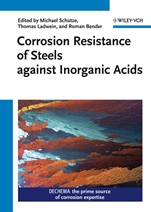
Corrosion Resistance of Steels Against Inorganic Acids
ISBN 9783527335206
Autor: Michael Schütze, Thomas L. Ladwein, Roman Bender
Wydawca: Wiley
Dostępność: 3-6 tygodni
Cena: 1 287,30 zł
Przed złożeniem zamówienia prosimy o kontakt mailowy celem potwierdzenia ceny.
ISBN13: |
9783527335206 |
ISBN10: |
352733520X |
Autor: |
Michael Schütze, Thomas L. Ladwein, Roman Bender |
Oprawa: |
Hardback |
Rok Wydania: |
2012-10-18 |
Ilość stron: |
682 |
Wymiary: |
241x176 |
Tematy: |
PN |
Steel is one of the most widely used construction materials with more than 1.3 billion tons produced each year. Buildings, industrial plants, machines, tools, pipelines, vessels and tanks are only a few of its applications in our daily life. Steel is an alloy made of iron and additional elements like carbon, chromium, manganese, vanadium and tungsten, and its quality, ductility, hardness and strength vary with the amount of the alloying element. As steels corrode in various atmospheres, in water and in soil its corrosion resistance against the four most common chemicals and inorganic acids – hydrochloric, nitric, sulfuric and phosphoric acid – as well as against mixed acids is essential and a crucial financial factor for many industries. These acids are present in nearly every industrial production process such as metal manufacturing but also explosives, food, dyes, leather, paper and fertilizers, to name only a few. Understanding how to strengthen the corrosion resistance of steels as reaction, transport and storage devices against these omnipresent and aggressive acids is key for all industries involved. This book is therefore a must–have for all mechanical, civil and chemical engineers, material scientists and chemists working with steel or acidic media.
Preface Ix How to Use the Handbook Xi Warranty disclaimer 1 Hydrochloric Acid 3 Unalloyed and low–alloyed steels/cast steel 3 Unalloyed and low–alloy cast iron 13 High–alloy cast iron 14 Austenitic cast iron (and others) 14 Ferritic chromium steels with < 13 % Cr 14 Ferritic chromium steels with>=13 % Cr 19 Ferritic/perlitic–martensitic steels 21 Ferritic–austenitic steels/duplex steels 24 Austenitic CrNi steels 26 Austenitic CrNiMo (N) and CrNiMoCu (N) steels 43 Special iron–based alloys 44 Bibliography 46 Mixed Acids 49 Unalloyed and low alloy steels/cast steel 49 Unalloyed cast iron and low–alloy cast iron 53 High–alloy cast iron 53 Ferritic chromium steels with < 13 % Cr 53 Ferritic chromium steels with>= 13 % Cr 55 erritic–austenitic steels/duplex steels 57 Austenitic CrNi steels 63 Austenitic CrNiMo (N) and CrNiMoCu (N) steels 79 Austenitic CrNiMoCu (N) steels 92 Bibliography 108 Nitric Acid 113 Unalloyed steels and cast steel 113 Unalloyed cast iron 118 High–alloy cast iron 119 High–silicon cast iron 119 Structural steels with up to 12 % chromium 120 Ferritic chromium steels with more than 12 % chromium 120 Ferritic–austenitic steels with more than 12 % chromium 129 Austenitic chromium–nickel steels 131 Austenitic chromium–nickel–molybdenum steels 167 Austenitic chromium–nickel steels with special alloying additions 190 Special iron–based alloys 195 Bibliography 197 Phosphoric Acid 219 Unalloyed steels and cast steel 219 Unalloyed cast iron 240 High–alloy cast iron 242 High–silicon cast iron 242 Structural steels with up to 12 % chromium 250 Ferritic chromium steels with more than 12 % chromium 253 Ferritic–austenitic steels with more than 12 % chromium 274 Austenitic CrNi steels 293 Austenitic CrNiMo (N) steels 302 Austenitic chromium–nickel steels with special alloying additions 346 Special iron–based alloys 354 Bibliography 357 Sulfuric Acid 369 Unalloyed steels and cast steel 369 Unalloyed cast iron 420 High–alloy cast iron 436 High–silicon cast iron 436 Structural steels with up to 12 % chromium 444 Ferritic chromium steels with more than 12 % chromium 453 Ferritic–austenitic steels with more than 12 % chromium 470 Austenitic chromium–nickel steels 486 Austenitic chromium–nickel–molybdenum steels 518 Austenitic chromium–nickel steel with special alloying additions 560 Special iron–based alloys 584 Bibliography 592 Key to Materials Compositions 609 Index of Materials 647 Subject Index 663
Michael Schütze , born in 1952, studied materials sciences at the University of Erlangen–Nürnberg from 1972 to 1978, and then joined the Karl Winnacker Institute of the DECHEMA as a research associate. He received his doctorate in engineering sciences from the RWTH (Technical University) in Aachen in 1983, completed his habilitation in 1991, becoming a member of the external teaching staff of the RWTH. Since 1998, he holds a professorship there. He was appointed director of the Karl Winnacker Institute in 1996 and Chairman of the executive board of DECHEMA–Forschungsinstitut in 2012. He is recipient of the Friedrich–Wilhelm–Prize, the Rahmel–Schwenk medal and the Cavallaro medal, past Chairman of the Gordon Research Conference on Corrosion, editor of the journal Materials and Corrosion, Past–President of the European Federation of Corrosion, Past–President of the World Corrosion Organization and Chairman of the Working Party Corrosion by Hot Gases and Combustion Products of the European Federation of Corrosion. Thomas L. Ladwein , born in 1955, studied chemistry and metallurgy at the Universities of Saarbrücken and Münster, and graduated with a Diploma in Chemistry in 1980 and a PhD in Sciences in 1984. After that he worked as a R&D and application engineer for a chemical fabricator specialized in refractory metals. In 1987 he joined the stainless steel divison of Thyssen AG (later ThyssenKrupp AG) and worked there in several positions in R&D, application engineering and technical marketing. Since 2003 he is full time professor for electrochemistry, corrosion and tribology at Aalen University of Applied Science. He works in various committees and working parties of DECHEMA, GfKORR (German Corrosion Society), VDEh (German Iron and Steel Institute) and NACE International. He is current chair of the NACE committee “STG 39: Process Industries – Materials Applications and Experiences” and chairman of the NACE European Area. In 2011 he received the Herbert H. Uhlig Award from NACE International. Roman Bender , born in 1971, studied chemistry at the Justus Liebig University of Giessen from 1992 to 1997. After he received his diploma he joined the Karl Winnacker Institute of the DECHEMA in Frankfurt (Main) as a research associate. Since 2000 he is head of the group materials and corrosion at the DECHEMA and editor in chief of the world’s largest corrosion data collection, the DECHEMA Werkstofftabelle, and the Corrosion Handbook. In 2001 he received his doctorate in natural sciences from the Technical University of Aachen (RWTH Aachen). In 2008 Dr. Bender was appointed chief executive offi cer of the GfKORR – The Society for Corrosion Protection.
“It should not be missed in the shelves of technicians, engineers and scientists dealing with those materials or their applications.” ( Materials and Corrosion , 1 December 2013 “The book “Corrosion Resistance of Steel against Inorganic Acid”, edited by Michael Schutze, Thomas Ladwein, and Roman Bender, Wiley–VCH, is therefore a must–have for all mechanical, civil and chemical engineers, material scientists and chemists working with steel or acidic media.” ( LaborPraxis , 1 December 2012)
Koszyk
Książek w koszyku: 0 szt.
Wartość zakupów: 0,00 zł
Informacje


Kontakt
Gambit
Centrum Oprogramowania
i Szkoleń Sp. z o.o.
Al. Pokoju 29b/22-24
31-564 Kraków
Siedziba Księgarni
ul. Kordylewskiego 1
31-542 Kraków
+48 12 410 5991
+48 12 410 5987
+48 12 410 5989
Subskrypcje
Administratorem danych osobowych jest firma Gambit COiS Sp. z o.o. Na podany adres będzie wysyłany wyłącznie biuletyn informacyjny.
Autoryzacja płatności

Informacje na temat autoryzacji płatności poprzez PayU.

© Copyright 2012: GAMBIT COiS Sp. z o.o. Wszelkie prawa zastrzeżone.
Projekt i wykonanie: Alchemia Studio Reklamy