


Wydawcy
Katalog tematyczny
- Archeologia (109)
- Ekonomia, finanse, business (13704)
- Filozofia (1445)
- Historia (3040)
- Języki i językoznawstwo (2356)
- Lifestyle, hobby i rozrywka (475)
- Medycyna (9704)
- Chirurgia (272)
- Inne gałęzie medycyny (1871)
- Medycyna kliniczna (4187)
- Choroby wewnętrzne (514)
- Dermatologia (51)
- Diagnostyka medyczna (3)
- Endokrynologia (144)
- Gastroenterologia (27)
- Geriatria (50)
- Ginekologia i położnictwo (134)
- Hematologia (46)
- Hepatologia (10)
- Kardiologia (71)
- Laryngologia (12)
- Nefrologia (10)
- Neurologia (500)
- Oftalmologia (50)
- Pediatria (33)
- Pulmunologia (32)
- Reumatologia (14)
- Terapia genowa (1)
- Układ mięśniowo-szkieletowy (1)
- Urologia (14)
- Medycyna niekonwencjonalna (14)
- Medycyna przedkliniczna (269)
- Medycyna, ogólnie (1740)
- Medyczne służby pomocnicze (745)
- Studia medyczne (16)
- Weterynaria (548)
- Nauki humanistyczne (4)
- Nauki o Ziemi i środowisku (2638)
- Nauki ścisłe (20412)
- Nauki społeczne (8486)
- Nauki techniczne (13450)
- Prawo (1696)
- Publikacje informacyjne i interdyscyplinarne (1288)
- Religia i wierzenia (917)
- Technika komputerowa (4067)
- Zdrowie, relacje międzyludzkie i rozwój osobisty (657)





Informacje szczegółowe o książce
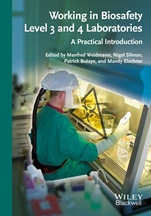
Working in Biosafety Level 3 and 4 Laboratories: A Practical Introduction
ISBN 9783527334674
Autor: Manfred Weidmann, Nigel Silmann, Patrick Butaye, Mandy Elschner
Wydawca: Wiley
Dostępność: 3-6 tygodni
Cena: 502,95 zł
Przed złożeniem zamówienia prosimy o kontakt mailowy celem potwierdzenia ceny.
ISBN13: |
9783527334674 |
ISBN10: |
352733467X |
Autor: |
Manfred Weidmann, Nigel Silmann, Patrick Butaye, Mandy Elschner |
Oprawa: |
Paperback |
Rok Wydania: |
2013-10-09 |
Ilość stron: |
152 |
Wymiary: |
244x172 |
Tematy: |
MJ |
This is a training manual for staff working in BSL3/4 laboratories. It is based on a course developed in the frame of COST Action B28 and subsequently funded by DG Home Affairs. It covers bio–containment, hazard criteria, the categorization of microbes, technical specifi cations for BSL–3 and ABSL–3 laboratories, personal protective equipment, and shipping BSL–3 and BSL–4 organisms according to UN and IATA regulations. It also examines the effi cacy of inactivation procedures, fumigation, learning from a history of lab accidents, handling samples submitted for diagnostic testing, and bridging the gap between the requirements of bio–containment and diagnostics. The result is a welcome tool for training new personnel, as well as a useful reference for all permanent staff working in BSL3/4 labs.
Acknowledgement X Preface XI List of Contributors XIII Introduction 1 Manfred Weidmann References 3 1 Laboratory Biosafety in Containment Laboratories 5 Annette A. Kraus and Ali Mirazimi 1.1 Routes of Infection 5 1.2 Classification of Microorganisms 6 1.3 General Containment Principles 7 1.4 Specific Containment Principles 7 1.4.1 Biosafety Level 1 Laboratory 8 1.4.2 Biosafety Level 2 Laboratory 8 1.4.3 Biosafety Level 3 Laboratory 8 1.4.4 Biosafety Level 4 Laboratory 9 1.5 Design of a Suit–Based–BSL–4 Laboratory with Negative Pressure 9 1.6 Safety Routines 11 Summary 11 References 12 2 Hazard Criteria and Categorization of Microbes Classification Systems 13 Nigel Silman 2.1 Facility Requirements 16 2.2 Exceptions to the Rules 18 Summary 19 3 Technical and Practical Aspects of BSL–3 Laboratories 21 Frank T. Hufert and Manfred Weidmann 3.1 Technical Aspects–Facilities, Secondary Barriers 21 3.1.1 Air Filtration Systems 23 3.1.2 Water 23 3.1.3 Fire Protection 24 3.2 Practical Aspects–Safety Equipment, Primary Barriers 25 3.2.1 Staff 25 3.3 Personal Protective Equipment (PPE) 25 3.3.1 Primary Barriers and Working Procedures 26 Summary 29 References 29 4 Animal Biosafety Level 3 Facility – Enhancements When Dealing with Large Animals 31 Francesc Xavier Abad, David Solanes, and Mariano Domingo 4.1 Enhancements to Upgrade a Standard Animal ABSL–3 Facility to a LABSL–3 Facility Housing Large Animals 33 4.2 Additional Recommendations 36 Summary 38 References 38 5 Personal Protective Equipment 41 Nigel Silman 5.1 Definitions 41 5.2 Regulatory Background 41 5.3 Routes of Entry and Types of PPE 42 5.4 Use of PPE 45 Summary 45 6 Shipping of Infectious Substances According IATA–DGR Regulations 47 Mandy Elschner and Martin Heller 6.1 Introduction 47 6.2 Classifications and UN Code 47 6.3 Limitations 49 6.4 Packaging 49 6.5 Packing Instruction 650 for Biological Substance, Category B 51 6.6 Packing Instruction 620 for Infectious Substance, Category A; UN 2814 and UN 2900 53 6.7 Packing Instruction 904 (UN 1845) for Dry Ice 55 6.8 Documentation 56 Summary 58 References 58 7 Disinfection and Decontamination 59 Patrick Butaye 7.1 Introduction 59 7.2 Ways of Decontamination/Disinfection 60 7.3 Physical Disinfection/Decontamination 61 7.4 Irradiation 61 7.5 Factors Influencing Chemical Disinfection/Decontamination 62 7.5.1 Temperature 62 7.5.2 Time of Contact 62 7.5.3 Microorganism 63 7.5.4 Surface Type (Absorbant vs Nonabsorbant) 63 7.5.5 Liquid 63 7.5.6 pH 64 7.5.7 Presence and Type of Dirt 64 7.5.8 Concentration of the Product 64 7.5.9 High–Pressure Water Cleaning 64 7.5.10 Water Used 65 7.5.11 Mechanism/Methods of Decontamination 65 7.5.12 Inoculum Concentration 65 7.6 Testing the Activity of a Certain Product 65 7.6.1 Physical Disinfection 65 7.6.2 Chemical Disinfection 66 7.6.2.1 Introduction 66 7.6.2.2 Phase 1 Studies 66 7.6.2.3 Phase 2 Studies 67 7.6.2.4 Phase 3 Studies 68 7.7 Chemical Compounds Used as Disinfectants 69 7.7.1 Introduction 69 7.7.2 Phenols 69 7.7.3 Chlorine Derivatives 69 7.7.4 Iodophores 70 7.7.5 Quaternary Ammonium Compounds 70 7.7.6 Amphoteres 70 7.7.7 Aldehydes 71 7.7.8 Calcium Oxide, Lime 71 7.7.9 Alcohols 71 7.7.10 Chlorhexidine 72 7.7.11 Peroxides 72 7.7.12 Peracetic Acid 72 7.7.13 Sodium Hydroxide 72 7.8 Conclusion 73 Summary 73 References 73 8 Fumigation of Spaces 75 Nigel Silman 8.1 Definitions 75 8.2 Practicalities 76 8.3 Fumigation Process 76 8.4 Validation of Fumigation 79 8.5 Post–Fumigation 80 8.6 Fumigation of Cabinets 81 8.7 Emergency Plans 82 8.8 Conclusions 82 Summary 82 9 Learning from a History of Laboratory Accidents 83 Manfred Weidmann 9.1 Introduction 83 9.2 Strains 83 9.3 Eye Protection 84 9.4 Necropsies, Animal Experiments, and Sharps 85 9.5 Skin Protection 86 9.6 The Omnipresence of Aerosol 87 9.7 Centrifugation 89 9.8 Spills 89 9.9 Laboratory Accident Statistics 90 Summary 91 References 91 10 Bridging the Gap between Requirements of Biocontainment and Diagnostics 95 Manfred Weidmann, Frank T. Hufert, and Nigel Silman Summary 97 References 97 11 Risk Assessment Procedures 99 ¢ªAsa S. Bj¨orndal 11.1 Introduction 99 11.2 Risk Identification 100 11.2.1 Timing of Assessment 100 11.2.2 A Qualitative Risk Assessment 100 11.2.3 Systematic Documentation 101 11.3 Additional Points for General Risk 102 Summary 105 Further Readings 105 12 Biosecurity 107 J¨urgen Mertsching 12.1 Introduction 107 12.2 Biosecurity as Part of a Biorisk Management Program 108 12.3 Risk (Threat) Assessment Process 108 12.3.1 Identify and Prioritize Biological Materials 109 12.3.2 Identify and Prioritize the Threat to Security of Biological Materials 109 12.3.3 Analyze the Risk of Specific Security Scenarios 109 12.3.4 Integrate the Biosecurity Risk Assessment Process into a Biorisk Management Program 109 12.4 Physical Security and Access Control 110 12.4.1 Physical Security–Biosecurity Meets Biosafety 111 12.5 Material Management 112 12.5.1 Material Management–Biosecurity Meets Biosafety 113 12.6 Personnel Security Management 114 12.6.1 Personnel Security Management–Biosecurity Meets Biosafety 115 12.7 Transport of Biological Materials 115 12.7.1 Transfer within an Institution 115 12.7.2 Transport Outside of the Facility 116 12.7.3 Transport–Biosecurity Meets Biosafety 116 12.8 Information Security 116 12.9 Incident and Emergency Response Planning 117 12.9.1 Emergency Response Planning – Biosecurity Meets Biosafety 118 Summary 118 References 118 Appendix 121 Practical Course 121 Day 1 121 Day 2 123 Day 3 126 Index 129
Mandy C. Elschner is a researcher at the Friedrich–Loeffler–Institute, Federal Research Institute for Animal Health, Institute for Bacterial Infections and Zoonoses, Jena, Germany. She leads the working group ?BSL 3–agents? and is the head of the Reference Laboratories for Glanders and Anthrax. She obtained her academic degree at the University of Leipzig and authored and co–authored in 25 national and international publications. Patrick Butaye is a senior researcher active at the Veterinary and Agrochemical Research center and a professor at the University of Ghent, Faculty of Veterinary medicine. He obtained his academic degrees at the University of Ghent. He authored and co–authored in more than 70 international scientific publications. Manfred Weidmann is a senior scientist at the Department of Virology of the University Medical Center Göttingen Germany. He obtained his degree from the Johannes–Gutenberg University of Mainz working on the pathogenesis of Clostridium difficille. Ever since he has worked on developing rapid diagnostic tools for the detection of arboviruses and haemorrhagic fever viruses in cooperation with partners from third world countries. He obtained the 2003 Abbot Diagnostic Award. He authored and co–authored 28 international scientific publications. Nigel Silman is the Strategic Coordinator for Research & Development at the Health Protection Agencys? Centre for Emergency Preparedness & Response at Porton Down in the UK. He is the HPA research lead for Diagnostics and Detection and also responsible for the scientific overview of specialist reference and contract microbiology services for a range of exotic & emerging infectious diseases. He has authored and co–authored 26 international scientific publications.
Koszyk
Książek w koszyku: 0 szt.
Wartość zakupów: 0,00 zł
Informacje


Kontakt
Gambit
Centrum Oprogramowania
i Szkoleń Sp. z o.o.
Al. Pokoju 29b/22-24
31-564 Kraków
Siedziba Księgarni
ul. Kordylewskiego 1
31-542 Kraków
+48 12 410 5991
+48 12 410 5987
+48 12 410 5989
Subskrypcje
Administratorem danych osobowych jest firma Gambit COiS Sp. z o.o. Na podany adres będzie wysyłany wyłącznie biuletyn informacyjny.
Autoryzacja płatności

Informacje na temat autoryzacji płatności poprzez PayU.

© Copyright 2012: GAMBIT COiS Sp. z o.o. Wszelkie prawa zastrzeżone.
Projekt i wykonanie: Alchemia Studio Reklamy