


Wydawcy
Katalog tematyczny
- Archeologia (109)
- Ekonomia, finanse, business (13704)
- Filozofia (1445)
- Historia (3040)
- Języki i językoznawstwo (2356)
- Lifestyle, hobby i rozrywka (475)
- Medycyna (9704)
- Nauki humanistyczne (4)
- Nauki o Ziemi i środowisku (2638)
- Nauki ścisłe (20412)
- Astronomia (294)
- Biologia (5119)
- Chemia (6540)
- Chemia analityczna (361)
- Chemia fizyczna (346)
- Chemia nieorganiczna (137)
- Chemia organiczna (535)
- Krystalografia (27)
- Minerologia (46)
- Fizyka (3309)
- Matematyka (4574)
- Nauki ścisłe, ogólnie (503)
- Nauki społeczne (8486)
- Nauki techniczne (13450)
- Prawo (1696)
- Publikacje informacyjne i interdyscyplinarne (1288)
- Religia i wierzenia (917)
- Technika komputerowa (4067)
- Zdrowie, relacje międzyludzkie i rozwój osobisty (657)





Informacje szczegółowe o książce
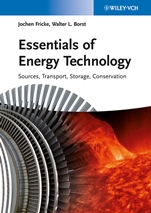
Essentials of Energy Technology: Sources, Transport, Storage, Conservation
ISBN 9783527334162
Autor: Jochen Fricke, Walter L. Borst
Wydawca: Wiley
Dostępność: 3-6 tygodni
Cena: 401,10 zł
Przed złożeniem zamówienia prosimy o kontakt mailowy celem potwierdzenia ceny.
ISBN13: |
9783527334162 |
ISBN10: |
3527334165 |
Autor: |
Jochen Fricke, Walter L. Borst |
Oprawa: |
Paperback |
Rok Wydania: |
2013-12-04 |
Ilość stron: |
462 |
Wymiary: |
243x175 |
Tematy: |
PN |
An in–depth understanding of energy technology, sources, conversion, storage, transport and conservation is crucial for developing a sustainable and economically viable energy infrastructure. This need, for example, is addressed in university courses with a special focus on the energy mix of renewable and depletable energy resources. Energy makes our lives comfortable, and the existence of amenities such as heaters, cars, warm water, household appliances and electrical light is characteristic for a developed economy. Supplying the industrial or individual energy consumer with energy 24 hours a day is a non–trivial challenge, especially in times where the energy is coming from very diverse resources such as oil, gas, nuclear fuels, wind, sun, or waves. This book gives physics, chemistry, engineering, and materials science students insights in the basics of energy and energy technology. It was developed along a successful course for advanced bachelor or graduate students and is written in a didactic style. The problems and solutions at the end of each chapter are ideal for exams and make self–study easy. Topics covered include energy from fossil and nuclear fuels, renewable sources, energy transport, storage, and conservation.
Acknowledgments XI Preface XIII List of Abbreviations XV 1 Introduction 1 1.1 Global Energy Flow 1 1.2 Natural and Anthropogenic Greenhouse Effect 1 1.3 Limit to Atmospheric CO2 Concentration 5 1.4 Potential Remedies 6 1.4.1 Energy Conservation 6 1.4.2 Rational Energy Production and Use 7 1.4.3 Carbon Capture and Storage (CCS) 7 1.4.4 Nuclear Energy 8 1.4.5 Renewable Energies 8 References 9 Solutions 10 2 Energy Conservation with Thermal Insulation 11 2.1 Opaque Insulations 11 2.1.1 Conventional Opaque Insulation: Three Contributions to Heat Transfer 14 2.1.2 Advanced Opaque Insulations: Vacuum Insulation Panels (VIPs) 21 2.1.3 Switchable Thermal Insulations 24 2.1.4 Thermal Measurement Methods 25 2.2 Transparent and Translucent Insulations 28 2.2.1 Radiative Transfer 28 2.2.2 Convective Heat Transfer 30 2.2.3 Windows 37 2.2.4 Switchable Glazings 42 2.2.5 Translucent Insulations 43 References 44 Solutions 45 3 Thermodynamic Energy Efficiency 47 3.1 Carnot’s Law 47 3.2 Stirling Engine 49 3.3 Irreversibilities 52 3.4 Exergy and Anergy 52 3.5 Compression Heat Pumps and Air–Conditioning Systems 54 3.6 Absorption Heat Transformers 61 3.7 Energy and Exergy Efficiency 62 References 64 Solutions 65 4 Fossil Fuel–Fired Energy Converters 67 4.1 Power Plants 67 4.1.1 The Rankine Steam Process 68 4.1.2 Gas Turbines 74 4.1.3 Combined–Cycle Power Plants 76 4.1.4 Turbine and Cooling Tower 78 4.1.5 Scrubber: Dust Removal, Desulfurization, and DeNOx 80 4.1.6 Carbon Dioxide Capture and Storage (CCS) 83 4.1.7 Fossil–Fired Back–Up Power Plants 89 4.2 Internal Combustion Engines 89 4.2.1 The Otto, Diesel, and Seiliger Processes 90 4.2.2 Fuels for Transportation 95 4.3 Thermoelectric Converters (TECs) 96 4.4 Exotic Energy Converters 101 4.4.1 Thermionic Converters 101 4.4.2 Alkali Metal Thermal Energy Converter (AMTEC) 102 4.4.3 Magneto–Hydro–Dynamic (MHD) Converter 103 4.5 Absorption Cycles 104 4.6 Condensation Boilers 108 References 108 Solutions 110 5 Nuclear Fission Energy and Power Plants 113 5.1 Binding Energy and Mass Defect 113 5.1.1 Volume Term 114 5.1.2 Surface Term 116 5.1.3 Coulomb Term 116 5.1.4 Asymmetry Term 116 5.1.5 Pairing Term 117 5.2 Fission 118 5.3 The Multiplication Factor 124 5.3.1 Neutron Emission Factor k1 124 5.3.2 Fast Neutron Enhancement Factor k2 125 5.3.3 Resonance Escape Probability k3 127 5.3.4 Thermal Utilization Factor k4 127 5.4 Reactor Control 127 5.5 Neutron Flux 129 5.6 Reactivity Changes during Power Plant Operation 134 5.7 Fuel Conversion and Breeding 135 5.8 Nuclear Reactor Types 139 5.9 The Fuel Question 145 5.10 U235 Enrichment 146 5.11 Spent Fuel 147 5.12 Reactor Safety and Accidents 152 References 156 Solutions 158 6 Hydropower 161 6.1 Water Runoff from Mountains 161 6.2 Laminar and Turbulent Flow in Pipes 166 6.3 Running Water from Oceans 170 6.4 Ocean Tides 172 6.4.1 Equilibrium Theory of Tides 172 6.4.2 Dynamical Theory of Tides 176 6.4.3 Basin Resonances and Seiches 180 6.4.4 Tidal Power Plants 183 6.5 Ocean Waves 185 6.5.1 Characterization of Ocean Waves 185 6.5.2 Energy from Ocean Waves 189 6.6 Ocean Thermal Energy Conversion (OTEC) 191 6.7 Energy from Osmotic Pressure 192 References 195 Solutions 197 7 Wind Power 201 7.1 Wind Velocity 201 7.2 Using the Drag 203 7.3 Using the Lift 205 7.4 Technical Questions 213 7.5 Electricity from Wind on Demand 215 7.6 Small–Scale Wind Energy Conversion 216 7.7 Alternative Wind Energy Converters 218 7.8 Wind Energy Concentration 219 References 220 Solutions 221 8 Photovoltaics (PV) 223 8.1 Diodes and Solar Cells 224 8.2 Transport Phenomena, Isc and Uoc 229 8.3 Temperature Effects 233 8.4 Equivalent Circuit 234 8.5 Absorption Process and Transitions 235 8.6 Advanced Solar Cells 237 8.7 Si Production and Energy Amortization 238 8.8 Other Solar Materials 241 8.9 From Solar Cells to Modules 241 8.10 Future Prospects for Photovoltaics 242 8.11 Wet Solar Cells 244 References 247 Solutions 248 9 Solar Space and Hot Water Heating 249 9.1 Solar Radiation 249 9.2 Flat Plate Collectors 252 9.2.1 Gains, Losses, and Efficiency 252 9.2.2 Temperature Rise along a Solar Flat Plate Collector 258 9.2.3 Temperature Distribution across a Solar Flat Plate Collector 262 9.3 Evacuated Thermal Collectors 264 9.4 Compound Parabolic Concentrator (CPC) 267 9.5 Solar Thermal Heating Systems 269 9.5.1 Active Solar Heating Systems 269 9.5.2 Thermosiphon 271 References 276 Solutions 277 10 Electricity and Fuels from Solar Heat 281 10.1 Concentration of Solar Radiation 281 10.2 Solar Troughs 286 10.3 Fresnel Systems 288 10.4 Solar Dish and Solar Tower 289 10.5 Solar Thermic Power Plants 291 10.6 Solar Fuels 295 References 297 Solutions 298 11 Biomass Energy 301 11.1 Growth of Biomass 301 11.2 Direct Use of Solid Biomass 304 11.3 Biogas 306 11.4 Biofuel 309 11.4.1 First Production Method 309 11.4.2 Second Production Method 309 11.4.3 Third Production Method 310 11.5 Hydrothermal Carbonization of Biomass 311 References 311 Solutions 312 12 Geothermal Energy 315 12.1 The Origin of Geothermal Energy 315 12.2 Geothermal Anomalies 318 12.3 Geothermal Power Plants 319 12.4 Hot Dry Rock 321 References 322 Solutions 324 13 Energy Storage 325 13.1 Mechanical Energy Storage 325 13.1.1 Flywheels 325 13.1.2 Compressed Air Storage 329 13.2 Electric Energy Storage 335 13.2.1 Capacitors 335 13.2.2 Supercaps 336 13.2.3 Superconducting Magnetic Energy Storage (SMES) 337 13.3 Electrochemical Energy Storage 338 13.3.1 General Considerations 338 13.3.2 Accumulators 341 13.3.2.1 Lead–Acid Accumulator 341 13.3.2.2 Ni–Cd Accumulator 342 13.3.2.3 Ni–Metal–Hydride Accumulator 343 13.3.2.4 Li–Ion and Li–Polymer Accumulator 343 13.3.2.5 Na–NiCl2 Accumulator 344 13.3.2.6 Na–S Accumulator 345 13.3.3 Redox Flow Systems (RFS) 346 13.4 Chemical Energy Storage 348 13.5 Thermal Energy Storage 350 13.5.1 Sensible Heat 350 13.5.2 Solid–Liquid Phase Change Materials (PCMs) 354 13.5.3 Liquid–Vapor and Solid–Vapor Phase Transitions 357 References 361 Solutions 362 14 Energy Transport 365 14.1 Mechanical Energy Transport 365 14.2 Transporting Electricity 367 14.2.1 AC Transmission Lines 367 14.2.2 DC Transmission Lines 375 14.2.3 Superconductivity 376 14.3 Heat Transport 382 14.3.1 Heat Pipes 382 14.3.2 District Heating 387 14.3.3 Daily and Annual Temperature Variations near the Earth’s Surface 389 14.3.4 Radiative Transfer 393 References 395 Solutions 396 15 Fuel Cells 401 15.1 General Considerations 401 15.2 Polymer Electrolyte Membrane Fuel Cell (PEMFC) 404 15.3 Solid Oxide Fuel Cell (SOFC) 407 15.4 Other Fuel Cells 408 References 408 Solutions 409 16 Nuclear Fusion Energy 411 16.1 Introduction 411 16.2 Fuel for Fusion 412 16.3 Break–Even and the Lawson Criterion 413 16.4 Magnetic Confinement Fusion (MCF) 416 16.5 International Thermonuclear Experimental Reactor (ITER) 421 16.6 Inertial Confinement Fusion (ICF) 423 16.7 The National Ignition Facility (NIF) 426 References 430 Solutions 431 Index 435
Jochen Fricke became professor for experimental physics at the University of Würzburg in 1975, where he is still giving lectures on energy technology. He was appointed as founding director of the Bavarian Center for Applied Energy Research (ZAE) in Würzburg in 1991, and was head of the board of directors until 2005. His research interests started in nuclear energy and went on to energy conservation and renewables. He received his PhD at the Technical University of Munich, followed by post–doc research in Munich and Pittsburgh. In 2006 he was appointed as spokesperson for the Bavarian Energy Technology Cluster. Jochen Fricke was honoured with several prizes, among them the ′Medal for Scientific Publication′ by the German Physical Society and the "State Medal for Special Services to the Bavarian Economy". Walter Borst is physics professor at the Texas Tech University in Lubbock since 1984. He received his PhD in Berkeley and stayed for a post–doc research at the University of Pittsburgh. Before he went to Lubbock, he became Assistant and later on Associate Professor in Carbondale. His research interests range from atomic and molecular collisions, time–resolved laser fluorescence spectroscopy, organic dye scintillators, coal and oil shale fluorescence, long–term solar heat storage to solar heat collectors.
Koszyk
Książek w koszyku: 0 szt.
Wartość zakupów: 0,00 zł
Informacje


Kontakt
Gambit
Centrum Oprogramowania
i Szkoleń Sp. z o.o.
Al. Pokoju 29b/22-24
31-564 Kraków
Siedziba Księgarni
ul. Kordylewskiego 1
31-542 Kraków
+48 12 410 5991
+48 12 410 5987
+48 12 410 5989
Subskrypcje
Administratorem danych osobowych jest firma Gambit COiS Sp. z o.o. Na podany adres będzie wysyłany wyłącznie biuletyn informacyjny.
Autoryzacja płatności

Informacje na temat autoryzacji płatności poprzez PayU.

© Copyright 2012: GAMBIT COiS Sp. z o.o. Wszelkie prawa zastrzeżone.
Projekt i wykonanie: Alchemia Studio Reklamy