


Wydawcy
Katalog tematyczny
- Archeologia (109)
- Ekonomia, finanse, business (13704)
- Filozofia (1445)
- Historia (3040)
- Języki i językoznawstwo (2356)
- Lifestyle, hobby i rozrywka (475)
- Medycyna (9704)
- Nauki humanistyczne (4)
- Nauki o Ziemi i środowisku (2638)
- Nauki ścisłe (20412)
- Astronomia (294)
- Biologia (5119)
- Chemia (6540)
- Chemia analityczna (361)
- Chemia fizyczna (346)
- Chemia nieorganiczna (137)
- Chemia organiczna (535)
- Krystalografia (27)
- Minerologia (46)
- Fizyka (3309)
- Matematyka (4574)
- Nauki ścisłe, ogólnie (503)
- Nauki społeczne (8486)
- Nauki techniczne (13450)
- Prawo (1696)
- Publikacje informacyjne i interdyscyplinarne (1288)
- Religia i wierzenia (917)
- Technika komputerowa (4067)
- Zdrowie, relacje międzyludzkie i rozwój osobisty (657)





Informacje szczegółowe o książce
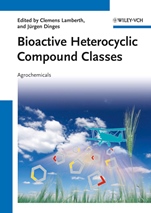
Bioactive Heterocyclic Compound Classes: Agrochemicals
ISBN 9783527333967
Autor: Clemens Lamberth, Jürgen Dinges
Wydawca: Wiley
Dostępność: 3-6 tygodni
Cena: 757,05 zł
Przed złożeniem zamówienia prosimy o kontakt mailowy celem potwierdzenia ceny.
ISBN13: |
9783527333967 |
ISBN10: |
3527333967 |
Autor: |
Clemens Lamberth, Jürgen Dinges |
Oprawa: |
Hardback |
Rok Wydania: |
2012-09-12 |
Ilość stron: |
302 |
Wymiary: |
244x173 |
Tematy: |
PN |
The chemistry of heterocycles is an important branch of organic chemistry. This is due to the fact that a large number of natural products, e. g. hormones, antibiotics, vitamins, etc. are composed of heterocyclic structures. Often, these compounds show beneficial properties and are therefore applied as pharmaceuticals to treat diseases or as insecticides, herbicides or fungicides in crop protection. This volume presents important agrochemicals. Each of the 21 chapters covers in a concise manner one class of heterocycles, clearly structured as follows: Structural formulas of most important examples (market products) Short background of history or discovery Typical syntheses of important examples Mode of action Characteristic biological activity Structure–activity relationship Additional chemistry information (e.g. further transformations, alternative syntheses, metabolic pathways, etc.) References A valuable one–stop reference source for researchers in academia and industry as well as for graduate students with career aspirations in the agrochemical chemistry.
V Contents Preface XI List of Contributors XIII Introduction 1 1 The Significance of Heterocycles for Pharmaceuticals and Agrochemicals 3 Clemens Lamberth and Jürgen Dinges 1.1 Introduction 3 1.2 Heterocycles as Framework of Biologically Active Compounds 4 1.3 Fine–Tuning the Physicochemical Properties with Heterocycles 6 1.4 Heterocycles as Prodrugs 6 1.5 Heterocycles as Peptidomimetics 7 1.6 Heterocycles as Isosteric Replacement of Functional Groups 8 1.7 Heterocycles as Isosteric Replacement of Alicyclic Rings 11 1.8 Heterocycles as Isosteric Replacement of other Heterocyclic Rings 13 References 16 Part I Herbicides 21 2 Triazine Herbicides 23 Andrew J.F. Edmunds 2.1 Introduction 23 2.2 History 23 2.3 Synthesis 27 2.4 Mode of Action 31 2.5 Biological Activity 34 2.6 Structure–Activity Relationships 34 References 37 3 Pyrimidinyl and Triazinylsulfonylurea Herbicides 39 Mary Ann Hanagan and Atul Puri 3.1 Introduction 39 3.2 History 39 3.3 Synthesis 41 3.4 Mode of Action 45 3.5 Biological Activity 46 3.6 Structure–Activity Relationship 47 References 48 4 Acetohydroxyacid Synthase Inhibiting Triazolopyrimidine Herbicides 51 Timothy C. Johnson, Richard K. Mann, Paul R. Schmitzer, and Roger E. Gast 4.1 Introduction 51 4.2 History 51 4.3 Synthesis 53 4.4 Mode of Action 55 4.5 Biological Activity 56 4.6 Structure–Activity Relationship 57 References 59 5 HPPD–Inhibiting Benzoylpyrazole Herbicides 61 Matthias Witschel 5.1 Introduction 61 5.2 History 61 5.3 Synthesis 62 5.4 Mode of Action 64 5.5 Biological Activity 66 5.6 Structure–Activity Relationship 66 References 68 6 Pyridyloxyphenoxypropionate Herbicides: Inhibitors of Acetyl–CoA Carboxylase 69 William G. Whittingham 6.1 Introduction 69 6.2 History 69 6.3 Synthesis 71 6.4 Mode of Action 73 6.5 Biological Activity 75 6.6 Structure–Activity Relationships 76 References 80 7 Imidazolinone Herbicides 83 Dale Shaner 7.1 Introduction 83 7.2 History 83 7.3 Synthesis 85 7.4 Mode of Action 86 7.5 Biological Activity 86 7.6 Structure–Activity Relationship 88 References 89 8 Protoporphyrinogen–IX–Oxidase–Inhibiting Uracil Herbicides 91 George Theodoridis 8.1 Introduction 91 8.2 History 91 8.3 Synthesis 92 8.4 Mode of Action 94 8.5 Biological Activity 94 8.6 Structure–Activity Relationship 97 References 100 Part II Fungicides 103 9 Benzimidazole Fungicides 105 Laura Quaranta 9.1 Introduction 105 9.2 History 105 9.3 Synthesis 108 9.4 Mode of Action 110 9.5 Biological Activity 112 9.6 Structure–Activity Relationship 114 References 116 10 Morpholine Fungicides for the Treatment of Powdery Mildew 119 Clemens Lamberth 10.1 Introduction 119 10.2 History 119 10.3 Synthesis 120 10.4 Mode of Action 122 10.5 Biological Activity 123 10.6 Structure–Activity Relationship 124 References 126 11 Sterol Biosynthesis Inhibiting Triazole Fungicides 129 Paul Worthington 11.1 Introduction 129 11.2 History 129 11.3 Synthesis 134 11.4 Mode of Action 138 11.5 Biological Activity 140 11.6 Structure–Activity Relationship 141 References 143 12 Methionine Biosynthesis–Inhibiting Anilinopyrimidine Fungicides 147 Clemens Lamberth 12.1 Introduction 147 12.2 History 147 12.3 Synthesis 148 12.4 Mode of Action 150 12.5 Biological Activity 151 12.6 Structure–Activity Relationship 151 References 153 13 Phenylpyrrole Fungicides 155 Clemens Lamberth 13.1 Introduction 155 13.2 History 155 13.3 Synthesis 156 13.4 Mode of Action 158 13.5 Biological Activity 158 13.6 Structure–Activity Relationship 160 References 161 14 Broad–Spectrum Fungicidally Active Pyrimidinyldioxy Strobilurins Inhibiting the Respiratory Chain 163 Clemens Lamberth 14.1 Introduction 163 14.2 History 163 14.3 Synthesis 165 14.4 Mode of Action 165 14.5 Biological Activity 168 14.6 Structure–Activity Relationship 169 References 173 15 Pyrazole Carboxamide Fungicides Inhibiting Succinate Dehydrogenase 175 Harald Walter 15.1 Introduction 175 15.2 History 175 15.3 Synthesis 177 15.4 Mode of Action 183 15.5 Biological Activity 185 15.6 Structure–Activity Relationships 187 Acknowledgements 191 References 191 Part III Insecticides 195 16 Avermectin Insecticides and Acaricides 197 Thomas Pitterna 16.1 Introduction 197 16.2 History 197 16.3 Synthesis 199 16.4 Mode of Action 201 16.5 Biological Activity 202 16.6 Structure–Activity Relationship 204 References 206 17 Pyridine and Thiazole–Containing Insecticides as Potent Agonists on Insect Nicotinic Acetylcholine Receptors 209 Peter Jeschke 17.1 Introduction 209 17.2 History 209 17.3 Synthesis 211 17.4 Mode of Action 214 17.5 Biological Activity 215 17.6 Structure–Activity Relationship 217 References 221 18 Pyrazole and Pyrimidine Acaricides and Insecticides Acting as Inhibitors of Mitochondrial Electron Transport at Complex I 225 Ottmar Franz Hüter 18.1 Introduction 225 18.2 History 225 18.3 Synthesis 227 18.4 Mode of Action 229 18.5 Biological Activity 230 18.6 Structure–Activity Relationship 230 References 236 19 Phenylpyrazole–Containing Fiprole Insecticides 239 Stefan Schnatterer 19.1 Introduction 239 19.2 History 239 19.3 Synthesis 241 19.4 Mode of Action 244 19.5 Biological Activity 244 19.6 Structure–Activity Relationship 246 References 248 20 Pyrazolylpyridine Activators of the Insect Ryanodine Receptor 251 George P. Lahm, Thomas P. Selby, Thomas M. Stevenson, Daniel Cordova, I. Billy Annan, and John T. Andaloro 20.1 Introduction 251 20.2 History 251 20.3 Synthesis 253 20.4 Mode of Action 254 20.5 Biological Activity 255 20.6 Structure–Activity Relationships 256 References 262 21 Tetronic Acid Insecticides and Acaricides Inhibiting Acetyl–CoA Carboxylase 265 Thomas Bretschneider, Reiner Fischer, and Ralf Nauen 21.1 Introduction 265 21.2 History 265 21.3 Synthesis 268 21.4 Mode of Action 269 21.5 Biological Activity 271 21.6 Structure–Activity Relationship 274 References 277 Index 279
Clemens Lamberth is a senior team leader in the crop protection research department of Syngenta AG, Switzerland. He studied chemistry at the Technical University of Darmstadt, Germany, where he obtained his Ph.D. under the supervision of Prof. Bernd Giese in 1990. Subsequently, he spent one and a half years as a postdoctoral fellow in the group of Prof. Mark Bednarski at the University of California at Berkeley, U.S.A. In 1992 Clemens Lamberth joined the agrochemical research department of Sandoz Agro AG, Switzerland, which is today, after two mergers, part of Syngenta Crop Protection AG. Since 20 years he is specialized in fungicide discovery. He was the organizer of the two–day session ′New Trends for Agrochemicals′ at the 2nd EUCHEMS congress in Torino 2008. He is the author of 46 publications and 56 patents and the inventor of Syngenta′s fungicide mandipropamid (Revus®, Pergado®). Jürgen Dinges obtained his M.S. degree in organic chemistry at the Technical University in Darmstadt, Germany in 1988. He then joined the group of Prof. Frieder W. Lichtenthaler at the same University, where he received his Ph.D. degree in organic chemistry and chemical engineering in 1991. After being awarded a Feodor–Lynen scholarship from the Humboldt foundation, he spent 18 months as a postdoctoral fellow in the group of Prof. William G. Dauben at the University of California at Berkeley, U.S.A. In 1993, Jurgen Dinges joined the department for biochemistry at Syntex, U.S.A. and since 1995 he is working in the pharmaceutical research department at Abbott Laboratories, U.S.A. In 2009, he was a guest editor for Current Topics in Medicinal Chemistry for a special issue on Parkinson?s disease. He is an author of 17 publications and 23 patents and a co–inventor of more than 10 clinical drug development candidates.
Koszyk
Książek w koszyku: 0 szt.
Wartość zakupów: 0,00 zł
Informacje


Kontakt
Gambit
Centrum Oprogramowania
i Szkoleń Sp. z o.o.
Al. Pokoju 29b/22-24
31-564 Kraków
Siedziba Księgarni
ul. Kordylewskiego 1
31-542 Kraków
+48 12 410 5991
+48 12 410 5987
+48 12 410 5989
Subskrypcje
Administratorem danych osobowych jest firma Gambit COiS Sp. z o.o. Na podany adres będzie wysyłany wyłącznie biuletyn informacyjny.
Autoryzacja płatności

Informacje na temat autoryzacji płatności poprzez PayU.

© Copyright 2012: GAMBIT COiS Sp. z o.o. Wszelkie prawa zastrzeżone.
Projekt i wykonanie: Alchemia Studio Reklamy