


Wydawcy
Katalog tematyczny
- Archeologia (109)
- Ekonomia, finanse, business (13704)
- Filozofia (1445)
- Historia (3040)
- Języki i językoznawstwo (2356)
- Lifestyle, hobby i rozrywka (475)
- Medycyna (9704)
- Nauki humanistyczne (4)
- Nauki o Ziemi i środowisku (2638)
- Nauki ścisłe (20412)
- Astronomia (294)
- Biologia (5119)
- Chemia (6540)
- Chemia analityczna (361)
- Chemia fizyczna (346)
- Chemia nieorganiczna (137)
- Chemia organiczna (535)
- Krystalografia (27)
- Minerologia (46)
- Fizyka (3309)
- Matematyka (4574)
- Nauki ścisłe, ogólnie (503)
- Nauki społeczne (8486)
- Nauki techniczne (13450)
- Prawo (1696)
- Publikacje informacyjne i interdyscyplinarne (1288)
- Religia i wierzenia (917)
- Technika komputerowa (4067)
- Zdrowie, relacje międzyludzkie i rozwój osobisty (657)





Informacje szczegółowe o książce
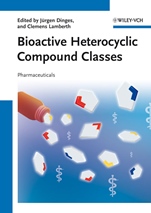
Bioactive Heterocyclic Compound Classes: Pharmaceuticals
ISBN 9783527333950
Autor: Clemens Lamberth, Jürgen Dinges
Wydawca: Wiley
Dostępność: 3-6 tygodni
Cena: 838,95 zł
Przed złożeniem zamówienia prosimy o kontakt mailowy celem potwierdzenia ceny.
ISBN13: |
9783527333950 |
ISBN10: |
3527333959 |
Autor: |
Clemens Lamberth, Jürgen Dinges |
Oprawa: |
Hardback |
Rok Wydania: |
2012-09-12 |
Ilość stron: |
372 |
Wymiary: |
246x172 |
Tematy: |
PN |
The chemistry of heterocycles is an important branch of organic chemistry. This is due to the fact that a large number of natural products, e. g. hormones, antibiotics, vitamins, etc. are composed of heterocyclic structures. Often, these compounds show beneficial properties and are therefore applied as pharmaceuticals to treat diseases or as insecticides, herbicides or fungicides in crop protection. This volume presents important pharmaceuticals. Each of the 20 chapters covers in a concise manner one class of heterocycles, clearly structuredas follows: Structural formulas of most important examples (market products) Short background of history or discovery Typical syntheses of important examples Mode of action Characteristic biological activity Structure–activity relationship Additional chemistry information (e.g. further transformations, alternative syntheses, metabolic pathways, etc.) References. A valuable one–stop reference source for researchers in academia and industry as well as for graduate students with career aspirations in the pharmaceutical chemistry.
Preface XI List of Contributors XIII Introduction 1 1 The Significance of Heterocycles for Pharmaceuticals and Agrochemicals 3 Clemens Lamberth and Jürgen Dinges 1.1 Introduction 3 1.2 Heterocycles as Framework of Biologically Active Compounds 4 1.3 Fine–Tuning the Physicochemical Properties with Heterocycles 6 1.4 Heterocycles as Prodrugs 6 1.5 Heterocycles as Peptidomimetics 7 1.6 Heterocycles as Isosteric Replacement of Functional Groups 8 1.7 Heterocycles as Isosteric Replacement of Alicyclic Rings 11 1.8 Heterocycles as Isosteric Replacement of other Heterocyclic Rings 13 References 16 Part I Neurological Disorders 21 2 Tropane–Based Alkaloids as Muscarinic Antagonists for the Treatment of Asthma, Obstructive Pulmonary Disease, and Motion Sickness 23 Michael L. Schulte and Craig W. Lindsley 2.1 Introduction 23 2.2 History 23 2.3 Synthesis 25 2.4 Mode of Action 29 2.5 Structure–Activity Relationships 32 References 34 3 Morphinone–Based Opioid Receptor Agonist Analgesics 37 Stephanie M. Ng 3.1 Introduction 37 3.2 History 37 3.3 Synthesis 40 3.4 Mode of Action 43 3.5 Structure–Activity Relationship 44 References 48 4 Barbituric Acid–Based GABA(A) Receptor Modulators for the Treatment of Sleep Disorder and Epilepsy and as Anesthetics 51 Ingo Janser and Romy Janser 4.1 Introduction 51 4.2 History 52 4.3 Synthesis 57 4.4 Mode of Action 60 4.5 Structure–Activity Relationship 62 References 63 5 Phenothiazine–Based Dopamine D 2 Antagonists for the Treatment of Schizophrenia 65 Cristiana A. Zaharia 5.1 Introduction 65 5.2 History 65 5.3 Synthesis 70 5.4 Mode of Action 72 5.5 Structure–Activity Relationships 76 References 77 6 Arylpiperazine–Based 5–HT1A Receptor Partial Agonists and 5–HT2A Antagonists for the Treatment of Autism, Depression, Anxiety, Psychosis, and Schizophrenia 81 Irini Akritopoulou–Zanze 6.1 Introduction 81 6.2 History 81 6.3 Synthesis 85 6.4 Mode of Action 88 6.5 Structure–Activity Relationship 89 References 96 7 Arylpiperidine–Based Dopamine D 2 Antagonists/5–HT 2 A Antagonists for the Treatment of Autism, Depression, Schizophrenia, and Bipolar Disorder 99 Ying Wang 7.1 Introduction 99 7.2 History 99 7.3 Synthesis 106 7.4 Mode of Action 109 7.5 Structure–Activity Relationship 111 References 113 8 Dibenzazepine–Based Sodium Channel Blockers for the Treatment of Neuropathic Pain 115 Derek W. Nelson 8.1 Introduction 115 8.2 History 115 8.3 Synthesis 119 8.4 Mode of Action 124 8.5 Structure–Activity Relationships 128 References 130 Part II Cardiovascular Diseases 135 9 Dihydropyridine–Based Calcium Channel Blockers for the Treatment of Angina Pectoris and Hypertension 137 Milan Bruncko 9.1 Introduction 137 9.2 History 139 9.3 Synthesis 141 9.4 Mode of Action 144 9.5 Structure–Activity Relationship 148 References 149 10 Tetrazole–Based Angiotensin II Type 1 (AT 1 ) Antagonists for the Treatment of Heart Failure and Congestive Hypertension 153 Edward C. Lawson, Brian C. Shook, and James C. Lanter 10.1 Introduction 153 10.2 History 154 10.3 Synthesis 157 10.4 Mode of Action 159 10.5 Structure–Activity Relationship 161 References 163 11 Thiazide–Based Diuretics for the Treatment of Hypertension and Genitourinary Disorders 169 Jürgen Dinges 11.1 Introduction 169 11.2 History 169 11.3 Synthesis 174 11.4 Mode of Action 177 11.5 Structure–Activity Relationship 179 References 180 12 Tetrahydropyranone–Based HMG–CoA Reductase Inhibitors for the Treatment of Arterial Hypercholesterolemia 183 Hongyu Zhao 12.1 Introduction 183 12.2 History 183 12.3 Synthesis 188 12.4 Mode of Action 191 12.5 Structure–Activity Relationship 192 References 198 Part III Infectious Diseases 201 13 Adenine–Based Reverse Transcriptase Inhibitors as Anti–HIV Agents 203 Alastair Donald 13.1 Introduction 203 13.2 History 203 13.3 Synthesis 209 13.4 Mode of Action 212 13.5 Structure–Activity Relationship 212 References 214 14 Guanine–Based Nucleoside Analogs as Antiviral Agents 217 Maurizio Franzini 14.1 Introduction 217 14.2 History 219 14.3 Synthesis 221 14.4 Mode of Action 227 14.5 Structure–Activity Relationship 229 References 232 15 Penicillin and Cephalosporin Antibiotics 237 Michael Z. Hoemann 15.1 Introduction 237 15.2 History 237 15.3 Synthesis 239 15.4 Mode of Action 248 15.5 Structure–Activity Relationships 250 References 251 Part IV Oncology 255 16 Pyrimidine–Based Kinase Inhibitors in Cancer Chemotherapy 257 Robert Mah 16.1 Introduction 257 16.2 History 257 16.3 Synthesis 261 16.4 Mode of Action 264 16.5 Structure–Activity Relationship 266 References 269 17 Benzyl Triazole–Based Aromatase Inhibitors for the Treatment of Breast Cancer 275 Dawn George and Stacy Van Epps 17.1 Introduction 275 17.2 History 275 17.3 Synthesis 277 17.4 Mode of Action 281 17.5 Structure–Activity Relationship 282 References 286 Part V Inflammation and Gastrointestinal Diseases 289 18 Acetonide–Based Glucocorticoids for the Treatment of Asthma, Skin Inflammation, and Diseases of the Eye 291 Kevin P. Cusack, Vikram G. Kalthod, Rajarathnam E. Reddy, and Sanjay R. Chemburkar 18.1 Introduction 291 18.2 History 293 18.3 Synthesis 297 18.4 Mode of Action 304 18.5 Structure–Activity Relationship 308 References 311 19 Benzimidazole–Based H + /K + –ATPase Inhibitors for the Treatment of Gastroesophageal Reflux Disease 313 Steve Swann 19.1 Introduction 313 19.2 History 313 19.3 Synthesis 316 19.4 Mode of Action 319 19.5 Structure–Activity Relationships 320 References 324 Part VI Metabolic Diseases 327 20 Thiazolidinedione–Based Insulin Sensitizers: PPAR– γ Agonists for the Treatment of Type 2 Diabetes 329 Steven Richards 20.1 Introduction 329 20.2 History 329 20.3 Synthesis 337 20.4 Mode of Action 343 20.5 Structure–Activity Relationship 344 References 345 Index 349
Jürgen Dinges obtained his M.S. degree in organic chemistry at the Technical University in Darmstadt, Germany in 1988. He then joined the group of Prof. Frieder W. Lichtenthaler at the same University, where he received his Ph.D. degree in organic chemistry and chemical engineering in 1991. After being awarded a Feodor–Lynen scholarship from the Humboldt foundation, he spent 18 months as a postdoctoral fellow in the group of Prof. William G. Dauben at the University of California at Berkeley, U.S.A. In 1993, Jurgen Dinges joined the department for biochemistry at Syntex, U.S.A. and since 1995 he is working in the pharmaceutical research department at Abbott Laboratories, U.S.A. In 2009, he was a guest editor for Current Topics in Medicinal Chemistry for a special issue on Parkinson′s disease. He is an author of 17 publications and 23 patents and a co–inventor of more than 10 clinical drug development candidates. Clemens Lamberth is a senior team leader in the crop protection research department of Syngenta AG, Switzerland. He studied chemistry at the Technical University of Darmstadt, Germany, where he obtained his Ph.D. under the supervision of Prof. Bernd Giese in 1990. Subsequently, he spent one and a half years as a postdoctoral fellow in the group of Prof. Mark Bednarski at the University of California at Berkeley, U.S.A. In 1992 Clemens Lamberth joined the agrochemical research department of Sandoz Agro AG, Switzerland, which is today, after two mergers, part of Syngenta Crop Protection AG. Since 20 years he is specialized in fungicide discovery. He was the organizer of the two–day session ′New Trends for Agrochemicals′ at the 2nd EUCHEMS congress in Torino 2008. He is the author of 46 publications and 56 patents and the inventor of Syngenta′s fungicide mandipropamid (Revus®, Pergado®).
Koszyk
Książek w koszyku: 0 szt.
Wartość zakupów: 0,00 zł
Informacje


Kontakt
Gambit
Centrum Oprogramowania
i Szkoleń Sp. z o.o.
Al. Pokoju 29b/22-24
31-564 Kraków
Siedziba Księgarni
ul. Kordylewskiego 1
31-542 Kraków
+48 12 410 5991
+48 12 410 5987
+48 12 410 5989
Subskrypcje
Administratorem danych osobowych jest firma Gambit COiS Sp. z o.o. Na podany adres będzie wysyłany wyłącznie biuletyn informacyjny.
Autoryzacja płatności

Informacje na temat autoryzacji płatności poprzez PayU.

© Copyright 2012: GAMBIT COiS Sp. z o.o. Wszelkie prawa zastrzeżone.
Projekt i wykonanie: Alchemia Studio Reklamy