


Wydawcy
Katalog tematyczny
- Archeologia (109)
- Ekonomia, finanse, business (13704)
- Filozofia (1445)
- Historia (3040)
- Języki i językoznawstwo (2356)
- Lifestyle, hobby i rozrywka (475)
- Medycyna (9704)
- Nauki humanistyczne (4)
- Nauki o Ziemi i środowisku (2638)
- Nauki ścisłe (20412)
- Astronomia (294)
- Biologia (5119)
- Chemia (6540)
- Chemia analityczna (361)
- Chemia fizyczna (346)
- Chemia nieorganiczna (137)
- Chemia organiczna (535)
- Krystalografia (27)
- Minerologia (46)
- Fizyka (3309)
- Matematyka (4574)
- Nauki ścisłe, ogólnie (503)
- Nauki społeczne (8486)
- Nauki techniczne (13450)
- Prawo (1696)
- Publikacje informacyjne i interdyscyplinarne (1288)
- Religia i wierzenia (917)
- Technika komputerowa (4067)
- Zdrowie, relacje międzyludzkie i rozwój osobisty (657)





Informacje szczegółowe o książce
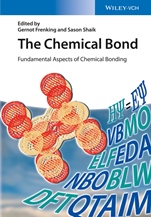
The Chemical Bond: Fundamental Aspects of Chemical Bonding
ISBN 9783527333141
Autor: Gernot Frenking, Sason Shaik
Wydawca: Wiley
Dostępność: 3-6 tygodni
Cena: 746,55 zł
Przed złożeniem zamówienia prosimy o kontakt mailowy celem potwierdzenia ceny.
ISBN13: |
9783527333141 |
ISBN10: |
3527333142 |
Autor: |
Gernot Frenking, Sason Shaik |
Oprawa: |
Hardback |
Rok Wydania: |
2014-05-21 |
Ilość stron: |
438 |
Wymiary: |
251x180 |
Tematy: |
PN |
One of the fundamental territories of chemistry is the chemical bond, the glue from which an entire chemical universe is constructed. For a while it seemed that Chemists have, by and large, abandoned their territory as if everything about bonding is known and well understood; the frontier has moved to Nano and Bio, leaving the original territory untended. This however was a wrong impression, since the interest in bonding has quickly revived to be accompanied by many interesting theoretical approaches to probe the origins of bonds, many novel bonding motifs, and even experimental studies that describe imaging of bonds being broken and remade using atomic force microscopy. The bond is becoming again a central intellectual arena. Enormous progress was made in recent time in method development which gives insight into the chemical bond using calculated numbers which come from sophisticated quantum chemical methods in line with the famous statement of Charles Coulson: "Give us insight not numbers". This "return of the bond" has prompted the two editors to edit these two volumes on bonding, and it is only fitting that their publication date is close to the centenary of the Lewis seminal paper on electron pair bonding. The two volumes are meant to attract the interest of the practicing chemist, teachers and advanced students who may want to learn about the present understanding of chemical bonding. Volume 1 contains eleven chapters, which provide the theoretical frameworks of the various perspectives on bonding, coming from VB and MO theories, ELF, AIM, NBO, BLW and EDA. This Volume lays the foundations for the applications across the periodic table.
Preface XIII List of Contributors XXIII 1 The Physical Origin of Covalent Bonding 1 Michael W. Schmidt, Joseph Ivanic, and Klaus Ruedenberg 1.1 The Quest for a Physical Model of Covalent Bonding 1 1.2 Rigorous Basis for Conceptual Reasoning 3 1.2.1 Physical Origin of the Ground State 3 1.2.2 Physical Origin of Ground State Energy Differences 5 1.2.3 Relation between Kinetic and Potential Energies 8 1.3 Atoms in Molecules 10 1.3.1 Quantitative Bonding Analyses Require Quasi–Atoms in a Molecule 10 1.3.2 Primary and Secondary Energy Contributions 10 1.3.3 Identification of Quasi–Atoms in a Molecule 11 1.4 The One–Electron Basis of Covalent Binding: H + 2 13 1.4.1 Molecular Wave Function as a Superposition of Quasi–Atomic Orbitals 13 1.4.2 Molecular Electron Density and Gradient Density as Sums of Intra–atomic and Interatomic Contributions 16 1.4.2.1 Resolution of the Molecular Density 16 1.4.2.2 Resolution of the Molecular Gradient Density 17 1.4.3 Dependence of Delocalization and Interference on the Size of the Quasi–Atomic Orbitals 18 1.4.3.1 Charge Accumulation at the Bond Midpoint 19 1.4.3.2 Total Charge Accumulation in the Bond 19 1.4.3.3 Origin of the Relation between Interference and Quasi–Atomic Orbital Contraction/Expansion 20 1.4.4 Binding Energy as a Sum of Two Intra–atomic and Three Interatomic Contributions 22 1.4.5 Quantitative Characteristics of the Five Energy Contributions 24 1.4.5.1 Intra–atomic Deformation Energy: Eintra = Tintra +Vintra 24 1.4.5.2 Quasi–Classical Interaction between the Atoms: Vqc 24 1.4.5.3 Potential Interference Energy: VI 25 1.4.5.4 Kinetic Interference Energy: TI 25 1.4.5.5 Interference Energies and Quasi–Atomic Orbital Contraction and Expansion 25 1.4.6 Synergism of the Binding Energy Contributions along the Dissociation Curve 27 1.4.6.1 First Column: Zeroth Order Approximation to A, B by the 1sA, 1sB Hydrogen Atom Orbitals 27 1.4.6.2 Second Column: Optimal Spherical Approximation to A, B by the Scaled Orbitals 1sA∗, 1sB∗ 29 1.4.6.3 Third Column: Exact Quasi–Atomic Orbitals A, B 30 1.4.6.4 Conclusion 30 1.4.7 Origin of Bonding at the Equilibrium Distance 30 1.4.7.1 Contributions to the Binding Energy 30 1.4.7.2 Energy Lowering By Electron Sharing 31 1.4.7.3 Energy Lowering by Quasi–Atomic Orbital Deformation 32 1.4.7.4 Variational Perspective 32 1.4.7.5 General Implications 33 1.5 The Effect of Electronic Interaction in the Covalent Electron Pair Bond: H2 34 1.5.1 Quasi–Atomic Orbitals of the FORS Wave Function 35 1.5.2 FORS Wave Function and Density in Terms of Quasi–Atomic Orbitals 38 1.5.3 Binding Energy as a Sum of Two Intra–atomic and Five Interatomic Contributions 39 1.5.3.1 Overall Resolution 39 1.5.3.2 Interatomic Coulombic Contributions 40 1.5.3.3 Interatomic Interference Contributions 41 1.5.3.4 Binding Energy as a Sum of Two Intra–atomic and Five Interatomic Contributions 42 1.5.4 Quantitative Synergism of the Contributions to the Binding Energy 42 1.5.4.1 Quantitative Characteristics 42 1.5.4.2 Synergism along the Dissociation Curve 43 1.5.5 Origin of Bonding at the Equilibrium Distance 45 1.5.5.1 The Primary Mechanism as Exhibited by Choosing the Free–Atom Orbitals as Quasi–Atomic Orbitals 46 1.5.5.2 Effect of Quasi–Atomic Orbital Contraction 46 1.5.5.3 Effect of Polarization 47 1.5.5.4 Binding in the Electron Pair Bond of H2 47 1.5.6 Electron Correlation Contribution to Bonding in H2 48 1.6 Covalent Bonding in Molecules with More than Two Electrons: B2, C2, N2, O2, and F2 51 1.6.1 Basis of Binding Energy Analysis 52 1.6.2 Origin of Binding at the Equilibrium Geometry 53 1.6.3 Synergism along the Dissociation Curve 57 1.6.4 Effect of Dynamic Correlation on Covalent Binding 61 1.7 Conclusions 62 Acknowledgments 65 References 65 2 Bridging Cultures 69 Philippe C. Hiberty and Sason Shaik 2.1 Introduction 69 2.2 A Short History of the MO/VB Rivalry 69 2.3 Mapping MO–Based Wave Functions to VB Wave Functions 74 2.4 Localized Bond Orbitals – A Pictorial Bridge between MO and VB Wave Functions 78 2.5 Block–Localized Wave Function Method 79 2.6 Generalized Valence Bond Theory: a Simple Bridge from VB to MOs 80 2.7 VB Reading of CASSCF Wave Functions 82 2.8 Natural Bonding Orbitals and Natural Resonance Theory – a Direct Bridge between MO and VB 83 2.8.1 Natural Bonding Orbitals 83 2.8.2 Natural Resonance Theory 84 2.9 The Mythical Conflict of Hybrid Orbitals with Photoelectron Spectroscopy 85 2.10 Conclusion 87 Appendix 88 References 88 3 The NBO View of Chemical Bonding 91 Clark R. Landis and Frank Weinhold 3.1 Introduction 91 3.2 Natural Bond Orbital Methods 92 3.2.1 NBO Analysis of Free Atoms and Atoms in Molecular Environments 97 3.2.2 NBO Analysis of Simple Chemical Bonds: LiOH and H2O 99 3.2.3 Lewis–Like Structures of the P– and D–Block Elements 101 3.2.4 Unrestricted Calculations and Different Lewis Structures for Different Spins (DLDS) 104 3.3 Beyond Lewis–Like Bonding: The Donor–Acceptor Paradigm 106 3.3.1 Hyperconjugative Effects in Bond Bending 110 3.3.2 C3H3 Cation, Anion, and Radical: Aromaticity, Jahn–Teller Distortions, Resonance Structures, and 3c/2e Bonding 111 3.3.3 3c/4e Hypervalency 114 3.4 Conclusion 117 References 118 4 The EDA Perspective of Chemical Bonding 121 Gernot Frenking and F. Matthias Bickelhaupt 4.1 Introduction 121 4.2 Basic Principles of the EDA Method 125 4.3 The EDA–NOCV Method 126 4.4 Chemical Bonding in H2 and N2 127 4.5 Comparison of Bonding in Isoelectronic N2, CO and BF 133 4.6 Bonding in the Diatomic Molecules E2 of the First Octal Row E=Li–F 135 4.7 Bonding in the Dihalogens F2 – I2 144 4.8 Carbon–Element Bonding in CH3–X 146 4.9 EDA–NOCV Analysis of Chemical Bonding in the Transition State 148 4.10 Summary and Conclusion 155 Acknowledgements 156 References 156 5 The Valence Bond Perspective of the Chemical Bond 159 Sason Shaik, David Danovich, Wei Wu, and Philippe C. Hiberty 5.1 Introduction 159 5.2 A Brief Historical Recounting of the Development of the Chemical Bond Notion 160 5.3 The Pauling–Lewis VB Perspective of the Electron–Pair Bond 162 5.4 A Preamble to the Modern VB Perspective of the Electron–Pair Bond 165 5.5 Theoretical Characterization of Bond Types by VB and Other Methods 168 5.5.1 VB Characterization of Bond Types 168 5.5.2 ELF and AIM Characterization of Bond Types 169 5.5.2.1 ELF Characterization of Bond Types 169 5.5.2.2 AIM Characterization of Bond Types 170 5.6 Trends of Bond Types Revealed by VB, AIM and ELF 170 5.6.1 VB and AIM Converge 170 5.6.2 VB and ELF Converge 173 5.6.3 Convergence of VB, ELF and AIM 176 5.6.4 The Three Bonding Families 176 5.7 Physical Origins of CS Bonding 178 5.7.1 The Role of Atomic Size 178 5.7.2 The Role of Pauli Repulsion Pressure 179 5.8 Global Behavior of Electron–Pair Bonds 181 5.9 Additional Factors of CS Bonding 183 5.10 Can a Covalent Bond Become CS Bonds by Substitution? 184 5.11 Experimental Manifestations of CS Bonding 187 5.11.1 Marks of CS Bonding from Electron Density Measurements 187 5.11.2 Marks of CS Bonding in Atom Transfer Reactivity 188 5.11.3 Marks of CS Bonding in the Ionic Chemistry of Silicon in Condensed Phases 189 5.12 Scope and Territory of CS Bonding 190 5.12.1 Concluding Remarks 191 Appendix 192 5.A Modern VB Methods 192 5.B The Virial Theorem 193 5.C Resonance Interaction and Kinetic Energy 195 References 195 6 The Block–Localized Wavefunction (BLW) Perspective of Chemical Bonding 199 Yirong Mo 6.1 Introduction 199 6.2 Methodology Evolutions 202 6.2.1 Simplifying Ab Initio VB Theory to the BLW Method 202 6.2.2 BLW Method at the DFT Level 204 6.2.3 Decomposing Intermolecular Interaction Energies with the BLW Method 205 6.2.4 Probing Electron Transfer with BLW–Based Two–State Models 207 6.3 Exemplary Applications 209 6.3.1 Benzene: Evaluating the Geometrical and Energetic Impacts from π Conjugation 209 6.3.2 Butadiene: The Rotation Barrier Versus the Conjugation Magnitude 214 6.3.3 Ethane: What Force(s) Governs the Conformational Preference? 217 6.3.4 H3B–NH3: Quantifying the Electron Transfer Effect in Donor–Acceptor Complexes 221 6.4 Conclusion 223 6.5 Outlook 225 Acknowledgements 225 References 225 7 The Conceptual Density Functional Theory Perspective of Bonding 233 Frank De Proft, Paul W. Ayers, and Paul Geerlings 7.1 Introduction 233 7.2 Basics of DFT: The Density as a Fundamental Carrier of Information and How to Obtain It 235 7.3 Conceptual DFT: A Perturbative Approach to Chemical Reactivity and the Process of Bond Formation 238 7.3.1 Basics: Global and Local Response Functions 238 7.3.1.1 Global Response Functions 240 7.3.1.2 Local Response Functions 242 7.3.1.3 Nonlocal Response Functions: the Linear Response Kernel 249 7.3.2 Combined use of DFT–Based Reactivity Indices and Principles in the Study of Chemical Bonding 252 7.3.2.1 Principle of Electronegativity Equalization 252 7.3.2.2 Hard and Soft Acids and Bases Principle 256 7.3.2.3 Berlin’s Approach in a Conceptual DFT Context: the Nuclear Fukui Function 261 7.4 Conclusions 264 Acknowledgments 264 References 265 8 The QTAIM Perspective of Chemical Bonding 271 Paul Lode Albert Popelier 8.1 Introduction 271 8.2 Birth of QTAIM: the Quantum Atom 274 8.3 The Topological Atom: is it also a Quantum Atom? 278 8.4 The Bond Critical Point and the Bond Path 284 8.5 Energy Partitioning Revisited 295 8.6 Conclusion 302 Acknowledgment 303 References 303 9 The Experimental Density Perspective of Chemical Bonding 309 Wolfgang Scherer, Andreas Fischer, and Georg Eickerling 9.1 Introduction 309 9.2 Asphericity Shifts and the Breakdown of the Standard X–ray Model 311 9.3 Precision of Charge Density Distributions in Experimental and Theoretical Studies 313 9.4 Core Density Deformations Induced by Chemical Bonding 322 9.5 How Strongly Is the Static Electron Density Distribution Biased by Thermal Motion? 325 9.6 Relativistic Effects on the Topology of Electron Density 326 9.7 The Topology of the Laplacian and the MO Picture – Two Sides of the Same Coin? 330 9.8 Elusive Charge Density Phenomena: Nonnuclear Attractors 333 References 339 10 The ELF Perspective of chemical bonding 345 Yuri Grin, Andreas Savin, and Bernard Silvi 10.1 Introduction 345 10.1.1 Context 345 10.1.1.1 Chemical structure given by the electronic structure 345 10.1.1.2 Molecules and crystals are objects in three dimensions 345 10.1.2 Choices 346 10.1.2.1 Fix the nuclei 346 10.1.2.2 Compute, then analyze 346 10.1.2.3 Choose regions of space 346 10.2 Definitions 347 10.2.1 Definition of the Electron Localization Function (ELF) 347 10.2.2 Definition of auxiliary quantities 348 10.2.2.1 ELF maxima 348 10.2.2.2 Spatial regions: f –localization domains 349 10.2.2.3 Bifurcation diagrams 350 10.2.2.4 Spatial regions: Basins 351 10.2.2.5 ELF terminology 351 10.2.2.6 Quantities obtained for ELF basins 352 10.2.2.7 ELF from experimental data 353 10.2.2.8 Simplified forms of ELF 354 10.2.3 Hints for interpretation 354 10.2.3.1 ELF and mesomery 354 10.2.3.2 How important is a maximum? 354 10.2.3.3 When several maxima merge into a single one 355 10.2.3.4 Hidden bonding 355 10.2.3.5 Electron counting: oxidation numbers and formal charges 356 10.2.4 Sensitivity of ELF to technical details 356 10.3 Simple examples 358 10.3.1 Atoms and ions 358 10.3.1.1 Atomic shells and cores 358 10.3.1.2 Structured cores: TiH4, CrH6 359 10.3.1.3 Ions 359 10.3.1.4 Squeezing effects 359 10.3.2 Bonds and lone pairs 360 10.3.2.1 Bonds: C2H6, diamond 360 10.3.2.2 Multiple bonds: Allene 361 10.3.2.3 Lone pairs: NH3, H2O, ice 361 10.3.2.4 Multicenter bonds: B2H6 362 10.3.2.5 Cylindrical symmetry effects: C2H2, HF 362 10.3.2.6 Delocalization: Butadiene, benzene 363 10.3.3 Molecular reactions 364 10.3.3.1 Proton transfer in malonaldehyde 364 10.3.3.2 Aliphatic nucleophilic substitution SN2 366 10.3.3.3 Diels Alder addition 367 10.4 Solids 369 10.4.1 Ionic compounds 369 10.4.2 Molecular compounds 370 10.4.3 Elemental metals 370 10.4.4 Intermetallic compounds 372 10.4.4.1 Zintl–Klemm concept and ELF 372 10.4.4.2 ELF for penultimate shells of transition metals 373 10.4.4.3 Case of Al2Cu 374 10.4.4.4 Surprises 374 10.5 Perspectives 375 Appendix 376 10.A Mathematical expressions of calculated basin properties 376 10.A.1 Basin populations 376 10.A.2 Variance and covariance of basin populations 377 10.A.3 Probability distributions 378 10.A.4 Basin electrostatic moments 378 10.A.5 Combining ELF and AIM approaches 378 10.A.6 Potential energy contributions 379 10.A.7 Miscellaneous 379 References 380 11 Relativity and Chemical Bonding 383 Peter Schwerdtfeger 11.1 Introduction 383 11.2 Direct and Indirect Relativistic Effects and Spin–Orbit Coupling 387 11.2.1 Scalar–Relativistic Effects 387 11.2.2 Spin–Orbit Effects 391 11.3 Chemical Bonding and Relativistic Effects 393 11.4 Conclusions 400 Acknowledgments 400 References 400 Index 405
Gernot Frenking studied chemistry at the Technical University Aachen (Germany). He then became a research atudent in the group of Prof. Kenichi Fukui in Kyoto (Japan) and completed his PhD and his habilitation at Technical University Berlin (Germany). He was then a visiting scientist at the University of California, Berkeley (USA) and a staff scientist at SRI International in Menlo Park, California (USA). Since 1990 he is Professor for Computational Chemistry at the Philipps–Universität Marburg. Sason Shaik is a graduate of the University of Washington (USA), where he also obtained his PhD. After a postdoctoral year at Cornell University, he became Lecturer at Ben–Gurion University of the Negev (Israel), where he became Professor in 1988. In 1992 he moved to The Hebrew University where he is Professor and the Director of the Lise Meitner–Minerva Center for Computational Quantum Chemistry.
Koszyk
Książek w koszyku: 0 szt.
Wartość zakupów: 0,00 zł
Informacje


Kontakt
Gambit
Centrum Oprogramowania
i Szkoleń Sp. z o.o.
Al. Pokoju 29b/22-24
31-564 Kraków
Siedziba Księgarni
ul. Kordylewskiego 1
31-542 Kraków
+48 12 410 5991
+48 12 410 5987
+48 12 410 5989
Subskrypcje
Administratorem danych osobowych jest firma Gambit COiS Sp. z o.o. Na podany adres będzie wysyłany wyłącznie biuletyn informacyjny.
Autoryzacja płatności

Informacje na temat autoryzacji płatności poprzez PayU.

© Copyright 2012: GAMBIT COiS Sp. z o.o. Wszelkie prawa zastrzeżone.
Projekt i wykonanie: Alchemia Studio Reklamy