


Wydawcy
Katalog tematyczny
- Archeologia (109)
- Ekonomia, finanse, business (13704)
- Filozofia (1445)
- Historia (3040)
- Języki i językoznawstwo (2356)
- Lifestyle, hobby i rozrywka (475)
- Medycyna (9704)
- Nauki humanistyczne (4)
- Nauki o Ziemi i środowisku (2638)
- Nauki ścisłe (20412)
- Astronomia (294)
- Biologia (5119)
- Chemia (6540)
- Chemia analityczna (361)
- Chemia fizyczna (346)
- Chemia nieorganiczna (137)
- Chemia organiczna (535)
- Krystalografia (27)
- Minerologia (46)
- Fizyka (3309)
- Matematyka (4574)
- Nauki ścisłe, ogólnie (503)
- Nauki społeczne (8486)
- Nauki techniczne (13450)
- Prawo (1696)
- Publikacje informacyjne i interdyscyplinarne (1288)
- Religia i wierzenia (917)
- Technika komputerowa (4067)
- Zdrowie, relacje międzyludzkie i rozwój osobisty (657)





Informacje szczegółowe o książce
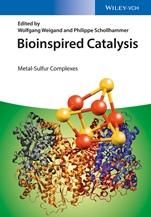
Bioinspired Catalysis: Metal–Sulfur Complexes
ISBN 9783527333080
Autor: Wolfgang Weigand, Philippe Schollhammer
Wydawca: Wiley
Dostępność: 3-6 tygodni
Cena: 801,15 zł
Przed złożeniem zamówienia prosimy o kontakt mailowy celem potwierdzenia ceny.
ISBN13: |
9783527333080 |
ISBN10: |
3527333088 |
Autor: |
Wolfgang Weigand, Philippe Schollhammer |
Oprawa: |
Hardback |
Rok Wydania: |
2014-10-08 |
Ilość stron: |
440 |
Wymiary: |
251x172 |
Tematy: |
PN |
The growing interest in green chemistry calls for new, efficient and cheap catalysts. Living organisms contain a wide range of remarkably powerful enzymes, which can be imitated by chemists in the search for new catalysts. In bioinspired catalysis, chemists use the basic principles of biological enzymes when creating new catalyst analogues. In this book, an international group of experts cover the topic from theoretical aspects to applications by including a wide variety of examples of different systems. This valuable overview of bioinspired metal–sulfur catalysis is a must–have for all scientists working in this hot field, including PhD students, postdocs and researchers.
List of Contributors XIII Preface XVII Part I PrimordialMetal–Sulfur–Mediated Reactions 1 1 FromChemical Invariance to Genetic Variability 3 Günter Wächtershäuser 1.1 Heuristic of Biochemical Retrodiction 3 1.2 Retrodicting the Elements of Life 5 1.3 Retrodicting Pioneer Catalysis 6 1.4 Retrodicting Metabolic Reproduction and Evolution 10 1.5 Retrodicting Pioneer–Metabolic Reactions 11 1.6 Early Evolution in a Spatiotemporal Flow Context 13 Acknowledgments 16 References 16 2 Fe–S Clusters: Biogenesis and Redox, Catalytic, and Regulatory Properties 21 Yvain Nicolet and Juan C. Fontecilla–Camps 2.1 Introduction 21 2.2 Fe–S Cluster Biogenesis and Trafficking 22 2.3 Redox Properties of Fe–S Clusters 27 2.4 Fe–S Clusters and Catalysis 28 2.4.1 Redox Catalysis 28 2.4.2 Nonredox Fe–S Cluster–Based Catalysis 30 2.5 Fe–S Clusters and Oxidative Stress 32 2.6 Regulation of Protein Expression by Fe–S Clusters 33 2.6.1 Eukaryotic Iron Regulatory Protein 1 (IRP1) 34 2.6.2 Bacterial Fumarate Nitrate Reduction Regulator (FNR) 37 2.6.3 The ISC Assembly Machinery Regulator IscR 38 2.7 Conclusion 38 References 39 Part II Model Complexes of the Active Site of Hydrogenases – Proton and Dihydrogen Activation 49 3 [NiFe] Hydrogenases 51 Joe Dawson, Carlo Perotto, Jonathan McMaster, and Martin Schröder 3.1 Introduction 51 3.2 Introduction to [NiFe] Hydrogenases 52 3.3 NickelThiolate Complexes as Analogs of [NiFe] Hydrogenase 52 3.4 [NiFe] Hydrogenase Model Complexes 59 3.4.1 Amine [N2Ni(μ–S2)Fe] Complexes 59 3.4.2 Phosphine [P2Ni(μ–S2)Fe] Complexes 60 3.4.3 Thiolate [SxNi(μ–Sy)Fe] Complexes 63 3.4.4 Polymetallic [Ni(μ–S)zFey] Complexes 65 3.5 Analogs of [NiFe] Hydrogenase Incorporating Proton Relays 67 3.5.1 Nickel Complexes Incorporating Protonation Sites 68 3.5.2 [NiFe] Complexes Incorporating Protonation Sites 72 3.6 Perspectives and Future Challenges 74 Acknowledgments 74 References 74 4 [FeFe] Hydrogenase Models: an Overview 79 Ulf–Peter Apfel, François Y. Pìetillon, Philippe Schollhammer, Jean Talarmin, and Wolfgang Weigand 4.1 Introduction 79 4.2 Synthetic Strategies toward [FeFe] Hydrogenase Model Complexes 81 4.3 Properties of Model Complexes 83 4.3.1 Biomimetic Models of the “Rotated State” 83 4.3.2 Electron Transfer in [FeFe] Hydrogenase Models 84 4.3.3 Protonation Chemistry of [FeFe] Hydrogenase Models 86 4.3.4 Water–Soluble Hydrogenase Mimics 94 4.4 Conclusion 96 References 96 5 The Third Hydrogenase 105 Callum Scullion and John A. Murphy 5.1 Introduction 105 5.2 Initial Studies of Hmd 106 5.3 Discovery that Hmd Contains a Bound Cofactor 109 5.4 Discovery that Hmd is a Metalloenzyme 109 5.5 Crystal Structure Studies of [Fe] Hydrogenase 111 5.6 Mechanistic Models of [Fe] Hydrogenase 118 5.6.1 Studies Before the Most Recent Assignment of the FeGP Cofactor 118 5.6.2 Studies After the Most Recent Assignment of the FeGP Cofactor 120 5.6.3 Synthesized Model Complexes of the FeGP Cofactor 126 References 134 6 DFT Investigation of Models Related to the Active Site of Hydrogenases 137 Claudio Greco and Luca De Gioia 6.1 Introduction 137 6.2 QM Studies of Hydrogenases 138 6.3 QM Studies of Synthetic Complexes Related to the Active Site of Hydrogenases 145 6.3.1 DFT Studies about Structural and Redox Properties of Synthetic Complexes Related to the Active Site of [FeFe] Hydrogenases 146 6.3.2 DFT Studies about the Reactivity of Synthetic Models Related to the Active Site of [FeFe] Hydrogenases 149 6.3.3 DFT Studies about Regiochemistry of Protonation of Synthetic Complexes Related to the Active Site of [FeFe] Hydrogenases 152 6.3.4 DFT Studies about the Isomerization of Synthetic Complexes Related to the Active Site of [FeFe] Hydrogenases 154 6.4 Conclusions 156 References 156 7 Mechanistic Aspects of Biological Hydrogen Evolution and Uptake 161 Joseph A.Wright and Christopher J. Pickett 7.1 Introduction 161 7.2 [FeFe] Hydrogenases 161 7.2.1 Overview of the Catalytic Cycle 161 7.2.2 The Nature of the Bridgehead Atom 163 7.2.3 Structural Features of the Resting State (Hox) and Reduced State (Hred) of the Active Site 164 7.2.4 Relationship between Structural and Spectroscopic Properties of Hox, Hred, and Hsred 164 7.2.5 The Rotated State and Mixed Valency: Synthetic Systems 167 7.2.6 Hydrides 170 7.2.7 Hydrides and Electrocatalysis of Hydrogen Evolution 174 7.2.8 Dihydrogen Oxidation 177 7.2.9 Final Comments 180 7.3 [NiFe] Hydrogenases 180 7.3.1 Overview of the Catalytic Cycle 180 7.3.2 Structural Models of Ni–A, Ni–B, and Ni–SI States 182 7.3.3 Hydride Chemistry Related to Ni–C/Ni–R: Functional Models 183 7.3.4 Final Comments 186 7.4 [Fe] Hydrogenase 186 7.4.1 Overview 186 7.4.2 Biological Mechanism 187 7.4.3 Model Studies 189 7.4.4 Final Comments 191 7.5 Nitrogenase 191 7.5.1 Overview 191 7.5.2 Hydrogen Evolution by Mo–Nitrogenase 192 7.5.3 Paramagnetic Bridging Fe/Fe Hydrides 193 7.5.4 Final Comments 194 References 194 Part III Nitrogen Fixation 199 8 Structures and Functions of the Active Sites of Nitrogenases 201 Chi Chung Lee, Jared A.Wiig, Yilin Hu, and Markus W. Ribbe 8.1 Introduction 201 8.2 Properties of Mo Nitrogenase 202 8.2.1 Properties of Fe Protein and its Associated Cluster 202 8.2.2 Properties of MoFe Protein and its Associated Clusters 204 8.3 Catalysis by Mo Nitrogenase 206 8.3.1 TheThorneley–Lowe Model 207 8.3.2 Recent Development 210 8.4 Unique Features of V Nitrogenase 213 8.4.1 Structural Features of Fe Protein and itsAssociated Cluster 213 8.4.2 Structural Features of VFe Protein and its Associated Clusters 214 8.4.3 Catalytic Features of V Nitrogenase 217 8.5 Catalytic Properties of Isolated FeMo–co and FeVco 220 Acknowledgments 221 References 221 9 Model Complexes of the Active Site of Nitrogenases: Recent Advances 225 Frédéric Barrière 9.1 Introduction 225 9.2 Structural Models of Metal–Sulfur Clusters in the Nitrogenases 227 9.3 Functional Modeling at a Single Molybdenum Center 229 9.4 Functional Modeling at a Single Iron Center 231 9.5 The Hydrogen and Homocitrate Issues in Nitrogenase Model Chemistry 235 9.6 Sulfur– and Metal–Metal Interaction in Functional Models of Nitrogenase 238 9.7 Surface Chemistry and the Supramolecular Protein Environment 242 9.8 Conclusion and Outlook 243 References 245 10 A Unified ChemicalMechanism for Hydrogenation Reactions Catalyzed by Nitrogenase 249 Ian Dance 10.1 Introduction 249 10.1.1 Nitrogenase: the Enzyme 249 10.1.2 FeMo–co 250 10.1.3 Where Does the Catalysis Occur on FeMo–co? 251 10.2 Investigations of Mechanism 251 10.2.1 Density Functional Simulations 252 10.2.2 The Coordination Chemistry of FeMo–co 253 10.2.3 Electronic Structure of FeMo–co 254 10.3 Hydrogen Supply for the Reactions of Nitrogenase 254 10.3.1 Multiple Protons are Needed for Catalytic Reaction Cycles 254 10.3.2 The Proton Supply Chain 255 10.3.3 Hydrogenation of FeMo–co 256 10.3.4 Hydrogen Atom Migration over FeMo–co 257 10.4 FeMo–co in Nitrogenase as a General Hydrogenating Machine 259 10.4.1 Modes of Substrate Binding to FeMo–co 259 10.4.2 Vectorial Hydrogenation of FeMo–co in Relation to Substrate Binding 260 10.4.3 The Intramolecular Hydrogenation Paradigm for the Catalytic Reactivity of FeMo–co 261 10.5 Chemical Mechanisms for the Catalysis of Substrate Hydrogenation at FeMo–co 263 10.5.1 How Does N2 Bond to FeMo–co? 263 10.5.2 Proposed Intimate Chemical Mechanism for the Catalysis of Hydrogenation of N2 to NH3 at FeMo–co 264 10.6 Hydrogen Tunneling in the Nitrogenase Mechanism 267 10.6.1 Characteristics of H Atom Tunneling in Enzyme Reactions 267 10.6.2 Characteristics of H–Atom Transfer in Nitrogenase 268 10.7 Intramolecular Hydrogenation of Other Substrates 270 10.7.1 Formation of Dihydrogen 270 10.7.2 Hydrogenation of Alkynes 270 10.7.3 Hydrogenation of D2: the HD Reaction 273 10.7.4 Hydrogenation of CO and CO2 273 10.8 Interpretation of the Structure of FeMo–co and Its Surrounds 277 10.9 Mimicking Nitrogenase 278 10.10 Summary and Epilog 279 Acknowledgments 280 References 280 11 Binding Substrates to Synthetic Fe–S–Based Clusters and the Possible Relevance to Nitrogenases 289 Richard A. Henderson 11.1 Introduction 289 11.2 Mechanism of Nitrogenases 290 11.2.1 Detecting Substrates and Intermediates Bound to the Enzyme 292 11.2.2 Exploring Intermediates in the Enzyme Mechanism Using Calculations 294 11.3 Studies on Synthetic Clusters 296 11.3.1 Evidence for Substrates Bound to Synthetic Clusters 296 11.3.2 Mechanisms of Substrates Binding to Fe–S–Based Clusters 299 11.3.3 Mechanisms Peculiar to Clusters 303 11.3.4 Influence of Cluster Composition on Substrate Binding 304 11.3.5 Transient Binding of Substrates to Clusters 305 11.3.6 Protonation of Clusters 310 11.4 Studies on Extracted FeMo–Cofactor 316 11.4.1 Evidence for Substrates Binding to Extracted FeMo–Cofactor 316 11.4.2 Rates of Substrate Binding to Extracted FeMo–Cofactor 318 11.5 The Future 320 References 321 Part IV Miscellaneous: CO, RCN Activation, DMSO Reduction 325 12 Sulfur–Oxygenation and FunctionalModels of Nitrile Hydratase 327 Davinder Kumar and Craig A. Grapperhaus 12.1 Introduction 327 12.2 Nitrile Hydratase 327 12.2.1 Significance 327 12.2.2 Enzyme Active Site 328 12.2.3 Reaction Cycle 329 12.3 Small–Molecule Mimics 330 12.4 Early S–Oxygenation Studies 332 12.5 Sulfur–Oxygenation of Co(III) NHase Mimics 333 12.5.1 N2S2 Co(III) Model Complexes 334 12.5.2 N3S2 Co(III) Model Complexes 335 12.5.3 N2S3 Co(III) Model Complexes 337 12.6 Sulfur–Oxygenation of Fe(III) NHase Mimics 339 12.6.1 N2S2–Fe(III) Model Complexes 339 12.6.2 N3S2–Fe(III) Model Complexes 340 12.6.3 N2S3 Fe(III) Model Complexes 341 12.7 Ruthenium Complexes 343 12.8 Conclusions/Challenges 344 Abbreviations 345 References 345 13 Molybdenum and Tungsten Oxidoreductase Models 349 Carola Schulzke and Ashta Chandra Ghosh 13.1 Introduction 349 13.2 Classification of Molybdenum– and Tungsten–Dependent Enzymes 351 13.3 Ligand Systems Commonly Used in Model Studies 353 13.4 Selected Molybdenum–Containing Enzymes and Relevant Modeling Chemistry 355 13.4.1 Enzymes of the Xanthine Oxidase (XO) Family 355 13.4.2 The Sulfite Oxidase (SO) Family 360 13.4.3 The DMSO Reductase (DMSOR) Family 365 13.5 Selected Tungsten–Containing Enzymes and Relevant Model Chemistry 372 13.5.1 The Aldehyde Ferredoxin Oxidoreductase (AOR) Family 372 13.5.2 The Formate Dehydrogenase (FDH) Family of Enzymes 375 13.5.3 Acetylene Hydratase 376 References 377 Part V Applicative Perspectives 383 14 ElectrodeMaterials and Artificial Photosynthetic Systems 385 Phong D. Tran, Marc Fontecave, and Vincent Artero 14.1 Introduction 385 14.2 Electrode Materials for Hydrogen Evolution 385 14.2.1 Electrode Materials Based on Bio–Inspired Molecular Catalyst 386 14.2.2 Electrode Materials Based on Bio–Inspired All–Inorganic Catalysts 394 14.3 Photoelectrode Materials for Hydrogen Evolution 397 14.3.1 All–Inorganic Photocatalysts Composed of Solid–State Semiconductor and Solid Inorganic Catalyst 397 14.3.2 Solid–State Semiconductor and Molecular Catalyst 399 14.3.3 All–Molecular–Based Electrode Materials 400 14.4 Artificial Photosynthetic Systems 401 14.5 Toward Photoelectrode Materials for CO2 Reduction 404 14.6 Conclusion and Perspective 406 References 407 Index 411
Wolfgang Weigand received his PhD degree from the Ludwigs–Maximilian–University of Munich under the supervision of Professor W. Beck in 1986. After a postdoctoral stay with Professor D. Seebach at ETH Zurich, he finished his habilitation at Ludwigs–Maximilian–University in 1994. Since 1997 he is Professor of Inorganic Chemistry at the Friedrich–Schiller–University Jena. He has received the "Forschungspreis der Thüringer Ministerin für Wissenschaft, Forschung und Kunst" and he is also "Ordentliches Mitglied der Akademie gemeinnütziger Wissenschaften zu Erfurt". Philippe Schollhammer, Professor of Chemistry, obtained his PhD in 1994 at UBO (Université de Bretagne Occidentale, Brest–France) under the supervision of Professor F.Y. Pétillon. In 2001, he joined during a sabbatical leave the group of Professor R.H. Henderson at the University of Newcastle upon Tyne, UK. His current research interests include activation of small molecules by organometallic dinuclear complexes.
Koszyk
Książek w koszyku: 0 szt.
Wartość zakupów: 0,00 zł
Informacje


Kontakt
Gambit
Centrum Oprogramowania
i Szkoleń Sp. z o.o.
Al. Pokoju 29b/22-24
31-564 Kraków
Siedziba Księgarni
ul. Kordylewskiego 1
31-542 Kraków
+48 12 410 5991
+48 12 410 5987
+48 12 410 5989
Subskrypcje
Administratorem danych osobowych jest firma Gambit COiS Sp. z o.o. Na podany adres będzie wysyłany wyłącznie biuletyn informacyjny.
Autoryzacja płatności

Informacje na temat autoryzacji płatności poprzez PayU.

© Copyright 2012: GAMBIT COiS Sp. z o.o. Wszelkie prawa zastrzeżone.
Projekt i wykonanie: Alchemia Studio Reklamy