


Wydawcy
Katalog tematyczny
- Archeologia (109)
- Ekonomia, finanse, business (13704)
- Filozofia (1445)
- Historia (3040)
- Języki i językoznawstwo (2356)
- Lifestyle, hobby i rozrywka (475)
- Medycyna (9704)
- Nauki humanistyczne (4)
- Nauki o Ziemi i środowisku (2638)
- Nauki ścisłe (20412)
- Astronomia (294)
- Biologia (5119)
- Biochemia (575)
- Biologia człowieka (14)
- Biologia komórkowa (377)
- Biologia molekularna (398)
- Biologia rozwoju (130)
- Biologia, ogólnie (1277)
- Botanika (280)
- Hydrobiologia (92)
- Mikrobiologia (363)
- Mykologia (22)
- Zoologia (303)
- Chemia (6540)
- Fizyka (3309)
- Matematyka (4574)
- Nauki ścisłe, ogólnie (503)
- Nauki społeczne (8486)
- Nauki techniczne (13450)
- Prawo (1696)
- Publikacje informacyjne i interdyscyplinarne (1288)
- Religia i wierzenia (917)
- Technika komputerowa (4067)
- Zdrowie, relacje międzyludzkie i rozwój osobisty (657)





Informacje szczegółowe o książce
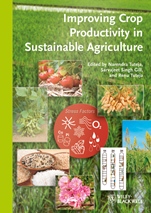
Improving Crop Productivity in Sustainable Agriculture
ISBN 9783527332427
Autor: Narendra Tuteja, Sarvajeet S. Gill, Renu Tuteja
Wydawca: Wiley
Dostępność: 3-6 tygodni
Cena: 746,55 zł
Przed złożeniem zamówienia prosimy o kontakt mailowy celem potwierdzenia ceny.
ISBN13: |
9783527332427 |
ISBN10: |
3527332421 |
Autor: |
Narendra Tuteja, Sarvajeet S. Gill, Renu Tuteja |
Oprawa: |
Hardback |
Rok Wydania: |
2012-12-05 |
Ilość stron: |
536 |
Wymiary: |
249x177 |
Tematy: |
PS |
An up–to–date overview of current progress in improving crop quality and quantity using modern methods. With a particular emphasis on genetic engineering, this text focuses on crop improvement under adverse conditions, paying special attention to such staple crops as rice, maize, and pulses. It includes an excellent mix of specific examples, such as the creation of nutritionally–fortified rice and a discussion of the political and economic implications of genetically engineered food. The result is a must–have hands–on guide, ideally suited for the biotech and agroindustries.
Foreword XIX Preface XXI List of Contributors XXV PART I Climate Change and Abiotic Stress Factors 1 1 Climate Change and Food Security 3 R.B. Singh 1.1 Background and Introduction 3 1.2 State of Food Security 6 1.3 Climate Change Impact and Vulnerability 9 1.4 Natural Resources Management 13 1.5 Adaptation and Mitigation 17 1.6 Climate Resilient Agriculture – The Way Forward 18 References 22 2 Improving Crop Productivity under Changing Environment 23 Navjot K. Dhillon, Satbir S. Gosal, and Manjit S. Kang 2.1 Introduction 23 2.1.1 Global Environmental Change Alters Crop Targets 28 2.1.2 Crop Productivity 28 2.1.3 Climatic Factors Affecting Crop Production 29 2.1.4 Plant Genetic Engineering 31 2.1.5 Molecular Breeding 39 2.2 Conclusions 40 References 40 3 Genetic Engineering for Acid Soil Tolerance in Plants 49 Sagarika Mishra, Lingaraj Sahoo, and Sanjib K. Panda 3.1 Introduction 49 3.2 Phytotoxic Effect of Aluminum on Plant System 50 3.2.1 Al–Induced Morphophysiological Changes in Roots 50 3.2.2 Negative Influence of Al on Cytoskeletal Network of Plant Cells 51 3.2.3 Interaction of Al3þ Ions with Cell Wall and Plasma Membrane 52 3.2.4 Oxidative Stress Response upon Al Stress 52 3.3 Aluminum Tolerance Mechanisms in Plants 53 3.3.1 Preventing the Entry of Al into Plant Cell 53 3.3.2 Role of Organic Acids in External and Internal Detoxification of Al 54 3.4 Aluminum Signal Transduction in Plants 55 3.5 Genetic Approach for Development of Al–Tolerant Plants 56 3.6 Transcriptomics and Proteomics as Tools for Unraveling Al Responsive Genes 59 3.7 Future Perspectives 60 References 61 4 Evaluation of Tropospheric O3 Effects on Global Agriculture: A New Insight 69 Richa Rai, Abhijit Sarkar, S.B. Agrawal, and Madhoolika Agrawal 4.1 Introduction 69 4.2 Tropospheric O3 Formation and Its Recent Trend 71 4.2.1 Projected Trends of Ozone Concentrations 74 4.3 Mechanism of O3 Uptake 75 4.3.1 Mode of Action 76 4.3.2 O3 Sensing and Signal Transduction 76 4.3.3 ROS Detoxification Mechanisms: From Apoplast to Symplast 77 4.3.4 Physiological Responses 80 4.3.5 Cultivar Sensitivity in Relation to Growth and Yield 84 4.4 Looking Through the “–Omics” at Post–Genomics Era 87 4.4.1 Evolution of Multi–Parallel “–Omics” Approaches in Modern Biology 87 4.4.2 “–Omics” Response in Ozone–Affected Crop Plants: An In Vivo Assessment 87 4.5 Different Approaches to Assess Impacts of Ozone on Agricultural Crops 92 4.6 Tropospheric O3 and Its Interaction with Other Components of Global Climate Change and Abiotic Stresses 94 4.6.1 Elevated CO2 and O3 Interaction 94 4.6.2 O3 and Drought Interaction 95 4.6.3 O3 and UV–B Interaction 95 4.7 Conclusions 96 References 97 PART II Methods to Improve Crop Productivity 107 5 Mitogen–Activated Protein Kinases in Abiotic Stress Tolerance in Crop Plants: “–Omics” Approaches 109 Monika Jaggi, Meetu Gupta, Narendra Tuteja, and Alok Krishna Sinha 5.1 Introduction 109 5.2 MAPK Pathway and Its Components 112 5.2.1 MAP3Ks 112 5.2.2 MAP2Ks 114 5.2.3 MAPKs 114 5.3 Plant MAPK Signaling Cascade in Abiotic Stress 115 5.3.1 MAPK Cascades under Salt Stress 117 5.3.2 Drought Stress–Induced MAPKs 117 5.3.3 Temperature Stress Response and MAPK Cascades 119 5.3.4 Activation of MAPKs by Oxidative Stress 120 5.3.5 Ozone–Induced MAPKs 121 5.3.6 Wounding–Induced MAPKs 121 5.3.7 MAPKs in Heavy Metal Signaling 122 5.4 Crosstalk between Plant MAP Kinases in Abiotic Stress Signaling 122 5.5 “–Omics” Analyses of Plants under Abiotic Stress 123 5.6 Conclusions and Future Perspectives 127 Acknowledgments 128 References 128 6 Plant Growth Promoting Rhizobacteria–Mediated Amelioration of Abiotic and Biotic Stresses for Increasing Crop Productivity 133 Vasvi Chaudhry, Suchi Srivastava, Puneet Singh Chauhan, Poonam C. Singh, Aradhana Mishra, and Chandra Shekhar Nautiyal 6.1 Introduction 133 6.2 Factors Affecting Plant Growth 134 6.2.1 Biotic Stress 135 6.2.2 Abiotic Stress 135 6.3 Plant–Mediated Strategies to Elicit Stresses 136 6.3.1 Osmoadaptation 137 6.3.2 Antioxidative Enzyme Production 137 6.3.3 Effect of Stress on Plant Nutrient Uptake 137 6.4 Plant Growth Promoting Rhizobacteria–Mediated Beneficiaries to the Environment 138 6.4.1 PGPR as Abiotic Stress Ameliorating Agent 138 6.4.2 PGPR Action against Multiple Pathogens 139 6.4.3 Determinants of PGPR Colonization in Stressed Environment 140 6.4.4 PGPR–Mediated Induction of Defense Mechanism 143 6.4.5 Modulation of Plant Genes through Bacterial Intervention 144 6.5 PGPR–Based Practical Approaches to Stress Tolerance 145 6.5.1 Development and Commercialization of PGPRs: Approaches and Limitations 145 6.5.2 Implications of Bacterial Genes for Transgenic Development 146 6.6 Conclusions 147 References 147 7 Are Viruses Always Villains? The Roles Plant Viruses May Play in Improving Plant Responses to Stress 155 Stephen J. Wylie and Michael G.K. Jones 7.1 Introduction 155 7.2 Viruses Are Abundant and Diverse 156 7.3 Wild Versus Domesticated 156 7.4 New Encounters 157 7.5 Roles for Viruses in Adaptation and Evolution 158 7.6 Conclusions 160 References 160 8 Risk Assessment of Abiotic Stress Tolerant GM Crops 163 Paul Howles and Joe Smith 8.1 Introduction 163 8.2 Abiotic Stress 164 8.3 Abiotic Stress Traits are Mediated by Multiple Genes 165 8.4 Pleiotropy and Abiotic Stress Responses 167 8.5 General Concepts of Risk Analysis 168 8.6 Risk Assessment and Abiotic Stress Tolerance 169 8.6.1 Choice of Comparator 171 8.6.2 Production of an Allergenic or Toxic Substance 171 8.6.3 Invasiveness and Weediness 172 8.6.4 Pleiotropic Effects 173 8.6.5 Gene Transfer to Another Organism 175 8.7 Abiotic Stress Tolerance Engineered by Traditional Breeding and Mutagenesis 176 8.8 Conclusions 177 Acknowledgments 177 References 177 9 Biofertilizers: Potential for Crop Improvement under Stressed Conditions 183 Alok Adholeya and Manab Das 9.1 Introduction 183 9.2 What Is Biofertilizer? 184 9.3 How It Differs from Chemical and Organic Fertilizers 184 9.4 Type of Biofertilizers 184 9.5 Description and Function of Important Microorganisms Used as Biofertilizers 187 9.5.1 Rhizobia 187 9.5.2 Azotobacter and Azospirillum 187 9.5.3 Blue–Green Algae or Cyanobacteria 188 9.6 Phosphate Solubilizing Bacteria 189 9.7 Plant Growth Promoting Rhizobacteria 189 9.8 Mycorrhiza 189 9.9 Inoculation of Biofertilizers 190 9.9.1 Carrier Materials for Biofertilizers 190 9.10 Potential Role of Various Biofertilizers in Crop Production and Improvement 192 9.10.1 Bacterial Biofertilizers 192 9.10.2 Fungal Biofertilizers 194 9.11 Conclusions 195 References 195 PART III Species–Specific Case Studies 201 Section IIIA Graminoids 201 10 Rice: Genetic Engineering Approaches for Abiotic Stress Tolerance – Retrospects and Prospects 203 Salvinder Singh, M.K. Modi, Sarvajeet Singh Gill, and Narendra Tuteja 10.1 Introduction 204 10.2 Single Action Genes 204 10.2.1 Osmoprotectants 204 10.2.2 Late Embryogenesis Abundant Proteins 207 10.2.3 Detoxifying Genes 208 10.2.4 Multifunctional Genes for Lipid Biosynthesis 210 10.2.5 Heat Shock Protein Genes 211 10.2.6 Regulatory Genes 212 10.2.7 Transcription Factors 212 10.2.8 Other Transcription Factors 215 10.2.9 Signal Transduction Genes 216 10.2.10 Functional Proteins 217 10.2.11 ROS Scavenging System 217 10.2.12 Sodium Transporters 218 10.3 Choice of Promoters 220 10.4 Physiological Evaluation of Stress Effect 221 10.5 Means of Stress Impositions, Growth Conditions, and Evaluations 222 10.6 Adequate Protocols to Apply Drought and Salinity Stress 223 10.7 Conclusions 224 References 225 11 Rice: Genetic Engineering Approaches to Enhance Grain Iron Content 237 Salvinder Singh, D. Sudhakar, and M.K. Modi 11.1 Introduction 237 11.2 Micronutrient Malnutrition 237 11.2.1 Approaches to Decrease Micronutrient Deficiencies and/or Malnutrition 238 11.2.2 Importance of Iron in Human Physiology 239 11.2.3 Source of Iron for Human Nutrition 239 11.2.4 Approaches to Decrease Micronutrient Deficiencies 240 11.2.5 Pharmaceutical Preparation 241 11.2.6 Disease Reduction 241 11.3 Food Fortification 241 11.4 Biofortification 242 11.4.1 Biofortification through Classical Breeding Approach 243 11.4.2 Biofortification through Genetic Engineering Approach 244 11.4.3 Biofortification by Decreasing Antinutrient Contents 245 11.4.4 Biofortification by Increasing Iron Bioavailability Promoting Compounds 246 11.5 Iron Uptake and Transport in Plants 247 11.5.1 The Reduction Strategy 247 11.5.2 The Chelation Strategy 248 11.5.3 Regulation of the Reduction Strategy 248 11.5.4 Iron Signaling and Sensing in Plants 249 11.5.5 Iron Transport within the Plant 249 11.6 Conclusions 252 References 253 12 Pearl Millet: Genetic Improvement in Tolerance to Abiotic Stresses 261 O.P. Yadav, K.N. Rai, and S.K. Gupta 12.1 Introduction 262 12.2 Drought: Its Nature and Effects 264 12.2.1 Seedling Phase 264 12.2.2 Vegetative Phase 264 12.2.3 Reproductive Phase 265 12.3 Genetic Improvement in Drought Tolerance 265 12.3.1 Conventional Breeding 266 12.3.2 Molecular Breeding 273 12.4 Heat Tolerance 274 12.4.1 Tolerance at Seedling Stage 274 12.4.2 Tolerance at Reproductive Stage 275 12.5 Salinity Tolerance 277 References 279 13 Bamboo: Application of Plant Tissue Culture Techniques for Genetic Improvement of Dendrocalamus strictus Nees 289 C.K. John and V.A. Parasharami 13.1 Introduction 289 13.2 Vegetative Propagation 290 13.3 Micropropagation 291 13.4 Genetic Improvement for Abiotic Stress Tolerance 291 13.5 Dendrocalamus strictus 292 13.6 Future Prospects 299 References 299 Section IIIB Leguminosae 303 14 Groundnut: Genetic Approaches to Enhance Adaptation of Groundnut (Arachis Hypogaea, L.) to Drought 305 R.C. Nageswara Rao, M.S. Sheshshayee, N. Nataraja Karaba, Rohini Sreevathsa, N. Rama, S. Kumaraswamy, T.G. Prasad, and M. Udayakumar 14.1 Introduction 306 14.1.1 Importance of Groundnut 306 14.1.2 Origin and Diversity 307 14.1.3 Area, Production, and Productivity 307 14.1.4 Major Abiotic Stresses 307 14.2 Response to Water Deficits at the Crop Level 309 14.2.1 Effects of Water Deficits on Yield 309 14.2.2 Effects of Multiple Water Deficits 309 14.2.3 Effects of Water Deficit at Different Stages of Crop Growth 311 14.2.4 Effects of Water Deficits on Some Physiological Processes 313 14.2.5 Effects of Water Deficit on Seed Quality 318 14.3 Some Physiological Mechanisms Contributing to Drought Tolerance in Groundnut 320 14.3.1 Water Extraction Efficiency 321 14.3.2 Transpiration Efficiency 321 14.3.3 Surrogate Measures of TE 322 14.3.4 Epicuticular Wax 324 14.3.5 Survival under and Recovery from Drought 324 14.3.6 Acquired Thermotolerance 325 14.4 Integration of Physiological Traits to Improve Drought Adaptation of Groundnut 326 14.5 Status of Genomic Resources in Groundnut 330 14.5.1 Marker Resources in Groundnut 330 14.5.2 Drought–Specific ESTs Libraries in Groundnut 331 14.6 Molecular Breeding and Genetic Linkage Maps in Groundnut 337 14.6.1 Genetic Linkage Maps for Groundnut 338 14.7 Transgenic Approach to Enhance Drought Tolerance 339 14.7.1 Transgenics: An Option to Pyramid Drought Adaptive Traits 340 14.8 Summary and Future Perspectives 343 14.8.1 Options and Approaches 344 14.8.2 Molecular Breeding a Potential Option for Genetic Improvement in Groundnut 344 14.8.3 Transgenics: A Potential Future Alternative Strategy 345 Acknowledgments 345 References 345 15 Chickpea: Crop Improvement under Changing Environment Conditions 361 B.K. Sarmah, S. Acharjee, and H.C. Sharma 15.1 Introduction 362 15.2 Abiotic Constraints to Chickpea Production 363 15.3 Modern Crop Breeding Approaches for Abiotic Stress Tolerance 364 15.3.1 Drought, Salinity, and Low Temperature 364 15.4 Genetic Engineering of Chickpea for Tolerance to Abiotic Stresses 365 15.4.1 Drought and Salinity 365 15.4.2 Elevated CO2 Concentrations 366 15.5 Biotic Constraints in Chickpea Production 366 15.5.1 Insect Pests 366 15.5.2 Diseases 368 15.5.3 Biological Nitrogen Fixation 369 15.6 Modern Molecular Breeding Approaches for Biotic Stress Tolerance 369 15.6.1 Pod Borers 369 15.6.2 Ascochyta and Fusarium 370 15.6.3 Wide Hybridization 371 15.7 Application of Gene Technology 372 15.7.1 Pod Borers 372 15.8 Conclusion 372 References 373 16 Grain Legumes: Biotechnological Interventions in Crop Improvement for Adverse Environments 381 Pooja Bhatnagar–Mathur, Paramita Palit, Ch Sridhar Kumar, D. Srinivas Reddy, and Kiran K. Sharma 16.1 Introduction 382 16.2 Grain Legumes: A Brief Introduction 382 16.3 Major Constraints for Grain Legume Production 383 16.3.1 Biotic Stresses 383 16.3.2 Abiotic Stresses: A Threat to Grain Legumes 386 16.4 Biotechnological Interventions in Grain Legume Improvement 387 16.4.1 Groundnut 387 16.4.2 Chickpea 391 16.4.3 Pigeonpea 395 16.4.4 Soybean 398 16.4.5 Cowpea 401 16.4.6 Common Beans 403 16.4.7 Lentils 405 16.5 Future Prospects 407 16.6 Integration of Technologies 407 16.7 Conclusion 408 References 409 17 Pulse Crops: Biotechnological Strategies to Enhance Abiotic Stress Tolerance 423 S. Ganeshan, P.M. Gaur, and R.N. Chibbar 17.1 Pulse Crops: Definition and Major and Minor Pulse Crops 423 17.2 Pulse Production: Global and Different Countries from FAOStat 424 17.3 Abiotic Stresses Affecting Pulse Crops 424 17.4 Mechanisms Underlying Stress Tolerance: A Generalized Picture 426 17.5 Strategies to Enhance Abiotic Stress Tolerance: Conventional 428 17.5.1 Breeding 428 17.5.2 Mining Germplasm Resources 430 17.5.3 Variation Creation: Traditional Mutagenesis and TILLING 430 17.6 Strategies to Enhance Abiotic Stress Tolerance: Biotechnology and Genomics 432 17.6.1 Genetic Mapping and QTL Analysis 432 17.6.2 Transcriptomic Resources 434 17.6.3 Transgenic Approaches 435 17.6.4 In Vitro Regeneration and Transformation 436 17.7 Concluding Remarks 438 References 438 Section IIIC Rosaceae 449 18 Improving Crop Productivity and Abiotic Stress Tolerance in Cultivated Fragaria Using Omics and Systems Biology Approach 451 Jens Rohloff, Pankaj Barah, and Atle M. Bones 18.1 Introduction 451 18.2 Abiotic Factors and Agronomic Aspects 453 18.2.1 Botany and Agricultural History 453 18.2.2 Abiotic Factors in Strawberry Production 458 18.2.3 Fragaria Breeding toward Abiotic Factors 461 18.3 Genetically Modified (GM) Plants 466 18.4 Omics Approaches toward Abiotic Stress in Fragaria 467 18.4.1 Genomic Approaches toward Fragaria 467 18.4.2 Proteomic Approaches toward Fragaria 469 18.4.3 Metabolomic Approaches toward Fragaria 470 18.5 Systems Biology as Suitable Tool for Crop Improvement 473 18.5.1 Omics Data Integration for Improving Plant Productivity/Translational Research 474 18.5.2 Plant/Crops Systems Biology 476 18.5.3 Pathway Modeling and the Concept of “Virtual Plant” 477 18.5.4 Network–Based Approaches 477 18.6 Conclusions and Future Prospects 479 18.6.1 Technology–Driven Innovations for Fragaria Breeding and Development 480 18.6.2 Biology–Related Issues for Improvements in the Fragaria Genus 480 Acknowledgments 480 References 480 19 Rose: Improvement for Crop Productivity 485 Madhu Sharma, Kiran Kaul, Navtej Kaur, Markandey Singh, Devendra Dhayani, and Paramvir Singh Ahuja 19.1 Introduction 485 19.2 Abiotic Stress and Rose Yield 487 19.2.1 Drought Stress 487 19.2.2 Salt Stress 491 19.2.3 Light Stress 493 19.2.4 Low–Temperature Stress 494 19.2.5 High–Temperature Stress 494 19.3 Abiotic Stress and Reactive Oxygen Species 497 19.4 Stress–Related Genes Associated with Abiotic Stress Tolerance in Rose and Attempts to Transgenic Development 497 19.5 Conclusions 499 Acknowledgments 500 References 500 Index 507
Dr. Narendra Tuteja did his M.Sc., Ph.D and D.Sc. in Biochemistry from the Lucknow University in 1977, 1982 and 2008, respectively. He is fellow of the Academies of Sciences: FNASc. (2003), FNA (2007), FASc. (2009) and FNESA (2009). Dr. Tuteja has made major contributions in the field of plant DNA replication and abiotic stress signal transduction, especially in isolating novel DNA/RNA helicases and several components of calcium and G–proteins signaling pathways. Initially he made pioneer contributions in isolation and characterization of large number of helicases from human cells while he was at ICGEB Trieste and published several papers in high impact journals including EMBO J. and Nucleic Acids Research. From India he has cloned the first plant helicase (Plant J. 2000) and presented the first direct evidence for a novel role of a pea DNA helicase (PNAS, USA, 2005) in salinity stress tolerance and pea heterotrimeric G–proteins (Plant J. 2007) in salinity and heat stress tolerance. Dr. Tuteja has reported the first direct evidence in plant that PLC functions as an effector for Ga subunit of G–proteins. All the above work has received extensive coverage in many journals, including Nature Biotechnology, and bulletins all over the world. His group has also discovered novel substrate (pea CBL) for pea CIPK (FEBS J. 2006). He has already developed the salinity tolerant tobacco and rice plants without affecting yield. Recently, few new high salinity stress tolerant genes (e.g. Lectin receptor like kinase, Chlorophyll a/b binding protein and Ribosomal L30E) have been isolated from Pisum sativum and have been shown to confer high salinity stress tolerance in bacteria and plant (Glycoconjugate J. 2010; Plant Signal. Behav. 2010). Recently, very high salinity stress tolerant genes from fungus Piriformospora indica have been isolated and their functional validation in fungus and plants is in progress. Overall, Dr. Tuteja?s research uncovers three new pathways to plant abiotic stress tolerance. His results are an important success and indicate the potential for improving crop production at sub–optimal conditions. Dr. Sarvajeet Singh Gill did his B.Sc. (1998) from Kanpur University and M.Sc. (2001, Gold Medalist), M. Phil. (2003) and Ph.D (2009) from Aligarh Muslim University. Dr. Gill has several research papers, review articles and book chapters to his credit in the journals of national and international repute and in edited books. He has co–edited four books namely Sulfur assimilation and Abiotic Stress in Plants; Eutrophication: causes, consequences and control; Plant Responses to Abiotic Stress, and Abiotic Stress Tolerance published by Springer–Verlag (Germany), IK International, New Delhi, and Bentham Science Publishers, respectively. He was awarded Junior Scientist of the year award by National Environmental Science Academy New Delhi in 2008. Presently with Dr. Tuteja, Dr. Gill is working on heterotrimeric G proteins and plant DNA helicases to uncover the abiotic stress tolerance mechanism in rice. The transgenic plants overexpressing heterotrimeric G proteins and plant DNA helicases may be important for improving crop production at sub–optimal conditions. Renu Tuteja is a senior scientist at ICGEB, New Delhi, India, and an elected fellow of the National Environmental Science Academy (FNESA). She has made significant contributions to understanding DNA and RNA metabolism in plants, malaria parasite and human systems. She reported the genomewide analysis of helicases from plants and the malaria parasite, eIF4A as a dual helicase, RNA helicase functions in splicing, and unraveled the protein translocation and mRNA transport pathways. A double–strand break repair model has been proposed in many textbooks on the basis of her discovery of Ku as a helicase, and, collaborating with Narendra Tuteja, she contributed significantly to crop improvement under stress conditions.
“Readers in the field of agriculture, and particularly in abiotic stress management, biotechnology, and plant recombinant DNA cooking, will find this book very useful. This readership is found both in biotechnology and agro–industries, and in academia.” ( Int. J. Environment and Pollution , 1 October 2013)
Koszyk
Książek w koszyku: 0 szt.
Wartość zakupów: 0,00 zł
Informacje


Kontakt
Gambit
Centrum Oprogramowania
i Szkoleń Sp. z o.o.
Al. Pokoju 29b/22-24
31-564 Kraków
Siedziba Księgarni
ul. Kordylewskiego 1
31-542 Kraków
+48 12 410 5991
+48 12 410 5987
+48 12 410 5989
Subskrypcje
Administratorem danych osobowych jest firma Gambit COiS Sp. z o.o. Na podany adres będzie wysyłany wyłącznie biuletyn informacyjny.
Autoryzacja płatności

Informacje na temat autoryzacji płatności poprzez PayU.

© Copyright 2012: GAMBIT COiS Sp. z o.o. Wszelkie prawa zastrzeżone.
Projekt i wykonanie: Alchemia Studio Reklamy