


Wydawcy
Katalog tematyczny
- Archeologia (109)
- Ekonomia, finanse, business (13704)
- Filozofia (1445)
- Historia (3040)
- Języki i językoznawstwo (2356)
- Lifestyle, hobby i rozrywka (475)
- Medycyna (9704)
- Nauki humanistyczne (4)
- Nauki o Ziemi i środowisku (2638)
- Nauki ścisłe (20412)
- Astronomia (294)
- Biologia (5119)
- Chemia (6540)
- Chemia analityczna (361)
- Chemia fizyczna (346)
- Chemia nieorganiczna (137)
- Chemia organiczna (535)
- Krystalografia (27)
- Minerologia (46)
- Fizyka (3309)
- Matematyka (4574)
- Nauki ścisłe, ogólnie (503)
- Nauki społeczne (8486)
- Nauki techniczne (13450)
- Prawo (1696)
- Publikacje informacyjne i interdyscyplinarne (1288)
- Religia i wierzenia (917)
- Technika komputerowa (4067)
- Zdrowie, relacje międzyludzkie i rozwój osobisty (657)





Informacje szczegółowe o książce
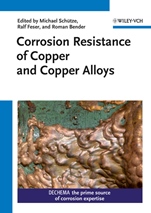
Corrosion Resistance of Copper and Copper Alloys
ISBN 9783527332243
Autor: Michael Schütze, Ralf Feser, Roman Bender
Wydawca: Wiley
Dostępność: 3-6 tygodni
Cena: 1 314,60 zł
Przed złożeniem zamówienia prosimy o kontakt mailowy celem potwierdzenia ceny.
ISBN13: |
9783527332243 |
ISBN10: |
3527332243 |
Autor: |
Michael Schütze, Ralf Feser, Roman Bender |
Oprawa: |
Hardback |
Rok Wydania: |
2011-10-19 |
Ilość stron: |
752 |
Wymiary: |
244x178 |
Tematy: |
PN |
While the corrosion resistance of copper and copper alloys is excellent in unpolluted air and drinking water, corrosion rates in impure environments, such as waste water, soil, gases or acidic conditions, can be much higher and lead to severe material damage. Since these compounds are also characterized by good electrical and thermal conductivity, ease of fabrication and joining and mechanical properties, they are widely used in many applications. These include roofing, hand rails, freshwater supply lines and plumbing, heat exchangers, condensers, valves, industrial and chemical plants, electrical wiring and circuit boards. Thus it is important to find the right copper material with regard to the environmental conditions it will be exposed to.
Collating the widespread information on corrosion protection and prevention in copper and copper–containing materials, this handbook and ready reference is derived from the successful "Corrosion Handbook". The contents are clearly structured according to the various media that can corrode and damage these compounds, while also discussing methods of prevention. The substances covered range from acetates and alkanols, via fluorides and polyols, to soil and waste water.
A must–have for corrosion specialists, materials scientists, civil, mechanical, electrical and process engineers as well as those working in power technology, the metal processing, electrotechnical and chemical industries.
Spis treści:
Acetates
Acetic Acid
Aliphatic Aldehydes
Aliphatic Amines
Aliphatic Ketones
Alkaline Earth Chlorides
alkaline Earth Hydroxides
Alkanols
Aluminium Chloride
Ammonia and Ammonium Hydroxide
Ammonium Salts
Atmosphere
Benzene and Benzene Homologues
Carbonic Acid
Carboxylic Acid Esters
Chloroethanes
Chloromethanes
Chlorine and Chlorinated Water
Chlorine Dioxide
Drinking Water
Ferrous Chlorides
Fluorides
Fluorine, Hydrogen Fluoride, Hy
drofluoric Acid
Formic Acid
Hot Oxidizing Gases
Hydrochloric Acid
Hydrogen Chloride
Hypochlorites
Lithium Hydroxide
Methanol
Nitric Acid
Phosphoric Acid
Polyols
Potassium Chloride
Potassium Hydroxide
Seawater
Sodium Chloride
Sodium Hydroxide
Sodium Sulfate
Soil
Steam
Sulfonic Acid
Sulfur Dioxide
Sulfuric Acid
Waste Water
Nota biograficzna:
Michael Schutze, born in 1952, studied materials sciences at the University of Erlangen–Nuremberg from 1972 to 1978, and then joined the Karl Winnacker Institute of DECHEMA as a research associate. He received his doctorate in engineering sciences from the Technical University of Aachen (RWTH) in 1983, and his lecturing qualifi cation in 1991, becoming a member of the external teaching staff of the RWTH, where he has held a professorship since 1998 and has been director of the Karl Winnacker Institute since 1996. He is a recipient of the Friedrich Wilhelm Prize, the Rahmel Schwenk Medal and the Cavallaro Medal, a past chairman of the Gordon Research Conference on Corrosion, editor of the journal Materials and Corrosion, past president of the European Federation of Corrosion, and of the World Corrosion Organization, as well as chairman of the Working Party Corrosion by Hot Gases and Combustion Products of the European Federation of Corrosion.
Ralf Feser, born in 1960, studied materials sciences at the University of Erlangen–Nuremberg from 1980 to 1986, and then joined the Max–Planck Institute for Iron Research in Dusseldorf. He received his doctorate in engineering sciences from the University of Clausthal–Zellerfeld in 1990, after which he worked for several years at the Metallgesellschaft. In 1996 he was appointed professor for corrosion technology at the University of Applied Sciences in Iserlohn, a position he still holds. Since 2005 he has also been one of the CEOs at the Institute for Maintenance and Corrosion Protec
tion in Iserlohn, a board member at the Society for Corrosion Protection (GfKORR) and convenor of the working party on "corrosion and corrosion protection of copper alloys". Professor Feser is also head of the research board at the Hot Dip Galvanizing Organisation, and a member of several other organisations dealing with corrosion on a national or international level.
Roman Bender, born in 1971, studied chemistry at the Justus Liebig University of Giessen from 1992 to 1997. He received his doctorate in natural sciences from the Technical University of Aachen (RWTH Aachen) in 2001. After receiving his diploma he joined the Karl Winnacker Institute of the DECHEMA in Frankfurt (Main) as a research associate, where he has been head of the materials and corrosion group since 2000, and editor–in–chief of the world?s largest corrosion data collection, the DECHEMA Werkstofftabelle and the Corrosion Handbook. In 2008 Dr. Bender was appointed CEO of the GfKORR ? the Society for Corrosion Protection.
Okładka tylna:
While the corrosion resistance of copper and copper alloys is excellent in unpolluted air and drinking water, corrosion rates in impure environments, such as waste water, soil, gases or acidic conditions, can be much higher and lead to severe material damage. Since these compounds are also characterized by good electrical and thermal conductivity, ease of fabrication and joining and mechanical properties, they are widely used in many applications. These include roofing, hand rails, freshwater supply lines and plumbing, heat exchangers, condensers, valves, industrial and chemical plants, electrical wiring and circuit boards. Thus it is important to find the right copper material with regard to the environmental conditions it will be exposed to.
Collating the widespread information on corrosion protection and prevention in copper and copper–containing materials, this handbook and ready reference is derived from the
successful "Corrosion Handbook". The contents are clearly structured according to the various media that can corrode and damage these compounds, while also discussing methods of prevention. The substances covered range from acetates and alkanols, via fluorides and polyols, to soil and waste water.
A must–have for corrosion specialists, materials scientists, civil, mechanical, electrical and process engineers as well as those working in power technology, the metal processing, electrotechnical and chemical industries.
Koszyk
Książek w koszyku: 0 szt.
Wartość zakupów: 0,00 zł
Informacje


Kontakt
Gambit
Centrum Oprogramowania
i Szkoleń Sp. z o.o.
Al. Pokoju 29b/22-24
31-564 Kraków
Siedziba Księgarni
ul. Kordylewskiego 1
31-542 Kraków
+48 12 410 5991
+48 12 410 5987
+48 12 410 5989
Subskrypcje
Administratorem danych osobowych jest firma Gambit COiS Sp. z o.o. Na podany adres będzie wysyłany wyłącznie biuletyn informacyjny.
Autoryzacja płatności

Informacje na temat autoryzacji płatności poprzez PayU.

© Copyright 2012: GAMBIT COiS Sp. z o.o. Wszelkie prawa zastrzeżone.
Projekt i wykonanie: Alchemia Studio Reklamy