


Wydawcy
Katalog tematyczny
- Archeologia (109)
- Ekonomia, finanse, business (13704)
- Filozofia (1445)
- Historia (3040)
- Języki i językoznawstwo (2356)
- Lifestyle, hobby i rozrywka (475)
- Medycyna (9704)
- Nauki humanistyczne (4)
- Nauki o Ziemi i środowisku (2638)
- Nauki ścisłe (20412)
- Astronomia (294)
- Biologia (5119)
- Chemia (6540)
- Chemia analityczna (361)
- Chemia fizyczna (346)
- Chemia nieorganiczna (137)
- Chemia organiczna (535)
- Krystalografia (27)
- Minerologia (46)
- Fizyka (3309)
- Matematyka (4574)
- Nauki ścisłe, ogólnie (503)
- Nauki społeczne (8486)
- Nauki techniczne (13450)
- Prawo (1696)
- Publikacje informacyjne i interdyscyplinarne (1288)
- Religia i wierzenia (917)
- Technika komputerowa (4067)
- Zdrowie, relacje międzyludzkie i rozwój osobisty (657)





Informacje szczegółowe o książce
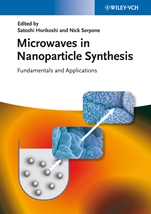
Microwaves in Nanoparticle Synthesis: Fundamentals and Applications
ISBN 9783527331970
Autor: Satoshi Horikoshi, Nick Serpone
Wydawca: Wiley
Dostępność: 3-6 tygodni
Cena: 757,05 zł
Przed złożeniem zamówienia prosimy o kontakt mailowy celem potwierdzenia ceny.
ISBN13: |
9783527331970 |
ISBN10: |
3527331972 |
Autor: |
Satoshi Horikoshi, Nick Serpone |
Oprawa: |
Hardback |
Rok Wydania: |
2013-04-23 |
Ilość stron: |
352 |
Wymiary: |
247x178 |
Tematy: |
PN |
Filling a gap in the literature, this timely publication is the first to comprehensively cover the emerging and rapidly growing field of the synthesis of nanoparticles using microwaves. Divided into the three parts of fundamentals, methods and applications, the handbook presents such hot topics as microwave theory, scale–up, microwave plasma synthesis, characterization and much more. With its excellent and experienced editor team, this book is of high interest to those working in industry due to the number of possible applications in semiconductors, electronics, catalysis, and sensors, to name but a few examples.
Preface XI List of Contributors XIII 1 Introduction to Nanoparticles 1 Satoshi Horikoshi and Nick Serpone 1.1 General Introduction to Nanoparticles 1 1.2 Methods of Nanoparticle Synthesis 8 1.3 Surface Plasmon Resonance and Coloring 10 1.4 Control of Size, Shape, and Structure 12 1.4.1 Size Control of Nanoparticles 12 1.5 Reducing Agent in Nanoparticle Synthesis 18 1.6 Applications of Metallic Nanoparticles 19 References 23 2 General Features of Microwave Chemistry 25 Satoshi Horikoshi and Nick Serpone 2.1 Microwave Heating 25 2.2 Some Applications of Microwave Heating 26 2.3 Microwave Chemistry 29 2.4 Microwave Chemical Reaction Equipment 33 References 36 3 Considerations of Microwave Heating 39 Satoshi Horikoshi and Nick Serpone 3.1 General Considerations of Microwave Heating 39 3.2 Peculiar Microwave Heating 47 3.3 Relevant Points of Effective Microwave Heating 52 References 53 4 Combined Energy Sources in the Synthesis of Nanomaterials 55 Luisa Boffa, Silvia Tagliapietra, and Giancarlo Cravotto 4.1 Introduction 55 4.2 Simultaneous Ultrasound/Microwave Treatments 58 4.3 Sequential Ultrasound and Microwaves 63 4.4 Conclusions 72 References 72 5 Nanoparticle Synthesis through Microwave Heating 75 Satoshi Horikoshi and Nick Serpone 5.1 Introduction 75 5.2 Microwave Frequency Effects 76 5.3 Nanoparticle Synthesis under a Microwave Magnetic Field 81 5.4 Synthesis of Metal Nanoparticles by a Greener Microwave Hydrothermal Method 84 5.5 Nanoparticle Synthesis with Microwaves under Cooling Conditions 85 5.6 Positive Aspects of Microwaves’ Thermal Distribution in Nanoparticle Synthesis 87 5.7 Microwave–Assisted Nanoparticle Synthesis in Continuous Flow Apparatuses 90 References 103 6 Microwave–Assisted Solution Synthesis of Nanomaterials 107 Xianluo Hu and Jimmy C. Yu 6.1 Introduction 107 6.2 Synthesis of ZnO Nanocrystals 110 6.3 Synthesis of α–Fe2O3 Nanostructures 114 6.4 Element–Based Nanostructures and Nanocomposite 118 6.5 Chalcogenide Nanostructures 125 6.6 Graphene 132 6.7 Summary 135 References 135 7 Precisely Controlled Synthesis of Metal Nanoparticles under Microwave Irradiation 145 Zhi Chen, Dai Mochizuki, and Yuji Wada 7.1 Introduction 145 7.2 Precise Control of Single Component under Microwave Irradiation 152 7.3 Precise Control of Multicomponent Structures under Microwave Irradiation 164 7.4 An Example of Mass Production Oriented to Application 178 7.5 Conclusion 180 References 180 8 Microwave–Assisted Nonaqueous Routes to Metal Oxide Nanoparticles and Nanostructures 185 Markus Niederberger 8.1 Introduction 185 8.2 Nonaqueous Sol–Gel Chemistry 186 8.3 Polyol Route 189 8.4 Benzyl Alcohol Route 191 8.5 Other Mono–Alcohols 197 8.6 Ionic Liquids 198 8.7 Nonaqueous Microwave Chemistry beyond Metal Oxides 199 8.8 Summary and Outlook 201 References 202 9 Input of Microwaves for Nanocrystal Synthesis and Surface Functionalization Focus on Iron Oxide Nanoparticles 207 Irena Milosevic, Erwann Guenin, Yoann Lalatonne, Farah Benyettou, Caroline de Montferrand, Frederic Geinguenaud, and Laurence Motte 9.1 Introduction 207 9.2 Biomedical Applications of Iron Oxide Nanoparticles 208 9.3 Nanoparticle Synthesis 211 9.4 Nanoparticle Surface Functionalization 214 9.5 Microwave–Assisted Chemistry 222 9.6 Conclusions 236 References 236 10 Microwave–Assisted Continuous Synthesis of Inorganic Nanomaterials 247 Naftali N. Opembe, Hui Huang, and Steven L. Suib 10.1 Introduction and Overview 247 10.2 Microwave–Assisted Continuous Synthesis of Inorganic Nanomaterials 249 10.3 Types of Microwave Apparatus Used in Continuous Synthesis 250 10.4 Microwave Continuous Synthesis of Molecular Sieve Materials 253 10.5 Microwave Continuous Synthesis of Metal Oxides and Mixed Metal Oxide Materials 259 10.6 Microwave Continuous Synthesis of Metallic Nanomaterials 267 10.7 Conclusions and Outlook 268 References 269 11 Microwave Plasma Synthesis of Nanoparticles: From Theoretical Background and Experimental Realization to Nanoparticles with Special Properties 271 Dorothée Vinga Szabó 11.1 Introduction 271 11.2 Using Microwave Plasmas for Nanoparticle Synthesis 272 11.3 Experimental Realization of the Microwave Plasma Synthesis 279 11.4 Influence of Experimental Parameters 282 11.5 Nanoparticle Properties and Application 294 11.6 Summary 300 References 301 12 Oxidation, Purification and Functionalization of Carbon Nanotubes under Microwave Irradiation 311 Davide Garella and Giancarlo Cravotto 12.1 Introduction 311 12.2 Oxidation and Purification 313 12.3 Functionalization 316 12.4 Conclusion 321 References 321 Index 325
Satoshi Horikoshi r eceived his PhD degree in 1999 from Meisei University, and subsequently was a postdoctoral researcher at the Frontier Research Center for the Global Environment Science unitl 2006. He joined Sophia University as Assistant Professor in 2006, and then moved to Tokyo University of Science as an associate professor in 2008. He is currently the Vice–President of the Japan Society of Electromagnetic Wave Energy Applications, a Member of the Board of the International Microwave Power Institute, and the Editorial Advisory Board of Mini–Reviews in Organic Chemistry.His research interests include the application of microwave radiation to catalytic chemistry, to the effects of microwaves on photocatalysts for environmental protection, to the microwave–assisted organic syntheses, and to microwave effects on nanoparticles. He has authored over 110 scientific publications. Nick Serpone received his Ph.D. from Cornell University (Physical–Inorganic Chemistry, 1968), after which he joined Concordia University in Montreal as Assistant Professor (1968–73), Associate Professor (1973–1980), and Professor (1980–1998). He was a consultant to 3M?s Imaging Sector for over 10 years. He took early retirement from Concordia University (1998) and was made a University Research Professor (1998–2004) and Professor Emeritus (2000 to present). He was Program Director at NSF (1998–2001) and has been a Visiting Professor at the University of Pavia, Italy, since 2002. His research interests are currently in the photophysics and photochemistry of semiconductor metal oxides, heterogeneous photocatalysis, environmental photochemistry, photochemistry of sunscreen active agents, and application of microwaves to nanomaterials and to environmental remediation. He has co–authored over 400 articles and has co–edited four monographs (for Wiley, Elsevier and the American Chemical Society).
Koszyk
Książek w koszyku: 0 szt.
Wartość zakupów: 0,00 zł
Informacje


Kontakt
Gambit
Centrum Oprogramowania
i Szkoleń Sp. z o.o.
Al. Pokoju 29b/22-24
31-564 Kraków
Siedziba Księgarni
ul. Kordylewskiego 1
31-542 Kraków
+48 12 410 5991
+48 12 410 5987
+48 12 410 5989
Subskrypcje
Administratorem danych osobowych jest firma Gambit COiS Sp. z o.o. Na podany adres będzie wysyłany wyłącznie biuletyn informacyjny.
Autoryzacja płatności

Informacje na temat autoryzacji płatności poprzez PayU.

© Copyright 2012: GAMBIT COiS Sp. z o.o. Wszelkie prawa zastrzeżone.
Projekt i wykonanie: Alchemia Studio Reklamy