


Wydawcy
Katalog tematyczny
- Archeologia (109)
- Ekonomia, finanse, business (13704)
- Filozofia (1445)
- Historia (3040)
- Języki i językoznawstwo (2356)
- Lifestyle, hobby i rozrywka (475)
- Medycyna (9704)
- Nauki humanistyczne (4)
- Nauki o Ziemi i środowisku (2638)
- Nauki ścisłe (20412)
- Astronomia (294)
- Biologia (5119)
- Chemia (6540)
- Chemia analityczna (361)
- Chemia fizyczna (346)
- Chemia nieorganiczna (137)
- Chemia organiczna (535)
- Krystalografia (27)
- Minerologia (46)
- Fizyka (3309)
- Matematyka (4574)
- Nauki ścisłe, ogólnie (503)
- Nauki społeczne (8486)
- Nauki techniczne (13450)
- Prawo (1696)
- Publikacje informacyjne i interdyscyplinarne (1288)
- Religia i wierzenia (917)
- Technika komputerowa (4067)
- Zdrowie, relacje międzyludzkie i rozwój osobisty (657)





Informacje szczegółowe o książce
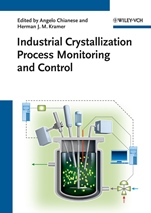
Industrial Crystallization Process Monitoring and Control
ISBN 9783527331734
Autor: Angelo Chianese, Herman J. Kramer
Wydawca: Wiley
Dostępność: 3-6 tygodni
Cena: 693,00 zł
Przed złożeniem zamówienia prosimy o kontakt mailowy celem potwierdzenia ceny.
ISBN13: |
9783527331734 |
ISBN10: |
3527331735 |
Autor: |
Angelo Chianese, Herman J. Kramer |
Oprawa: |
Hardback |
Rok Wydania: |
2012-03-14 |
Ilość stron: |
252 |
Wymiary: |
243x173 |
Tematy: |
PN |
Crystallization is an important technique for separation and purification of substances as well as for product design in chemical, pharmaceutical and biotechnological process industries. This ready reference and handbook draws on research work and industrial practice of a large group of experts in the various areas of industrial crystallization processes, capturing the essence of current trends, the markets, design tools and technologies in this key field. Along the way, it outlines trouble free production, provides laboratory controls, analyses case studies and discusses new challenges. First the instrumentation and techniques used to measure the crystal size distribution, the nucleation and solubility points, and the chemical composition of the solid and liquid phase are outlined. Then the main techniques adopted to control industrial crystallizers, starting from fundamental approaches to the most advanced ones, including the multivariable predictive control are described. An overview of the main crystallizer types is given with details of the main control schemes adopted in industry as well as the more suitable sensors and actuators.
PREFACE CHARACTERIZATION OF CRYSTAL SIZE DISTRIBUTION Introduction Particle Size Distribution Particle Size Distribution Moments Particle Size Distribution Characterization on the Basis of Mass Distribution FORWARD LIGHT SCATTERING Introduction Principles of Laser Diffraction Scatter Theory Deconvolution The Effects of Shape Multiple Scattering Application of Laser Diffraction for Monitoring and Control of Industrial Crystallization Processes Conclusions FOCUSED BEAM REFLECTANCE MEASUREMENT Measurement Principle Application Examples Advantages and Limitations TURBIDIMETRY FOR THE ESTIMATION OF CRYSTAL AVERAGE SIZE Introduction Determination of Average Particle Size from Specific Turbidity Procedure to Evaluate Average Crystal Size by Turbidimetry for a High Solid Slurry Concentration Conclusion IMAGING Introduction Literature Overview The Sensor Design Application of In Situ Imaging for Monitoring Crystallization Processes Conclusions TURBIDIMETRY AND NEPHELOMETRY Introduction Measurement of Nucleation and Solubility Points The Developed Turbidimetric and Nephelometric Instruments The Examined Systems Obtained Results SPEED OF SOUND Introduction In–Process Ultrasound Measurement Determining Solubility and Metastable Zone Width Measuring Crystal Growth Rates Detecting Phase Transitions with Ultrasound IN–LINE PROCESS REFRACTOMETER FOR CONCENTRATION MEASUREMENT IN SUGAR CRYSTALLIZERS Introduction Measurement Principle In–Line Instrument Features and Benefits Features and Benefits Example of Application in the Crystallization Conclusion ATR–FTIR SPECTROSCOPY Introduction Calibration Speciation Monitoring Co–Crystal Formation Solubility Measurement Crystal Growth Rates Polymorph Transformation Crystallization Monitoring and Control Impurity Monitoring Conclusions RAMAN SPECTROSCOPY Introduction Factors Influencing the Raman Spectrum Calibration Applications Conclusions BASIC RECIPE CONTROL Introduction Incentives for Basic Recipe Control Main Mechanisms, Sensors, and Actuators Basic Recipe Control Strategy Seeding as a Process Actuator Rate of Supersaturation Generation Mixing and Suspension of Solids Fines Removal and Dissolution Implementation of Basic Recipe Control Conclusions SEEDING TECHNIQUE IN BATCH CRYSTALLIZATION Introduction Seeding Operation: Main Principles and Phenomena Use of Seeding for Batch Crystallization: Main Process Parameters Control of Batch Crystallization by Seeding: Empirical Rules for Design ADVANCED RECIPE CONTROL Introduction Incentives and Strategy of the Advanced Recipe Control Modeling for Optimization, Prediction, and Control Model Validation Rate of Supersaturation Generation Mixing Conditions Implementation Example of Modeling, Optimization, and Open–Loop Control of a 75–l Draft–Tube Crystallizer Conclusions ADVANCED MODEL–BASED RECIPE CONTROL Introduction Online Dynamic Optimization MPC for Batch Crystallization Conclusions and Perspectives FINES REMOVAL Introduction Fines Removal by Heat Dissolution Modeling of an MSMPR Continuous Crystallizer with Fines Removal Fines Destruction in the Industrial Practice CSD Control by Fines Removal for Pilot Scale Crystallizers The Cycling Phenomenon as Undesired Effect of Fines Destruction in Industrial Crystallizers MODEL PREDICTIVE CONTROL Introduction Approach for Designing and Implementing an MPC Control System Process Modeling The Performance Index Constraints The MPC Optimization Tuning State Estimation Implementation MPC of Crystallization Processes Delta–Mode MPC Conclusions and Perspectives INDUSTRIAL CRYSTALLIZERS DESIGN AND CONTROL Introduction Forced Circulation Crystallizer Draft–Tube–Baffle Crystallizer Process Variables in Crystallizer Operation Sensors Control Devices
Angelo Chianese is full Professor of Chemical Plant Design at the University of Rome La Sapienza. He worked as a process engineer for the first 10 years of his working life, before joining academia. Prof. Chianese has more than 30 years in the field of industrial crystallization. In this respect, he collaborated with the major academic laboratories all over the world and major industrial companies. Between 1998 and 2001 he was the coordinator of the European Thematic Network on Industrial Crystallization (acronym. CRYSOPT) and since 1990 was partner in many European projects. He is one of the two Italian delegates at the European Working Party on Crystallization. Herman J. M. Kramer is associate professor at the Delft University of Technology, The Netherlands, working on the design, monitoring and control of crystallization and precipitation processes. He headed a large number of international multi client, multidisciplinary, research projects on design, monitoring and control of industrial crystallization. He was president of the Dutch Association of Crystal growth and is nowadays member of the European Working Party of Industrial Crystallization.
Koszyk
Książek w koszyku: 0 szt.
Wartość zakupów: 0,00 zł
Informacje


Kontakt
Gambit
Centrum Oprogramowania
i Szkoleń Sp. z o.o.
Al. Pokoju 29b/22-24
31-564 Kraków
Siedziba Księgarni
ul. Kordylewskiego 1
31-542 Kraków
+48 12 410 5991
+48 12 410 5987
+48 12 410 5989
Subskrypcje
Administratorem danych osobowych jest firma Gambit COiS Sp. z o.o. Na podany adres będzie wysyłany wyłącznie biuletyn informacyjny.
Autoryzacja płatności

Informacje na temat autoryzacji płatności poprzez PayU.

© Copyright 2012: GAMBIT COiS Sp. z o.o. Wszelkie prawa zastrzeżone.
Projekt i wykonanie: Alchemia Studio Reklamy