


Wydawcy
Katalog tematyczny
- Archeologia (109)
- Ekonomia, finanse, business (13704)
- Filozofia (1445)
- Historia (3040)
- Języki i językoznawstwo (2356)
- Lifestyle, hobby i rozrywka (475)
- Medycyna (9704)
- Nauki humanistyczne (4)
- Nauki o Ziemi i środowisku (2638)
- Nauki ścisłe (20412)
- Nauki społeczne (8486)
- Nauki techniczne (13450)
- Budownictwo lądowe (1045)
- Chemia przemysłowa (2258)
- Elektronika i telekomunikacja (3287)
- Energetyka (1122)
- Inne nauki stosowane (363)
- Inżynieria biochemiczna (507)
- Inżynieria transportu (232)
- Mechanika i materiały (3316)
- Nauka o środowisku (321)
- Rolnictwo (507)
- Technika, ogólnie (475)
- Prawo (1696)
- Publikacje informacyjne i interdyscyplinarne (1288)
- Religia i wierzenia (917)
- Technika komputerowa (4067)
- Zdrowie, relacje międzyludzkie i rozwój osobisty (657)





Informacje szczegółowe o książce
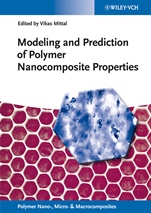
Modeling and Prediction of Polymer Nanocomposite Properties
ISBN 9783527331505
Autor: Vikas Mittal
Wydawca: Wiley
Dostępność: 3-6 tygodni
Cena: 801,15 zł
Przed złożeniem zamówienia prosimy o kontakt mailowy celem potwierdzenia ceny.
ISBN13: |
9783527331505 |
ISBN10: |
3527331506 |
Autor: |
Vikas Mittal |
Oprawa: |
Hardback |
Rok Wydania: |
2013-01-16 |
Ilość stron: |
320 |
Wymiary: |
248x177 |
Tematy: |
TG |
T he book series “Polymer Nano–, Micro– and Macrocomposites” provides complete and comprehensive information on all important aspects of polymer composite research and development, including, but not limited to synthesis, filler modification, modeling, characterization as well as application and commercialization issues. Each book focuses on a particular topic and gives a balanced in–depth overview of the respective subfield of polymer composite science and its relation to industrial applications. With the books the readers obtain dedicated resources with information relevant to their research, thereby helping to save time and money. This book lays the theoretical foundations and emphasizes the close connection between theory and experiment to optimize models and real–life procedures for the various stages of polymer composite development. As such, it covers quantum–mechanical approaches to understand the chemical processes on an atomistic level, molecular mechanics simulations to predict the filler surface dynamics, finite element methods to investigate the macro–mechanical behavior, and thermodynamic models to assess the temperature stability. The whole is rounded off by a look at multiscale models that can simulate properties at various length and time scales in one go – and with predictive accuracy.
List of Contributors XI Preface XV 1 Convergence of Experimental and Modeling Studies 1 Vikas Mittal 1.1 Introduction 1 1.2 Review of Various Model Systems 1 References 10 2 Self–Consistent Field Theory Modeling of Polymer Nanocomposites 11 Valeriy V. Ginzburg 2.1 Introduction 11 2.2 Theoretical Methods 13 2.2.1 Incompressible SCFT 13 2.2.2 Compressible SCFT 17 2.3 Applications of SCFT Modeling: Predicting the Nanocomposite Phase Behavior 18 2.3.1 Organically Modifi ed Nanoclays in a Homopolymer Matrix 18 2.3.2 Organically Modifi ed Nanoclays in a Binary Blend Containing End–Functionalized Polymers 24 2.4 Summary and Outlook 32 Acknowledgments 33 References 33 3 Modern Experimental and Theoretical Analysis Methods of Particulate–Filled Nanocomposites Structure 39 Georgy V. Kozlov, Yurii G. Yanovskii, and Gennady E. Zaikov 3.1 Introduction 39 3.2 Experimental 40 3.3 Results and Discussion 42 3.4 Conclusions 60 References 61 4 Reptation Model for the Dynamics and Rheology of Particle Reinforced Polymer Chains 63 Kalonji K. Kabanemi and Jean–François Hétu 4.1 Introduction 63 4.2 Terminal Relaxation Time 66 4.2.1 Linear Entangled Chains 66 4.2.2 Linear Entangled Chains with Rigid Spherical Nanoparticles 66 4.3 Detachment/Reattachment Dynamics 72 4.4 Constitutive Equation 74 4.5 Numerical Results 75 4.5.1 Step Shear Strain 75 4.5.2 Steady Shear Flow 78 4.5.3 Start–up of Steady Shear Flow 84 4.5.4 Experimental Validation 85 4.6 Discussion and Generalization of the Model 88 4.6.1 Preliminaries 88 4.6.2 Diffusion of an Attached Chain 89 4.6.3 Multimode Constitutive Equation 91 4.7 Conclusions 92 References 93 5 Multiscale Modeling Approach for Polymeric Nanocomposites 95 Paola Posocco, Sabrina Pricl, and Maurizio Fermeglia 5.1 Multiscale Modeling of Polymer–Based Nanocomposite Materials: Toward “Virtual Design” 95 5.2 Atomistic Scale: Basic Instincts 101 5.2.1 Sodium Montmorillonite Silylation: Unexpected Effect of the Aminosilane Chain Length 101 5.2.2 Water–Based Montmorillonite/Poly(Ethylene Oxide) Nanocomposites: A Molecular Viewpoint 106 5.3 Mesoscale: Connecting Structure to Properties 109 5.3.1 Water–Based Montmorillonite/Poly(Ethylene Oxide) Nanocomposites at the Mesoscale 109 5.3.2 Nanoparticles at the Right Place: Tuning Nanostructure Morphology of Self–Assembled Nanoparticles in Diblock Copolymers 112 5.4 Macroscale: Where Is the Detail? The Matter at Continuum 119 5.4.1 Small Is Different. Size and Shape Effects of Nanoparticles on the Enhancement Efficiency in PCNs 119 5.5 Conclusions 123 References 125 6 Modeling of Oxygen Permeation and Mechanical Properties of Polypropylene–Layered Silicate Nanocomposites Using DoE Designs 129 Vikas Mittal 6.1 Introduction 129 6.2 Materials and Methods 131 6.2.1 Materials 131 6.2.2 Filler Surface Modification and Composite Preparation 131 6.2.3 Characterization and Modeling Techniques 131 6.3 Results and Discussion 132 6.4 Conclusions 141 Acknowledgment 141 References 141 7 Multiscale Stochastic Finite Elements Modeling of Polymer Nanocomposites 143 Antonios Kontsos and Jefferson A. Cuadra 7.1 Introduction 143 7.2 Multiscale Stochastic Finite Elements Method 144 7.2.1 Modeling State–of–the–Art and MSFEM Motivation 144 7.2.2 Definition of a Representative Material Region (MR) 145 7.2.3 Spatial Randomness Identifi cation 146 7.2.4 Multiscale Homogenization Model 148 7.2.5 Monte Carlo Finite Element Model 152 7.3 Applications and Results 153 7.3.1 Estimation of Bulk Mechanical Properties 153 7.3.2 Modeling of Nanoindentation Data 161 References 165 8 Modeling of Thermal Conductivity of Polymer Nanocomposites 169 Wei Lin 8.1 Models for Thermal Conductivity of Polymer Composites – A Historical Review on Effective Medium Approximations and Micromechanical Models 169 8.1.1 Parallel and Series Models 170 8.1.2 Maxwell’s Model (Maxwell–Garnett Equation) 172 8.1.3 Fricke’s Model 172 8.1.4 Hamilton–Crosser Model 174 8.1.5 Hashin’s Model 175 8.1.6 Nielsen’s Micromechanics Model 176 8.1.7 Equivalent Inclusion Method 178 8.1.8 Benveniste–Miloh Model 180 8.1.9 Davis’ Model 182 8.1.10 Empirical Model by Agari and Uno 182 8.1.11 Hasselman–Johnson Model 183 8.1.12 Bruggeman Asymmetric Equation 183 8.1.13 Felske’s Model 185 8.2 A Generalized Effective Medium Theory 186 8.2.1 ATA 187 8.2.2 CPA 188 8.2.3 Further Extension of ATA and CPA to Anisotropic Filler with Orientation Distributions 189 8.2.4 Incorporation of Size Distribution Functions into ATA and CPA 190 8.2.5 Incorporation of Interfacial Thermal Resistance into ATA and CPA 191 8.3 Challenges for Modeling Thermal Conductivity of Polymer Nanocomposites 191 8.3.1 Size Effect and Surface Effect 191 8.3.2 Sensitivity of κf to a Specific Environment 192 8.3.3 Interfacial Resistance Plays a Very Important Role 193 8.3.4 Filler–Induced Change in κm 195 8.3.5 Dispersion and Distribution 196 Acknowledgments 196 References 197 9 Numerical–Analytical Model for Nanotube–Reinforced Nanocomposites 201 Antonio Pantano 9.1 Introduction 201 9.2 Numerical–Analytical Model 204 9.2.1 The Mori–Tanaka Method 204 9.2.1.1 Calculation of the Correlation Matrix A1 dil 206 9.2.1.2 Calculation of the Stiffness Matrix of the Equivalent Inclusion Cl 207 9.2.2 FEM Model Design 207 9.2.2.1 RVE Geometry 207 9.2.2.2 Matrix Constitutive Model 208 9.2.2.3 Carbon Nanotube 208 9.2.2.4 Contact Model 208 9.2.2.5 Deformation Mode 209 9.2.2.6 Calculation of the Equivalent Young’s Modulus of the MWCNT 209 9.2.2.7 Calculation of the Eshelby Tensor 209 9.3 Results 210 9.4 Conclusions 212 Appendix 9.A 212 References 213 10 Dissipative Particles Dynamics Model for Polymer Nanocomposites 215 Shin–Pon Ju, Yao–Chun Wang, and Wen–Jay Lee 10.1 Introduction 215 10.2 Scheme for Multiscale Modeling 218 10.2.1 Dissipative Particle Dynamics Simulation Method 219 10.2.2 Coarse–Grained Mapping 219 10.2.3 Mixing Energy and Compressibility 220 10.2.4 Dissipative Particle Dynamics Scales to Physical Scales 222 10.3 Two Case Studies 222 10.3.1 PE/PLLA Composite 222 10.3.2 CNT/PE/PLLA Composite 228 10.4 Future Work 234 References 234 11 Computer–Aided Product Design of Wheat Straw Polypropylene Composites 237 Rois Fatoni, Ali Almansoori, Ali Elkamel, and Leonardo Simon 11.1 Natural Fiber Plastic Composites 237 11.1.1 History and Current Market Situation 237 11.1.2 Technical Issues and Current Research Progress 238 11.2 Wheat Straw Polypropylene Composites 240 11.3 Product Design and Computer–Aided Product Design 242 11.4 Modeling Natural Fiber Polymer Composites 245 11.5 Mixture Design of Experiments 247 References 252 12 Modeling of the Chemorheological Behavior of Thermosetting Polymer Nanocomposites 255 Luigi Torre, Debora Puglia, Antonio Iannoni, and Andrea Terenzi 12.1 Introduction 255 12.2 The Cure Kinetics Model 258 12.3 The Chemoviscosity Model 263 12.4 Relationship between Tg and α 268 12.5 Case Study 1: Carbon Nanofibers in Unsaturated Polyester 268 12.5.1 Cure Kinetic Analysis 271 12.5.2 Chemorheological Analysis 275 12.6 Case Study 2: Montmorillonite in Epoxy Resin 277 12.6.1 Cure Kinetic Analysis 279 12.6.2 Relation between Tg and Degree of Cure 281 12.6.3 Chemorheological Analysis 282 References 285 Index 289
Vikas Mittal is an Assistant Professor at the Chemical Engineering Department of The Petroleum Institute, Abu Dhabi. He obtained his PhD in 2006 in Polymer and Materials Engineering from the Swiss Federal Institute of Technology in Zurich, Switzerland. Later, he worked as Materials Scientist in the Active and Intelligent Coatings section of SunChemical in London, UK and as Polymer Engineer at BASF Polymer Research in Ludwigshafen, Germany. His research interests include polymer nano–composites, novel filler surface modifications, thermal stability enhancements, polymer latexes with functionalized surfaces etc. He has authored over 40 scientific publications, book chapters and patents on these subjects.
Koszyk
Książek w koszyku: 0 szt.
Wartość zakupów: 0,00 zł
Informacje


Kontakt
Gambit
Centrum Oprogramowania
i Szkoleń Sp. z o.o.
Al. Pokoju 29b/22-24
31-564 Kraków
Siedziba Księgarni
ul. Kordylewskiego 1
31-542 Kraków
+48 12 410 5991
+48 12 410 5987
+48 12 410 5989
Subskrypcje
Administratorem danych osobowych jest firma Gambit COiS Sp. z o.o. Na podany adres będzie wysyłany wyłącznie biuletyn informacyjny.
Autoryzacja płatności

Informacje na temat autoryzacji płatności poprzez PayU.

© Copyright 2012: GAMBIT COiS Sp. z o.o. Wszelkie prawa zastrzeżone.
Projekt i wykonanie: Alchemia Studio Reklamy