


Wydawcy
Katalog tematyczny
- Archeologia (109)
- Ekonomia, finanse, business (13704)
- Filozofia (1445)
- Historia (3040)
- Języki i językoznawstwo (2356)
- Lifestyle, hobby i rozrywka (475)
- Medycyna (9704)
- Nauki humanistyczne (4)
- Nauki o Ziemi i środowisku (2638)
- Nauki ścisłe (20412)
- Astronomia (294)
- Biologia (5119)
- Chemia (6540)
- Chemia analityczna (361)
- Chemia fizyczna (346)
- Chemia nieorganiczna (137)
- Chemia organiczna (535)
- Krystalografia (27)
- Minerologia (46)
- Fizyka (3309)
- Matematyka (4574)
- Nauki ścisłe, ogólnie (503)
- Nauki społeczne (8486)
- Nauki techniczne (13450)
- Prawo (1696)
- Publikacje informacyjne i interdyscyplinarne (1288)
- Religia i wierzenia (917)
- Technika komputerowa (4067)
- Zdrowie, relacje międzyludzkie i rozwój osobisty (657)





Informacje szczegółowe o książce
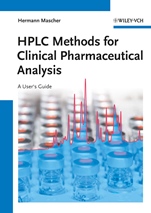
HPLC Methods for Clinical Pharmaceutical Analysis: A Users Guide
ISBN 9783527331291
Autor: Hermann Mascher
Wydawca: Wiley
Dostępność: 3-6 tygodni
Cena: 368,55 zł
Przed złożeniem zamówienia prosimy o kontakt mailowy celem potwierdzenia ceny.
ISBN13: |
9783527331291 |
ISBN10: |
3527331298 |
Autor: |
Hermann Mascher |
Oprawa: |
Hardback |
Rok Wydania: |
2012-01-11 |
Ilość stron: |
256 |
Wymiary: |
249x171 |
Tematy: |
PN |
Filling a gap in the literature for a hands–on guide focusing on everyday laboratory challenges, this English edition has been expanded and revised using the feedback received on the successful German precursor. Throughout the book, Professor Mascher draws on his 30 years of experience and provides abundant practical advice, troubleshooting and other hints highlighted in boxes, as well as a broad selection of walkthrough case studies. Based on a course taught by the author, the first part of the book intuitively explains all steps of routine bioanalysis and explains how to set up a robust, inexpensive and effi cient method for a given substance. In the second part he includes 20 worked example cases that highlight common challenges and how to overcome them. With its appendix containing tried–and–tested analytical methods for 100 clinically relevant substances from the author`s own laboratory, complete with spectral and MS data as well as literature references and basic pharmacokinetic information, this is a life–long companion for everyone working in clinical, pharmaceutical and biochemical analysis. Comments to the German book: "The book comes to life through its examples, showing not only what did work in the author′s laboratory, but also what didn′t." ChemieReport "Indispensable for novices, while even old hands will be able to expand their knowledge. A collection of analytical data for ca. 100 substances completes the book′s offering, leaving almost nothing to be desired." pharmind
Preface VII Acknowledgements IX 1 Introduction 1 1.1 First Question: Determination of Ibuprofen in Plasma 2 1.2 Second Question: Determination of Tryptophan in Urine 7 1.3 Third Question: Determination of Paclitaxel in Tissue 10 2 Planning of Analyses 13 2.1 Introduction 13 2.2 Limit of Detection (LOD) and Determination (LLOQ) 14 2.3 Detectors 15 2.4 Structure of the Analyte 17 2.5 Solubility of an Analyte 20 2.6 Selection of the Detector 21 3 Sample Preparation 23 3.1 Dilution 23 3.2 Protein Precipitation, Overview 23 3.3 Extraction 25 4 HPLC Separation 35 4.1 HPLC Pumps 36 4.2 Degasser 38 4.3 Injector 38 4.4 HPLC Columns 39 5 Detection 45 5.1 Detection in the Pharmaceutical/Bioanalytical Area 46 5.2 Detection in the “Clinical Area” (Therapy Control/Compliance) 46 6 Chemical Derivatization for Detection Enhancement 49 7 Validation Concepts 53 7.1 Introduction 53 7.2 Realization of the FDA Guideline 55 8 Practical Hints Concerning Stability, Destruction and Degradation Products 59 9 Metabolites 61 10 Internal Standards 63 11 Case Studies with Intensive Discussion for Each Substance 65 11.1 Acetylcarnitine in Plasma 66 11.2 Acetylcysteine in Plasma 68 11.3 Acyclovir in Plasma and Urine 72 11.4 Caffeine in Plasma 74 11.5 Diazepam in Plasma 78 11.6 Diclofenac in Plasma 79 11.7 Dihydralazine in Plasma 82 11.8 Duramycin (Moli1901) in Plasma 85 11.9 Fluticasone Propionate in Plasma 89 11.10 Hydroxytriamterene Sulfate and Triamterene in Plasma and Urine 92 11.11 Ibuprofen in Plasma (also Enantiomeric Separation) 94 11.12 Minocycline in Plasma 96 11.13 Norfloxacine in Plasma and Urine 98 11.14 Paclitaxel in Plasma, Urine and Tissue 101 11.15 Paracetamol (Acetaminophen) in Plasma 104 11.16 Pimelic Acid in Plasma and Urine 106 11.17 8–Prenylnaringenin in Plasma and Different Types of Tissues 108 11.18 Silibinin in Plasma 110 11.19 Valnemulin in Plasma, Different Tissue Types and in Animal Feed 115 11.20 Vitamin B1 (Total Thiamine) in Plasma 118 Table 11.1 Recommended books 121 Table 11.2 Properties of substances 124 Appendix 135 Short Description of Determination for about 100 Substances 135 Substances listed in the Appendix 138 A Short Explanation of Tables Presented in the Appendix 139
Hermann Mascher is founder and CEO of the independent contract research organization "pharm–analyt" based in Baden (near Vienna), Austria. A chemist by training, he has been dealing with quantitative determination of drugs, metabolites, phyto–ingredients and endogenous substances in plasma, urine and tissue for more than 30 years. Professor Mascher is regularly being consulted for analytical questions of drugs, food as well as botanical and ecological issues. He has published over 80 publications majorly in peer reviewed journals and received several awards in science and innovation for his work in the analysis of clinically important substances.
"The book is clearly written and comprehensive. A lot of practical advice and tips makes it helpful for any practically oriented clinical laboratory and it can be counted as a valuable source for everyone working with chromatographic techniques in a bioanalytical laboratory." ( Analytical and Bioanalytical Chemistry , 13 November 2012) “This book is more than a very successful and useful user guide, and is a valuable tool for the laboratorywork, not only for clinical analysts, but also for biochemists, pharmacists, etc. In addition to a compact targeted representation of the most important theoretical foundations for the planning and execution of (clinical) analysis (sample preparation, HPLC separation, usage of different modes, detection capabilities, derivatization techniques to the point of validation), the readers receive valuable information for their work, which are explained on the basis of practical examples [pages 1–64].” ( ChemMedChem , 1 November 2012)
Koszyk
Książek w koszyku: 0 szt.
Wartość zakupów: 0,00 zł
Informacje


Kontakt
Gambit
Centrum Oprogramowania
i Szkoleń Sp. z o.o.
Al. Pokoju 29b/22-24
31-564 Kraków
Siedziba Księgarni
ul. Kordylewskiego 1
31-542 Kraków
+48 12 410 5991
+48 12 410 5987
+48 12 410 5989
Subskrypcje
Administratorem danych osobowych jest firma Gambit COiS Sp. z o.o. Na podany adres będzie wysyłany wyłącznie biuletyn informacyjny.
Autoryzacja płatności

Informacje na temat autoryzacji płatności poprzez PayU.

© Copyright 2012: GAMBIT COiS Sp. z o.o. Wszelkie prawa zastrzeżone.
Projekt i wykonanie: Alchemia Studio Reklamy