


Wydawcy
Katalog tematyczny
- Archeologia (109)
- Ekonomia, finanse, business (13704)
- Filozofia (1445)
- Historia (3040)
- Języki i językoznawstwo (2356)
- Lifestyle, hobby i rozrywka (475)
- Medycyna (9704)
- Nauki humanistyczne (4)
- Nauki o Ziemi i środowisku (2638)
- Nauki ścisłe (20412)
- Astronomia (294)
- Biologia (5119)
- Chemia (6540)
- Fizyka (3309)
- Elektryczność i magnetyzm (90)
- Fizyka atomowa i molekularna (110)
- Fizyka cząstek elementarnych (36)
- Fizyka jądra atomowego (36)
- Fizyka kwantowa (210)
- Fizyka matematyczna (121)
- Fizyka relatywistyczna (36)
- Fizyka statystyczna (51)
- Fizyka stosowana (498)
- Mechanika klasyczna (186)
- Optyka i światło (133)
- Stany materii (202)
- Matematyka (4574)
- Nauki ścisłe, ogólnie (503)
- Nauki społeczne (8486)
- Nauki techniczne (13450)
- Prawo (1696)
- Publikacje informacyjne i interdyscyplinarne (1288)
- Religia i wierzenia (917)
- Technika komputerowa (4067)
- Zdrowie, relacje międzyludzkie i rozwój osobisty (657)





Informacje szczegółowe o książce
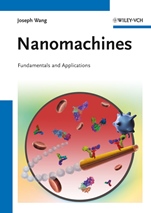
Nanomachines: Fundamentals and Applications
ISBN 9783527331208
Autor: Joseph Wang
Wydawca: Wiley
Dostępność: 3-6 tygodni
Cena: 246,75 zł
Przed złożeniem zamówienia prosimy o kontakt mailowy celem potwierdzenia ceny.
ISBN13: |
9783527331208 |
ISBN10: |
3527331204 |
Autor: |
Joseph Wang |
Oprawa: |
Paperback |
Rok Wydania: |
2013-08-07 |
Ilość stron: |
200 |
Wymiary: |
239x170 |
Tematy: |
PH |
Nanomachines represent one of the most fascinating topics in of nanotechnology. These tiny devices provide diverse opportunities towards a wide range of important applications, ranging from targeted delivery of drug payloads to environmental remediation. This book addresses comprehensively the latest developments and discoveries in the field of nano– and microscale machines. It covers the evolution of nanomachines in general from a historical perspective, the fundamental challenges for motion at the nanoscale, different categories of biological and synthetic nano/microscale motors based on different propulsion mechanisms, ways for controlling the movement directionality and regulated speed, followed by detailed of major areas for which nanomachines has the potential to make a transformational impact. It ends with a futuristic look at nano/ microscale machines and into their impact on the society. Key Features: • The only nanomachine introductory textbook currently available. • Written with college graduate level in mind to appeal to a broad interdisciplinary audience. • Covers the fundamental challenges for nanoscale motion. • Covers the latest advances in the design and operaton of a wide range of small–scale machines. • Covers diverse biomedical, environmental and technological applications of nanomachines. • Written in review format with cited articles to cover latest research and developments.
Preface IX 1 Fundamentals – Small–Scale Propulsion 1 1.1 Introduction 1 1.2 Nanomachines History 3 1.3 Challenges to Nanoscale Propulsion 4 1.4 Low Reynolds Number Hydrodynamics 7 References 9 2 Motion of Natural Nanoswimmers 13 2.1 Introduction 13 2.2 Chemically Powered Motor Proteins 14 2.2.1 Biological Motors: Active Workhorses of Cells 15 2.2.2 Protein Motors: Basic Operation 16 2.2.3 Kinesins 17 2.2.3.1 Function and Structure 17 2.2.3.2 Kinesin Movement 18 2.2.4 Myosins 19 2.2.5 Dyneins 21 2.2.6 Biomotor–based Active Nanoscale Transport in Microchip Devices 21 2.3 Rotary Biomotors 24 2.4 Swimming Microorganisms 26 2.4.1 Bacterial Flagella – Escherichia coli 27 2.4.2 Sperm Motility 28 2.4.3 Cilia–Driven Swimming of Paramecium 29 2.4.4 Bacteria Transporters and Actuators 30 References 31 3 Molecular Machines 35 3.1 Stimuli–Responsive Rotaxane, Pseudorotaxane, and Catenane Nanomachines 37 3.2 Molecular Rotary Motors 43 3.3 Light–Driven Molecular Machines based on cis–trans Photoisomerization 44 3.3.1 Azobenzene–based Nanomachines 45 3.4 Nanocars 47 3.5 DNA Nanomachines 50 3.5.1 Autonomous Enzyme–Assisted DNA Nanomachines 53 3.5.2 DNA Spiders 54 3.5.3 pH and Light Switchable DNA Machines 55 References 57 4 Self–Propelling Chemically Powered Devices 61 4.1 Self–Propelling Catalytic Nanowires 63 4.1.1 Propulsion Mechanism of Catalytic Nanowire Motors 67 4.1.2 Magnetically Directed Movement of Catalytic Nanowire Motors 68 4.2 Catalytic Tubular Microengines 69 4.2.1 Bubble–Propulsion Mechanism of Tubular Microengines 71 4.2.2 Preparation of Tubular Microengines 73 4.2.2.1 Rolled–up Fabrication of Tubular Microengines 73 4.2.2.2 Membrane–Template Electrodeposition of Tubular Microengines 75 4.3 Catalytic Janus Microparticles: Spherical Motors 76 4.3.1 Preparation of Catalytic Janus Particle Motors 77 4.3.1.1 Janus Capsule Motors 79 4.3.2 Propulsion Mechanisms of Catalytic Janus Spherical Motors 79 4.4 Controlled Motion of Chemically Powered Nano/Microscale Motors 81 4.4.1 Thermally Controlled Nanomotors 82 4.4.2 Light Control of Catalytic Motors 83 4.4.3 Potential Control of Catalytic Motors 84 4.5 Alternative Fuels for Chemically Powered Micro/Nanoscale Motors 84 4.6 Collective Behavior: Toward Swarming and Chemotaxis 86 4.6.1 Triggered Self–Organization of Microparticles 86 4.6.2 Chemotaxis: Movement along Concentration Gradients 89 4.7 Biocatalytic Propulsion 91 4.8 Motion Based on Asymmetric Release of Chemicals 93 4.9 Polymerization–Induced Motion 95 References 95 5 Externally Powered Nanomotors – Fuel–Free Nanoswimmers 101 5.1 Magnetically Driven Nanomotors 101 5.1.1 Helical Propellers 102 5.1.2 Flexible Swimmers 106 5.1.3 Surface Walkers 107 5.1.4 Magnetically Actuated Artificial Cilia Array 109 5.2 Electrically Driven Nanomotors 110 5.2.1 Motion of Miniature Diodes 110 5.2.2 Micromotors Driven by Bipolar Electrochemistry 110 5.3 Ultrasound–Actuated Micromotors 112 5.4 Light–Driven Micromotors 113 5.5 Hybrid Nanomotors 114 References 115 6 Applications of Nano/Microscale Motors 119 6.1 Cargo Towing: Toward Drug Delivery 119 6.1.1 Cargo–Loading Schemes 119 6.1.2 Cargo Release Strategies 122 6.1.3 Drug Delivery: Realizing the Fantastic Voyage Vision 124 6.2 Biosensing and Target Isolation 126 6.2.1 Biomotor–Driven Sensing: Toward “Smart Dust” Devices 126 6.2.2 Motion–based Signal Transduction 128 6.2.3 Isolation of Biological Targets: “Swim–Catch–Isolation” 130 6.3 Active Nanoscale Transport by Synthetic Motors in Microchip Devices 134 6.4 Nanomotor–based Surface Patterning and Self–Assembly 135 6.5 Use of Micro/Nanoscale Motors for Environmental Monitoring and Remediation 137 References 138 7 Conclusions and Future Prospects 141 7.1 Current Status and Future Opportunities 141 7.1.1 Future Micro/Nanoscale Machines in Medicine 143 7.2 Future Challenges 144 7.3 Concluding Remarks 146 References 147 Glossary 149 Index 155
Joseph Wang is Professor in Department of Nanoengineering at the University of California, San Diego. He received his PhD from the Israel Institute of Technology in 1978. He held a Regents Professorship and a Manasse Chair at New Mexico State University and served as the Director of Center for Bioelectronics and Biosensors of the Arizona State University. Joseph Wang has published more than 800 papers and ten books and holds twelve patents. He received two ACS National Awards and three honorary professorships from Spain, Argentina and Slovenia. He became the most cited electrochemist in the world and was listed fourth on the ISI list of "Most Cited Researchers in Chemistry" in the decade 1996–2006. Joseph Wang is the Editor–in–Chief of "Electroanalysis" (Wiley). His scientific interests are concentrated in the areas of nanomachines, bioelectronics, bionanotechnology and electroanalytical chemistry.
Koszyk
Książek w koszyku: 0 szt.
Wartość zakupów: 0,00 zł
Informacje


Kontakt
Gambit
Centrum Oprogramowania
i Szkoleń Sp. z o.o.
Al. Pokoju 29b/22-24
31-564 Kraków
Siedziba Księgarni
ul. Kordylewskiego 1
31-542 Kraków
+48 12 410 5991
+48 12 410 5987
+48 12 410 5989
Subskrypcje
Administratorem danych osobowych jest firma Gambit COiS Sp. z o.o. Na podany adres będzie wysyłany wyłącznie biuletyn informacyjny.
Autoryzacja płatności

Informacje na temat autoryzacji płatności poprzez PayU.

© Copyright 2012: GAMBIT COiS Sp. z o.o. Wszelkie prawa zastrzeżone.
Projekt i wykonanie: Alchemia Studio Reklamy