


Wydawcy
Katalog tematyczny
- Archeologia (109)
- Ekonomia, finanse, business (13704)
- Filozofia (1445)
- Historia (3040)
- Języki i językoznawstwo (2356)
- Lifestyle, hobby i rozrywka (475)
- Medycyna (9704)
- Nauki humanistyczne (4)
- Nauki o Ziemi i środowisku (2638)
- Nauki ścisłe (20412)
- Astronomia (294)
- Biologia (5119)
- Chemia (6540)
- Chemia analityczna (361)
- Chemia fizyczna (346)
- Chemia nieorganiczna (137)
- Chemia organiczna (535)
- Krystalografia (27)
- Minerologia (46)
- Fizyka (3309)
- Matematyka (4574)
- Nauki ścisłe, ogólnie (503)
- Nauki społeczne (8486)
- Nauki techniczne (13450)
- Prawo (1696)
- Publikacje informacyjne i interdyscyplinarne (1288)
- Religia i wierzenia (917)
- Technika komputerowa (4067)
- Zdrowie, relacje międzyludzkie i rozwój osobisty (657)





Informacje szczegółowe o książce
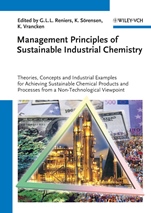
Management Principles of Sustainable Industrial Chemistry: Theories, Concepts and Indusstrial Examples for Achieving Sustainable Chemical Products and Processes from a Non–Technological Viewpoint - IS
ISBN 9783527330997
Autor: Genserik L. L. Reniers, Kenneth Sörensen, Karl Vrancken
Wydawca: Wiley
Dostępność: 3-6 tygodni
Cena: 502,95 zł
Przed złożeniem zamówienia prosimy o kontakt mailowy celem potwierdzenia ceny.
ISBN13: |
9783527330997 |
ISBN10: |
3527330992 |
Autor: |
Genserik L. L. Reniers, Kenneth Sörensen, Karl Vrancken |
Oprawa: |
Hardback |
Rok Wydania: |
2013-03-13 |
Ilość stron: |
280 |
Wymiary: |
245x171 |
Tematy: |
PN |
Preface XIII
List of Contributors XV
Part I Introductory Section 1
1 Editorial Introduction 3
Genserik L.L. Reniers, Kenneth S¨orensen, and Karl Vrancken
1.1 From Industrial to Sustainable Chemistry, a Policy Perspective 4
1.2 Managing Intraorganizational Sustainability 5
1.3 Managing Horizontal Interorganizational Sustainability 5
1.4 Managing Vertical Interorganizational Sustainability 6
1.5 Sustainable Chemistry in a Societal Context 6
2 History and Drivers of Sustainability in the Chemical Industry 7
Dicksen Tanzil and Darlene Schuster
2.1 The Rise of Public Pressure 7
2.1.1 The Environmental Movement 8
2.1.2 A Problem of Public Trust 9
2.2 Industry Responded 10
2.2.1 The Responsible Care Program 10
2.2.2 Technology Development 12
2.2.3 Corporate Sustainability Strategies 14
2.3 An Evolving Framework 15
2.3.1 New Issues and Regulations 15
2.3.2 Sustainability as an Opportunity 16
2.3.3 Recent Industry Trends 16
2.4 Conclusions: the Sustainability Drivers 18
References 18
3 From Industrial to Sustainable Chemistry, a Policy Perspective 21
Karl Vrancken and Frank Nevens
3.1 Introduction 21
3.2 Integrated Pollution Prevention and Control 22
3.2.1 Environmental Policy for Industrial Emissions 22
3.2.2 Best Available Techniques and BREFs 23
3.2.3 Integrated Pollution Prevention and Control in the Chemical Sector 24
3.3 From IED to Voluntary Systems 25
3.4 Sustainability Challenges for Industry 26
3.4.1 Introduction 26
3.4.2 Policy Drivers for Sustainable Chemistry 27
3.4.3 Transition Concept 28
3.5 Conclusion 30
References 31
4 Sustainable Industrial Chemistry from a Nontechnological Viewpoint 33
Genserik L.L. Reniers, Kenneth S¨orensen, and Karl Vrancken
4.1 Introduction 33
4.2 Intraorganizational Management for Enhancing Sustainability 36
4.3 Horizontal Interorganizational Management for Enhancing Sustainability 37
4.4 Vertical Interorganizational Management for Enhancing Sustainability 38
4.5 Sustainable Chemistry in a Societal Context 39
4.6 Conclusions 40
References 41
Part II Managing Intra-Organizational Sustainability 43
5 Building Corporate Social Responsibility – Developing a Sustainability Management System Framework 45
Stefan Maas, Genserik L.L. Reniers, and Marijke De Prins
5.1 Introduction 45
5.2 Development of a CSR Management System Framework 47
5.2.1 Management Knowledge and Commitment (Soft Factor) 49
5.2.2 Stakeholder Knowledge and Commitment (Soft Factor) 49
5.2.3 Strategic Planning – the Choice of Sustainable Strategic Pillars (Hard Factor) 50
5.2.4 Knowledge and Commitment from the Workforce (Soft Factor) 50
5.2.5 Operational Planning, Execution, and Monitoring (Hard Factor) 51
5.3 Conclusions 52
References 52
6 Sustainability Assessment Methods and Tools 55
Steven De Meester, Geert Van der Vorst, Herman Van Langenhove, and Jo Dewulf
6.1 Introduction 55
6.2 Sustainability Assessment Framework 56
6.3 Impact Indicators and Assessment Methodologies 59
6.3.1 Environmental Impact Assessment 62
6.3.1.1 Emission Impact Indicators 62
6.3.1.2 Resource Impact Indicators 68
6.3.1.3 Technology Indicators 71
6.3.1.4 Assessment Methodologies 72
6.3.2 Economic Impact Assessment 75
6.3.2.1 Economic Impact Indicators 76
6.3.2.2 Assessment Methodologies 76
6.3.3 Social Impact Assessment 77
6.3.3.1 Social Impact Indicators 78
6.3.3.2 Assessment Methodologies 79
6.3.4 Multidimensional Assessment 79
6.3.5 Interpretation 81
6.4 Conclusions 81
References 82
7 Integrated Business and SHESE Management Systems 89
Kathleen Van Heuverswyn and Genserik L.L. Reniers
7.1 Introduction 89
7.2 Requirements for Integrating Management Systems 90
7.3 Integrating Management Systems: Obstacles and Advantages 92
7.4 Integrated Risk Management Models 95
7.4.1 FERMA Risk Management Standard 2003 95
7.4.2 Australian/New Zealand Norm AS/NZS 4360:2004 96
7.4.3 ISO 31000:2009 97
7.4.4 The Canadian Integrated Risk Management Framework (IRM Framework) 98
7.5 Characteristics and Added Value of an Integrated Model; Integrated Management in Practice 100
7.6 Conclusions 103
References 103
8 Supporting Process Design by a Sustainability KPIs Methodology 105
Alessandro Tugnoli, Valerio Cozzani, and Francesco Santarelli
8.1 Introduction 105
8.2 Quantitative Assessment of Sustainability KPIs in Process Design Activities 107
8.3 Identification of Relevant KPIs: the ‘‘Tree of Impacts’’ 111
8.4 Criteria for Normalization and Aggregation of the KPIs 121
8.5 Customization and Sensitivity Analysis in Early KPI Assessment 123
8.6 Conclusions 128
References 128
Part III Managing Horizontal Interorganizational Sustainability 131
9 Industrial Symbiosis and the Chemical Industry: between Exploration and Exploitation 133
Frank Boons
9.1 Introduction 133
9.2 Understanding Industrial Symbiosis 134
9.2.1 Industrial Symbiosis Leads to Decreased Ecological Impact 135
9.2.2 Industrial Symbiosis Requires a Highly Developed Social Network 136
9.2.3 The Regional Cluster Is the Preferred Boundary for Optimizing Ecological Impact 136
9.3 Resourcefulness 137
9.4 Putting Resourcefulness to the Test 138
9.4.1 Petrochemical Cluster in the Rotterdam Harbor Area 138
9.4.2 Terneuzen 139
9.4.3 Moerdijk 141
9.5 Conclusions 142
References 144
10 Cluster Management for Improving Safety and Security in Chemical Industrial Areas 147
Genserik L.L. Reniers
10.1 Introduction 147
10.2 Cluster Management 148
10.3 Cross-Organizational Learning on Safety and Security 150
10.3.1 Knowledge Transfer 150
10.3.2 Overcoming Confidentiality Hurdles: the Multi-Plant Council (MPC) 151
10.3.3 A Cluster Management Model for Safety and Security 152
10.4 Discussion 157
10.5 Conclusions 158
References 159
Part IV Managing Vertical Inter-Organizational Sustainability 161
11 Sustainable Chemical Logistics 163
Kenneth S¨orensen and Christine Vanovermeire
11.1 Introduction 163
11.2 Sustainability of Logistics and Transportation 165
11.3 Improving Sustainability of Logistics in the Chemical Sector 166
11.3.1 Optimization 167
11.3.2 Coordinated Supply Chain Management 170
11.3.3 Horizontal Collaboration 171
11.3.4 Multimodal, Intermodal and Co-Modal Transportation 174
11.4 Conclusions 178
References 179
12 Implementing Service-Based Chemical Supply Relationship – Chemical Leasing – Potential in EU 181
Bart P.A. Van der Velpen and Marianne J.J. Hoppenbrouwers
12.1 Introduction 181
12.2 Basic Principles of Chemical Leasing (ChL) 182
12.3 Differences between Chemical Leasing and Other Alternative Business Models for Chemicals 186
12.3.1 Classical Leasing 186
12.3.2 Chemical Management Services 186
12.3.3 Outsourcing 187
12.4 Practical Implications of Chemical Leasing 187
12.4.1 Strengths and Opportunities for the Supplier 189
12.4.2 Strengths and Opportunities for the Customer 190
12.5 Economic, Technical, and Juridical Aspects of Chemical Leasing 191
12.5.1 An Example 191
12.5.2 Barriers to the Model 191
12.5.3 Analysis of the Legal Requirements Impacting Chemical Leasing Projects 193
12.5.3.1 The Importance of Contracts 193
12.5.3.2 Competition Law and Chemical Leasing 194
12.5.3.3 REACH and Chemical Leasing 195
12.5.3.4 Legal Aspects, a Bottleneck? 196
12.6 Conclusions and Recommendations 197
References 198
13 Sustainable Chemical Warehousing 199
Kenneth S¨orensen, Gerrit K. Janssens, Mohamed Lasgaa, and Frank Witlox
13.1 Introduction 199
13.2 Risk Management in the Chemical Warehouse 200
13.2.1 Hazard Identification 200
13.2.2 Quantifying Risk: Probabilities and Consequences 205
13.2.3 Mitigation Strategies 209
13.2.3.1 Minimize Risk 209
13.2.3.2 Transfer Risk 211
13.2.3.3 Accept Risk 213
13.2.4 Control and Documentation 213
13.3 Conclusions 214
References 214
Part V Sustainable Chemistry in a Societal Context 215
14 A Transition Perspective on Sustainable Chemistry: the Need for Smart Governance? 217
Derk A. Loorbach
14.1 Introduction 217
14.2 A Transitions Perspective on Chemical Industry 219
14.3 A Tale of Two Pathways 223
14.4 Critical Issues in the Transition Management to Sustainable Chemistry 225
14.5 Governance Strategies for a Transition to a Sustainable Chemistry 227
14.6 Conclusions and Reflections 230
References 231
15 The Flemish Chemical Industry Transition toward Sustainability: the ‘‘FISCH’’ Experience 233
Luc Van Ginneken and Frans Dieryck
15.1 Introduction 233
15.1.1 Societal Chemistry 233
15.1.2 The Belgian and Flemish Chemical and Life Sciences Industry in a Global Context 233
15.1.3 The Challenge of Sustainable Development for the Chemical Industry in Flanders 234
15.2 Transition of the Chemical Industry in Flanders: the ‘‘FISCH’’ Initiative 236
15.2.1 Setting the Scene: the ‘‘FISCH’’ Feasibility Study 236
15.2.2 Outcome of the Study – Goals and Overall Setup of ‘‘FISCH’’ 237
15.2.2.1 Vision, Mission, and Setup of FISCH 237
15.2.2.2 FISCH in a Flemish and European Context 241
15.2.2.3 Added Value of ‘‘FISCH’’ and Spillover Effects 242
15.2.3 Putting It All into Practice: Implementing ‘‘FISCH’’ 243
15.3 Concluding Remarks and Lessons Learned 244
Acknowledgments 245
References 245
16 The Transition to a Bio-Based Chemical Industry: Transition Management from a Geographical Point of View 247
Nele D’Haese
16.1 Introduction 247
16.2 Composition of the Chemical Clusters in Antwerp, Ghent, Rotterdam, and Terneuzen 249
16.2.1 The Rhine–Scheldt Delta 249
16.2.2 Past and Present of the Petrochemical Industry in the Ports of Antwerp, Ghent, Rotterdam, and Terneuzen 250
16.3 Regional Innovation Projects to Strengthen the Transition to a Bio-Based Chemical Industry 254
16.3.1 First Step: Substitution of Fossil Resources by Bio-Based Feedstocks Making Use of Vested Technologies 254
16.3.2 Second Step: Development of a New Technological Paradigm for the Production of Second-Generation Bio-Based Products 257
16.3.3 Third Step: Closing Material Loops 258
16.4 Conclusions 259
References 262
Part VI Conclusions and Recommendations 265
17 Conclusions and Recommendations 267
Genserik L.L. Reniers, Kenneth S¨orensen, and Karl Vrancken
Index 269
Koszyk
Książek w koszyku: 0 szt.
Wartość zakupów: 0,00 zł
Informacje


Kontakt
Gambit
Centrum Oprogramowania
i Szkoleń Sp. z o.o.
Al. Pokoju 29b/22-24
31-564 Kraków
Siedziba Księgarni
ul. Kordylewskiego 1
31-542 Kraków
+48 12 410 5991
+48 12 410 5987
+48 12 410 5989
Subskrypcje
Administratorem danych osobowych jest firma Gambit COiS Sp. z o.o. Na podany adres będzie wysyłany wyłącznie biuletyn informacyjny.
Autoryzacja płatności

Informacje na temat autoryzacji płatności poprzez PayU.

© Copyright 2012: GAMBIT COiS Sp. z o.o. Wszelkie prawa zastrzeżone.
Projekt i wykonanie: Alchemia Studio Reklamy