


Wydawcy
Katalog tematyczny
- Archeologia (109)
- Ekonomia, finanse, business (13704)
- Filozofia (1445)
- Historia (3040)
- Języki i językoznawstwo (2356)
- Lifestyle, hobby i rozrywka (475)
- Medycyna (9704)
- Nauki humanistyczne (4)
- Nauki o Ziemi i środowisku (2638)
- Nauki ścisłe (20412)
- Astronomia (294)
- Biologia (5119)
- Chemia (6540)
- Chemia analityczna (361)
- Chemia fizyczna (346)
- Chemia nieorganiczna (137)
- Chemia organiczna (535)
- Krystalografia (27)
- Minerologia (46)
- Fizyka (3309)
- Matematyka (4574)
- Nauki ścisłe, ogólnie (503)
- Nauki społeczne (8486)
- Nauki techniczne (13450)
- Prawo (1696)
- Publikacje informacyjne i interdyscyplinarne (1288)
- Religia i wierzenia (917)
- Technika komputerowa (4067)
- Zdrowie, relacje międzyludzkie i rozwój osobisty (657)





Informacje szczegółowe o książce
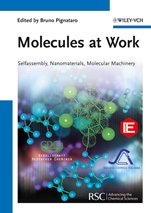
Molecules at Work: Selfassembly, Nanomaterials, Molecular Machinery
ISBN 9783527330935
Autor: Bruno Pignataro
Wydawca: Wiley
Dostępność: 3-6 tygodni
Cena: 611,10 zł
Przed złożeniem zamówienia prosimy o kontakt mailowy celem potwierdzenia ceny.
ISBN13: |
9783527330935 |
ISBN10: |
3527330933 |
Autor: |
Bruno Pignataro |
Oprawa: |
Hardback |
Rok Wydania: |
2012-04-18 |
Ilość stron: |
410 |
Wymiary: |
245x172 |
Tematy: |
PN |
This volume represents one of the two edited by inviting a selection of young researchers participating to the European Young Chemist Award 2010. The other volume concerns the area of Synthesis and Catalysis and is titled: New Strategies in Chemical Synthesis and Catalysis. This book contains the contributions of selected young chemists from the field of nanotechnology and material sciences. The contributions are grouped under the following umbrella topics: ∗ Self assembly ∗ Nano Materials ∗ Molecular Machinery This volume is an indispensable read for all materials scientists, organic, and inorganic chemists, Ph.D. students in chemistry and material sciences interested in seeing what tomorrow′s chemistry will look like.
Preface XIII List of Contributors XXI Part I Self Assembly 1 1 Yoctoliter–Sized Vessels as Potential Biological Models 3 Sheshanath V. Bhosale, Bradley E. Wilman, and Steven J. Langford 1.1 Introduction 3 1.2 Cavities on Glass Plates and Gold Surfaces 5 1.3 Preparation and Confirmation of Rigid Yoctowell Cavity 6 1.4 Molecular Sorting 7 1.5 Yoctowell–Based Molecular Recognition Events 9 1.6 Conclusion 11 2 Switchable Host–Guest Interactions of Supramolecular Rings and Cages 13 Guido H. Clever 2.1 Introduction 13 2.2 Host–Guest Chemistry 15 2.3 Switching in Supramolecular Systems 17 2.4 Natural Paragons 19 2.5 Types of External Input and Methods for Analysis 20 2.6 Conclusion 33 Part II NanoMaterials 39 3 Tailored Graphene–Type Molecules by Chemical Synthesis 41 Milan Kivala and Xinliang Feng 3.1 Introduction 41 3.2 Synthetic Concepts toward Expanded PAHs – Nanographenes 43 3.3 Conclusion and Outlook 64 4 Analyzing the Surface Area Properties of Microporous Materials 71 Abbie Trewin 4.1 Introduction 71 4.2 Microporous Materials 74 4.3 Porosity 81 4.4 Porous Materials and Calculating Surface Areas 85 4.5 Summary 92 5 Nanostructured Materials Based on Core–Substituted Naphthalene Diimides 97 Sheshanath V. Bhosale, Bradley E. Wilman, and Steven J. Langford 5.1 Introduction 97 5.2 Synthesis of Novel cNDI Derivatives 99 5.3 Electron Transfer 102 5.4 Supramolecular Self–Assembly of cNDI 105 5.5 Conclusion 110 6 Metal Phosphides: From Chemist’s Oddities to Designed Functional Materials 113 Sophie Carenco, Matthieu Demange, Cedric Boissiere, Clement Sanchez, and Nicolas Mezailles 6.1 Introduction 113 6.2 Bulk Metal Phosphides: A Long History 113 6.3 White Phosphorus for the Low–Temperature Synthesis of Metal Phosphide Nanoparticles 115 7 "Artificial Supermolecule": Progress in the Study of II–V Colloidal Semiconductor Nanocrystals 121 Shiding Miao, Alexander Eychmuller, and Stephen G. Hickey 7.1 Introduction 121 7.2 Optical Properties of II–V Nanocrystals 124 7.3 Synthesis of II–V Nanocrystals 133 7.4 Conclusions and Outlook 143 8 Luminescent Dendrimers 155 Giacomo Bergamini 8.1 Introduction 155 8.2 Intrinsic Photochemical and Photophysical Properties of Organic Dendrimers 156 8.3 Energy Transfer and Energy Upconversion in Multichromophoric Dendrimers 161 8.4 Dendrimers as Ligands for Metal Ions 164 8.5 Self–Assembly 168 8.6 Dendrimers as Photoswitchable Hosts 170 8.7 Conclusion and Perspectives 172 9 Fabrication of Ultramicroporous Silica Membranes for Pervaporation and Gas Separation 177 Vittorio Boffa 9.1 Ultramicroporous Silica Membranes 177 9.2 MxOy –Silica Membrane 185 9.3 Hybrid Organic–Silica Membranes 193 9.4 Perspectives in the Fabrication and Application of Silica Membranes 200 10 New Directions in the Fight against Cancer: From Metal Complexes to Nanostructured Materials 207 Santiago Gomez–Ruiz 10.1 Introduction 207 10.2 Metal Complexes in Cancer Treatment 208 10.3 Nanostructured Materials in Cancer Treatments 221 Part III Molecular Machinery 243 11 Molecular Rotors: Imaging Intracellular Viscosity 245 Marina K. Kuimova 11.1 Introduction 245 11.2 Theoretical Background 246 11.3 Biological Applications of Molecular Rotors 247 11.4 Conclusions and Outlook 258 12 Surface–Functionalized Inorganic Colloidal Nanocrystals in Functional Nanocomposite Materials for Microfabrication 263 Chiara Ingrosso, Marinella Striccoli, Angela Agostiano, and Maria Lucia Curri 12.1 Introduction 263 12.2 Colloidal Nanocrystals: Properties, Synthesis, and Surface Functionalization 264 12.3 NC–Based Nanocomposites for Microfabrication 269 12.4 Conclusions and Future Perspectives 279 13 Fluorescence Sensing of Temperature and Oxygen with Fullerenes 285 Mario N. Berberan–Santos and Carlos Baleizao 13.1 Introduction 285 13.2 Thermally Activated Delayed Fluorescence: Fundamental Aspects 287 13.3 Sensing Applications 292 13.4 Conclusions and Future Perspectives 307 14 Going beyond Glucose Sensing with Boronic Acid Receptors 315 Alexander Schiller 14.1 Introduction 315 14.2 Indicator Displacement Assays for the Detection of Sugars 316 14.3 Glucose Sensing with Boronic Acid Receptors 317 14.4 Solution–Phase Sensor Arrays with Boronic–Acid–Appended Bipyridinium Salts 321 14.5 Carbohydrate–Active Enzyme Assays 327 14.6 Boronic–Acid–Appended Bipyridinium Salts at Work – NOVOSIDES 330 14.7 Conclusions and Perspectives 333 15 Design of Novel Iridium Complexes to Obtain Stable and Efficient Light–Emitting Electrochemical Cells 339 Ruben D. Costa 15.1 Brief History of Electroluminescence and Optoelectronic Devices 339 15.2 Light–Emitting Electrochemical Cells: Motivation and Definition 340 15.3 Ionic Transition–Metal Complexes Based on Ir(III) Metal Core for LECs 343 15.4 Strategies to Design Iridium(III) Complexes for Highly Efficient LECs 346 15.5 Strategies to Design Iridium(III) Complexes for Highly Stable LECs 350 15.6 Outlook and Conclusions 356 16 Photochemically Driven Molecular Devices and Machines 361 Serena Silvi 16.1 Introduction 361 16.2 Switches and Logic Gates 363 16.3 Molecular Machines 369 16.4 Conclusions 380 Acknowledgments 381 References 381 Index 385
Bruno Pignataro, born in Bologna in 1972, is Professor of Physical Chemistry at the University of Palermo. He received his degree in chemistry in 1995 from the University of Catania and his PhD in materials science five years later. He has helped establish a wide network of international collaborations and organized several scientific activities at national and international level, including coordinating the Young Chemists Group of the Italian Chemical Society and chairing the first three editions of the European Young Chemist Award. Professor Pignataro′s group research focus on the fields of nanoscience and nanotechnology, molecular electronics, and biotechnology.
Koszyk
Książek w koszyku: 0 szt.
Wartość zakupów: 0,00 zł
Informacje


Kontakt
Gambit
Centrum Oprogramowania
i Szkoleń Sp. z o.o.
Al. Pokoju 29b/22-24
31-564 Kraków
Siedziba Księgarni
ul. Kordylewskiego 1
31-542 Kraków
+48 12 410 5991
+48 12 410 5987
+48 12 410 5989
Subskrypcje
Administratorem danych osobowych jest firma Gambit COiS Sp. z o.o. Na podany adres będzie wysyłany wyłącznie biuletyn informacyjny.
Autoryzacja płatności

Informacje na temat autoryzacji płatności poprzez PayU.

© Copyright 2012: GAMBIT COiS Sp. z o.o. Wszelkie prawa zastrzeżone.
Projekt i wykonanie: Alchemia Studio Reklamy