


Wydawcy
Katalog tematyczny
- Archeologia (109)
- Ekonomia, finanse, business (13704)
- Filozofia (1445)
- Historia (3040)
- Języki i językoznawstwo (2356)
- Lifestyle, hobby i rozrywka (475)
- Medycyna (9704)
- Nauki humanistyczne (4)
- Nauki o Ziemi i środowisku (2638)
- Nauki ścisłe (20412)
- Nauki społeczne (8486)
- Nauki techniczne (13450)
- Budownictwo lądowe (1045)
- Chemia przemysłowa (2258)
- Elektronika i telekomunikacja (3287)
- Energetyka (1122)
- Inne nauki stosowane (363)
- Inżynieria biochemiczna (507)
- Inżynieria transportu (232)
- Mechanika i materiały (3316)
- Nauka o środowisku (321)
- Rolnictwo (507)
- Technika, ogólnie (475)
- Prawo (1696)
- Publikacje informacyjne i interdyscyplinarne (1288)
- Religia i wierzenia (917)
- Technika komputerowa (4067)
- Zdrowie, relacje międzyludzkie i rozwój osobisty (657)





Informacje szczegółowe o książce
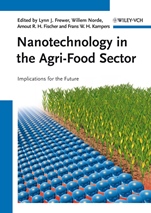
Nanotechnology in the Agri–Food Sector: Implications for the Future
ISBN 9783527330607
Autor: Lynn J. Frewer, Willem Norde, Arnout Fischer, Frans Kampers
Wydawca: Wiley
Dostępność: 3-6 tygodni
Cena: 611,10 zł
Przed złożeniem zamówienia prosimy o kontakt mailowy celem potwierdzenia ceny.
ISBN13: |
9783527330607 |
ISBN10: |
3527330607 |
Autor: |
Lynn J. Frewer, Willem Norde, Arnout Fischer, Frans Kampers |
Oprawa: |
Hardback |
Rok Wydania: |
2011-02-23 |
Ilość stron: |
328 |
Wymiary: |
246x178 |
Tematy: |
TDCB |
Providing an overview of nanotechnology in the context of agriculture and food science, this monograph covers topics such as nano–applications in teh agri–food sector, as well as the social and ethical implications.
Following a review of the basics, the book goes on to take an in–depth look at processing and engineering, encapsulation and delivery, packaging, crop protection and disease. It highlights the technical, regulatory, and safety aspects of nanotechnology in food science and agriculture, while also considering the environmental impact.
A valuable and accessible guide for professionals, novices, and students alike.
Spis treści:
List of Contributors.
Introduction (Lynn Frewer, Arnout Fischer, Willem Norde, and Frans Kampers).
Part 1 Fundamentals.
1 Intermolecular Interactions (Willem Norde).
1.1 Introduction.
1.2 Water.
1.3 Hydrophobic and Hydrophilic Interactions.
1.4 Dispersion Interaction.
1.5 Electrostatic Interactions.
1.6 Steric Interactions Involving Soluble Polymers.
1.7 Epilog.
Further Reading.
2 Supramolecular Structures (Pieter Stroeve).
2.1 Introduction.
2.2 Self–Assembly.
2.3 Plant Cells.
2.4 Organized Self–Assembled Structures.
2.5 Summary.
References.
Part 2 Basic Applications.
3 Nanotechnology in Food Production (Remko M. Boom).
3.1 Introduction.
3.2 Food Production.
3.3 Nanotechnology and Food.
3.4 Applications of Nanotechnology in Foods.
3.5 Concerns about Using Nanotechnology in Food Production.
References.
4 Packaging (Frans W.H. Kampers).
4.1 Introduction.
4.2 Reasons to Package Food Products.
4.3 Physical Properties of Packaging Materials.
4.4 Antimicrobial Functionality.
4.5 Visual Indicators.
4.6 Information and Communication Technology.
4.7 Discussion.
References.
5 Using Nanopa
rticles in Agricultural and Food Diagnostics (Geertruida A. Posthuma–Trumpie and Aart van Amerongen).
5.1 Introduction.
5.2 Biosensors.
5.3 Transduction Principles.
5.4 Examples of Biosensors in Which Nanoparticles Are Being Used.
5.5 Future Prospects.
References.
Part 3 Food Applications.
6 Nano–Functionalized Techniques in Crop and Livestock Production: Improving Food Productivity, Traceability, and Safety (Niall O′Brien and Enda Cummins).
6.1 Introduction.
6.2 Sensors.
6.3 Enzyme Biosensors and Diagnostics.
6.4 DNA–Based Biosensors and Diagnostics.
6.5 Radiofrequency Identifi cation (RFID).
6.6 Integrated Nanosensor Networks: Detection and Response.
6.7 Conclusions.
References.
7 Nanotechnologies for Improving Food Quality, Safety, and Security (Douglas K.R. Robinson and Mark Morrison).
7.1 Introduction.
7.2 Improving Quality, Safety, and Security of Agricultural Production.
7.3 Improving Quality, Safety, and Security in Food Processing.
7.4 Improving Quality, Safety, and Security in Packaging and Distribution.
7.5 Wrapping Up.
References.
8 Food Functionality and the Physics of Bionanotechnology: Some Examples and Challenges (Erik van der Linden).
8.1 Introduction: How Are Foods and Bionanotechnology Related?
8.2 Physics and Structures in Food Bionanotechnology.
8.3 Fibrillar Structures.
8.4 Plate–Like Structures.
8.5 Spherically Symmetric Structures.
8.6 Bicontinuous Structures in Protein–Polysaccharide Systems.
8.7 Gastronomy and the Nanodomain: Molecular Gastronomy.
8.8 Conclusions.
References.
9 Products and Their Commercialization (Betty Bugusu, Ursula Vanesa Lay Ma, and John D. Floros).
9.1 Introduction.
9.2 Investment in Nanotechnology Research.
9.3 Innovations in Food and Agriculture Nanotechnology.
9.4 Nanotechnology Commercializati
on.
9.5 Current and Emerging Markets.
9.6 Conclusions.
References.
Part 4 Nanotechnology and Society.
10 Toxicology of Nanomaterials in Food (Bernadene A. Magnuson and Hans Bouwmeester).
10.1 Introduction.
10.2 What Makes Nanomaterials Special?
10.3 Characterization of Engineered Nanomaterials.
10.4 Safety Assessment of Oral–Exposure Engineered Nanomaterials for Food Application.
10.5 Conclusions.
References.
11 Nanomaterials in Food and Food Contact Materials – Potential Implications for Consumer Safety and Regulatory Controls (Qasim Chaudhry, Laurence Castle, and Richard Watkins).
11.1 Background.
11.2 Nanomaterials Likely to be Used in Food and Related Applications.
11.3 Potential Consumer Safety Implications.
11.4 Current and Projected Applications for Food.
11.5 Implications for Regulatory Frameworks.
11.6 Conclusions.
References.
12 Environmental Considerations of and Societal Reactions to Nanotechnology in the Food Sector (Michael Siegrist, Bernd Nowack, and Hans Kastenholz).
12.1 Introduction.
12.2 Life Cycle of Nanotechnology Food Products.
12.3 Occurrence of Engineered Nanoparticles in the Environment.
12.4 How Should Society Deal with Uncertainty?
12.5 Conclusions.
References.
13 Nanotechnology and Food Allergy (E.N. Clare Mills, Yuri Aleexev, and Alan R. Mackie).
13.1 Introduction.
13.2 Molecules in Foods Involved in Triggering Allergies.
13.3 Food Structure, Processing, and Food Allergy.
13.4 Impact of Nanoscale Structures on Allergenic Potential of Foods.
13.5 Conclusions.
Acknowledgments.
References.
14 Communication of Risks and Benefi ts of Nanotechnology: the Issue of Societal Acceptance of Emerging Technologies (Lynn J. Frewer, Arnout R.H. Fischer, and J.(Hans)C.M. van Trijp).
14.1 Introduction.
14.2 Science and Society: Lessons for Nanotechnology Ap
plied to Food Production.
14.3 A Short Introduction to the Psychology of Risk–Benefit Perception.
14.4 How do People Form Perceptions of New Technologies.
14.5 Nanotechnology Communication in the Business Context.
14.6 Conclusion.
References.
15 Public Engagement with Emerging Issues in Agri–Food Nanotechnology (Lynn J. Frewer, Arnout R.H. Fischer, and Gene Rowe).
15.1 Introduction.
15.2 What Is "Public Engagement"?
15.3 Evaluating the Effectiveness of Public and Stakeholder Engagement.
15.4 Public Engagement Examples.
15.5 Recommendations for Conducting Public Engagement and Public Consultation Exercises.
Appendix.
Glossary.
References.
16 Nano–Ethics (Roger Strand).
16.1 Introduction: Historical Background.
16.2 Identifying and Avoiding Unethical Nanotechnological Products.
16.3 Ensuring Ethical Nanotechnological Research, Innovation, and Production.
16.4 Nano–Ethics as the Question of the Good Nanotechnology Society.
16.5 Conclusion: The Ethical Challenge Ahead for the Nano–Agri–Food Sector.
Acknowledgments.
References.
17 Evolving Best Practice in Governance Policy – Developing Consumer Confidence in Risk Analysis Applied to Emerging Technologies (Hans J.P. Marvin, Hans Bouwmeester, Gijs A. Kleter, Lynn J. Frewer, and Meike T.A. Wentholt).
17.1 Introduction.
17.2 Introduction to Food Safety Governance.
17.3 Potential Innovations to the Risk Analysis Framework as Proposed by SAFE FOODS.
17.4 Risk Analysis and Nanotechnology.
17.5 Recommendations.
Acknowledgments.
References.
Index.
Nota biograficzna:
Lynn Frewer is a researcher and professor at the University of Wageningen and has worked for the Institute of Food Research in both Norwich and Reading. She is a founding editorial board member of the Journal of Risk Research and on the editori
al boards of Environmental Biosafety Research and British Food Journal.
Willem Norde is Professor of Bionanotechnology at the University of Wageningen. He has 200 scientific publications and is editor of the book Physical Chemistry of Biological Interfaces (Dekker, 2000) and author of Colloids and Interfaces in Lide Sciences (Dekker, 2003).
Arnout Fischer is a researcher in the Marketing and Consumer Behavior group at Wageningen University. His research covers existing and emerging food products and technologies.
Frans Kampers is the director of BioNT, a research area based in the Wageningen Centre for Bionanotechnology in Food and Health.
Okładka tylna:
Providing an overview of nanotechnology in the context of agriculture and food science, this monograph covers topics such as nano–applications in teh agri–food sector, as well as the social and ethical implications.
Following a review of the basics, the book goes on to take an in–depth look at processing and engineering, encapsulation and delivery, packaging, crop protection and disease. It highlights the technical, regulatory, and safety aspects of nanotechnology in food science and agriculture, while also considering the environmental impact.
A valuable and accessible guide for professionals, novices, and students alike.
Koszyk
Książek w koszyku: 0 szt.
Wartość zakupów: 0,00 zł
Informacje


Kontakt
Gambit
Centrum Oprogramowania
i Szkoleń Sp. z o.o.
Al. Pokoju 29b/22-24
31-564 Kraków
Siedziba Księgarni
ul. Kordylewskiego 1
31-542 Kraków
+48 12 410 5991
+48 12 410 5987
+48 12 410 5989
Subskrypcje
Administratorem danych osobowych jest firma Gambit COiS Sp. z o.o. Na podany adres będzie wysyłany wyłącznie biuletyn informacyjny.
Autoryzacja płatności

Informacje na temat autoryzacji płatności poprzez PayU.

© Copyright 2012: GAMBIT COiS Sp. z o.o. Wszelkie prawa zastrzeżone.
Projekt i wykonanie: Alchemia Studio Reklamy