


Wydawcy
Katalog tematyczny
- Archeologia (109)
- Ekonomia, finanse, business (13704)
- Filozofia (1445)
- Historia (3040)
- Języki i językoznawstwo (2356)
- Lifestyle, hobby i rozrywka (475)
- Medycyna (9704)
- Nauki humanistyczne (4)
- Nauki o Ziemi i środowisku (2638)
- Nauki ścisłe (20412)
- Astronomia (294)
- Biologia (5119)
- Chemia (6540)
- Fizyka (3309)
- Elektryczność i magnetyzm (90)
- Fizyka atomowa i molekularna (110)
- Fizyka cząstek elementarnych (36)
- Fizyka jądra atomowego (36)
- Fizyka kwantowa (210)
- Fizyka matematyczna (121)
- Fizyka relatywistyczna (36)
- Fizyka statystyczna (51)
- Fizyka stosowana (498)
- Mechanika klasyczna (186)
- Optyka i światło (133)
- Stany materii (202)
- Matematyka (4574)
- Nauki ścisłe, ogólnie (503)
- Nauki społeczne (8486)
- Nauki techniczne (13450)
- Prawo (1696)
- Publikacje informacyjne i interdyscyplinarne (1288)
- Religia i wierzenia (917)
- Technika komputerowa (4067)
- Zdrowie, relacje międzyludzkie i rozwój osobisty (657)





Informacje szczegółowe o książce
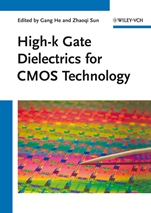
High–k Gate Dielectrics for CMOS Technology
ISBN 9783527330324
Autor: Gang He, Zhaoqi Sun
Wydawca: Wiley
Dostępność: 3-6 tygodni
Cena: 882,00 zł
Przed złożeniem zamówienia prosimy o kontakt mailowy celem potwierdzenia ceny.
ISBN13: |
9783527330324 |
ISBN10: |
3527330321 |
Autor: |
Gang He, Zhaoqi Sun |
Oprawa: |
Hardback |
Rok Wydania: |
2012-08-22 |
Ilość stron: |
590 |
Wymiary: |
245x176 |
Tematy: |
PH |
A state–of–the–art overview of high–k dielectric materials for advanced field–effect transistors, from both a fundamental and a technological viewpoint, summarizing the latest research results and development solutions. As such, the book clearly discusses the advantages of these materials over conventional materials and also addresses the issues that accompany their integration into existing production technologies. Aimed at academia and industry alike, this monograph combines introductory parts for newcomers to the field as well as advanced sections with directly applicable solutions for experienced researchers and developers in materials science, physics and electrical engineering.
Preface XV List of Contributors XVII Color Plates XXIII Part One Scaling and Challenge of Si–based CMOS 1 1 Scaling and Limitation of Si–based CMOS 3 Gang He, Zhaoqi Sun, Mao Liu, and Lide Zhang 1.1 Introduction 3 1.2 Scaling and Limitation of CMOS 4 1.3 Toward Alternative Gate Stacks Technology 16 1.4 Improvements and Alternative to CMOS Technologies 22 1.4.1 Improvement to CMOS 1.5 Potential Technologies Beyond CMOS 23 1.6 Conclusions 24 References 25 Part Two High–k Deposition and Materials Characterization 31 2 Issues in High–k Gate Dielectrics and its Stack Interfaces 33 Hong–Liang Lu and David Wei Zhang 2.1 Introduction 33 2.2 High–k Dielectrics 33 2.3 Metal Gates 40 2.4 Integration of High–k Gate Dielectrics with Alternative Channel Materials 45 2.5 Summary 51 References 52 3 UV Engineering of High–k Thin Films 61 Ian W. Boyd 3.1 Introduction 61 3.2 Gas Discharge Generation of UV (Excimer) Radiation 61 3.3 Excimer Lamp Sources Based on Silent Discharges 63 3.4 Predeposition Surface Cleaning for High–k Layers 65 3.5 UV Photon Deposition of Ta 2 O 5 Films 66 3.6 Photoinduced Deposition of Hf 1–x Si x O y Layers 70 3.7 Summary 73 References 73 4 Atomic Layer Deposition Process of Hf–Based High–k GateDielectric Film on Si Substrate 77 Tae Joo Park, Moonju Cho, Hyung–Suk Jung, and Cheol Seong Hwang 4.1 Introduction 77 4.2 Precursor Effect on the HfO2 Characteristics 78 4.3 Doped and Mixed High–k 97 4.4 Summary 105 References 105 5 Structural and Electrical Characteristics of Alternative High– k Dielectrics for CMOS Applications 111 Fu–Chien Chiu, Somnath Mondal, and Tung–Ming Pan 5.1 Introduction 111 5.2 Requirement of High–k Oxide Materials 114 5.3 Rare–Earth Oxide as Alternative Gate Dielectrics 117 5.4 Structural Characteristics of High–k RE Oxide Films 118 5.5 Electrical Characteristics of High–k RE Oxide Films 132 5.6 Conclusions and Perspectives 171 References 172 6 Hygroscopic Tolerance and Permittivity Enhancement of Lanthanum Oxide (La2O3 ) for High–k Gate Insulators 185 Yi Zhao 6.1 Introduction 185 6.2 Hygroscopic Phenomenon of La 2 O 3 Films 186 6.3 Low Permittivity Phenomenon of La 2 O 3 Films 191 6.4 Hygroscopic Tolerance Enhancement of La 2 O 3 Films 194 6.5 Hygroscopic Tolerance Enhancement of La 2 O 3 Films by Ultraviolet Ozone Treatment 198 6.6 Thermodynamic Analysis of Moisture Absorption Phenomenon in High–k Gate Dielectrics 203 6.7 Permittivity Enhancement of La 2 O 3 Films by Phase Control 205 6.8 Summary 219 References 221 7 Characterization of High–k Dielectric Internal Structure by X–Ray Spectroscopy and Reflectometry: New Approaches to Interlayer Identification and Analysis 225 Elena O. Filatova, Andrey A. Sokolov, and Igor V. Kozhevnikov 7.1 Introduction 225 7.2 Chemical Bonding and Crystalline Structure of Transition Metal Dielectrics 227 7.3 NEXAFS Investigation of Internal Structure 229 7.4 Studying the Internal Structure of High–K Dielectric Films by Hard X–Ray Photoelectron Spectroscopy and TEM 236 7.5 Studying the Internal Structure of High–K Dielectric Films by X–ray Reflectometry 244 References 266 8 High–k Insulating Films on Semiconductors and Metals: General Trends in Electron Band Alignment 273 Valeri V. Afanasev, Michel Houssa, and Andre Stesmans 8.1 Introduction 273 8.2 Band Offsets and IPE Spectroscopy 274 8.3 Silicon/Insulator Band Offsets 277 8.4 Band Alignment at Interfaces of High–Mobility Semiconductors 280 8.5 Metal/Insulator Barriers 284 8.6 Conclusions 289 References 289 Part Three Challenge in Interface Engineering and Electrode 293 9 Interface Engineering in the High–k Dielectric Gate Stacks 295 Shijie Wang, Yuanping Feng, and Alfred C.H. Huan 9.1 Introduction 295 9.2 High–k Oxide/Si Interfaces 295 9.3 Metal Gate/High–k Dielectric Interfaces 303 9.4 Chemical Tuning of Band Alignments for Metal Gate/High–k Oxide Interfaces 308 9.5 Summary and Discussion 314 References 315 10 Interfacial Dipole Effects on High–k Gate Stacks 319 Li Qiang Zhu 10.1 Introduction 319 10.2 Metal Gate Consideration 321 10.3 Interfacial Dipole Effects in High–k Gate Stacks 324 10.4 Observation of the Interfacial Dipole in High–k Stacks 332 10.5 Summary 348 References 349 11 Metal Gate Electrode for Advanced CMOS Application 355 Wenwu Wang, Xiaolei Wang, and Kai Han 11.1 The Scaling and Improved Performance of MOSFET Devices 355 11.2 Urgent Issues about MOS Gate Materials for Sub–0.1 µm Device Gate Stack 360 11.3 New Requirements of MOS Gate Materials for Sub–0.1 µm Device Gate Stack 365 11.4 Summary 374 References 374 Part Four Development in non–Si–based CMOS technology 379 12 Metal Gate/High– k CMOS Evolution from Si to Ge Platform 381 Albert Achin 12.1 Introduction 381 12.2 High–k/Si CMOSFETs 386 12.3 High–k/Ge CMOSFETs 392 12.4 Ge Platform 397 12.5 Conclusions 401 References 402 13 TheoreticalProgressonGaAs(001)SurfaceandGaAs/high– k Interface 407 Weichao Wang, Ka Xiong, Robert M. Wallace, and Kyeongjae Cho 13.1 Introduction 407 13.2 Computational Method 409 13.3 GaAs Surface Oxidation and Passivation 409 13.4 Origin of Gap States at the High–k/GaAs Interface and Interface Passivation 419 13.5 Conclusions 428 References 428 14 III – V MOSFETs with ALD High– k Gate Dielectrics 433 Jack C. Lee and Han Zhao 14.1 Introduction 433 14.2 Surface Channel InGaAs MOSFETs with ALD Gate Oxides 436 14.3 Buried Channel InGaAs MOSFETs 450 14.4 Summary 460 References 466 Part Five High–k Application in Novel Devices 471 15 High–k Dielectrics in Ferroelectric Gate Field Effect Transistors for Nonvolatile Memory Applications 473 Xubing Lu 15.1 Introduction 473 15.2 Overview of High–k Dielectric Studies for FeFET Applications 477 15.3 Developing of HfTaO Buffer Layers for FeFET Applications 485 15.4 Summary 496 References 497 16 Rare–Earth Oxides as High–k Gate Dielectrics for Advanced Device Architectures 501 Pooi See Lee, Mei Yin Chan, and Peter Damarwan 16.1 Introduction 501 16.2 Key Challenges for High–k Dielectrics 502 16.3 Rare–Earth Oxides as High–k Dielectrics 506 16.4 High–k Dielectrics in Advanced Device Architecture 517 References 522 Part Six Challenge and Future Directions 531 17 The Interaction Challenges with Novel Materials in Developing High–Performance and Low–Leakage High– k /Metal Gate CMOS Transistors 533 Michael Chudzik, Siddarth Krishnan, Unoh Kwon, Mukesh Khare, Vijay Narayanan, Takashi Ando, Ed Cartier, Huiming Bu, and Vamsi Paruchuri 17.1 Introduction 533 17.2 Traditional CMOS Integration Processes 534 17.3 High–k /Metal Gate Integration Processes 536 17.4 Mobility 536 17.5 Metal Electrodes and Effective Work Function 541 17.6 T inv Scaling and Impacts on Gate Leakage and Effective Work Function 544 17.7 Ambients and Oxygen Vacancy–Induced Modulation of Threshold Voltage 545 17.8 Reliability 547 17.9 Conclusions 550 References 551 Index 557
Gang He is Professor at the School of Physics and Materials Science of the Anhui University, China. He obtained his academic degrees from the Institute of Solid State Physics of the Chinese Academy of Sciences. His research interests and efforts cover the areas of the preparation, characterization, fundamental understanding and associated applications of high–k gate dielectric thin films. Due to his outstanding performance in research work, he won a scholarship award from the Chinese Academy of Sciences in 2005 and a grant of the Japanese Society for the Promotion of Science in 2006. Zhaoqi Sun is the President of the School of Physics and Materials Science at the Anhui University. He graduated from Sichuan University and obtained his academic degrees from the University of Science and Technology of China. His research is focused on functional thin film materials for applications in microelectronics. Zhaoqi Sun has authored more than 140 scientific publications and has received numerous scientific awards, including the Science and Technology Award of the Anhui Province and an Outstanding Teacher Award.
Koszyk
Książek w koszyku: 0 szt.
Wartość zakupów: 0,00 zł
Informacje


Kontakt
Gambit
Centrum Oprogramowania
i Szkoleń Sp. z o.o.
Al. Pokoju 29b/22-24
31-564 Kraków
Siedziba Księgarni
ul. Kordylewskiego 1
31-542 Kraków
+48 12 410 5991
+48 12 410 5987
+48 12 410 5989
Subskrypcje
Administratorem danych osobowych jest firma Gambit COiS Sp. z o.o. Na podany adres będzie wysyłany wyłącznie biuletyn informacyjny.
Autoryzacja płatności

Informacje na temat autoryzacji płatności poprzez PayU.

© Copyright 2012: GAMBIT COiS Sp. z o.o. Wszelkie prawa zastrzeżone.
Projekt i wykonanie: Alchemia Studio Reklamy