


Wydawcy
Katalog tematyczny
- Archeologia (109)
- Ekonomia, finanse, business (13704)
- Filozofia (1445)
- Historia (3040)
- Języki i językoznawstwo (2356)
- Lifestyle, hobby i rozrywka (475)
- Medycyna (9704)
- Nauki humanistyczne (4)
- Nauki o Ziemi i środowisku (2638)
- Nauki ścisłe (20412)
- Astronomia (294)
- Biologia (5119)
- Chemia (6540)
- Chemia analityczna (361)
- Chemia fizyczna (346)
- Chemia nieorganiczna (137)
- Chemia organiczna (535)
- Krystalografia (27)
- Minerologia (46)
- Fizyka (3309)
- Matematyka (4574)
- Nauki ścisłe, ogólnie (503)
- Nauki społeczne (8486)
- Nauki techniczne (13450)
- Prawo (1696)
- Publikacje informacyjne i interdyscyplinarne (1288)
- Religia i wierzenia (917)
- Technika komputerowa (4067)
- Zdrowie, relacje międzyludzkie i rozwój osobisty (657)





Informacje szczegółowe o książce
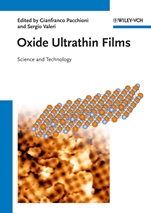
Oxide Ultrathin Films: Science and Technology
ISBN 9783527330164
Autor: Gianfranco Pacchioni, Sergio Valeri
Wydawca: Wiley
Dostępność: 3-6 tygodni
Cena: 801,15 zł
Przed złożeniem zamówienia prosimy o kontakt mailowy celem potwierdzenia ceny.
ISBN13: |
9783527330164 |
ISBN10: |
352733016X |
Autor: |
Gianfranco Pacchioni, Sergio Valeri |
Oprawa: |
Hardback |
Rok Wydania: |
2011-11-23 |
Ilość stron: |
368 |
Wymiary: |
245x175 |
Tematy: |
PN |
A wealth of information in one accessible book. Written by international experts from multidisciplinary fields, this in–depth exploration of oxide ultrathin films covers all aspects of these systems, starting with preparation and characterization, and going on to geometrical and electronic structure, as well as applications in current and future systems and devices.
Spis treści:
Preface xi
List of Contributors xiii
1 Synthesis and Preparation of Oxide Ultrathin Films 1
Sergio Valeri and Stefania Benedetti
1.1 Introduction 1
1.2 Basic Aspects of Fabrication 3
1.3 Physical Methods 7
1.3.1 Controlled Oxidation of Bulk Single–Crystal Surfaces 7
1.3.2 Sputtering and Ablation of Oxide Targets 8
1.3.2.1 Sputter Deposition 8
1.3.2.2 Pulsed Laser Deposition 8
1.3.3 Reactive Physical Vapor Deposition 9
1.3.3.1 Film Growth by Sputtering or Ablation of Pure Targets in Oxidizing Atmosphere 10
1.3.3.2 Film Growth by Reactive MBE 10
1.3.4 Post–oxidation of Pre–deposited Thin Metal Films 13
1.4 Chemical Methods 14
1.4.1 Chemical Vapor Deposition 15
1.4.2 Liquid–Precursor–Based Thin–Film Deposition Techniques 16
1.5 Oxide Nanosheets and Buried Layers 19
1.5.1 Exfoliated and Detachable Layers 19
1.5.1.1 Exfoliated Oxide Nanosheets 19
1.5.1.2 Detachable Ultrathin Oxide Films 19
1.5.2 Buried Oxide Layers 20
1.6 Conclusions and Perspectives 21
2 Characterization Tools of Ultrathin Oxide Films 27
David C. Grinter and Geoff Thornton
2.1 Introduction 27
2.2 Structure Determination Techniques 28
2.2.1 Scanned Probe Microscopy 28
2.2.2 Scanning Tunneling Microscopy 28
2.2.2.1 Case Study: CeO2(111)/Pt(111) 30
2.2.3 Noncontact Atomic Force Microscopy 30
2.2.4 X–Ray Photoemission Electron Microscopy 31
2.2.4.1 Case Study: Iron Oxide on a–Al2O3(0001) 33
2.2.5 Surface X–Ray
Diffraction 33
2.2.5.1 Case Study: Oxidation of Rh(111) 34
2.2.6 Photoelectron Diffraction 35
2.2.6.1 Case Study: VO Layers on TiO2(110) 36
2.3 Spectroscopic Techniques 36
2.3.1 X–Ray Magnetic Circular/Linear Dichroism 36
2.3.1.1 Case Study: Fe3dO4(111) Ultrathin Films on Pt(111) 38
2.3.1.2 Case Study: NiO/FeO(001) 39
2.3.2 Magneto–optical Kerr Effect 40
2.3.2.1 Case Study: Fe/NiO/MgO(001) and Fe/NiO/Ag(001) 40
2.3.3 Conversion Electron Mo¨ssbauer Spectroscopy 41
2.3.3.1 Case Study: Fe3O4(111)/Pt(111) 43
2.4 Summary 43
3 Ordered Oxide Nanostructures on Metal Surfaces 47
Falko P. Netzer and Svetlozar Surnev
3.1 Introduction 47
3.2 Fabrication of Oxide Nanostructures 48
3.3 Novel Structure Concepts 49
3.4 Dimensionality Aspects: from Two– to One– to Zero–Dimensional Structures 58
3.5 Transition from Two– to Three–Dimensional Structures: Growth of Bulk Structures out of Interfacial Layers 63
3.6 Synopsis 69
Acknowledgment 69
4 Unusual Properties of Oxides and Other Insulators in the Ultrathin Limit 75
Livia Giordano and Gianfranco Pacchioni
4.1 Introduction 75
4.2 Evolution of Band Gap with Film Thickness 77
4.3 Electronic Transport through Oxide Ultrathin Films 79
4.4 Work Function Changes Induced by Oxide Films 85
4.5 Nanoporosity: Oxide Films as Molecular and Atomic Sieves 89
4.6 Flexibility of Oxide Thin Films and Polaronic Distortion 94
4.7 Conclusions 97
Acknowledgments 97
5 Silica and High–k Dielectric Thin Films in Microelectronics 101
Gennadi Bersuker, Keith McKenna, and Alexander Shluger
5.1 Introduction 101
5.2 Electrical Characterization of High–k Dielectrics on Silicon 103
5.3 Theoretical Modeling of Gate Dielectric Films 104
5.3.1 Aims of Theoretical Modeling 104
5.3.2 Computational Methods 105
5.4 Models of the Struct
ure and Properties of HfO2 Gate Dielectric Films 106
5.4.1 Oxygen–Deficient Defect Centers in Bulk HfO2 106
5.4.2 Self–Trapped Polarons in HfO2 107
5.4.3 Using Doping to Increase the k Value in HfO2 108
5.4.4 Modeling of Si/SiO2/HfO2 Films and Interfaces 109
5.5 Polycrystalline Gate Oxide Films 110
5.5.1 Impact of Polycrystallinity on Microelectronic Device Characteristics 110
5.5.2 Structure and Electronic Properties of Grain Boundaries 112
5.5.3 Defect Segregation at Grain Boundaries 113
5.6 Conclusions and Outlook 114
Acknowledgments 115
6 Oxide Passive Films and Corrosion Protection 119
Philippe Marcus and Vincent Maurice
6.1 Introduction 119
6.2 Electrochemical Fundamentals of Passivation of Metals 119
6.3 Chemical Composition, Chemical States, and Thickness of Passive Films on Metals and Alloys 122
6.3.1 Copper, silver, nickel, iron, and chromium 122
6.3.2 Stainless Steels 124
6.4 Two–Dimensional Oxide Passive Films on Metals 126
6.4.1 Copper 126
6.4.2 Silver 128
6.5 Growth and Nanostructure of Three–Dimensional Ultrathin Oxide Films 130
6.5.1 Cu(I) and Cu(I)/Cu(II) Passive Films 131
6.5.2 Ni(II) Passive Films 133
6.5.3 Fe(II)/Fe(III) Passive Films 135
6.5.4 Aging Effects on Cr(III)–Rich Passive Films 136
6.6 Corrosion Modeling by DFT 137
6.7 Conclusion 140
7 Oxide Films as Catalytic Materials and Models of Real Catalysts 145
Hans–Joachim Freund
7.1 Introduction 145
7.2 Oxide Thin Films Grown as Supports 146
7.3 Systems to Model Real Catalysts 154
7.3.1 Supported Gold 154
7.3.2 Oxides on Oxides: Vanadia Nanoparticles on Ceria 163
7.4 Ultrathin–Film Catalysts 166
7.5 Synopsis 173
Acknowledgments 174
8 Oxide Films in Spintronics 181
Riccardo Bertacco and Franco Ciccacci
8.1 Introduction 181
8.2 Historical Notes 182
8.3 Half–Meta
llic Manganites: the Case of LSMO 183
8.4 Electric Control of Magnetization in Oxide Heterostructures 189
8.4.1 Proximity and Electric Field Effects on Magnetic Properties of LSMO Films 189
8.4.2 Magnetoelectric Coupling at Fe–BTO Interfaces 196
8.5 Conclusions and Perspectives 197
Acknowledgments 197
9 Oxide Ultrathin Films for Solid Oxide Fuel Cells 201
Tatsumi Ishihara
9.1 Overview of Solid Oxide Fuel Cell Technology 201
9.2 Preparation of Oxide Ion Conductor Thin Films 203
9.3 Nano Size Effects on Oxide Ion Conductor Films 206
9.4 Power Generating Property of SOFCs using LaGaO3 Thin Films 208
9.5 Development of m–SOFCs 216
9.6 Concluding Remarks 217
10 Transparent Conducting and Chromogenic Oxide Films as Solar Energy Materials 221
Claes–Go¨ran Granqvist
10.1 Introduction 221
10.2 Transparent Infrared Reflectors and Transparent Electrical Conductors 223
10.2.1 Overview 223
10.2.2 Computed Optical Data for ITO Films 225
10.2.3 Alternative Transparent Conductors 226
10.3 Thermochromics 228
10.3.1 Overview 228
10.3.2 VO2 Films and Nanoparticles: How to Improve the Modulation of Tsol 229
10.3.3 Magnesium Doping of VO2: How to Enhance Tlum 231
10.4 Electrochromics 232
10.4.1 Overview 232
10.4.2 Nanostructural Features: A Closer Look at EC Films 233
10.4.3 EC Foils by Roll–to–Roll Manufacturing: Some Initial Results 234
10.5 Summary and Concluding Remarks 235
11 Oxide Ultrathin Films in Sensor Applications 239
Elise Brunet, Giorgio C. Mutinati, Stephan Steinhauer, and Anton Köck
11.1 Introduction 239
11.2 Sensor Applications 241
11.2.1 Magnetic Sensors 243
11.2.2 Photodetectors and Detectors for the (F)IR Region 246
11.2.3 Electrochemical Sensors 246
11.2.4 Gas Sensors 247
11.2.4.1 Optical Gas Sensors 248
11.2.4.2 Mass–Sensitive Gas Sensors 249<
br>11.2.4.3 Electrical Gas Sensors 250
11.3 SnO2–Based Gas Sensors 254
11.3.1 Sensor Fabrication 254
11.3.2 Sensor Performance 255
11.4 Conclusion 258
12 Ferroelectricity in Ultrathin–Film Capacitors 265
Celine Lichtensteiger, Pavlo Zubko, Massimiliano Stengel, Pablo Aguado–Puente, Jean–Marc Triscone, Philippe Ghosez, and Javier Junquera
12.1 Introduction 265
12.2 Ferroelectricity: Basic Definitions 266
12.3 Theoretical Methods for the Study of Bulk Ferroelectric Materials 269
12.3.1 Devonshire–Ginzburg–Landau Phenomenological Theory 269
12.3.2 First–Principles Simulations 270
12.3.3 Second–Principles Methods: Model Hamiltonians and Shell Models 272
12.4 Modeling Ferroelectricity in Oxides 274
12.5 Theory of Ferroelectric Thin Films 277
12.5.1 Mechanical Boundary Conditions: Strain 277
12.5.2 Electrical Boundary Conditions: Imperfect Screening 280
12.5.3 Electrical Functionals with a Depolarization Field 284
12.5.4 Chemical Bonding Contributions to Electrical Boundary Conditions 285
12.6 Polarization Domains and Domain Walls 287
12.6.1 Kittel Law 287
12.6.2 Domain Morphology 289
12.6.3 Domain Walls 290
12.7 Artificially Layered Ferroelectrics 291
12.7.1 Electrostatic Coupling 291
12.7.2 Engineering Ferroelectricity at Interfaces 294
12.8 Conclusion and Perspectives 296
13 Titania Thin Films in Biocompatible Matals and Medical Implants 309
Fabio Variola and Antonio Nanci
13.1 The Advent of Titanium–Based Materials 309
13.2 Biologically Relevant Physicochemical Properties of Native Titania Thin Films 310
13.3 Strategies for Modification of the Surface Oxide Layer 311
13.3.1 Chemical Methods 312
13.3.1.1 Oxide Growth Models for Oxidative Treatments 313
13.3.1.2 Doping of Oxide Layers with Bioactive Elements 314
13.3.2 Physical Methods 315
13.3.3 Biochemical Functional
ization 315
13.4 Biological Surface Science 316
13.5 Biological Response to Surface Oxide Layers 317
13.5.1 Protein Adsorption 317
13.5.2 In Vitro Studies 317
13.5.3 In Vivo and Clinical Studies 319
13.5.4 Antibacterial Capacity 320
13.6 Slow Release Capacity of Nanoporous Titanium Oxide Layers 321
13.7 Conclusion and Perspectives 322
Acknowledgments 324
14 Oxide Nanowires for New Chemical Sensor Devices 329
Alberto Vomiero, Elisabetta Comini, and Giorgio Sberveglieri
14.1 Outline 329
14.2 Introduction 329
14.3 Synthesis 331
14.4 Integration 334
14.5 Metal Oxide Chemical Sensors 335
14.6 Conductometric Sensors 336
14.7 Optical Sensors 340
Index 345
Nota biograficzna:
Prof. Gianfranco Pacchioni is the Vice–Director of the Department of Material Science at the University of Milano Bicocca. He received his degree in Chemistry from the University of Milan and was awarded his Ph. D. in Physical Chemistry from the Freie Universitat Berlin, Germany. Prof. Pacchioni?s research activity is directed towards theoretical aspects of surface science and material science, with particular emphasis on the properties of oxide materials, oxide ultrathin films and supported metal nanoclusters. He is author of about 400 papers, edited a number of books and is on the editorial board of several journals.
Prof. Sergio Valeri is Director of the Department of Physics at the University of Modena and Reggio Emilia. He received his degree in Physics from the University of Bologna, Italy. Prof. Valeri?s research concentrates on solid surfaces and interfaces and low dimensional systems with emphasis on structural and electronic characterization of metal–semiconductor, metal–metal and metal–oxide thin and ultrathin films and interfaces, on the interaction of energetic particles with solid surfaces, and on the development of electron spectroscopies. Prof. Valeri has authored ca
200 papers on international refereed scientific journals.
Koszyk
Książek w koszyku: 0 szt.
Wartość zakupów: 0,00 zł
Informacje


Kontakt
Gambit
Centrum Oprogramowania
i Szkoleń Sp. z o.o.
Al. Pokoju 29b/22-24
31-564 Kraków
Siedziba Księgarni
ul. Kordylewskiego 1
31-542 Kraków
+48 12 410 5991
+48 12 410 5987
+48 12 410 5989
Subskrypcje
Administratorem danych osobowych jest firma Gambit COiS Sp. z o.o. Na podany adres będzie wysyłany wyłącznie biuletyn informacyjny.
Autoryzacja płatności

Informacje na temat autoryzacji płatności poprzez PayU.

© Copyright 2012: GAMBIT COiS Sp. z o.o. Wszelkie prawa zastrzeżone.
Projekt i wykonanie: Alchemia Studio Reklamy