


Wydawcy
Katalog tematyczny
- Archeologia (109)
- Ekonomia, finanse, business (13704)
- Filozofia (1445)
- Historia (3040)
- Języki i językoznawstwo (2356)
- Lifestyle, hobby i rozrywka (475)
- Medycyna (9704)
- Nauki humanistyczne (4)
- Nauki o Ziemi i środowisku (2638)
- Nauki ścisłe (20412)
- Astronomia (294)
- Biologia (5119)
- Chemia (6540)
- Chemia analityczna (361)
- Chemia fizyczna (346)
- Chemia nieorganiczna (137)
- Chemia organiczna (535)
- Krystalografia (27)
- Minerologia (46)
- Fizyka (3309)
- Matematyka (4574)
- Nauki ścisłe, ogólnie (503)
- Nauki społeczne (8486)
- Nauki techniczne (13450)
- Prawo (1696)
- Publikacje informacyjne i interdyscyplinarne (1288)
- Religia i wierzenia (917)
- Technika komputerowa (4067)
- Zdrowie, relacje międzyludzkie i rozwój osobisty (657)





Informacje szczegółowe o książce
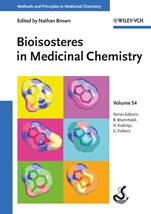
Bioisosteres in Medicinal Chemistry
ISBN 9783527330157
Autor: Nathan Brown, Raimund Mannhold, Hugo Kubinyi, Gerd Folkers
Wydawca: Wiley
Dostępność: 3-6 tygodni
Cena: 746,55 zł
Przed złożeniem zamówienia prosimy o kontakt mailowy celem potwierdzenia ceny.
ISBN13: |
9783527330157 |
ISBN10: |
3527330151 |
Autor: |
Nathan Brown, Raimund Mannhold, Hugo Kubinyi, Gerd Folkers |
Oprawa: |
Hardback |
Rok Wydania: |
2012-08-22 |
Ilość stron: |
256 |
Wymiary: |
258x170 |
Tematy: |
PN |
Written with the practicing medicinal chemist in mind, this is the first modern handbook to systematically address the topic of bioisosterism. As such, it provides a ready reference on the principles and methods of bioisosteric replacement as a key tool in preclinical drug development. The first part provides an overview of bioisosterism, classical bioisosteres and typical molecular interactions that need to be considered, while the second part describes a number of molecular databases as sources of bioisosteric identification and rationalization. The third part covers the four key methodologies for bioisostere identification and replacement: physicochemical properties, topology, shape, and overlays of protein–ligand crystal structures. In the final part, several real–world examples of bioisosterism in drug discovery projects are discussed. With its detailed descriptions of databases, methods and real–life case studies, this is tailor–made for busy industrial researchers with little time for reading, while remaining easily accessible to novice drug developers due to its systematic structure and introductory section.
List of Contributors XI Preface XV A Personal Foreword XVII Part One Principles 1 1 Bioisosterism in Medicinal Chemistry 3 Nathan Brown 1.1 Introduction 3 1.2 Isosterism 3 1.3 Bioisosterism 6 1.4 Bioisosterism in Lead Optimization 9 1.5 Conclusions 13 References 14 2 Classical Bioisosteres 15 Caterina Barillari and Nathan Brown 2.1 Introduction 15 2.2 Historical Background 15 2.3 Classical Bioisosteres 17 2.4 Nonclassical Bioisosteres 20 2.5 Summary 27 References 27 3 Consequences of Bioisosteric Replacement 31 Dennis A. Smith and David S. Millan 3.1 Introduction 31 3.2 Bioisosteric Groupings to Improve Permeability 32 3.3 Bioisosteric Groupings to Lower Intrinsic Clearance 40 3.4 Bioisosteric Groupings to Improve Target Potency 43 3.5 Conclusions and Future Perspectives 47 References 49 Part Two Data 53 4 BIOSTER: A Database of Bioisosteres and Bioanalogues 55 István Ujváry and Julian Hayward 4.1 Introduction 55 4.2 Historical Overview and the Development of BIOSTER 56 4.3 Description of BIOSTER Database 59 4.4 Examples 64 4.5 Applications 69 4.6 Summary 70 4.7 Appendix 70 References 71 5 Mining the Cambridge Structural Database for Bioisosteres 75 Colin R. Groom, Tjelvar S. G. Olsson, John W. Liebeschuetz, David A. Bardwell, Ian J. Bruno, and Frank H. Allen 5.1 Introduction 75 5.2 The Cambridge Structural Database 76 5.3 The Cambridge Structural Database System 78 5.4 The Relevance of the CSD to Drug Discovery 83 5.5 Assessing Bioisosteres: Conformational Aspects 84 5.6 Assessing Bioisosteres: Nonbonded Interactions 86 5.7 Finding Bioisosteres in the CSD: Scaffold Hopping and Fragment Linking 91 5.8 A Case Study: Bioisosterism of 1 H –Tetrazole and Carboxylic Acid Groups 94 5.9 Conclusions 97 References 98 6 Mining for Context–Sensitive Bioisosteric Replacements in Large Chemical Databases 103 George Papadatos, Michael J. Bodkin, Valerie J. Gillet, and Peter Willett 6.1 Introduction 103 6.2 Definitions 104 6.3 Background 105 6.4 Materials and Methods 109 6.5 Results and Discussion 113 6.6 Conclusions 124 References 125 Part Three Methods 129 7 Physicochemical Properties 131 Peter Ertl 7.1 Introduction 131 7.2 Methods to Identify Bioisosteric Analogues 132 7.3 Descriptors to Characterize Properties of Substituents and Spacers 132 7.4 Classical Methods for Navigation in the Substituent Space 135 7.5 Tools to Identify Bioisosteric Groups Based on Similarity in Their Properties 136 7.6 Conclusions 138 References 138 8 Molecular Topology 141 Nathan Brown 8.1 Introduction 141 8.2 Controlled Fuzziness 141 8.3 Graph Theory 142 8.4 Data Mining 144 8.5 Topological Pharmacophores 146 8.6 Reduced Graphs 149 8.7 Summary 151 References 152 9 Molecular Shape 155 Pedro J. Ballester and Nathan Brown 9.1 Methods 156 9.2 Applications 161 9.3 Future Prospects 164 References 165 10 Protein Structure 167 James E. J. Mills 10.1 Introduction 167 10.2 Database of Ligand–Protein Complexes 168 10.3 Generation of Ideas for Bioisosteres 173 10.4 Context–Specific Bioisostere Generation 177 10.5 Using Structure to Understand Common Bioisosteric Replacements 178 10.6 Conclusions 180 References 180 Part Four Applications 183 11 The Drug Guru Project 185 Kent D. Stewart, Jason Shanley, Karam B. Alsayyed Ahmed, and J. Phillip Bowen 11.1 Introduction 185 11.2 Implementation of Drug Guru 187 11.3 Bioisosteres 188 11.4 Application of Drug Guru 194 11.5 Quantitative Assessment of Drug Guru Transformations 195 11.6 Related Work 197 11.7 Summary: The Abbott Experience with the Drug Guru Project 197 References 198 12 Bioisosteres of an NPY–Y5 Antagonist 199 Nicholas P. Barton and Benjamin R. Bellenie 12.1 Introduction 199 12.2 Background 199 12.3 Potential Bioisostere Approaches 201 12.4 Template Molecule Preparation 204 12.5 Database Molecule Preparation 206 12.6 Alignment and Scoring 206 12.7 Results and Monomer Selection 207 12.8 Synthesis and Screening 208 12.9 Discussion 209 12.10 SAR and Developability Optimization 211 12.11 Summary and Conclusion 214 References 214 13 Perspectives from Medicinal Chemistry 217 Nicholas A. Meanwell, Marcus Gastreich, Matthias Rarey, Mike Devereux, Paul L.A. Popelier, Gisbert Schneider, and Peter Willett 13.1 Introduction 217 13.2 Pragmatic Bioisostere Replacement in Medicinal Chemistry: A Software Makers Viewpoint 219 13.3 The Role of Quantum Chemistry in Bioisostere Prediction 221 13.4 Learn from ‘‘Naturally Drug–Like’’ Compounds 223 13.5 Bioisosterism at the University of Sheffield 224 References 227 Index 231
Nathan Brown is the Head of the In Silico Medicinal Chemistry group in the Cancer Therapeutics Unit at The Institute of Cancer Research in London (UK). At the ICR, Nathan and his group support our entire drug discovery portfolio together with developing new computational methodologies to enhance our drug design work. Nathan conducted his doctoral research in Sheffield with Professor Peter Willett focusing on evolutionary algorithms and graph theory. After a two–year Marie Curie fellowship in Amsterdam in collaboration with Professor Johann Gasteiger in Erlangen, he joined the Novartis Institutes for BioMedical Research in Basel for a three–year Presidential fellowship in Basel working with Professors Peter Willett and Karl–Heinz Altmann. Nathan?s work has led to the pioneering work on mulitobjective de novo design in addition to a variety of discoveries and method development in bioisosteric identification and replacement, scaffold hopping, molecular descriptors and statistical modelling. Nathan continues to pursue his research in all aspects of in silico medicinal chemistry.
“In all, I believe this book is a musthave handbook on bioisosteres. It is highly valuable both as a text book for graduate students and as a book of reference for the medicinal chemist working in the industry as well as in an academic setting.” ( ChemMedChem , 1 July 2013)
Koszyk
Książek w koszyku: 0 szt.
Wartość zakupów: 0,00 zł
Informacje


Kontakt
Gambit
Centrum Oprogramowania
i Szkoleń Sp. z o.o.
Al. Pokoju 29b/22-24
31-564 Kraków
Siedziba Księgarni
ul. Kordylewskiego 1
31-542 Kraków
+48 12 410 5991
+48 12 410 5987
+48 12 410 5989
Subskrypcje
Administratorem danych osobowych jest firma Gambit COiS Sp. z o.o. Na podany adres będzie wysyłany wyłącznie biuletyn informacyjny.
Autoryzacja płatności

Informacje na temat autoryzacji płatności poprzez PayU.

© Copyright 2012: GAMBIT COiS Sp. z o.o. Wszelkie prawa zastrzeżone.
Projekt i wykonanie: Alchemia Studio Reklamy