


Wydawcy
Katalog tematyczny
- Archeologia (109)
- Ekonomia, finanse, business (13704)
- Filozofia (1445)
- Historia (3040)
- Języki i językoznawstwo (2356)
- Lifestyle, hobby i rozrywka (475)
- Medycyna (9704)
- Chirurgia (272)
- Inne gałęzie medycyny (1871)
- Medycyna kliniczna (4187)
- Choroby wewnętrzne (514)
- Dermatologia (51)
- Diagnostyka medyczna (3)
- Endokrynologia (144)
- Gastroenterologia (27)
- Geriatria (50)
- Ginekologia i położnictwo (134)
- Hematologia (46)
- Hepatologia (10)
- Kardiologia (71)
- Laryngologia (12)
- Nefrologia (10)
- Neurologia (500)
- Oftalmologia (50)
- Pediatria (33)
- Pulmunologia (32)
- Reumatologia (14)
- Terapia genowa (1)
- Układ mięśniowo-szkieletowy (1)
- Urologia (14)
- Medycyna niekonwencjonalna (14)
- Medycyna przedkliniczna (269)
- Medycyna, ogólnie (1740)
- Medyczne służby pomocnicze (745)
- Studia medyczne (16)
- Weterynaria (548)
- Nauki humanistyczne (4)
- Nauki o Ziemi i środowisku (2638)
- Nauki ścisłe (20412)
- Nauki społeczne (8486)
- Nauki techniczne (13450)
- Prawo (1696)
- Publikacje informacyjne i interdyscyplinarne (1288)
- Religia i wierzenia (917)
- Technika komputerowa (4067)
- Zdrowie, relacje międzyludzkie i rozwój osobisty (657)





Informacje szczegółowe o książce
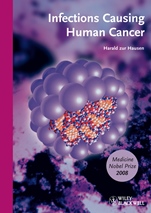
Infections Causing Human Cancer: Softcover Edition
ISBN 9783527329779
Autor: Harald zur Hausen
Wydawca: Wiley
Dostępność: 3-6 tygodni
Cena: 368,55 zł
Przed złożeniem zamówienia prosimy o kontakt mailowy celem potwierdzenia ceny.
ISBN13: |
9783527329779 |
ISBN10: |
3527329773 |
Autor: |
Harald zur Hausen |
Oprawa: |
Paperback |
Rok Wydania: |
2010-10-27 |
Ilość stron: |
531 |
Wymiary: |
242x172 |
Tematy: |
MJ |
During the past 35 years, the author of this work and his co–workers initially found Epstein–Barr virus DNA in Burkitt′s lymphomas and nasopharyngeal cancer and made the connection between HPV infection and cervical cancer. It was also during this period and subsequently that scientists all over the world discovered tumor–inducing bacteria, viruses, parasites, and protozoa, opening up entirely new prospects for the prevention and treatment of infection–induced cancer by vaccination.
Adopting a unifying concept and a consistent structure for the individual chapters, Professor zur Hausen provides a thorough and comprehensive overview on cancer–inducing infective agents – viruses, bacteria and parasites – and their corresponding transforming capacities and mechanisms. He does not cover the structure and molecular biology of the agents presented in great detail, but rather concentrates on those aspects that link the respective agents to human oncogenesis. As such, an extensive bibliography after each chapter permits further studies on the subject.
With a chapter on Helicobacter written by James Fox and his colleagues at Harvard University, this is an invaluable and instructive reference for all oncologists, microbiologists and molecular biologists working in the area of infections and cancer.
Harald zur Hausen studied medicine at the Universities of Bonn, Hamburg and Dusseldorf, gaining his MD in 1960. He was a research fellow at the University of Dusseldorf and the Children′s Hospital of Philadelphia, before being appointed assistant professor at the University of Pennsylvania in 1968. He joined the University of Wurzburg one year later, initially as a senior scientist and then as a private lecturer. From 1972 to 1977 he was Professor of Virology at the University of Erlangen–Nurnberg, and then at the University of Freiburg until 1983. Thereafter, he was appointed Scientific Director of the German C
ancer Research Center in Heidelberg until his retirement in 2003.
Professor zur Hausen has been a member of various research organizations, academies of science, and scientific boards. He was President of OECI, Vice–Chairman of the German American Academic Council and Vice–President of the Helmholtz Society of German National Research Centers. Among others, he received the Robert Koch Award, the Charles S. Mott Prize of the General Motors Cancer Research Foundation, the Paul Ehrlich and Ludwig Darmstaedter Award, the German Cancer Award, the Prince Mahidol Award of Thailand and the Federal Order of Merit, as well as six honorary degrees in six different countries. He is Editor–in–Chief of the International Journal of Cancer and on the editorial board of several scientific journals and has organized or co–organized a number of international meetings.
Spis treści:
1 Historical Review.
1.1 The Early Period (1898–1911).
1.2 Frustration and Successes (1912–1950).
1.3 The Period from 1950 to 1965.
1.4 A First Human Tumorvirus?
1.5 The Difficult 1970s.
1.6 The Re–Emergence of a Concept.
References.
2 The Quest for Causality.
2.1 Infectious Agents as Direct Carcinogens.
2.2 Infectious Agents as Indirect Carcinogens.
2.2.1 Induction of Chromosomal Aberrations.
References.
3 Tumors Linked to Infections: Some General Aspects.
3.1 Tumor Types Linked to Infections.
3.2 Global Contributions of Infections to Human Cancers.
3.3 Host Interactions with Potentially Carcinogenic Infections: The CIF Concept.
References.
4 Herpesviruses and Oncogenesis.
References.
4.1 Alphaherpesvirinae.
4.2 Betaherpesvirinae.
4.3 Gammaherpesvirinae (Lymphocryptoviruses).
4.4 Rhadinoviruses.
5 Papillomavirus Infections: A Major Cause of Human Cancers.
5.1 Introduction.
5.2 The Concept of Cellular Interfering Cascades: I
mmunological, Intracellular and Paracrine Host Factors Influencing Viral Oncogene Expression or Function.
5.3 Cancers Linked to HPV Infections.
5.4 The Role of Cofactors.
5.5 Preventive Vaccination.
5.6 Therapeutic Vaccination.
5.7 Therapy.
References.
6 Hepadnaviruses.
6.1 Hepatitis B.
References.
7 Flaviviruses.
7.1 Hepatitis C Virus.
References.
8 Retrovirus Family.
8.1 Human T–Lymphotropic Retrovirus (HTLV–1).
8.2 Human T–Lymphotropic Retrovirus–2 (HTLV–2).
References.
8.3 Human Endogenous Retroviruses.
8.4 Gibbon Ape Leukemia Virus and Simian Sarcoma Virus.
References.
9 Other Virus Infections Possibly Involved in Human Cancers.
9.1 Polyomaviruses (JC, BK, and SV40).
References.
10 Helicobacter, Chronic Inflammation, and Cancer (James G. Fox, Timothy C. Wang, and Julie Parsonnet).
10.1 Discovery, Taxonomy, and Genomics.
10.2 Life Cycle, Specificity, and Virulence Determinants in Cancer Development.
10.3 Prevention of H. pylori–Induced Cancer.
10.4 Animal Models.
10.5 Virulence Determinants of Enterohepatic Helicobacter spp.
10.6 Enterohepatic Helicobacter spp.: Are they Co–Carcinogens?
References.
11 Parasites and Human Cancers.
11.1 Schistosoma Infections.
11.2 Infection with Liver Flukes (Opisthorchis viverrini, O. felineus, Clonorchis sinensis).
References.
12 Cancers with a Possible Infectious Etiology.
12.1 Leukemias and Lymphomas.
12.2 Human Breast Cancer.
12.3 Other Human Cancers Possibly Linked to Infectious Events.
References.
Nota biograficzna:
From 1983 until his retirement in 2003, Harald zur Hausen acted as chairman of the management board and scientific director of the German Cancer Research Center in Heidelberg until his retirement in. Previously he worked at a number of different universities in the USA and Ge
rmany. Professor zur Hausen has served on a large number of different scientific and policy bodies in many different countries including the European Board of Directors of HUGO, the International Scientific Advisory Committee of the French National Cancer Institute and Vice–Chairman of the German American Academic Council.
In 2008 Professor zur Hausen was awarded the Nobel Prize in Physiology/Medicine for his research on the relationship between infections and cancer. Among his many other awards, he has held the Robert Koch Award, the Charles S. Mott Prize of the General Motors Cancer Research Foundation, the Paul Ehrlich and Ludwig Darmstaedter Award, the German Cancer Award, and the Federal Order of Merit, as well as six honorary degrees and seven visiting professorships.
Okładka tylna:
During the past 35 years, the author of this work and his co–workers initially found Epstein–Barr virus DNA in Burkitt′s lymphomas and nasopharyngeal cancer and made the connection between HPV infection and cervical cancer. It was also during this period and subsequently that scientists all over the world discovered tumor–inducing bacteria, viruses, parasites, and protozoa, opening up entirely new prospects for the prevention and treatment of infection–induced cancer by vaccination.
Adopting a unifying concept and a consistent structure for the individual chapters, Professor zur Hausen provides a thorough and comprehensive overview on cancer–inducing infective agents – viruses, bacteria and parasites – and their corresponding transforming capacities and mechanisms. He does not cover the structure and molecular biology of the agents presented in great detail, but rather concentrates on those aspects that link the respective agents to human oncogenesis. As such, an extensive bibliography after each chapter permits further studies on the subject.
With a chapter on Helicobacter written by James
Fox and his colleagues at Harvard University, this is an invaluable and instructive reference for all oncologists, microbiologists and molecular biologists working in the area of infections and cancer.
Harald zur Hausen studied medicine at the Universities of Bonn, Hamburg and Dusseldorf, gaining his MD in 1960. He was a research fellow at the University of Dusseldorf and the Children′s Hospital of Philadelphia, before being appointed assistant professor at the University of Pennsylvania in 1968. He joined the University of Wurzburg one year later, initially as a senior scientist and then as a private lecturer. From 1972 to 1977 he was Professor of Virology at the University of Erlangen–Nurnberg, and then at the University of Freiburg until 1983. Thereafter, he was appointed Scientific Director of the German Cancer Research Center in Heidelberg until his retirement in 2003.
Professor zur Hausen has been a member of various research organizations, academies of science, and scientific boards. He was President of OECI, Vice–Chairman of the German American Academic Council and Vice–President of the Helmholtz Society of German National Research Centers. Among others, he received the Robert Koch Award, the Charles S. Mott Prize of the General Motors Cancer Research Foundation, the Paul Ehrlich and Ludwig Darmstaedter Award, the German Cancer Award, the Prince Mahidol Award of Thailand and the Federal Order of Merit, as well as six honorary degrees in six different countries. He is Editor–in–Chief of the International Journal of Cancer and on the editorial board of several scientific journals and has organized or co–organized a number of international meetings.
Koszyk
Książek w koszyku: 0 szt.
Wartość zakupów: 0,00 zł
Informacje


Kontakt
Gambit
Centrum Oprogramowania
i Szkoleń Sp. z o.o.
Al. Pokoju 29b/22-24
31-564 Kraków
Siedziba Księgarni
ul. Kordylewskiego 1
31-542 Kraków
+48 12 410 5991
+48 12 410 5987
+48 12 410 5989
Subskrypcje
Administratorem danych osobowych jest firma Gambit COiS Sp. z o.o. Na podany adres będzie wysyłany wyłącznie biuletyn informacyjny.
Autoryzacja płatności

Informacje na temat autoryzacji płatności poprzez PayU.

© Copyright 2012: GAMBIT COiS Sp. z o.o. Wszelkie prawa zastrzeżone.
Projekt i wykonanie: Alchemia Studio Reklamy