


Wydawcy
Katalog tematyczny
- Archeologia (109)
- Ekonomia, finanse, business (13704)
- Filozofia (1445)
- Historia (3040)
- Języki i językoznawstwo (2356)
- Lifestyle, hobby i rozrywka (475)
- Medycyna (9704)
- Nauki humanistyczne (4)
- Nauki o Ziemi i środowisku (2638)
- Nauki ścisłe (20412)
- Astronomia (294)
- Biologia (5119)
- Chemia (6540)
- Chemia analityczna (361)
- Chemia fizyczna (346)
- Chemia nieorganiczna (137)
- Chemia organiczna (535)
- Krystalografia (27)
- Minerologia (46)
- Fizyka (3309)
- Matematyka (4574)
- Nauki ścisłe, ogólnie (503)
- Nauki społeczne (8486)
- Nauki techniczne (13450)
- Prawo (1696)
- Publikacje informacyjne i interdyscyplinarne (1288)
- Religia i wierzenia (917)
- Technika komputerowa (4067)
- Zdrowie, relacje międzyludzkie i rozwój osobisty (657)





Informacje szczegółowe o książce
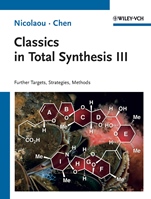
Classics in Total Synthesis III: Further Targets, Strategies, Methods
ISBN 9783527329588
Autor: K. C. Nicolaou, Jason S. Chen
Wydawca: Wiley
Dostępność: 3-6 tygodni
Cena: 693,00 zł
Przed złożeniem zamówienia prosimy o kontakt mailowy celem potwierdzenia ceny.
ISBN13: |
9783527329588 |
ISBN10: |
3527329587 |
Autor: |
K. C. Nicolaou, Jason S. Chen |
Oprawa: |
Hardback |
Rok Wydania: |
2011-02-09 |
Ilość stron: |
770 |
Wymiary: |
258x202 |
Tematy: |
PN |
Retaining his excellent, proven approach, world–famous chemist and passionate teacher K. C. Nicolaou and his student Jason S. Chen compile here the important strategies and tools employed to construct complex molecules. Through 42 syntheses of 25 challenging natural products they explain the key steps of the synthetic pathway, highlighting the major developments for easier understanding, and contrasting these to other synthetic methods. Similar it its predecessors and completing a trilogy, this textbook analyzes the syntheses in a didactic manner, with several chapters including mini–reviews of key methodologies, and an emphasis on the history, mechanism, scope, and generality of the reactions, In contrast to the first two volumes, this new one features full–color frontspieces.
A wonderful tool for learning and teaching, and a must–have for all current and future organic, medicinal and biological chemists.
From reviews of “Classics in Total Synthesis”, Volume I and II:
“… a volume, (..) which any chemist with an interest in synthetic organic chemistry will wish to acquire.” –JACS
“…this superb book (..) will be an essential purchase for many organic chemists.” –Nature
“…Classics II is undoubtedly an excellent bargain that is highly recommended to everybody interested in advanced organic chemistry. …” – Angewandte Chemie
Spis treści:
Chapter 1. Introduction: The Advancing Field of Total Synthesis.
1.1 Targets.
1.2 Strategies and Methods.
1.3 Classics in Total Synthesis III.
Chapter 2. Tetrodotoxin (Y. Kishi, J. Du Bois) (1972; 2003).
2.1 Introduction.
2.2 Kishi’s Retrosynthetic Analysis and Strategy.
2.3 Kishi’s Totla Synthesis.
2.4 Du Bois’ Retrosynthetic Anaysis and Strategy.
2.5 Du Bois’ Total Synthesis.
2.6 Conclusion.
Chapter 3. Discodermolide (Novartis: S. J. Mickel, I. Paterson, A. B. Smith, III) (2004).
3.1 Introduction.
3.2 Retrosynthetic Analysis and Strategy.
3.3 Total synthesis.
3.4 Conclusion.
Chapter 4. Azaspiracid – I (K. C. Nicolaou, D. A. Evans) (2004, 2006, 2007).
4.1 Introduction.
4.2 Nicolaou’s Retrosynthetic Analysis and Stratrgy.
4.3 Nicolaou’s Total Synthesis.
4.4 Evans’ Retrosynthetic Analysis and Strategy.
4.5 Evans’ Total Synthesis.
4.6 Conclusion.
Chapter 5. Thiostrepton (K. C. Nicolaou) (2004).
5.1 Introduction.
5.2 Retrosynthetic Analysis and Strategy.
5.3 Total Synthesis.
5.4 Conclusion.
Chapter 6. Pentacycloanammoxic Acid Methyl Ester (E. J. Corey (2004, 2006).
6.1 Introduction.
6.2 First–Generation Retrosynthetic Analysis and Strategy.
6.3 First–Generation Total Synthesis.
6.4 Second–Generation Retrosynthetic Analysis and Strategy.
6.5 Second–Generation Total Synthesis.
6.6 Conclusion.
Chapter 7. Littoralisone, Oseltamivir (Tamiflu®), and Hirsutellone B (D. W. C. MacMillan, Y. Hayashi, K. C. Nicolaou ) (2005, 2009, 2009).
7.1 Introduction.
7.2 Introduction to Littoralisone.
7.3 Total Synthesis of Littoralisone.
7.4 Introduction to Oseltamivir (Tamiflu®).
7.5 Total Synthesis of Oseltamivir (Tamiflu®).
7.6 Introduction to Hirsutellone B.
7.7 Total Synthesis of Hirsutellone B.
7.8 Conclusion.
Chapter 8. Rubicordifolin and Rubiocolin B (D. Trauner) (2005, 2008).
8.1 Introduction.
8.2 Retrosynthetic Analysis of Rubicordifolin.
8.3 Total Synthesis of Rubicordifolin.
8.4 Retrosynthetic Analysis of Rubioncolin B.
8.5 Total Synthesis of Rubioncolin B.
8.6 Conclusion.
Chapter 9. Cyanthiwigins U and F (A. J. Phillips, B. M. Stol
tz) (2005, 2008).
9.1 Introduction.
9.2 Phillips’ Retrosynthesis Analysis and Strategy.
9.3 Phillips Total Synthesis.
9.4 Stoltz’ Retrosynthetic Analysis and Strategy.
9.5 Stoltz’ Total Synthesis.
9.6 Conclusion.
Chapter 10. Stephacidin B (A. G. Myers, P. S. Baran, R. M. Williams) (2005, 2005, 2007).
10.1 Introduction.
10.2 Myers’ Retrosynthetic Analysis and Strategy.
10.3 Myers’ Total Synthesis.
10.4 Baran’s Retrosynthetic Analysis and Strategy.
10.5 Baran’s Total Synthesis.
10.6 Williams’ Retrosynthetic Analysis and Strategy.
10.7 Williams’ Total Synthesis.
10.8 Conclusion.
Chapter 11. Abyssomicin C and atrop–Abyssomicin C (E. J. Sorensen, K. C. Nicolaou) (2005, 2006).
11.1 Introduction.
11.2 Sorensen’s Retrosynthetic Analysis and Strategy.
11.3 Sorensen’s Total Synthesis of Abyssomicin C.
11.4 Nicolaou’s Retrosynthetic Analysis and Strategy.
11.5 Nicolaou’s Total Synthesis of Abyssomicin C and atrop–Abyssomicin C.
11.6 Conclusion.
Chapter 12. Tetracycline (A. G. Myers). (2005, 2007).
12.1 Introduction.
12.2 Retrosynthetic Analysis and Strategy.
12.3 Total Synthesis.
12.4 Conclusion.
Chapter 13. Bisanthraquinone Natural Products (K.Nicolaou) (2005, 2009).
13.1 Introduction.
13.2 Retrosynthetic Analysis and Strategy Toward 2,2’ –epi–Cytoskyrin A, Rugulosin, and Rugulin, and Rugulin.
13.3 Total Synthesis of 2,2’ –epi–Cytoskyrin A, Rugulosin, and Rugulin.
13.4 Retrosynthetic Analysis and Strategy Toward Antibiotic BE–43472B.
13.5 Total Synthesis of Antibiotic BE–43472B.
13.6 Conclusion.
Chapter 14. Garsubellin A (M. Shibasaki, M. Kanai, S. J. Danishefsky) (2205, 2006).
14.1 Introduction.
14.2 Shibasaki and Kanai’s Retrosynthetic Analysis and S
trategy.
14.3 Shibasaki and Kanai’s Total Synthesis.
14.4 Danishefsky’s Retrosynthetic Analysis and Strategy.
14.5 Danishefsky’s Total Synthesis.
14.6 Conclusion.
Chapter 15. Welwitindolinone A (P. S. Baran, J. L. Wood) (2005, 2006).
15.1 Introduction.
15.2 Baran’s Retrosynthetic Analysis and Strategy.
15.3 Baran’s Total Synthesis.
15.4 Wood’s Retrosynthetic Analysis and Strategy.
15.5 Wood’s Total Synthesis.
15.6 Conclusion.
Chapter 16. Iejimalide B (A. Fürstner) (2006, 2007).
16.1 Introduction.
16.2 Retrosynthetic Analysis and Strategy.
16.3 Total Synthesis.
16.4 Conclusion.
Chapter 17. Kedarcidin Chromophore and Maduropeptin Chromophore (A. G. Myers, M. Hirama, M. Inoue, I. Sato) (2007, 2009).
17.1 Introduction.
17.2 Retrosynthetic Analysis and Strategy for Kedarcidin Chromophore.
17.3 Total Synthesis of Kedarcidin Chromophore.
17.4 Retrosynthetic Analysis and Strategy for Maduropeptin Chromophore.
17.5 Total Synthesis of Maduropeptin Chromophore.
17.6 Conclusion.
Chapter 18. Biyouranagin A (K. C. Nicolaou) (2007).
18.1 Introduction.
18.2 Retrosynthetic Analysis and Strategy.
18.3 Total Synthesis.
18.4 Conclusion.
Chapter 19. Azadirachtin (S. V. Ley) (2007, 2009).
19.1 Introduction.
19.2 Retrosynthetic Analysis and Strategy.
19.3 Synthesis.
19.4 Conclusion.
Chapter 20. Resveratro–Derived Natural Products (S. A. Snyder, K. C. Nicolaou, D. Y.–K. Chen) (2007, 2009, 2010).
20.1 Introduction.
20.2 Snyder’s Retrosynthetic Analysis and Strategy for a Collection of Resveratrol–Derived Natural Products.
20.3 Snyder’s Total Synthesis of a Collection of Resveratrol–Derived Natural Products.
20.4 Nicolaou and Chen’s Retrosynthetic Analysis and Strategy for Hopeahainol A and Hopeanol.
20.5
Nicolaou and Chen’s Total Synthesis of Hopeahianol A and Hopeanol.
20.6 Conclusion.
Chapter 21. Chlorosulfolipid Cytotoxin (E. M. Carreira) (2009).
21.1 Introduction.
21.2 Retrosynthetic Analysis and Strategy.
21.3 Total Synthesis.
21.4 Conclusion.
Chapter 22. Sporolide B (K. C. Nicolaou) (2009).
22.1 Inroduction.
22.2 Retrosynthetic Analysis and Strategy.
22.3 Total Synthesis.
22.4 Conclusion.
Chapter 23. 11, 11’ –Dideoxyverticillin A and Chaetocin (M. Movassaghi, M. Sodeoka) (2009, 2010).
23.1 Introduction.
23.2 Retrosynthetic Analysis and Strategy for 11, 11’ –Dideoxyverticillin A.
23.3 Total Synthesis of 11, 11’ –Dideoxyverticillin A.
23.4 Retrosynthetic Analysis and Strategy for Chaetocin.
23.5 Total Synthesis of Chaetocin.
23.6 Conclusion.
Chapter 24. Vannusal B (K. C. Nicolaou) (2009).
24.1 Introduction.
24.2 Retrosynthetic Analysis and Strategy.
24.3 Total Synthesis.
24.4 Conclusion.
Chapter 25. Haplophytine (T. Fukuyama, H. Tokuyama, K. C. Nicolaou, D.Y. –K. Chen) (2009, 2009).
25.1 Introduction.
25.2 Fukuyama and Tokuyama’s Retrosynthetic Analysis and Strategy.
25.3 Fukuyama and Tokuyama’s Total Synthetis.
25.4 Nicolaou and Chen’s Retrosynthetic Analysis and Strategy.
25.5 Nicolaou and Chen’s Total Synthesis.
25.6 Conclusion.
Chapter 26. Palau’amine (P. S. Baran) (2010).
26.1 Introduction.
26.2 Retrosynthetic Analysis and Strategy.
26.3 Total Synthesis.
26.4 Conclusion.
Image / Photo Credits.
Author Index.
Subject Index.
Nota biograficzna:
K. C. Nicolaou is Professor of Chemistry at the University of California, San Diego and is Chairman of the Department of Chemistry and holds the Skaggs Professorship of Chemical Biology and the Darlene Shiley Chair in
Chemistry at The Scripps Research Insitute. He studied chemistry at the University of London, and finished his Ph.D. in 1972 with Professors Sondheimer and Garratt. After his postdocs at Columbia University with Professor Katz and Harvard University with Professor Corey, he joined the University of Pennsylvania, before accepting appointments at the University of California in San Diego. His impact on chemistry flows from his works in chemical synthesis and chemical biology described in over 550 publications and 55 patents, and he received numereous awards from all over the world. His book "Classics in Total Synthesis I and II" are long– and bestsellers as well as undispensible in view of chemical education in the strategy of organic synthesis.
Jason S. Chen received his AB and AM degrees in 2001 from Harvard University, where he performed research in the group of Professor Matthew D. Shair. He then joined Enanta Pharmaceuticals (USA) as a medicinal chemist studying novel cyclosporine analogs. He joined K.C. Nicolaou′s group at the Scripps Research Institute in 2003. In 2008, he completed his Ph.D. on the total synthesis and biological evaluation of uncialamycin. He is working currently as a research associate in K.C. Nicolaous laboratory.
Okładka tylna:
Retaining his excellent, proven approach, world–famous chemist and passionate teacher K. C. Nicolaou and his student Jason S. Chen compile here the important strategies and tools employed to construct complex molecules. Through 42 syntheses of 25 challenging natural products they explain the key steps of the synthetic pathway, highlighting the major developments for easier understanding, and contrasting these to other synthetic methods. Similar it its predecessors and completing a trilogy, this textbook analyzes the syntheses in a didactic manner, with several chapters including mini–reviews of key methodologies, and an emphasis on the history, mechanism, scop
e, and generality of the reactions, In contrast to the first two volumes, this new one features full–color frontspieces.
A wonderful tool for learning and teaching, and a must–have for all current and future organic, medicinal and biological chemists.
From reviews of “Classics in Total Synthesis”, Volume I and II:
“… a volume, (..) which any chemist with an interest in synthetic organic chemistry will wish to acquire.” –JACS
“…this superb book (..) will be an essential purchase for many organic chemists.” –Nature
“…Classics II is undoubtedly an excellent bargain that is highly recommended to everybody interested in advanced organic chemistry. …” – Angewandte Chemie
Koszyk
Książek w koszyku: 0 szt.
Wartość zakupów: 0,00 zł
Informacje


Kontakt
Gambit
Centrum Oprogramowania
i Szkoleń Sp. z o.o.
Al. Pokoju 29b/22-24
31-564 Kraków
Siedziba Księgarni
ul. Kordylewskiego 1
31-542 Kraków
+48 12 410 5991
+48 12 410 5987
+48 12 410 5989
Subskrypcje
Administratorem danych osobowych jest firma Gambit COiS Sp. z o.o. Na podany adres będzie wysyłany wyłącznie biuletyn informacyjny.
Autoryzacja płatności

Informacje na temat autoryzacji płatności poprzez PayU.

© Copyright 2012: GAMBIT COiS Sp. z o.o. Wszelkie prawa zastrzeżone.
Projekt i wykonanie: Alchemia Studio Reklamy