


Wydawcy
Katalog tematyczny
- Archeologia (109)
- Ekonomia, finanse, business (13704)
- Filozofia (1445)
- Historia (3040)
- Języki i językoznawstwo (2356)
- Lifestyle, hobby i rozrywka (475)
- Medycyna (9704)
- Nauki humanistyczne (4)
- Nauki o Ziemi i środowisku (2638)
- Nauki ścisłe (20412)
- Astronomia (294)
- Biologia (5119)
- Chemia (6540)
- Chemia analityczna (361)
- Chemia fizyczna (346)
- Chemia nieorganiczna (137)
- Chemia organiczna (535)
- Krystalografia (27)
- Minerologia (46)
- Fizyka (3309)
- Matematyka (4574)
- Nauki ścisłe, ogólnie (503)
- Nauki społeczne (8486)
- Nauki techniczne (13450)
- Prawo (1696)
- Publikacje informacyjne i interdyscyplinarne (1288)
- Religia i wierzenia (917)
- Technika komputerowa (4067)
- Zdrowie, relacje międzyludzkie i rozwój osobisty (657)





Informacje szczegółowe o książce
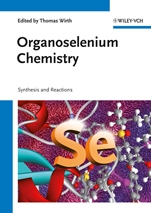
Organoselenium Chemistry: Synthesis and Reactions
ISBN 9783527329441
Autor: Thomas Wirth
Wydawca: Wiley
Dostępność: 3-6 tygodni
Cena: 827,40 zł
Przed złożeniem zamówienia prosimy o kontakt mailowy celem potwierdzenia ceny.
ISBN13: |
9783527329441 |
ISBN10: |
3527329447 |
Autor: |
Thomas Wirth |
Oprawa: |
Hardback |
Rok Wydania: |
2011-11-02 |
Ilość stron: |
462 |
Wymiary: |
244x181 |
Tematy: |
PN |
Filling the gap for a comprehensive handbook and ready reference with a focus on synthetic methods, this book covers all modern developments within the field, including biochemical aspects. The chemistry chapters are organized according to the different reactivities of various selenium compounds and reagents, with each chapter dealing with a special reaction type.
Also includes a table with 77Se NMR shifts to aid in practical problems.
Spis treści:
Preface XI
List of Contributor XIII
1 Electrophilic Selenium 1
Claudio Santi and Stefano Santoro
1.1 General Introduction 1
1.1.1 Synthesis of Electrophilic Selenium Reagents 3
1.1.2 Reactivity and Properties 7
1.2 Addition Reactions to Double Bonds 11
1.2.1 Addition Reaction Involving Oxygen–Centered Nucleophiles 11
1.2.2 Addition Reaction Involving Nitrogen–Centered Nucleophiles 22
1.2.3 Addition Reactions Involving Carbon–Centered Nucleophiles 26
1.2.4 Addition Reaction Involving Chiral Nucleophiles or Chiral Substrates 28
1.3 Selenocyclizations 30
1.3.1 Oxygen Nucleophiles 31
1.3.2 Nitrogen Nucleophiles 35
1.3.3 Competition between Oxygen and Nitrogen Nucleophiles 40
1.3.4 Carbon Nucleophiles 42
1.3.5 Double Cyclization Reactions 44
References 45
2 Nucleophilic Selenium 53
Michio Iwaoka
2.1 Introduction 53
2.1.1 Development of Nucleophilic Selenium Reagents 53
2.1.2 Examples of Recent Applications 54
2.2 Properties of Selenols and Selenolates 56
2.2.1 Electronegativity of Selenium 56
2.2.2 Tautomerism of Selenols 57
2.2.3 Nucleophilicity of Selenolates 58
2.3 Inorganic Nucleophilic Selenium Reagents 59
2.3.1 Conventional Reagents 59
2.3.2 New Reagents 61<
br>2.4 Organic Nucleophilic Selenium Reagents 65
2.4.1 Preparation 65
2.4.2 Structure 66
2.4.3 Ammonium Selenolates (NH4+) 67
2.4.4 Selenolates of Group 1 Elements (Li, Na, K, and Cs) 67
2.4.5 Selenolates of Group 2 Elements (Mg, Ca, and Ba) 70
2.4.6 Selenolates of Group 3 Elements (Sm, Ce, Pr, Nb, and U) 71
2.4.7 Selenolates of Group 4 Elements (Ti, Zr, and Hf) 73
2.4.8 Selenolates of Group 5 Elements (V, Nb, and Ta) 74
2.4.9 Selenolates of Group 6 Elements (Mo and W) 75
2.4.10 Selenolates of Group 7 Elements (Mn and Re) 76
2.4.11 Selenolates of Group 8 Elements (Fe, Ru, and Os) 78
2.4.12 Selenolates of Group 9 Elements (Co, Rh, and Ir) 81
2.4.13 Selenolates of Group 10 Elements (Ni, Pd, and Pt) 84
2.4.14 Selenolates of Group 11 Elements (Cu, Ag, and Au) 90
2.4.15 Selenolates of Group 12 Elements (Zn, Cd, and Hg) 92
2.4.16 Selenolates of Group 13 Elements (B, Al, Ga, and In) 95
2.4.17 Selenolates of Group 14 Elements (Si, Ge, Sn, and Pb) 97
2.4.18 Selenolates of Group 15 Elements (P, As, Sb, and Bi) 100
References 102
3 Selenium Compounds in Radical Reactions 111
W. Russell Bowman
3.1 Homolytic Substitution at Selenium to Generate Radical Precursors 111
3.1.1 Bimolecular SH2 Reactions: Synthetic Considerations 112
3.1.1.1 Radical Reagents 115
3.1.2 Alkyl Radicals from Selenide Precursors 115
3.1.3 Acyl Radicals from Acyl Selenide Precursors 119
3.1.4 Imidoyl Radicals from Imidoyl Selenides 123
3.1.5 Other Radicals from Selenide Precursors 125
3.2 Selenide Building Blocks 126
3.3 Solid–Phase Synthesis 128
3.4 Selenide Precursors in Radical Domino Reactions 130
3.5 Homolytic Substitution at Selenium for the Synthesis of Se–Containing
Products 132
3.5.1 Intermolecular SH2 onto Se 132
3.5.2 Intramolecular SH2: Cyclization onto Se 132
3.6 Seleno Group Transfer onto Alkenes and Alkynes 134
3.6.1 Seleno–Selenation 135
3.6.2 Seleno–Sulfonation 136
3.6.3 Seleno–Alkylation 137
3.7 PhSeH in Radical Reactions 138
3.7.1 Radical Clock Reactions 138
3.7.2 Problem of Unwanted Trapping of Intermediate Radicals 138
3.7.3 Catalysis of Stannane–Mediated Reactions 139
3.8 Selenium Radical Anions, SRN1 Substitutions 141
References 143
4 Selenium–Stabilized Carbanions 147
Joao V. Comasseto, Alcindo A. Dos Santos, and Edison P. Wendler
4.1 Introduction 147
4.2 Preparation of Selenium–Stabilized Carbanions 149
4.2.1 Deprotonation of Selenides 149
4.2.2 Element–Lithium Exchange 154
4.2.3 Conjugate Addition of Organometallics to Vinyl– and Alkynylselenides 158
4.3 Reactivity of the Selenium–Stabilized Carbanions with Electrophiles and Synthetic Transformations of the Products 161
4.3.1 Reaction of Selenium–Stabilized Carbanions with Electrophiles 166
4.3.2 Selenium–Based Transformations on the Reaction Products of Selenium–Stabilized Carbanions with Electrophiles 167
4.4 Stereochemical Aspects 168
4.4.1 Cyclic Selenium–Stabilized Carbanions 173
4.4.2 Acyclic Selenium–Stabilized Carbanions 176
4.5 Application of Selenium–Stabilized Carbanions in Total Synthesis 176
4.5.1 Examples Using Alkylation Reactions of Selenium–Stabilized Carbanions 177
4.5.2 Examples Using the Addition of Selenium–Stabilized Carbanions to Carbonyl Compounds 180
4.5.3 Examples Using 1,4–Addition of Selenium–Stabilized Carbanions to α,βR
11;Unsaturated Carbonyl Compounds 184
4.6 Conclusion 186
References 187
5 Selenium Compounds with Valency Higher than Two 191
Jozef Drabowicz, Jarosław Lewkowski, and Jacek S´cianowski
5.1 Introduction 191
5.2 Trivalent, Dicoordinated Selenonium Salts 192
5.3 Trivalent, Tricoordinated Derivatives 194
5.4 Tetravalent, Dicoordinated Derivatives 211
5.5 Tetravalent, Tricoordinated Derivatives 225
5.6 Pentavalent Derivatives 239
5.7 Hexavalent, Tetracoordinated Derivatives 240
5.8 Hypervalent Derivatives 244
5.8.1 Selenuranes 244
5.8.2 Selenurane Oxides 249
5.8.3 Perselenuranes 250
Acknowledgment 251
References 251
6 Selenocarbonyls 257
Toshiaki Murai
6.1 Overview 257
6.2 Theoretical Aspects of Selenocarbonyls 259
6.3 Molecular Structure of Selenocarbonyls 261
6.4 Synthetic Procedures of Selenocarbonyls 261
6.5 Manipulation of Selenocarbonyls 270
6.6 Metal Complexes of Selenocarbonyls 278
6.7 Future Aspects 280
References 281
7 Selenoxide Elimination and [2,3]–Sigmatropic Rearrangement 287
Yoshiaki Nishibayashi and Sakae Uemura
7.1 Introduction 287
7.2 Preparation and Properties of Chiral Selenoxides 288
7.3 Selenoxide Elimination 292
7.3.1 Enantioselective Selenoxide Elimination Producing Chiral Allenes and α,β–Unsaturated Ketones 293
7.3.2 Diastereoselective Selenoxide Elimination Producing Chiral Allenecarboxylic Esters 295
7.4 [2,3]–Sigmatropic Rearrangement via Allylic Selenoxides 297
7.4.1 Enantioselective [2,3]–Sigmatropic Rearrangement Producing Chiral Allylic Alcohols 297
7.4.2 Diastereoselective [2,3]–Sigmatropic Rearrangement Producing Chiral All
ylic Alcohols 299
7.5 [2,3]–Sigmatropic Rearrangement via Allylic Selenimides 305
7.5.1 Preparation and Properties of Chiral Selenimides 307
7.5.2 Enantioselective [2,3]–Sigmatropic Rearrangement Producing Chiral Allylic Amines 309
7.5.3 Diastereoselective [2,3]–Sigmatropic Rearrangements Producing Chiral Allylic Amines 310
7.6 [2,3]–Sigmatropic Rearrangement via Allylic Selenium Ylides 311
7.6.1 Preparation and Properties of Optically Active Selenium Ylides 312
7.6.2 Enantioselective [2,3]–Sigmatropic Rearrangements via Allylic Selenium Ylides 313
7.6.3 Diastereoselective [2,3]–Sigmatropic Rearrangement via Allylic Selenium Ylides 315
7.7 Summary 317
References 317
8 Selenium Compounds as Ligands and Catalysts 321
Fateh V. Singh and Thomas Wirth
8.1 Introduction 321
8.2 Selenium–Catalyzed Reactions 321
8.2.1 Stereoselective Addition of Diorganozinc Reagents to Aldehydes 322
8.2.1.1 Diethylzinc Addition 322
8.2.1.2 Diphenylzinc Addition 323
8.2.2 Selenium–Ligated Transition Metal–Catalyzed Reactions 324
8.2.2.1 Selenium–Ligated Stereoselective Hydrosilylation of Ketones 324
8.2.2.2 Selenium–Ligated Copper–Catalyzed Addition of Organometallic Reagents to Enones 325
8.2.2.3 Selenium–Ligated Palladium–Catalyzed Asymmetric Allylic Alkylation 326
8.2.2.4 Selenium–Ligands in Palladium–Catalyzed Mizoroki–Heck Reactions 328
8.2.2.5 Selenium–Ligands in Palladium–Catalyzed Phenylselenenylation of Organohalides 330
8.2.2.6 Selenium–Ligands in Palladium–Catalyzed Substitution Reactions 331
8.2.2.7 Selenium–Ligands in the Palladium–Catalyzed Allylation of Aldehydes 331
8.2.2.8 Selenium&#
8211;Ligands in Palladium–Catalyzed Condensation Reactions 332
8.2.2.9 Ruthenium–Catalyzed Substitution Reactions 333
8.2.2.10 Selenium–Ligands in Zinc–Catalyzed Intramolecular Hydroaminations 334
8.2.3 Selenium–Ligands in Organocatalytic Asymmetric Aldol Reactions 334
8.2.4 Selenium–Ligands in Stereoselective Darzens Reactions 334
8.2.5 Selenium–Catalyzed Carbonylation Reactions 335
8.2.6 Selective Reduction of α,β–Unsaturated Carbonyl Compounds 336
8.2.7 Selenium–Catalyzed Halogenations and Halocyclizations 336
8.2.8 Selenium–Catalyzed Staudinger–Vilarrasa Reaction 337
8.2.9 Selenium–Catalyzed Elimination Reactions of Diols 338
8.2.10 Selenium–Catalyzed Hydrostannylation of Alkenes 339
8.2.11 Selenium–Catalyzed Radical Chain Reactions 340
8.2.12 Selenium–Catalyzed Oxidation Reactions 342
8.2.12.1 Selenium–Catalyzed Epoxidation of Alkenes 342
8.2.12.2 Selenium–Catalyzed Dihydroxylation of Alkenes 344
8.2.12.3 Selenium–Catalyzed Oxidation of Alcohols 346
8.2.12.4 Baeyer–Villiger Oxidation 347
8.2.12.5 Selenium–Catalyzed Allylic Oxidation of Alkenes 349
8.2.12.6 Selenium–Catalyzed Oxidation of Aryl Alkyl Ketones 350
8.2.12.7 Selenium–Catalyzed Oxidation of Primary Aromatic Amines 350
8.2.12.8 Selenium–Catalyzed Oxidation of Alkynes 351
8.2.12.9 Selenium–Catalyzed Oxidation of Halide Anions 352
8.2.13 Stereoselective Catalytic Selenenylation–Elimination Reactions 353
8.2.14 Selenium–Catalyzed Diels–Alder Reactions 355
8.2.15 Selenium–Catalyzed Synthesis of Thioacetals 355
8.2.16 Selenium–Catalyzed Baylis–Hillman Reaction 356
References 356
9 Biological and Biochemical Aspects of Selenium Compounds 361
Bhaskar J. Bhuyan and Govindasamy Mugesh
9.1 Introduction 361
9.2 Biological Importance of Selenium 361
9.3 Selenocysteine: The 21st Amino Acid 362
9.4 Biosynthesis of Selenocysteine 363
9.5 Chemical Synthesis of Selenocysteine 366
9.6 Chemical Synthesis of Sec–Containing Proteins and Peptides 367
9.7 Selenoenzymes 369
9.7.1 Glutathione Peroxidases 369
9.7.2 Iodothyronine Deiodinase 379
9.7.3 Synthetic Mimics of IDs 384
9.7.4 Thioredoxin Reductase 387
9.8 Summary 389
References 392
77Se NMR Values 397
Index 435
Nota biograficzna:
Thomas Wirth is professor of organic chemistry at Cardiff University. After studying chemistry in Bonn and at the Technical University of Berlin, he obtained his PhD in 1992 with Prof. S. Blechert. After a postdoctoral stay with Professor K. Fuji at Kyoto University a JSPS fellow, he started his independent research at the University of Basel (Switzerland). In the group of Professor B. Giese he obtained his habilitation on stereoselective oxidation reactions supported by various scholarships before taking up his current position at Cardiff University in 2000. He was invited as a visiting professor to a number of places including the University of Toronto/Canada (1999), Chuo University in Tokyo/Japan (2000), and Osaka University/Japan (2004) and was awarded the Werner–Prize from the New Swiss Chemical Society (2000). His main interests of research concern stereoselective electrophilic reactions, oxidative transformations with hypervalent iodine reagents including mechanistic investigations and organic synthesis performed in microreactors.
Koszyk
Książek w koszyku: 0 szt.
Wartość zakupów: 0,00 zł
Informacje


Kontakt
Gambit
Centrum Oprogramowania
i Szkoleń Sp. z o.o.
Al. Pokoju 29b/22-24
31-564 Kraków
Siedziba Księgarni
ul. Kordylewskiego 1
31-542 Kraków
+48 12 410 5991
+48 12 410 5987
+48 12 410 5989
Subskrypcje
Administratorem danych osobowych jest firma Gambit COiS Sp. z o.o. Na podany adres będzie wysyłany wyłącznie biuletyn informacyjny.
Autoryzacja płatności

Informacje na temat autoryzacji płatności poprzez PayU.

© Copyright 2012: GAMBIT COiS Sp. z o.o. Wszelkie prawa zastrzeżone.
Projekt i wykonanie: Alchemia Studio Reklamy