


Wydawcy
Katalog tematyczny
- Archeologia (109)
- Ekonomia, finanse, business (13704)
- Filozofia (1445)
- Historia (3040)
- Języki i językoznawstwo (2356)
- Lifestyle, hobby i rozrywka (475)
- Medycyna (9704)
- Nauki humanistyczne (4)
- Nauki o Ziemi i środowisku (2638)
- Nauki ścisłe (20412)
- Astronomia (294)
- Biologia (5119)
- Chemia (6540)
- Chemia analityczna (361)
- Chemia fizyczna (346)
- Chemia nieorganiczna (137)
- Chemia organiczna (535)
- Krystalografia (27)
- Minerologia (46)
- Fizyka (3309)
- Matematyka (4574)
- Nauki ścisłe, ogólnie (503)
- Nauki społeczne (8486)
- Nauki techniczne (13450)
- Prawo (1696)
- Publikacje informacyjne i interdyscyplinarne (1288)
- Religia i wierzenia (917)
- Technika komputerowa (4067)
- Zdrowie, relacje międzyludzkie i rozwój osobisty (657)





Informacje szczegółowe o książce
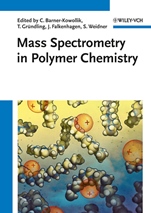
Mass Spectrometry in Polymer Chemistry
ISBN 9783527329243
Autor: Christopher Barner–Kowollik, Till Gruendling, Jana Falkenhagen, Steffen Weidner
Wydawca: Wiley
Dostępność: 3-6 tygodni
Cena: 746,55 zł
Przed złożeniem zamówienia prosimy o kontakt mailowy celem potwierdzenia ceny.
ISBN13: |
9783527329243 |
ISBN10: |
3527329242 |
Autor: |
Christopher Barner–Kowollik, Till Gruendling, Jana Falkenhagen, Steffen Weidner |
Oprawa: |
Hardback |
Rok Wydania: |
2011-12-07 |
Ilość stron: |
500 |
Wymiary: |
246x176 |
Tematy: |
PN |
Combining an up–to–date insight into mass–spectrometric polymer analysis beyond MALDI with application details of the instrumentation, this is a balanced and thorough presentation of the most important and widely used mass–spectrometric methods.
Written by the world′s most proficient experts in the field, the book focuses on the latest developments, covering such technologies and applications as ionization protocols, tandem and liquid chromatography mass spectrometry, gas–phase ion–separation techniques and automated data processing. Chapters on sample preparation, polymer degradation and the usage of mass–spectrometric tools on an industrial scale round off the book.
As a result, both entrants to the field and experienced researchers are able to choose the appropriate methods and instrumentations –– and to assess their respective strengths and limitations –– for the characterization of polymer compounds.
Spis treści:
List of Contributors XIII
Introduction 1
Christopher Barner–Kowollik, Jana Falkenhagen, Till Gruendling, and Steffen Weidner
References 4
1 Mass Analysis 5
Gene Hart–Smith and Stephen J. Blanksby
1.1 Introduction 5
1.2 Measures of Performance 5
1.2.1 Mass Resolving Power 6
1.2.2 Mass Accuracy 8
1.2.3 Mass Range 9
1.2.4 Linear Dynamic Range 9
1.2.5 Abundance Sensitivity 10
1.3 Instrumentation 12
1.3.1 Sector Mass Analyzers 12
1.3.2 Quadrupole Mass Filters 15
1.3.3 3D Ion Traps 17
1.3.4 Linear Ion Traps 19
1.3.5 Time–of–Flight Mass Analyzers 20
1.3.6 Fourier Transform Ion Cyclotron Resonance Mass Analyzers 22
1.3.7 Orbitraps 24
1.4 Instrumentation in Tandem and Multiple–Stage Mass Spectrometry 25
1.5 Conclusions and Outlook 29
References 30
2 Ionization Techniques for Polymer Mass Spectrometry 33
Anthony P.
Gies
2.1 Introduction 33
2.2 Small Molecule Ionization Era 34
2.2.1 Electron Ionization (EI) 34
2.2.2 Chemical Ionization (CI) 36
2.2.3 Pyrolysis Mass Spectrometry (Py–MS) 37
2.3 Macromass Era of Ionization 38
2.3.1 Field Desorption (FD) and Field Ionization (FI) 38
2.3.2 Secondary Ion Mass Spectrometry (SIMS) 40
2.3.3 Fast Atom Bombardment (FAB) and Liquid Secondary Ion Mass Spectrometry (LSIMS) 42
2.3.4 Laser Desorption (LD) 43
2.3.5 Plasma Desorption (PD) 44
2.3.6 Other Ionization Methods 45
2.4 Modern Era of Ionization Techniques 45
2.4.1 Electrospray Ionization (ESI) 46
2.4.2 New Trends 48
2.4.3 Atmospheric Pressure Chemical Ionization (APCI) 49
2.4.4 New Trends 49
2.4.5 Matrix–Assisted Laser Desorption/Ionization (MALDI) 49
2.4.6 New Trends 52
2.5 Conclusions 53
References 53
3 Tandem Mass Spectrometry Analysis of Polymer Structures and Architectures 57
Vincenzo Scionti and Chrys Wesdemiotis
3.1 Introduction 57
3.2 Activation Methods 59
3.2.1 Collisionally Activated Dissociation (CAD) 59
3.2.2 Surface–Induced Dissociation (SID) 60
3.2.3 Photodissociation Methods 60
3.2.4 Electron Capture Dissociation and Electron Transfer Dissociation (ECD/ETD) 61
3.2.5 Post–Source Decay (PSD) 62
3.3 Instrumentation 62
3.3.1 Quadrupole Ion Trap (QIT) Mass Spectrometers 63
3.3.2 Quadrupole/time–of–flight (Q/ToF) Mass Spectrometers 69
3.3.3 ToF/ToF Instruments 72
3.4 Structural Information from MS2 Studies 75
3.4.1 End–Group Analysis and Isomer/Isobar Differentiation 75
3.4.2 Polymer Architectures 75
3.4.3 Copolymer Sequences 76
3.4.4 Assessment of Intrinsic Stabilities and Binding Energies 77
3.5 Summary and Outlook 78
References 79
4 Matrix–Assisted Inlet Ionization and Solvent–Free Gas–Phase Separation Using Ion Mobility Spectrometry for Imaging and Electron Transf
er Dissociation Mass Spectrometry of Polymers 85
Christopher B. Lietz, Alicia L. Richards, Darrell D. Marshall, Yue Ren, and Sarah Trimpin
4.1 Overview 85
4.2 Introduction 87
4.3 New Sample Introduction Technologies 92
4.3.1 Laserspray Ionization – Ion Mobility Spectrometry–Mass Spectrometry 95
4.3.2 Matrix Assisted Inlet Ionization (MAII) 99
4.3.3 LSIV in Reflection Geometry at Intermediate Pressure (IP) 100
4.4 Fragmentation by ETD and CID 102
4.5 Surface Analyses by Imaging MS 103
4.5.1 Ultraf Fast LSII–MS Imaging in Transmission Geometry (TG) 105
4.5.2 LSIV–IMS–MS Imaging in Reflection Geometry (RG) 106
4.6 Future Outlook 109
References 110
5 Polymer MALDI Sample Preparation 119
Scott D. Hanton and Kevin G. Owens
5.1 Introduction 119
5.2 Roles of the Matrix 120
5.2.1 Intimate Contact 121
5.2.2 Absorption of Laser Light 121
5.2.3 Efficient Desorption 122
5.2.4 Effective Ionization 123
5.3 Choice of Matrix 125
5.4 Choice of the Solvent 125
5.5 Basic Solvent–Based Sample Preparation Recipe 127
5.6 Deposition Methods 127
5.7 Solvent–Free Sample Preparation 130
5.8 The Vortex Method 132
5.9 Matrix–to–Analyte Ratio 134
5.10 Salt–to–Analyte Ratio 136
5.11 Chromatography as Sample Preparation 138
5.12 Problems in MALDI Sample Preparation 140
5.13 Predicting MALDI Sample Preparation 142
5.14 Conclusions 143
References 144
6 Surface Analysis and Imaging Techniques 149
Christine M. Mahoney and Steffen M. Weidner
6.1 Imaging Mass Spectrometry 149
6.2 Secondary Ion Mass Spectrometry 150
6.2.1 Static SIMS of Polymers 150
6.2.1.1 The Fingerprint Region 151
6.2.1.2 High–Mass Region 162
6.2.2 Imaging in Polymer Blends and Multicomponent Systems 168
6.2.3 Data Analysis Methods 171
6.2.4 Polymer Depth Profiling with Clus
ter Ion Beams 174
6.2.4.1 A Brief Discussion on the Physics and Chemistry of Sputtering and its Role in Optimized Beam Conditions 180
6.2.5 3–D Analysis in Polymer Systems 182
6.3 Matrix–Assisted Laser Desorption Ionization (MALDI) 184
6.3.1 History of MALDI Imaging Mass Spectrometry 184
6.3.2 Sample Preparation in MALDI Imaging 185
6.3.3 MALDI Imaging of Polymers 188
6.3.4 Outlook 192
6.4 Other Surface Mass Spectrometry Methods 192
6.4.1 Desorption Electrospray Ionization 192
6.4.2 Plasma Desorption Ionization Methods 194
6.4.3 Electrospray Droplet Impact for SIMS 194
6.5 Outlook 196
References 196
7 Hyphenated Techniques 209
Jana Falkenhagen and Steffen Weidner
7.1 Introduction 209
7.2 Polymer Separation Techniques 210
7.3 Principles of Coupling: Transfer Devices 214
7.3.1 Online Coupling Devices 214
7.3.2 Off–Line Coupling Devices 218
7.4 Examples 220
7.4.1 Coupling of SEC with MALDI–/ESI–MS 220
7.4.2 Coupling of LAC/LC–CC with MALDI–/ESI–MS 224
7.5 Conclusions 228
References 228
8 Automated Data Processing and Quantification in Polymer Mass Spectrometry 237
Till Gruendling, William E. Wallace, Christopher Barner–Kowollik, Charles M. Guttman, and Anthony J. Kearsly
8.1 Introduction 237
8.2 File and Data Formats 237
8.3 Optimization of Ionization Conditions 239
8.4 Automated Spectral Analysis and Data Reduction in MS 241
8.4.1 Long–Standing Approaches 242
8.4.2 Some New Concepts 243
8.4.3 Mass Autocorrelation 243
8.4.4 Time–Series Segmentation 245
8.5 Copolymer Analysis 248
8.6 Data Interpretation in MS/MS 251
8.7 Quantitative MS and the Determination of MMDs by MS 252
8.7.1 Quantitative MMD Measurement by MALDI–MS 253
8.7.1.1 Example for Mixtures of Monodisperse Components 256
8.7.1.2 Example for Mixtures of Polydisperse Componen
ts 257
8.7.1.3 Calculating the Correction Factor for Each Oligomer 260
8.7.1.4 Step by Step Procedure for Quantitation 261
8.7.1.5 Determination of the Absolute MMD 262
8.7.2 Quantitative MMD Measurement by SEC/ESI–MS 266
8.7.2.1 Exact Measurement of the MMD of Homopolymers 266
8.7.2.2 MMD of the Individual Components in Mixtures of Functional Homopolymers 270
8.7.3 Comparison of the Two Methods for MMD Calculation 273
8.7.4 Simple Methods for the Determination of the Molar Abundance of Functional Polymers in Mixtures 274
8.8 Conclusions and Outlook 276
References 276
9 Comprehensive Copolymer Characterization 281
Anna C. Crecelius and Ulrich S. Schubert
9.1 Introduction 281
9.2 Scope 282
9.3 Reviews 282
9.4 Soft Ionization Techniques 283
9.4.1 MALDI 283
9.4.2 ESI 292
9.4.3 APCI 294
9.5 Separation Prior MS 297
9.5.1 LC–MS 297
9.5.2 Ion Mobility Spectrometry–Mass Spectrometry (IMS–MS) 299
9.6 Tandem MS (MS/MS) 301
9.7 Quantitative MS 303
9.8 Copolymers for Biological or (Bio)medical Application 304
9.9 Software Development 307
9.10 Summary and Outlook 309
References 309
10 Elucidation of Reaction Mechanisms: Conventional Radical Polymerization 319
Michael Buback, Gregory T. Russell, and Philipp Vana
10.1 Introduction 319
10.2 Basic Principles and General Considerations 320
10.3 Initiation 321
10.3.1 Radical Generation 321
10.3.1.1 Thermally Induced Initiator Decomposition 321
10.3.1.2 Photoinduced Initiator Decomposition 331
10.3.1.3 Other Means 334
10.3.2 Initiator Efficiency 335
10.4 Propagation 335
10.4.1 Propagation Rate Coefficients 336
10.4.2 Chain–Length Dependence of Propagation 340
10.4.3 Copolymerization 342
10.5 Termination 347
10.6 Chain Transfer 351
10.6.1 Transfer to Small Molecules 351
10.6.2 Acrylate Systems 356
10.7 Emulsion Polymerization
364
10.8 Conclusion 365
References 365
11 Elucidation of Reaction Mechanisms and Polymer Structure: Living/Controlled Radical Polymerization 373
Christopher Barner–Kowollik, Guillaume Delaittre, Till Gruendling, and Thomas Paulöhrl
11.1 Protocols Based on a Persistent Radical Effect (NMP, ATRP, and Related) 374
11.2 Protocols Based on Degenerative Chain Transfer (RAFT, MADIX) 386
11.3 Protocols based on CCT 393
11.4 Novel Protocols and Minor Protocols 397
11.5 Conclusions 398
References 399
12 Elucidation of Reaction Mechanisms: Other Polymerization Mechanisms 405
Gra—zyna Adamus and Marek Kowalczuk
12.1 Introduction 405
12.2 Ring–Opening Polymerization Mechanisms of Cyclic Ethers 406
12.3 Ring–Opening Polymerization Mechanisms of Cyclic Esters and Carbonates 408
12.4 Ring–Opening Metathesis Polymerization 423
12.5 Mechanisms of Step–Growth Polymerization 425
12.6 Concluding Remarks 430
References 431
13 Polymer Degradation 437
Paola Rizzarelli, Sabrina Carroccio, and Concetto Puglisi
13.1 Introduction 437
13.2 Thermal and Thermo–Oxidative Degradation 438
13.3 Photolysis and Photooxidation 449
13.4 Biodegradation 454
13.5 Other Degradation Processes 455
13.6 Conclusions 457
References 461
14 Outlook 467
Christopher Barner–Kowollik, Jana Falkenhagen, Till Gruendling, and Steffen Weidner
Index 469
Nota biograficzna:
Christopher Barner–Kowollik is currently Full Professor of Preparative Macromolecular Chemistry at the Karlsruhe Institute of Technology (KIT), Germany. He has published more than 250 peer–reviewed research papers and ten book chapters. He serves or has served as a member of nine editorial boards of leading peer–reviewed journals and edited the "Handbook of RAFT Polymerization" (2008, Wiley̵
1;VCH). Awards he has received for his research include the Edgeworth–David Medal of the Royal Society of Australia and the Rennie Medal of the Royal Australian Chemical Institute.
Till Gruendling is currently working as analytical chemist and lab team leader at BASF. His work involves the application and development of state–of–the–art mass spectrometric techniques for analytical problem solving in diverse areas of in industrial chemistry. He completed his PhD at the University of New South Wales under the supervision of Christopher Barner–Kowollik and Brynn Hibbert. Till Gruendling has published fourteen peer–reviewed research papers and has presented his work at international conferences.
Koszyk
Książek w koszyku: 0 szt.
Wartość zakupów: 0,00 zł
Informacje


Kontakt
Gambit
Centrum Oprogramowania
i Szkoleń Sp. z o.o.
Al. Pokoju 29b/22-24
31-564 Kraków
Siedziba Księgarni
ul. Kordylewskiego 1
31-542 Kraków
+48 12 410 5991
+48 12 410 5987
+48 12 410 5989
Subskrypcje
Administratorem danych osobowych jest firma Gambit COiS Sp. z o.o. Na podany adres będzie wysyłany wyłącznie biuletyn informacyjny.
Autoryzacja płatności

Informacje na temat autoryzacji płatności poprzez PayU.

© Copyright 2012: GAMBIT COiS Sp. z o.o. Wszelkie prawa zastrzeżone.
Projekt i wykonanie: Alchemia Studio Reklamy