


Wydawcy
Katalog tematyczny
- Archeologia (109)
- Ekonomia, finanse, business (13704)
- Filozofia (1445)
- Historia (3040)
- Języki i językoznawstwo (2356)
- Lifestyle, hobby i rozrywka (475)
- Medycyna (9704)
- Nauki humanistyczne (4)
- Nauki o Ziemi i środowisku (2638)
- Nauki ścisłe (20412)
- Astronomia (294)
- Biologia (5119)
- Chemia (6540)
- Chemia analityczna (361)
- Chemia fizyczna (346)
- Chemia nieorganiczna (137)
- Chemia organiczna (535)
- Krystalografia (27)
- Minerologia (46)
- Fizyka (3309)
- Matematyka (4574)
- Nauki ścisłe, ogólnie (503)
- Nauki społeczne (8486)
- Nauki techniczne (13450)
- Prawo (1696)
- Publikacje informacyjne i interdyscyplinarne (1288)
- Religia i wierzenia (917)
- Technika komputerowa (4067)
- Zdrowie, relacje międzyludzkie i rozwój osobisty (657)





Informacje szczegółowe o książce
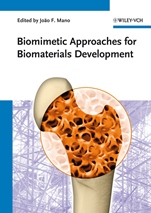
Biomimetic Approaches for Biomaterials Development
ISBN 9783527329168
Autor: Joao F. Mano
Wydawca: Wiley
Dostępność: 3-6 tygodni
Cena: 854,70 zł
Przed złożeniem zamówienia prosimy o kontakt mailowy celem potwierdzenia ceny.
ISBN13: |
9783527329168 |
ISBN10: |
3527329161 |
Autor: |
Joao F. Mano |
Oprawa: |
Hardback |
Rok Wydania: |
2012-10-24 |
Ilość stron: |
606 |
Wymiary: |
245x174 |
Tematy: |
PN |
Biomimetics, in general terms, aims at understanding biological principles and applying them for the development of man–made tools and technologies. This approach is particularly important for the purposeful design of passive as well as functional biomaterials that mimic physicochemical, mechanical and biological properties of natural materials, making them suitable, for example, for biomedical devices or as scaffolds for tissue regeneration. The book comprehensively covers biomimetic approaches to the development of biomaterials, including: an overview of naturally occurring or nature inspired biomaterials; an in–depth treatment of the surface aspects pivotal for the functionality; synthesis and self–assembly methods to prepare devices to be used in mineralized tissues such as bone and teeth; and preparation of biomaterials for the controlled/ sustained release of bioactive agents. The last part reviews the applications of bioinspired materials and principles of design in regenerative medicine such as in–situ grown bone or cartilage as well as the biomimetic techniques for soft tissue engineering. The comprehensive scope of this book makes it a must–have addition to the bookshelf of everyone in the fields of Materials Science/Engineering, Nanotechnologies / Nanosciences, Medical Sciences, Biochemistry, Polymer Chemistry, and Biomedical Engineering.
Preface XVII List of Contributors XXI Part I Examples of Natural and Nature–Inspired Materials 1 1 Biomaterials from Marine–Origin Biopolymers 3 Tiago H. Silva, Ana R.C. Duarte, Joana Moreira–Silva, Jo˜ao F. Mano, and Rui L. Reis 1.1 Taking Inspiration from the Sea 3 1.2 Marine–Origin Biopolymers 6 1.2.1 Chitosan 6 1.2.2 Alginate 8 1.2.3 Carrageenan 9 1.2.4 Collagen 9 1.2.5 Hyaluronic Acid 10 1.2.6 Others 11 1.3 Marine–Based Tissue Engineering Approaches 12 1.3.1 Membranes 12 1.3.2 Hydrogels 13 1.3.3 Tridimensional Porous Structures 15 1.3.4 Particles 17 1.4 Conclusions 18 References 18 2 Hydrogels from Protein Engineering 25 Midori Greenwood–Goodwin and Sarah C. Heilshorn 2.1 Introduction 25 2.2 Principles of Protein Engineering 26 2.2.1 Protein Structure and Folding 26 2.2.2 Design of Protein–Engineered Hydrogels 28 2.2.3 Production of Protein–Engineered Hydrogels 30 2.3 Structural Diversity and Applications of Protein–Engineered Hydrogels 32 2.3.1 Self–Assembled Protein Hydrogels 32 2.3.2 Covalently Cross–Linked Protein Hydrogels 38 2.4 Development of Biomimetic Protein–Engineered Hydrogels for Tissue Engineering Applications 39 2.4.1 Mechanical Properties Mediate Cellular Response 40 2.4.2 Biodegradable Hydrogels for Cell Invasion 41 2.4.3 Diverse Biochemical Cues Regulate Complex Cell Behaviors 43 2.4.3.1 Cell–Extracellular Matrix Binding Domains 43 2.4.3.2 Nanoscale Patterning of Cell–Extracellular Matrix Binding Domains 44 2.4.3.3 Cell–Cell Binding Domains 45 2.4.3.4 Delivery of Soluble Cell Signaling Molecules 46 2.5 Conclusions and Future Perspective 48 References 49 3 Collagen–Based Biomaterials for Regenerative Medicine 55 Christophe Helary and Abhay Pandit 3.1 Introduction 55 3.2 Collagens In Vivo 56 3.2.1 Collagen Structure 56 3.2.2 Collagen Fibrillogenesis 56 3.2.3 Three–Dimensional Networks of Collagen in Connective Tissues 57 3.2.4 Interactions of Cells with Collagen 57 3.3 Collagen In Vitro 59 3.4 Collagen Hydrogels 59 3.4.1 Collagen I Hydrogels 59 3.4.1.1 Classical Hydrogels 59 3.4.1.2 Concentrated Collagen Hydrogels 61 3.4.1.3 Dense Collagen Hydrogels Obtained by Plastic Compression 61 3.4.1.4 Dense Collagen Matrices 61 3.4.2 Cross–Linked Collagen I Hydrogels 62 3.4.2.1 Chemical Cross–Linking 62 3.4.2.2 Enzymatic Cross–Linking 62 3.4.3 Collagen II Hydrogels 63 3.4.4 Aligned Hydrogels and Extruded Fibers 64 3.4.4.1 Aligned Hydrogels 64 3.4.4.2 Extruded Collagen Fibers 65 3.5 Collagen Sponges 65 3.6 Multichannel Collagen Scaffolds 66 3.6.1 Multichannel Collagen Conduits 66 3.6.2 Multi–Channeled Collagen–Calcium Phosphate Scaffolds 66 3.7 What Tissues Do Collagen Biomaterials Mimic? (see Table 3.1) 66 3.7.1 Skin 66 3.7.2 Nerves 68 3.7.3 Tendons 68 3.7.4 Bone 69 3.7.5 Intervertebral Disk 69 3.7.6 Cartilage 70 3.8 Concluding Remarks 70 Acknowledgments 71 References 71 4 Silk–Based Biomaterials 75 S´ýlvia Gomes, Isabel B. Leonor, Jo˜ao F. Mano, Rui L. Reis, and David L. Kaplan 4.1 Introduction 75 4.2 Silk Proteins 76 4.2.1 Bombyx mori Silk 76 4.2.2 Spider Silk 77 4.2.3 Recombinant Silk 79 4.3 Mechanical Properties 82 4.4 Biomedical Applications of Silk 84 4.5 Final Remarks 87 References 88 5 Elastin–like Macromolecules 93 Rui R. Costa, Laura Mart´ýn, Jo˜ao F. Mano, and Jos´e C. Rodr´ýguez–Cabello 5.1 General Introduction 93 5.2 Materials Engineering – an Overview on Synthetic and Natural Biomaterials 94 5.3 Elastin as a Source of Inspiration for Nature–Inspired Polymers 94 5.3.1 Genetic Coding 94 5.3.2 Characteristics of Elastin 95 5.3.3 Elastin Disorders 97 5.3.4 Current Applications of Elastin as Biomaterials 97 5.3.4.1 Skin 97 5.3.4.2 Vascular Constructs 98 5.4 Nature–Inspired Biosynthetic Elastins 99 5.4.1 General Properties of Elastin–like Recombinamers 99 5.4.2 The Principle of Genetic Engineering – a Powerful Tool for Engineering Materials 100 5.4.3 From Genetic Construction to Molecules with Tailored Biofunctionality 102 5.4.4 Biocompatibility of ELRs 103 5.5 ELRs as Advanced Materials for Biomedical Applications 103 5.5.1 Tissue Engineering 104 5.5.2 Drug and Gene Delivery 106 5.5.3 Surface Engineering 108 5.6 Conclusions 110 Acknowledgements 110 References 111 6 Biomimetic Molecular Recognition Elements for Chemical Sensing 117 Justyn Jaworski 6.1 Introduction 117 6.1.1 Overview 117 6.1.2 Biological Chemoreception 118 6.1.3 Host–Guest Interactions 119 6.1.3.1 Lock and Key 119 6.1.3.2 Induced Fit 120 6.1.3.3 Preexisting Equilibrium Model 121 6.1.4 Biomimetic Surfaces for Molecular Recognition 121 6.2 Theory of Molecular Recognition 123 6.2.1 Foundation of Molecular Recognition 123 6.2.2 Noncovalent Interactions 123 6.2.3 Thermodynamics of the Molecular Recognition Event 125 6.2.4 Putting a Figure of Merit on Molecular Recognition 127 6.2.5 Multiple Interactions: Avidity and Cooperativity 128 6.3 Molecularly Imprinted Polymers 129 6.3.1 A Brief History of Molecular Imprinting 129 6.3.2 Strategies for the Formation of Molecularly Imprinted Polymers 129 6.3.3 Polymer Matrix Design 130 6.3.4 Cross–Linking and Polymerization Approaches 131 6.3.5 Template Extraction 132 6.3.6 Limitations and Areas for Improvement 133 6.4 Supramolecular Chemistry 134 6.4.1 Introduction 134 6.4.2 Macrocyclic Effect 134 6.4.3 Chelate Effect 135 6.4.4 Preorganization, Rational Design, and Modeling 135 6.4.5 Templating Effect 136 6.4.6 Effective Supramolecular Receptors for Biomimetic Sensing 137 6.4.6.1 Calixarenes 137 6.4.6.2 Metalloporphyrins 138 6.4.7 Recent Improvement 139 6.5 Biomolecular Materials 140 6.5.1 Introduction 140 6.5.2 Native Biomolecules 141 6.5.2.1 Polypeptides 141 6.5.2.2 Carbohydrates 142 6.5.2.3 Oligonucleotides 143 6.5.3 Engineered Biomolecules 144 6.5.3.1 In vitro Selection of RNA/DNA Aptamers 144 6.5.3.2 Evolutionary Screened Peptides 146 6.5.3.3 Computational and Rational Design of Biomimetic Receptors 150 6.6 Summary and Future of Biomimetic–Sensor–Coating Materials 151 References 152 Part II Surface Aspects 157 7 Biology Lessons for Engineering Surfaces for Controlling Cell–Material Adhesion 159 Ted T. Lee and Andr´es J. Garc´ýa 7.1 Introduction 159 7.2 The Extracellular Matrix 159 7.3 Protein Structure 160 7.4 Basics of Protein Adsorption 161 7.5 Kinetics of Protein Adsorption 162 7.6 Cell Communication 164 7.6.1 Intracellular Communication 164 7.6.2 Intercellular Communication 165 7.7 Cell Adhesion Background 166 7.8 Integrins and Adhesive Force Generation Overview 167 7.9 Adhesive Interactions in Cell, and Host Responses to Biomaterials 170 7.10 Model Systems for Controlling Integrin–Mediated Cell Adhesion 170 7.11 Self–Assembling Monolayers (SAMs) 171 7.12 Real–World Materials for Medical Applications 172 7.12.1 Polymer Brush Systems 172 7.12.2 Hydrogels 173 7.13 Bio–Inspired, Adhesive Materials: New Routes to Promote Tissue Repair and Regeneration 174 7.14 Dynamic Biomaterials 176 7.14.1 Nonspecific ‘‘On’’ Switches 176 7.14.1.1 Electrochemical Desorption 176 7.14.1.2 Oxidative Release 177 7.14.2 Photobased Desorption 178 7.14.3 Integrin Specific ‘‘On’’ Switching 178 7.14.3.1 Photoactivation 178 7.14.4 Adhesion ‘‘Off’’ Switching 179 7.14.4.1 Electrochemical Off Switching 179 7.14.5 Reversible Adhesion Switches 181 7.14.5.1 Reversible Photoactive Switching 181 7.14.5.2 Reversible Temperature–Based Switching 182 7.14.6 Conclusions and Future Prospects 184 References 185 8 Fibronectin Fibrillogenesis at the Cell–Material Interface 189 Marco Cantini, Patricia Rico, and Manuel Salmer´on–S´anchez 8.1 Introduction 189 8.2 Cell–Driven Fibronectin Fibrillogenesis 189 8.2.1 Fibronectin Structure 190 8.2.2 Essential Domains for FN Assembly 192 8.2.3 FN Fibrillogenesis and Regulation of Matrix Assembly 194 8.3 Cell–Free Assembly of Fibronectin Fibrils 195 8.4 Material–Driven Fibronectin Fibrillogenesis 202 8.4.1 Physiological Organization of Fibronectin at the Material Interface 203 8.4.2 Biological Activity of the Material–Driven Fibronectin Fibrillogenesis 206 References 210 9 Nanoscale Control of Cell Behavior on Biointerfaces 213 E. Ada Cavalcanti–Adam and Dimitris Missirlis 9.1 Nanoscale Cues in Cell Environment 213 9.2 Biomimetics of Cell Environment Using Interfaces 216 9.2.1 Surface Patterning Techniques at the Nanoscale 216 9.2.1.1 Surface Patterning by Nonconventional Nanolithography 216 9.2.1.2 Block Copolymer Micelle Lithography 217 9.2.2 Variation of Surface Physical Parameters at the Nanoscale 219 9.2.2.1 Surface Nanotopography 220 9.2.2.2 Interligand Spacing 221 9.2.2.3 Ligand Density 222 9.2.2.4 Substrate Mechanical Properties 223 9.2.2.5 Dimensionality 223 9.2.3 Surface Functionalization for Controlled Presentation of ECM Molecules to Cells 224 9.2.3.1 Proteins, Protein Fragments, and Peptides 224 9.2.3.2 Linking Systems 226 9.2.3.3 Modulation of Substrate Background 227 9.3 Cell Responses to Nanostructured Materials 227 9.3.1 Cell Adhesion and Migration 228 9.3.2 Cell–Cell Interactions 230 9.3.3 Cell Membrane Receptor Signaling 231 9.3.4 Applications of Nanostructures in Stem Cell Biology 232 9.4 The Road Ahead 233 References 234 10 Surfaces with Extreme Wettability Ranges for Biomedical Applications 237 Wenlong Song, Nat´alia M. Alves, and Jo˜ao F. Mano 10.1 Superhydrophobic Surfaces in Nature 237 10.2 Theory of Surface Wettability 239 10.2.1 Young’s Model 239 10.2.2 Wenzel’s Model 240 10.2.3 The Cassie–Baxter Model 240 10.2.4 Transition between the Cassie–Baxter and Wenzel Models 240 10.3 Fabrication of Extreme Water–Repellent Surfaces Inspired by Nature 241 10.3.1 Superhydrophobic Surfaces Inspired by the Lotus Leaf 241 10.3.2 Superhydrophobic Surfaces Inspired by the Legs of the Water Strider 243 10.3.3 Superhydrophobic Surfaces Inspired by the Anisotropic Superhydrophobic Surfaces in Nature 244 10.3.4 Other Superhydrophobic Surfaces 245 10.4 Applications of Surfaces with Extreme Wettability Ranges in the Biomedical Field 245 10.4.1 Cell Interactions with Surfaces with Extreme Wettability Ranges 246 10.4.2 Protein Interactions with Surfaces with Extreme Wettability Ranges 249 10.4.3 Blood Interactions with Surfaces with Extreme Wettability Ranges 251 10.4.4 High–Throughput Chips Based on Surfaces with Extreme Wettability Ranges 252 10.4.5 Substrates for Preparing Hydrogel and Polymeric Particles 254 10.5 Conclusions 254 References 255 11 Bio–Inspired Reversible Adhesives for Dry and Wet Conditions 259 Ar´anzazu del Campo and Juan Pedro Fern´andez–Bl´azquez 11.1 Introduction 259 11.2 Gecko–Like Dry Adhesives 260 11.2.1 Fibrils with 3D Contact Shapes 262 11.2.2 Tilted Structures 263 11.2.3 Hierarchical Structures 265 11.2.4 Responsive Adhesion Patterns 265 11.3 Bioinspired Adhesives for Wet Conditions 268 11.4 The Future of Bio–Inspired Reversible Adhesives 270 Acknowledgments 270 References 270 12 Lessons from Sea Organisms to Produce New Biomedical Adhesives 273 Elise Hennebert, Pierre Becker, and Patrick Flammang 12.1 Introduction 273 12.2 Composition of Natural Adhesives 274 12.2.1 Mussels 274 12.2.2 Tube Worms 278 12.2.3 Barnacles 279 12.2.4 Brown Algae 280 12.3 Recombinant Adhesive Proteins 281 12.3.1 Production 281 12.3.2 Applications 283 12.4 Production of Bio–Inspired Synthetic Adhesive Polymers 284 12.4.1 Adhesives Based on Synthetic Peptides 285 12.4.2 Adhesives Based on Polysaccharides 285 12.4.3 Adhesives Based on Other Polymers 286 12.5 Perspectives 288 Acknowledgments 288 References 288 Part III Hard and Mineralized Systems 293 13 Interfacial Forces and Interfaces in Hard Biomaterial Mechanics 295 Devendra K. Dubey and Vikas Tomar 13.1 Introduction 295 13.2 Hard Biological Materials 298 13.2.1 Role of Interfaces in Hard Biomaterial Mechanics 299 13.2.2 Modeling of TC–HAP and Generic Polymer–Ceramic–Type Nanocomposites at Fundamental Length Scales 301 13.2.2.1 Analytical Modeling 302 13.2.2.2 Atomistic Modeling 304 13.3 Bioengineering and Biomimetics 306 13.4 Summary 308 References 309 14 Nacre–Inspired Biomaterials 313 Gisela M. Luz and Jo˜ao F. Mano 14.1 Introduction 313 14.2 Structure of Nacre 316 14.3 Why Is Nacre So Strong? 318 14.4 Strategies to Produce Nacre–Inspired Biomaterials 320 14.4.1 Covalent Self–Assembly or Bottom–Up Approach 320 14.4.2 Electrophoretic Deposition 322 14.4.3 Layer–by–Layer and Spin–Coating Methodologies 323 14.4.4 Template Inhibition 325 14.4.5 Freeze–Casting 326 14.4.6 Other Methodologies 326 14.5 Conclusions 328 Acknowledgements 329 References 329 15 Surfaces Inducing Biomineralization 333 Nat´alia M. Alves, Isabel B. Leonor, Helena S. Azevedo, Rui. L. Reis, and Jo˜ao. F. Mano 15.1 Mineralized Structures in Nature: the Example of Bone 333 15.2 Learning from Nature to the Research Laboratory 336 15.2.1 Bioactive Ceramics and Their Bone–Bonding Mechanism 337 15.2.2 Is a Functional Group Enough to Render Biomaterials Self–Mineralizable? 338 15.2.2.1 How the Surface Charge of Functional Group Can Be Correlated to Apatite Formation? 338 15.2.2.2 Designing a Properly Functionalized Surface 339 15.3 Smart Mineralizing Surfaces 343 15.4 In Situ Self–Assembly on Implant Surfaces to Direct Mineralization 345 15.5 Conclusions 348 Acknowledgments 348 References 348 16 Bioactive Nanocomposites Containing Silicate Phases for Bone Replacement and Regeneration 353 Melek Erol, Jasmin Hum, and Aldo R. Boccaccini 16.1 Introduction 353 16.2 Nanostructure and Nanofeatures of the Bone 354 16.2.1 The Structure of Bone as a Nanocomposite 354 16.2.2 Cell Behavior at the Nanoscale 356 16.3 Nanocomposites–Containing Silicate Nanophases 356 16.3.1 Nanoscale Bioactive Glasses 356 16.3.1.1 Synthetic Polymer/Nanoparticulate Bioactive Glass Composites 357 16.3.1.2 Natural Polymer/Bioactive Glass Nanocomposites 360 16.3.2 Nanoscaled Silica 363 16.3.2.1 Composites Containing Silica Nanoparticles 364 16.3.3 Nanoclays 365 16.3.3.1 Composites Containing Clay Nanoparticles 366 16.4 Final Considerations 372 References 375 Part IV Systems for the Delivery of Bioactive Agents 381 17 Biomimetic Nanostructured Apatitic Matrices for Drug Delivery 383 Norberto Roveri and Michele Iafisco 17.1 Introduction 383 17.2 Biomimetic Apatite Nanocrystals 384 17.2.1 Properties 384 17.2.2 Synthesis 386 17.3 Biomedical Applications of Biomimetic Nanostructured Apatites 390 17.4 Biomimetic Nanostructured Apatite as Drug Delivery System 394 17.4.1 Adsorption and Release of Drugs 397 17.5 Adsorption and Release of Proteins 402 17.5.1 Adsorption and Release of Bisphosphonates 406 17.6 Conclusions and Perspectives 409 Acknowledgments 411 References 411 18 Nanostructures and Nanostructured Networks for Smart Drug Delivery 417 Carmen Alvarez–Lorenzo, Ana M. Puga, and Angel Concheiro 18.1 Introduction 417 18.2 Stimuli–Sensitive Materials 419 18.2.1 pH 419 18.2.2 Glutathione 420 18.2.3 Molecule–Responsive and Imprinted Systems 420 18.2.4 Temperature 422 18.2.5 Light 423 18.2.6 Electrical Field 425 18.2.7 Magnetic Field 426 18.2.8 Ultrasounds 427 18.2.9 Autonomous Responsiveness 428 18.3 Stimuli–Responsive Nanostructures and Nanostructured Networks 428 18.3.1 Self–Assembled Polymers: Micelles and Polymersomes 429 18.3.2 Treelike Polymers: Dendrimers 433 18.3.3 Layer–by–Layer Assembly of Preformed Polymers 436 18.3.4 Polymeric Particles from Preformed Polymers 438 18.3.5 Polymeric Particles from Monomers 439 18.3.6 Chemically Cross–Linked Hydrogels 444 18.3.7 Grafting onto Medical Devices 447 18.4 Concluding Remarks 449 Acknowledgments 449 References 450 19 Progress in Dendrimer–Based Nanocarriers 459 Joaquim M. Oliveira, Jo˜ao F. Mano, and Rui L. Reis 19.1 Fundamentals 459 19.2 Applications of Dendrimer–Based Polymers 460 19.2.1 Biomimetic/Bioinspired Materials 460 19.2.2 Drug Delivery Systems 461 19.2.3 Gene Delivery Systems 463 19.2.4 Biosensors 465 19.2.5 Theranostics 466 19.3 Final Remarks 467 References 467 Part V Lessons from Nature in Regenerative Medicine 471 20 Tissue Analogs by the Assembly of Engineered Hydrogel Blocks 473 Shilpa Sant, Daniela F. Coutinho, Nasser Sadr, Rui L. Reis, and Ali Khademhosseini 20.1 Introduction 473 20.2 Tissue/Organ Heterogeneity In Vivo 474 20.3 Hydrogel Engineering for Obtaining Biologically Inspired Structures 477 20.3.1 Structural Cues 477 20.3.2 Mechanical Cues 478 20.3.3 Biochemical Cues 480 20.3.4 Cell–Cell Contact 482 20.3.5 Combination of Multiple Cues 483 20.4 Assembly of Engineered Hydrogel Blocks 485 20.5 Conclusions 488 Acknowledgments 489 References 489 21 Injectable In–Situ–Forming Scaffolds for Tissue Engineering 495 Da Yeon Kim, Jae Ho Kim, Byoung Hyun Min, and Moon Suk Kim 21.1 Introduction 495 21.2 Injectable In–Situ–Forming Scaffolds Formed by Electrostatic Interactions 496 21.3 Injectable In–Situ–Forming Scaffolds Formed by Hydrophobic Interactions 497 21.4 Immune Response of Injectable In–Situ–Forming Scaffolds 500 21.5 Injectable In–Situ–Forming Scaffolds for Preclinical Regenerative Medicine 500 21.6 Conclusions and Outlook 501 References 502 22 Biomimetic Hydrogels for Regenerative Medicine 503 Iris Mironi–Harpaz, Olga Kossover, Eran Ivanir, and Dror Seliktar 22.1 Introduction 503 22.2 Natural and Synthetic Hydrogels 503 22.3 Hydrogel Properties 505 22.4 Engineering Strategies for Hydrogel Development 506 22.5 Applications in Biomedicine 508 References 511 23 Bio–inspired 3D Environments for Cartilage Engineering 515 Jos´e Luis G´omez Ribelles 23.1 Articular Cartilage Histology 515 23.2 Spontaneous and Forced Regeneration in Articular Cartilage 517 23.3 What Can Tissue Engineering Do for Articular Cartilage Regeneration? 517 23.4 Cell Sources for Cartilage Engineering 519 23.4.1 Bone Marrow Mesenchymal Cells Reaching the Cartilage Defect from Subchondral Bone 519 23.4.2 Autologous Mesenchymal Stem Cells from Different Sources 520 23.4.3 Mature Autologous Chondrocytes 521 23.5 The Role and Requirements of the Scaffolding Material 524 23.5.1 Gels Encapsulating Cells as Vehicles for Cell Transplant 524 23.5.2 Macroporous Scaffolds: Pore Architecture 524 23.5.3 Cell Adhesion Properties of the Scaffold Surfaces 525 23.5.4 Mechanical Properties 525 23.5.5 Can Scaffold Architecture Direct Tissue Organization? 526 23.5.6 Scaffold Biodegradation Rate 527 23.6 Growth Factor Delivery In Vivo 528 23.7 Conclusions 528 Acknowledgment 529 References 529 24 Soft Constructs for Skin Tissue Engineering 537 Simone S. Silva, Jo˜ao F. Mano, and Rui L. Reis 24.1 Introduction 537 24.2 Structure of Skin 537 24.2.1 Wound Healing 538 24.3 Current Biomaterials in Wound Healing 539 24.3.1 Alginate 539 24.3.2 Cellulose 540 24.3.3 Chitin/Chitosan 541 24.3.4 Hyaluronic Acid 543 24.3.5 Collagen and Other Proteins 544 24.3.6 Synthetic Polymers 545 24.4 Wound Dressings and Their Properties 545 24.5 Biomimetic Approaches in Skin Tissue Engineering 546 24.5.1 Commercially Available Skin Products 549 24.6 Final Remarks 549 Acknowledgments 552 List of Abbreviations 552 References 553 Index 559
João F. Mano (CEng, PhD, DSc) i s an Associate Professor at the Polymer Engineering Department, University of Minho, Portugal, and principal investigator at the 3B′s research group – Biomaterials, Biodegradables and Biomimetics. He is the former director of the Master program in Biomedical Engineering at the University of Minho. His current research interests include the development of new materials and concepts for biomedical applications, especially aimed at being used in tissue engineering and in drug delivery systems. In particular, he has been developing biomaterials and surfaces that can react to external stimuli, or biomimetic and nanotechnology approaches to be used in the biomedical area. J.F. Mano authored more than 330 papers in international journals and three patents. He belongs to the editorial boards of 5 well–established international journals. J.F. Mano awarded the Stimulus to Excellence by the Portuguese Minister for Science and Technology in 2005, the Materials Science and Technology Prize, attributed by the Federation of European Materials Societies in 2007 and the major BES innovation award in 2010.
Koszyk
Książek w koszyku: 0 szt.
Wartość zakupów: 0,00 zł
Informacje


Kontakt
Gambit
Centrum Oprogramowania
i Szkoleń Sp. z o.o.
Al. Pokoju 29b/22-24
31-564 Kraków
Siedziba Księgarni
ul. Kordylewskiego 1
31-542 Kraków
+48 12 410 5991
+48 12 410 5987
+48 12 410 5989
Subskrypcje
Administratorem danych osobowych jest firma Gambit COiS Sp. z o.o. Na podany adres będzie wysyłany wyłącznie biuletyn informacyjny.
Autoryzacja płatności

Informacje na temat autoryzacji płatności poprzez PayU.

© Copyright 2012: GAMBIT COiS Sp. z o.o. Wszelkie prawa zastrzeżone.
Projekt i wykonanie: Alchemia Studio Reklamy