


Wydawcy
Katalog tematyczny
- Archeologia (109)
- Ekonomia, finanse, business (13704)
- Filozofia (1445)
- Historia (3040)
- Języki i językoznawstwo (2356)
- Lifestyle, hobby i rozrywka (475)
- Medycyna (9704)
- Nauki humanistyczne (4)
- Nauki o Ziemi i środowisku (2638)
- Nauki ścisłe (20412)
- Astronomia (294)
- Biologia (5119)
- Chemia (6540)
- Chemia analityczna (361)
- Chemia fizyczna (346)
- Chemia nieorganiczna (137)
- Chemia organiczna (535)
- Krystalografia (27)
- Minerologia (46)
- Fizyka (3309)
- Matematyka (4574)
- Nauki ścisłe, ogólnie (503)
- Nauki społeczne (8486)
- Nauki techniczne (13450)
- Prawo (1696)
- Publikacje informacyjne i interdyscyplinarne (1288)
- Religia i wierzenia (917)
- Technika komputerowa (4067)
- Zdrowie, relacje międzyludzkie i rozwój osobisty (657)





Informacje szczegółowe o książce
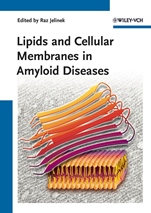
Lipids and Cellular Membranes in Amyloid Diseases
ISBN 9783527328604
Autor: Raz Jelinek
Wydawca: Wiley
Dostępność: 3-6 tygodni
Cena: 827,40 zł
Przed złożeniem zamówienia prosimy o kontakt mailowy celem potwierdzenia ceny.
ISBN13: |
9783527328604 |
ISBN10: |
3527328602 |
Autor: |
Raz Jelinek |
Oprawa: |
Hardback |
Rok Wydania: |
2011-04-06 |
Ilość stron: |
296 |
Wymiary: |
249x180 |
Tematy: |
PN |
Addressing one of the biggest riddles in current molecular cell biology, this ground–breaking monograph builds the case for the crucial involvement of lipids and membranes in the formation of amyloid deposits. Tying together recent knowledge from in vitro and in vivo studies, and built on a sound biophysical and biochemical foundation, this overview brings the reader up to date with current models of the interplay between membranes and amyloid formation. Required reading for any researcher interested in amyloid formation and amyloid toxicity, and possible avenues for the prevention or treatment of neurodegenerative disorders.
From the contents:Interactions of α–Synuclein with LipidsInteraction of hIAPP and its Precursors with MembranesAmyloid Polymorphisms: Structural Basis and Significance in Biology and Molecular MedicineThe Role of Lipid Rafts in Alzheimer’s DiseaseAlzheimer′s Disease as a Membrane–Associated Enzymopathy of Amyloid Precursor Protein (APP) SecretasesImpaired Regulation of Glutamate Receptor Channels and Signaling.Molecules by β–Amyloid in Alzheimer’s DiseaseMembrane Changes in BSE and ScrapieExperimental Approaches and Technical Challenges for Studying Amyloid–Membrane Interactions
and more
Spis treści:
Preface.
List of Contributors.
1 Interactions of α–Synuclein with Lipids and Artificial Membranes Monitored by ESIPT Probes (Volodymyr V. Shvadchak, Lisandro J. Falomir– Lockhart, Dmytro A. Yushchenko, and Thomas M. Jovin).
1.1 Introduction to Parkinson′s Disease and α–Synuclein.
1.2 Structural Biology of α–Synuclein.
1.3 Methods for Studying ASLipid Interactions.
1.4 ASLipid Interactions.
1.5 Interactions of Monomeric AS with Artificial Membranes Monitored with ESIPT Probes.
1.6
Aggregation of AS and the Effects of Fatty Acids Monitored with ESIPT Probes.
1.7 Concluding Remarks.
References.
2 Structural and Functional Insights into α–SynucleinLipid Interactions (Martin Stöckl, Bart D. van Rooijen, Mireille M.A.E Claessens, and Vinod Subramaniam).
2.1 Introduction.
2.2 Interaction of a–Synuclein with Model Membrane Systems.
2.3 Biological Significance.
References.
3 Surfactants and Alcohols as Inducers of Protein Amyloid: Aggregation Chaperones or Membrane Simulators? (Daniel E. Otzen).
3.1 Introduction.
3.2 Aggregation in the Presence of Surfactants.
3.3 Palimpsests of Future Functions: Cytotoxic ProteinLipid Complexes.
3.4 Aggregation in Fluorinated Organic Solvents.
3.5 From Mimetics to the Real Thing: Aggregation on Lipids.
3.6 Summary.
References.
4 Interaction of hIAPP and Its Precursors with Model and Biological Membranes (Katrin Weise, Rajesh Mishra, Suman Jha, Daniel Sellin, Diana Radovan, Andrea Gohlke, Christoph Jeworrek, Janine Seeliger, Simone Möbitz, and Roland Winter).
4.1 Introduction.
4.2 Results.
4.3 Conclusions.
References.
5 Amyloid Polymorphisms: Structural Basis and Significance in Biology and Molecular Medicine (Massimo Stefani).
5.1 Introduction.
5.2 Only Generic Data Are Currently Available on the Structural Features of Amyloid Oligomers.
5.3 The Plasma Membrane Can Be a Primary Site of Amyloid Oligomer Generation and Interaction.
5.4 Oligomer/Fibril Polymorphism Can Underlie Amyloid Cytotoxicity.
5.5 Amyloid Oligomers Grown Under Different Conditions Can Display Variable Cytotoxicity by Interacting in Different Ways with the Cell Membranes.
5.6 Conclusions.
References.
6 Intracellular Amyloid β: a Modification to the Amyloid Hypothesis in Alzheimer.s Disease (Yan Zhang).
6.1 Introduction.
6
.2 Evidence for the Presence of Intracellular Amyloid.
6.3 Sources of Intracellular Amyloid.
6.4 Relationship Between Intracellular and Extracelluar Amyloid.
6.5 Prevention of Intracellular Amyloid Toxicity.
6.6 Concluding Remarks.
6.7 Disclosure Statement.
References.
7 Lipid Rafts Play a Crucial Role in Protein Interactions and Intracellular Signaling Involved in Neuronal Preservation Against Alzheimer.s Disease (Raquel Marin).
7.1 Lipid Rafts: Keys to Signaling Platforms in Neurons.
7.2 Estrogen Receptors Are Part of Signaling Platforms in Neuronal Rafts.
7.3 Role of Lipid Raft ERaVDAC Interactions in Neuronal Preservation Against Ab Toxicity.
7.4 Disruption of ERaVDAC Complex in AD Brains.
7.5 Future Studies.
References.
8 Alzheimer′s Disease as a Membrane–Associated Enzymopathy of β–Amyloid Precursor Protein (APP) Secretases (Saori Hata, Yuhki Saito, and Toshiharu Suzuki).
8.1 Introduction.
8.2 Intramembrane–Cleaving Enzyme of Type I Membrane Proteins.
8.3 Alcadein Processing by γ–Secretase in Alzheimer.s Disease.
References.
9 Impaired Regulation of Glutamate Receptor Channels and Signaling Molecules by β–Amyloid in Alzheimer′s Disease (Zhen Yan).
9.1 Introduction.
9.2 AMPAR–Mediated Synaptic Transmission and Ionic Current are Impaired by Aβ.
9.3 CaMKII is Causally Involved in Ab Impairment of AMPAR Trafficking and Function.
9.4 PIP2 Regulation of NMDAR Currents is Lost by Aβ.
9.5 The Effect of AChE Inhibitor on NMDAR Response is Impaired in APP Transgenic Mice.
9.6 Aβ Impairs PKC–Dependent Signaling and Functions.
9.7 Conclusion.
References.
10 Membrane Changes in BSE and Scrapie (Cecilie Ersdal, Gillian McGovern, and Martin Jeffrey).
10.1 Prion Diseases.
10.2 The Cellu
lar Prion Protein (PrPc) and Conversion to Disease–Associated Prion Protein (PrPd).
10.3 PrPd Accumulation in the Central Nervous System and Lymphatic Tissues.
10.4 Aberrant Endocytosis and Trafficking of PrPd in Neurons and Tingible Body Macrophages.
10.5 Abnormal Maturation Cycle and Immune Complex Trapping of Follicular Dendritic Cells in Lymphoid Germinal Centers.
10.6 Molecular Changes of Plasma Membranes Associated with PrPd Accumulation.
10.7 Transfer of PrPd Between Cells.
10.8 Extracellular Amyloid Form of PrPd.
10.9 Strain–Directed Effects of Prion Infection.
10.10 Conclusion and Perspectives.
10.11 Summary.
References.
11 Interaction of Alzheimer Amyloid Peptide with Cell Surfaces and Artificial Membranes (David A. Bateman and Avijit Chakrabartty).
11.1 Introduction.
11.2 Comparison of the Neurotoxicity of Oligomeric and Fibrillar Alzheimer Amyloid Peptides.
11.3 Aβ Oligomerization at the Cell Surface.
11.4 Catalysis of Aβ Oligomerization by the Cell Surface.
11.5 Type of Aβ Complexes that Form on the Cell Surface.
11.6 Association of Alzheimer Amyloid Peptides with Lipid Particles.
11.7 Future Directions.
References.
12 Experimental Approaches and Technical Challenges for Studying AmyloidMembrane Interactions (Raz Jelinek and Tania Sheynis).
12.1 Introduction.
12.2 Unilamellar Vesicles and Micelles.
12.3 Black Lipid Membranes.
12.4 Langmuir Monolayers.
12.5 Solid–Supported Bilayers.
12.6 Other Techniques.
12.7 Challenges and Future Work.
References.
Index.
Nota biograficzna:
Currently at the department of Chemistry at Ben Gurion University, Israel, Raz Jelinek obtained his BSc in chemistry from the Hebrew University of Jerusalem, Israel, and his PhD from the University of California, Berkeley. He was a Cancer Research Institute post–doctora
l fellow at the University of Pennsylvania and a Visiting Professor at the Department of Chemical and Biomolecular Engineering at Johns Hopkins University. Professor Jelinek has over 90 scientific publications and 10 patents to his name, and has received several scientific awards, including the Roger–Siegel–Brown Award of the Israeli Academy of Science and the Ruth L. Kirschstein National Research Service Award of the National Institutes of Health, USA.
Okładka tylna:
Addressing one of the biggest riddles in current molecular cell biology, this ground–breaking monograph builds the case for the crucial involvement of lipids and membranes in the formation of amyloid deposits. Tying together recent knowledge from in vitro and in vivo studies, and built on a sound biophysical and biochemical foundation, this overview brings the reader up to date with current models of the interplay between membranes and amyloid formation. Required reading for any researcher interested in amyloid formation and amyloid toxicity, and possible avenues for the prevention or treatment of neurodegenerative disorders.
From the contents:Interactions of α–Synuclein with LipidsInteraction of hIAPP and its Precursors with MembranesAmyloid Polymorphisms: Structural Basis and Significance in Biology and Molecular MedicineThe Role of Lipid Rafts in Alzheimer’s DiseaseAlzheimer′s Disease as a Membrane–Associated Enzymopathy of Amyloid Precursor Protein (APP) SecretasesImpaired Regulation of Glutamate Receptor Channels and Signaling.Molecules by β–Amyloid in Alzheimer’s DiseaseMembrane Changes in BSE and ScrapieExperimental Approaches and Technical Challenges for Studying Amyloid–Membrane Interactions
and more
Koszyk
Książek w koszyku: 0 szt.
Wartość zakupów: 0,00 zł
Informacje


Kontakt
Gambit
Centrum Oprogramowania
i Szkoleń Sp. z o.o.
Al. Pokoju 29b/22-24
31-564 Kraków
Siedziba Księgarni
ul. Kordylewskiego 1
31-542 Kraków
+48 12 410 5991
+48 12 410 5987
+48 12 410 5989
Subskrypcje
Administratorem danych osobowych jest firma Gambit COiS Sp. z o.o. Na podany adres będzie wysyłany wyłącznie biuletyn informacyjny.
Autoryzacja płatności

Informacje na temat autoryzacji płatności poprzez PayU.

© Copyright 2012: GAMBIT COiS Sp. z o.o. Wszelkie prawa zastrzeżone.
Projekt i wykonanie: Alchemia Studio Reklamy