


Wydawcy
Katalog tematyczny
- Archeologia (109)
- Ekonomia, finanse, business (13704)
- Filozofia (1445)
- Historia (3040)
- Języki i językoznawstwo (2356)
- Lifestyle, hobby i rozrywka (475)
- Medycyna (9704)
- Nauki humanistyczne (4)
- Nauki o Ziemi i środowisku (2638)
- Nauki ścisłe (20412)
- Astronomia (294)
- Biologia (5119)
- Chemia (6540)
- Chemia analityczna (361)
- Chemia fizyczna (346)
- Chemia nieorganiczna (137)
- Chemia organiczna (535)
- Krystalografia (27)
- Minerologia (46)
- Fizyka (3309)
- Matematyka (4574)
- Nauki ścisłe, ogólnie (503)
- Nauki społeczne (8486)
- Nauki techniczne (13450)
- Prawo (1696)
- Publikacje informacyjne i interdyscyplinarne (1288)
- Religia i wierzenia (917)
- Technika komputerowa (4067)
- Zdrowie, relacje międzyludzkie i rozwój osobisty (657)





Informacje szczegółowe o książce
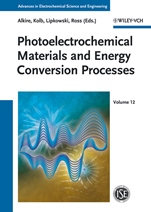
Photoelectrochemical Materials and Energy Conversion Processes
ISBN 9783527328598
Autor: Richard C. Alkire, Dieter M. Kolb, Jacek Lipkowski, Phil N. Ross
Wydawca: Wiley
Dostępność: 3-6 tygodni
Cena: 773,85 zł
Przed złożeniem zamówienia prosimy o kontakt mailowy celem potwierdzenia ceny.
ISBN13: |
9783527328598 |
ISBN10: |
3527328599 |
Autor: |
Richard C. Alkire, Dieter M. Kolb, Jacek Lipkowski, Phil N. Ross |
Oprawa: |
Hardback |
Rok Wydania: |
2010-12-15 |
Ilość stron: |
374 |
Wymiary: |
245x180 |
Tematy: |
PN |
An International group of leading scientists from the field has contributed to the 12th volume in this series, covering a range of different types of solar cells and including a critical comparison of the different techniques available for manufacturing the semiconductors needed.
Solar power is a promising green energy source for the future, but at the present many fundamental questions still remain unanswered. This book focuses on investigating some of these central questions in this interdisciplinary field.
The result is an expert insight into the central questions surrounding photovoltaic materials and systems, reflecting the latest developments in this hot and timely green topic. This handy reference is a must–have for Electrochemists, Physical Chemists, Surface Chemists, Materials Scientists, and Physicists.
Spis treści:
Preface.
List of Contributors.
1 Applications of Electrochemistry in the Fabrication and Characterization of Thin–Film Solar Cells (Phillip Dale and Laurence Peter).
1.1 Introduction.
1.2 Electrochemical Routes to Thin–Film Solar Cells.
1.3 Characterization of Solar Cell Materials using Electrolyte Contacts.
1.4 Conclusions.
Acknowledgments.
References.
2 Tailoring of Interfaces for the Photoelectrochemical Conversion of Solar Energy (Hans Joachim Lewerenz).
2.1 Introduction.
2.2 Operation Principles of Photoelectrochemical Devices.
2.3 Surface and Interface Analysis Methods.
2.4 Case Studies: Interface Conditioning.
2.5 Photovoltaic, Photoelectrochemical Devices.
2.6 Photoelectrocatalytic Devices.
2.7 Synopsis.
Acknowledgments.
Appendix 2.A.
Appendix 2.B.
Appendix 2.C.
References.
3 Printable Materials and Technologies for Dye–Sensitized Photovoltaic Cells with Flexible Substrates (Tsutomu Miyasaka).
3.1 Introduction: Historical Background.
3.2 Low–Temperature
Coating of Semiconductor Films.
3.3 Photoelectric Performance of Plastic Dye–Sensitized Photocells.
3.4 Polymer–Based Counter Electrodes with Printable Materials.
3.5 Investigation of High–Extinction Sensitizers and Co–adsorbents.
3.6 Durability Development for Plastic DSSCs.
3.7 Fabrication of Large–Area Plastic DSSC Modules.
3.8 Concluding Remarks.
References.
4 Electrodeposited Porous ZnO Sensitized by Organic Dyes – Promising Materials for Dye–Sensitized Solar Cells with Potential Application in Large–Scale Photovoltaics (Derck Schlettwein, Tsukasa Yoshida, and Daniel Lincot).
4.1 Introduction.
4.2 Electrodeposition – A Well–Established Technology.
4.3 Electrodeposition of ZnO Thin Films.
4.4 Sensitization of ZnO.
4.5 Alternative Sensitizer Molecules.
4.6 Electrodeposition of Hybrid ZnO/Organic Thin Films.
4.7 Porous Crystalline Networks of ZnO as Starting Material for Dye–Sensitized Solar Cells.
4.8 Adaptation of Electrodeposition Towards Specific Demands of Alternative Substrate Materials.
4.9 State of the Art and Outlook.
References.
5 Thin–Film Semiconductors Deposited in Nanometric Scales by Electrochemical and Wet Chemical Methods for Photovoltaic Solar Cell Applications (Oumarou Savadogo).
5.1 Introduction.
5.2 Materials and Composite Materials Fabrication.
5.3 Systems Development.
5.4 Conclusions and Perspectives.
References.
Index.
Nota biograficzna:
Richard C. Alkire is Professor Emeritus of Chemical & Biomolecular Engineering Charles and Dorothy Prizer Chair at the University of Illinois, Urbana, USA. He obtained his degrees at Lafayette College and University of California at Berkeley. He has received numerous prizes, including Vittorio de Nora Award and Lifetime National Associate award from National Academy.
Dieter M. Kolb is
Professor of Electrochemistry at the University of Ulm, Germany. He received his undergraduate and PhD degrees at the Technical University of Munich. He was a Postdoctoral Fellow at Bell Laboratories, Murray Hill, NJ, USA. He worked as a Senior Scientist at the Fritz–Haber–Institute of the Max–Planck–Society, Berlin and completed his habilitation at the Free University of Berlin, where he also was Professor. Prof. Kolb has received many prizes and is a member of several societies.
Jacek Lipkowski is Professor at the Department of Chemistry and Biochemistry at the University of Guelph, Canada. His research interests focus on surface analysis and interfacial electrochemistry. He has authored over 120 publications and is a member of several societies, including a Fellow of the International Society of Electrochemistry.
Philip N. Ross has recently retired from his position as a Senior Scientist at the Lawrence Berkeley National Laboratory. He received his academic degrees at Yale University, New Haven, CT, and University of Delaware, Newark, DL. He has received the David C. Grahame Award of the Electrochemical Society, and is a member of several Committees and Advisory Boards.
Okładka tylna:
An International group of leading scientists from the field has contributed to the 12th volume in this series, covering a range of different types of solar cells and including a critical comparison of the different techniques available for manufacturing the semiconductors needed.
Solar power is a promising green energy source for the future, but at the present many fundamental questions still remain unanswered. This book focuses on investigating some of these central questions in this interdisciplinary field.
The result is an expert insight into the central questions surrounding photovoltaic materials and systems, reflecting the latest developments in this hot and timely green topic. This handy reference is a m
ust–have for Electrochemists, Physical Chemists, Surface Chemists, Materials Scientists, and Physicists.
Koszyk
Książek w koszyku: 0 szt.
Wartość zakupów: 0,00 zł
Informacje


Kontakt
Gambit
Centrum Oprogramowania
i Szkoleń Sp. z o.o.
Al. Pokoju 29b/22-24
31-564 Kraków
Siedziba Księgarni
ul. Kordylewskiego 1
31-542 Kraków
+48 12 410 5991
+48 12 410 5987
+48 12 410 5989
Subskrypcje
Administratorem danych osobowych jest firma Gambit COiS Sp. z o.o. Na podany adres będzie wysyłany wyłącznie biuletyn informacyjny.
Autoryzacja płatności

Informacje na temat autoryzacji płatności poprzez PayU.

© Copyright 2012: GAMBIT COiS Sp. z o.o. Wszelkie prawa zastrzeżone.
Projekt i wykonanie: Alchemia Studio Reklamy