


Wydawcy
Katalog tematyczny
- Archeologia (109)
- Ekonomia, finanse, business (13704)
- Filozofia (1445)
- Historia (3040)
- Języki i językoznawstwo (2356)
- Lifestyle, hobby i rozrywka (475)
- Medycyna (9704)
- Nauki humanistyczne (4)
- Nauki o Ziemi i środowisku (2638)
- Nauki ścisłe (20412)
- Astronomia (294)
- Biologia (5119)
- Chemia (6540)
- Chemia analityczna (361)
- Chemia fizyczna (346)
- Chemia nieorganiczna (137)
- Chemia organiczna (535)
- Krystalografia (27)
- Minerologia (46)
- Fizyka (3309)
- Matematyka (4574)
- Nauki ścisłe, ogólnie (503)
- Nauki społeczne (8486)
- Nauki techniczne (13450)
- Prawo (1696)
- Publikacje informacyjne i interdyscyplinarne (1288)
- Religia i wierzenia (917)
- Technika komputerowa (4067)
- Zdrowie, relacje międzyludzkie i rozwój osobisty (657)





Informacje szczegółowe o książce
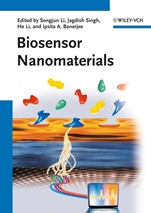
Biosensor Nanomaterials
ISBN 9783527328413
Autor: Songjun Li, Jagdish Singh, He Li, Ipsita A. Banerjee
Wydawca: Wiley
Dostępność: 3-6 tygodni
Cena: 746,55 zł
Przed złożeniem zamówienia prosimy o kontakt mailowy celem potwierdzenia ceny.
ISBN13: |
9783527328413 |
ISBN10: |
3527328416 |
Autor: |
Songjun Li, Jagdish Singh, He Li, Ipsita A. Banerjee |
Oprawa: |
Hardback |
Rok Wydania: |
2011-02-23 |
Ilość stron: |
296 |
Wymiary: |
249x178 |
Tematy: |
PN |
Biosensors are devices that react to the presence of bacteria, viruses or biomolecules, such as proteins, enzymes and DNA. Thus, they are routinely applied for monitoring the glucose concentration in blood, quality analysis of fresh and waste water and for food control, to name but three examples. Nanomaterials are ideal candidates for building sensor devices: even just a few molecules can alter the properties so drastically that these changes may be easily detected by optical, electrical or chemical means. Recent advances have radically increased the sensitivity of nanomaterial–based biosensors, making it possible to detect one particular molecule against a background of billions of others.
Focusing on the materials suitable for biosensor applications, such as nanoparticles, quantum dots, meso– and nanoporous materials and nanotubes, this text enables the reader to prepare the respective nanomaterials for use in actual devices by appropriate functionalization, surface processing or directed self–assembly. The emphasis throughout is on electrochemical, optical and mechanical detection methods, leading to solutions for today?s most challenging tasks.
The result is a reference for researchers and developers, disseminating first–hand information on which nanomaterial is best suited to a particular application –– and why.
Spis treści:
Preface.
List of Contributors.
1 New Micro– and Nanotechnologies for Electrochemical Biosensor Development (Francesca Berti and Anthony P. F. Turner).
1.1 Introduction.
1.2 Carbon Nanotubes.
1.3 Conductive Polymer Nanostructures.
1.4 Nanoparticles.
1.5 Conclusions.
2 Advanced Nanoparticles in Medical Biosensors (Dan Fei, Songjun Li, Christian Cimorra, and Yi Ge).
2.1 Introduction.
2.2 Nanoparticles.
2.3 Conclusions and Outlook.
3 Smart Polymeric Nanofi bers Resolving Biorecogn
ition Issues (Ashutosh Tiwari, Ajay K. Mishra, Shivani B. Mishra, Rajeev Mishra, and Songjun Li).
3.1 Introduction.
3.2 Nanofibers.
3.3 Electrospinning of Nanofibers.
3.4 Biorecognition Devices.
3.5 Conclusions.
4 Fabrication and Evaluation of Nanoparticle–Based Biosensors (Rhishikesh Mandke, Buddhadev Layek, Gitanjali Sharma, and Jagdish Singh).
4.1 Introduction.
4.2 Nanoparticle–Based Biosensors and their Fabrication.
4.3 Evaluation of Nanoparticle–Based Nanosensors.
4.4 Applications of Nanoparticle–Based Biosensors.
4.5 Conclusions.
5 Enzyme–Based Biosensors: Synthesis and Applications (Shunsheng Cao, Juanrong Chen, Xin Jin, Weiwei Wu, and Zhiyuan Zhao).
5.1 Introduction.
5.2 Synthesis and Characterization of Biosensor Supports.
5.3 Application of Enzyme–Based Biosensors.
5.4 Conclusions.
6 Energy Harvesting for Biosensors Using Biofriendly Materials (Radheshyam Rai).
6.1 Introduction.
6.2 Energy Production and Consumption.
6.3 Classifi cation of Energy–Harvesting Devices.
6.4 Conclusions.
7 Carbon Nanotubes: In Vitro and In Vivo Sensing and Imaging (William Cheung and Huixin He).
7.1 Introduction.
7.2 Carbon Nanotubes: Structure, Physical and Chemical Properties, and Applications.
7.3 Near–IR Absorption of Carbon Nanotubes.
7.4 Near–IR Photoluminescence of Single–Walled Carbon Nanotubes.
7.5 Raman Scattering of Carbon Nanotubes.
7.6 Conclusions and Outlook.
8 Lipid Nanoparticle–Mediated Detection of Proteins (Erin K. Nyren–Erickson, Ryne C. Hendrickson, and Sanku Mallik).
8.1 Introduction to Liposomes.
8.2 Saturated Liposomes.
8.3 Polymerized Liposomes.
8.4 Conclusions.
9 Nanomaterials for Optical Imaging (Anil
V. Wagh, Ruchi Malik, and Benedict Law).
9.1 Introduction.
9.2 Doped Nanoparticles.
9.3 Conclusions and Outlook.
10 Semiconductor Quantum Dots for Electrochemical Biosensors (Chunyan Wang, Bernard Knudsen, and Xueji Zhang).
10.1 Introduction.
10.2 Attachment of Biomolecules to Quantum Dots.
10.3 Quantum Dot–Based Redox Proteins Biosensor.
10.4 Quantum Dot–Based Electrochemical Biosensors of Proteins and DNA.
10.5 Conclusions.
11 Functionalized Graphene for Biosensing Applications (Minghui Yang, Chunyan Wang, Qin Wei, Bin Du, He Li, and Zhiyong Qian).
11.1 Introduction.
11.2 Preparation of Grapheme.
11.3 Functionalized Graphene with Metal Nanoparticles.
11.4 Glucose Biosensors Based on Graphene.
11.5 Immunosensors Based on Graphene.
11.6 Other Electrochemical Biosensors Based on Graphene.
11.7 Conclusions.
12 Current Frontiers in Electrochemical Biosensors Using Chitosan Nanocomposites (Shivani B. Mishra, Ajay K. Mishra, and Ashutosh Tiwari).
12.1 Introduction.
12.2 Chitosan.
12.3 Chitosan Nanocomposite–Based Electrochemical Biosensors.
12.4 Conclusions and Future Aspects.
13 Nanomaterials as Promising DNA Biosensors (Premlata Kumari).
13.1 Introduction.
13.2 Nanomaterials as Signal Amplifi ers for Hybridization.
13.3 Conclusions.
14 Nanocomposites and their Biosensor Applications (Ajay K. Mishra, Shivani B. Mishra, and Ashutosh Tiwari).
14.1 Introduction.
14.2 Nanocomposites.
14.3 Biosensors.
14.4 Types of Biosensors.
14.5 Biosensors Applications.
14.6 Nanocomposites for Biosensor Applications.
14.7 Conclusions.
Index.
Nota biograficzna:
Dr. Songjun Li is Associate Professor of Chemistry in the Key Laboratory of Pesticide & Chemical Biology of the Central China Normal University in Wuhan, China, and Marie Cu
rie International Fellow at the Cranfield University, United Kingdom. Since his PhD in polymer chemistry, received from the Chengdu Institute of Organic Chemistry, China, his scientific interests focus on the chemistry of biosensors. Songjun Li is associate editor of the American Journal of Environmental Sciences and member of the editorial board of the Journal of Public Health and Epidemiology.
Jagdish Singh is Professor and Chair of the Department of Pharmaceutical Sciences at NDSU College of Pharmacy, North Dakota, USA, and Fellow of the American Association of Pharmaceutical Scientists (AAPS). His research efforts focus on the mechanistic studies for developing and testing novel methods to deliver biotechnology–derived molecules. Jagdish Singh received twice the NDSU College of Pharmacy Researcher of the Year awards and was recognized with the Fred Waldron Research Award in 2002 in recognition of his outstanding contributions to research and creative activities at NDSU.
Dr. He Li, associated editor for Advanced Materials Letters, is an associate Professor of Chemistry in the School of Medical and Life Sciences at University of Jinan (UJN), China. He got his PhD degree in 2004 in Chengdu Institute of organic Chemistry, Chines Academy of Sciences, Subsequently, he was appointed by UJN as an associate professor with research interest in biosensors and nanomedicine. He worked as the dean of Pharmaceutical Engineering Department of UJN since 2007.
Ipsita Banerjee is Assistant Professor of Chemistry at the Fordham University of New York, USA. He studied chemistry at the University of Bombay and finished his PhD at the University of Connecticut, USA. He did postdoctoral research at the University of Notre Dame, Indianapolis, and at the City University of New York. His research interests lie at the interface of biology and nanotechnology.
Okładka tylna:
Biosensors are devices that react to the presence of b
acteria, viruses or biomolecules, such as proteins, enzymes and DNA. Thus, they are routinely applied for monitoring the glucose concentration in blood, quality analysis of fresh and waste water and for food control, to name but three examples. Nanomaterials are ideal candidates for building sensor devices: even just a few molecules can alter the properties so drastically that these changes may be easily detected by optical, electrical or chemical means. Recent advances have radically increased the sensitivity of nanomaterial–based biosensors, making it possible to detect one particular molecule against a background of billions of others.
Focusing on the materials suitable for biosensor applications, such as nanoparticles, quantum dots, meso– and nanoporous materials and nanotubes, this text enables the reader to prepare the respective nanomaterials for use in actual devices by appropriate functionalization, surface processing or directed self–assembly. The emphasis throughout is on electrochemical, optical and mechanical detection methods, leading to solutions for today?s most challenging tasks.
The result is a reference for researchers and developers, disseminating first–hand information on which nanomaterial is best suited to a particular application –– and why.
Koszyk
Książek w koszyku: 0 szt.
Wartość zakupów: 0,00 zł
Informacje


Kontakt
Gambit
Centrum Oprogramowania
i Szkoleń Sp. z o.o.
Al. Pokoju 29b/22-24
31-564 Kraków
Siedziba Księgarni
ul. Kordylewskiego 1
31-542 Kraków
+48 12 410 5991
+48 12 410 5987
+48 12 410 5989
Subskrypcje
Administratorem danych osobowych jest firma Gambit COiS Sp. z o.o. Na podany adres będzie wysyłany wyłącznie biuletyn informacyjny.
Autoryzacja płatności

Informacje na temat autoryzacji płatności poprzez PayU.

© Copyright 2012: GAMBIT COiS Sp. z o.o. Wszelkie prawa zastrzeżone.
Projekt i wykonanie: Alchemia Studio Reklamy