


Wydawcy
Katalog tematyczny
- Archeologia (109)
- Ekonomia, finanse, business (13704)
- Filozofia (1445)
- Historia (3040)
- Języki i językoznawstwo (2356)
- Lifestyle, hobby i rozrywka (475)
- Medycyna (9704)
- Nauki humanistyczne (4)
- Nauki o Ziemi i środowisku (2638)
- Nauki ścisłe (20412)
- Nauki społeczne (8486)
- Edukacja (229)
- Kryminologia, opieka spełeczna (284)
- Obronność (10)
- Polityka (1389)
- Psychologia (777)
- Socjologia (410)
- Społeczeństwo i kultura (187)
- Nauki techniczne (13450)
- Prawo (1696)
- Publikacje informacyjne i interdyscyplinarne (1288)
- Religia i wierzenia (917)
- Technika komputerowa (4067)
- Zdrowie, relacje międzyludzkie i rozwój osobisty (657)





Informacje szczegółowe o książce
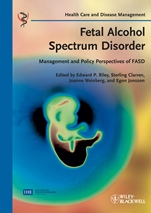
Fetal Alcohol Spectrum Disorder: Management and Policy Perspectives of FASD
ISBN 9783527328390
Autor: Edward P. Riley, Sterling Clarren, Joanne Weinberg, Egon Jonsson
Wydawca: Wiley
Dostępność: 3-6 tygodni
Cena: 665,70 zł
Przed złożeniem zamówienia prosimy o kontakt mailowy celem potwierdzenia ceny.
ISBN13: |
9783527328390 |
ISBN10: |
3527328394 |
Autor: |
Edward P. Riley, Sterling Clarren, Joanne Weinberg, Egon Jonsson |
Oprawa: |
Hardback |
Rok Wydania: |
2010-10-27 |
Ilość stron: |
482 |
Wymiary: |
244x176 |
Tematy: |
JP |
Reflecting the recent increased public awareness of the topic, this is the first and most comprehensive resource for over a decade on the molecular basis, prevalence, treatment, options, socioeconomic impact and prevention strategies of Fetal Alcohol Spectrum Disorder (FASD). Edited by world–renowned experts, this compendium includes the latest research results to provide new insights and realistic estimations of FASD frequencies in Western communities.
An invaluable resource for policy makers, and every professional dealing with the diagnosis, prevention and treatment of FASD, from researchers and health professionals to social workers.
Spis treści:
Preface.
List of Contributors.
1 Prenatal Alcohol Exposure, FAS, and FASD: An Introduction (Tanya T. Nguyen, Jennifer Coppens, and Edward P. Riley).
1.1 Introduction.
1.2 History.
1.3 Diagnosing the Effects of Prenatal Alcohol Exposure.
1.4 Risk Factors Influencing FAS and FASD Conditions.
1.5 Prevalence and Impact of FAS and FASD.
1.6 Prevention.
1.7 Interventions.
PART ONE INCIDENCE, PREVALENCE AND ECONOMIC ASPECTS OF FASD.
2 Researching the Prevalence and Characteristics of FASD in International Settings (Philip A. May).
2.1 Introduction.
2.2 Maternal Risk Factors and FASD.
2.3 Determining the Prevalence of FASD: How the Methods Have Influenced the Rates.
2.4 The Prevalence of FASD from In–School Studies.
2.5 Summary Rates of FASD and Their Meaning.
3 Frequency of FASD in Canada and What This Means for Prevention Efforts (Suzanne C. Tough and Monica Jack).
3.1 Introduction.
3.2 Challenges to Obtaining Accurate Incidence and Prevalence Rates.
3.3 Incidence of FASD.
3.4 Prevalence of FASD.
3.5 Rate of Exposure to Risk.
3.6 Gaps in the Data.
3.7 Policy Considerations.
3.8 Conclusions.
4 Costs of FASD (Ngyuen Xuan Thanh, Egon Jonsson, Liz Dennett an
d Philip Jacobs).
4.1 Introduction.
4.2 Methods.
4.3 Results.
4.4 Discussion.
4.5 Conclusion.
4.6 Appendices to Chapter 4.
PART TWO CAUSES AND DIAGNOSING OF FASD.
5 Direct and Indirect Mechanisms of Alcohol Teratogenesis: Implications for Understanding Alterations in Brain and Behaviour in FASD (Kristina A. Uban, Tamara Bodnar, Kelly Butts, Joanna H. Sliwowska, Wendy Comeau and Joanne Weinberg).
5.1 Introduction.
5.2 Fetal Programming: Programming of the HPA Axis by PAE.
5.3 Altered Epigenetic Regulation of Gene Expression: A Possible Mechanism Underlying Fetal Programming of the HPA Axis and Altered Neuroendocrine–Immune Interactions.
5.4 Prenatal Alcohol Exposure: Early Experience, Stress Responsiveness, and Vulnerability to Depression.
5.5 FASD and Substance Abuse.
5.6 Summary and Policy Considerations.
6 Genetic Factors Contributing to FASD (Albert E. Chudley).
6.1 Introduction.
6.2 The Evidence.
6.3 Genetic Factors in Alcohol Metabolism.
6.4 Some Genetic Factors.
6.5 Epigenetics, the Environment and Nutrition.
6.6 Conclusions, and Some Policy Recommendations.
6.7 Glossary.
7 Diagnosis of FASD: An Overview (Gail Andrew).
7.1 Introduction.
7.2 How Does Prenatal Alcohol Exposure Cause Damage?
7.3 Screening for FASD.
7.4 The Diagnostic Process.
7.5 FASD Across the Lifespan.
7.6 Implications of a Diagnosis of FASD.
7.7 Conclusion and Future Directions.
7.8 Policy Considerations.
PART THREE PREVENTION POLICIES AND PROGRAMS.
8 FASD: A Preconception Prevention Initiative (Lola Baydala, Stephanie Worrell, and Fay Fletcher).
8.1 Introduction.
8.2 Prevention Strategies.
8.3 Research Relationships.
8.4 The CIHR Guidelines for Research Involving Aboriginal People.
8.5 Summary.
9 Bringing a Women′s Health Perspective to FASD Prevention (Nancy Poole).
9.1 Int
roduction.
9.2 Applying Gender–Based Analysis to FASD Prevention.
9.3 Developing a Framework for Women–Centered Prevention Practice.
9.4 Evidencing the Framework.
9.5 Conclusions.
10 Next Steps in FASD Primary Prevention (Robin Thurmeier, Sameer Deshpande, Anne Lavack, Noreen Agrey, and Madgalena Cismaru).
10.1 Introduction.
10.2 Current State of FASD Primary Prevention in North–Western Canada.
10.3 Campaign Evaluation: What Is It and Why It Is Important.
10.4 Incorporating Social Marketing Strategies.
10.5 Creating Behavioral Change: A Protection Motivation Theory.
10.6 Future Considerations for Health Promoters and Policy Makers.
11 Preventing FASD: The Parent–Child Assistance Program (PCAP) Intervention with High–Risk Mothers (Therese M. Grant).
11.1 Introduction.
11.2 FASD Prevention.
11.3 Background.
11.4 The PCAP Intervention.
11.5 PCAP: A Two–Pronged Intervention.
11.6 Preventing Alcohol– and/or Drug–Exposed Births.
11.7 PCAP Outcomes.
11.8 PCAP Cost Effectiveness.
11.9 PCAP Intervention with Women who Themselves Have FASD.
11.10 Policy Recommendations: Collaborative Approaches for Preventing Alcohol–Exposed Pregnancies.
12 FASD in the Perspective of Primary Health Care (June Bergman).
12.1 Primary Care Approaches to FASD.
12.2 Barriers to Screening.
12.3 Impact of Healthcare Reform.
PART FOUR FASD AND THE LEGAL SYSTEM.
13 The Manitoba FASD Youth Justice Program: Addressing Criminal Justice Issues (Mary Kate Harvie, Sally E.A. Longstaffe, and Albert E.Chudley).
13.1 Introduction.
13.2 The Legislative Context.
13.3 The Information Gap.
13.4 The Manitoba FASD Youth Justice Program.
13.5 Screening.
13.6 The Preassessment Period.
13.7 Medical Assessment.
13.8 The Doctor′s Report and Its Use.
13.9 Sentencing Conferences.
13.10 The
Sentencing Process.
13.11 The Statistical Outcomes.
13.12 One–Day Snap–Shot of Age of Majority Youth (28 February 2010).
13.13 Other Initiatives.
13.14 Strengths and Challenges.
14 Understanding FASD: Disability and Social Supports for Adult Offenders (E. Sharon Brintnell, Patricia G. Bailey, Anjili Sawhney, Laura Kreftin).
14.1 Fetal Alcohol Spectrum Disorder (FASD) is a Disability.
14.2 Correctional Environment in Canada for Adults with FASD.
14.3 Interventions and Social Supports for Adults with FASD after Release.
14.4 Policy Considerations for Adults with FASD.
15 Policy Development in FASD for Individuals and Families Across the Lifespan (Dorothy Badry and Aileen Wight Felske).
15.1 Introduction.
15.2 Birth.
15.3 Childhood.
15.4 Adolescence/Teenage Years.
15.5 Adulthood.
15.6 A Disability Paradigm for FASD.
15.7 Cultural Fairness.
15.8 Life Trajectory Policy Model.
15.9 Conclusions.
16 The Impact of FASD: Children with FASD Involved with the Manitoba Child Welfare System (Linda Burnside, Don Fuchs, Shelagh Marchenski, Andria Mudry, Linda De Riviere, Marni Brownell, and Matthew Dahl).
16.1 Introduction.
16.2 Study One: Children in Care with Disabilities.
16.3 Study Two: The Trajectory of Care for Children with FASD.
16.4 Study Three: Youth with FASD Leaving Care.
16.5 Study Four: The Cost of Child Welfare Care for Children with FASD.
16.6 Study Five: Economic Impact of FASD for Children in Care.
16.7 Conclusions.
17 British Columbia′s Key Worker and Parent Support Program: Evaluation Highlights and Implications for Practice and Policy (Deborah Rutman, Carol Hubberstey, and Sharon Hume).
17.1 Introduction.
17.2 Background.
17.3 Program Model and Components.
17.4 Literature.
17.5 Evaluation Methods.
17.6 Formative Evaluation Findings.
17.7 Summative Evaluation Findings.
17.8 Discuss
ion.
17.9 Policy Considerations.
17.10 Conclusions.
18 FASD and Education Policy: Issues and Directions (Elisabeth Bredberg).
18.1 Introduction.
18.2 Where Do Students with FASD Fit Into the Education System?
18.3 Students with FASD within Special Education Systems.
18.4 Education Professionals and FASD.
18.5 Inter–Agency and Community Supports for Students with FASD.
18.6 Policy indications.
18.7 Conclusions.
19 Shifting Responsibility from the Individual to the Community (Audrey McFarlane).
19.1 Introduction.
19.2 Why Do We Need to Make a Shift?
19.3 Examples of Individual′s Situations.
19.4 One Model of Community of Care.
19.5 History.
19.6 Future.
19.7 Policy Considerations.
19.8 Conclusions.
20 A Social Work Perspective on Policies to Prevent Alcohol Consumption During Pregnancy (Mary Diana (Vandenbrink) Berube).
Appendix to Chapter 20.
21 A Cross–Ministry Approach to FASD Across the Lifespan in Alberta (Denise Milne, Tim Moorhouse, Kesa Shikaze, and Cross–Ministry Members).
21.1 Introduction.
21.2 The Impact of FASD.
21.3 Overview of Strategies.
21.4 FASD Service Network Program.
21.5 Ministry Initiatives Based on the Strategic Plan.
22 Critical Considerations for Intervention Planning for Children with FASD (John D. McLennan).
22.1 Introduction.
22.2 The Development of a Rational Service System for At–Risk Children.
22.3 Factors Supporting the Development of Separate Specialized Services for Subgroups of At–Risk Children.
22.4 Should Separate Specialized Services Be Developed for Children with FASD?
22.5 Policy Considerations: Strengthening the Service System for a Broader Range of Children At–Risk.
PART FIVE RESEARCH NEEDED ON FASD.
23 FASD Research in Primary, Secondary, and Tertiary Prevention: Building the Next Generation of Health
and Social Policy Responses (Amy Salmon, Sterling Clarren).
23.1 Introduction.
23.2 Mapping Prevention: What Research is Needed Now, and Why?
23.3 Conclusions: Drawing a Road–Map for Integrated, Supportive, and Effective Care.
24 Focusing Research Efforts: What Further Research into FASD is Needed? (Sara Jo Nixon, Robert A. Prather, and Rebecca J. Gilbertson).
24.1 Introduction.
24.2 FASD and Heterogeneity: An Encouraging Outcome.
24.3 Models: Moving Beyond Description.
24.4 Applying Neuroscience: Beyond the Mother?
24.5 Summary.
PART SIX PERSONAL VIEWS FROM PEOPLE LIVING WITH FASD.
25 Living with FASD (Myles Himmelreich).
26 Charlene′s Journey (Charlene Organ).
Appendix: FASD Consensus Statement of the Jury.
Index.
Nota biograficzna:
EDWARD P. RILEY is a Distinguished Professor in Psychology and Director of the Center for Behavioral Teratology, San Diego State University. Having received his PhD from Tulane University he has spent most of his career researching the effects of prenatal alcohol exposure. He has authored over 225 scientific publications and has received numerous awards, including the Research Society on Alcoholism Distinguished Researcher Award, James Tharp Distinguished Researcher Award, the Henry Rosett Distinguished Investigator Award, a MERIT Award from the National Institute of Alcohol Abuse and Alcoholism, and the National Organization on FAS Research Recognition Award. He chaired the US National Task Force on FAS/FAE between 2000–2004 and currently serves on the NIH Advisory Council on Alcohol Abuse and Alcoholism.
STERLING CLARREN is CEO and Scientific Director of the Canada Northwest FASD Research Network and Clinical Professor of Pediatrics at the University of British Columbia, Canada, and the University of Washington, Seattle. He wrote the first major summary article of th
e clinical pattern of malformation associated with alcohol teratogenesis in the New England Journal of Medicine in 1978. He was co–author of the 4–Digit Diagnostic Code for FAS and related conditions. Sterling Clarren developed one of the first pediatric clinics focused on the difficult diagnosis of FAS and related conditions. In 2001 he was given the Henry Rosett Award by the Fetal Alcohol Study Group of the Research Society on Alcoholism. In 2006, he received the Award for Career Excellence from the National Organization for FAS in Wahington DC. He lectures internationally and has been a distinguished visiting professor at both Queen′s University, and McGill University, Canada.
JOANNE WEINBERG is Professor and Distinguished University Scholar in the Department of Cellular & Physiological Sciences at the University of British Columbia. She obtained her B.A. from Brown University, an M.A.T. in Natural Sciences from Harvard University, and a PhD in Neuro– and Biobehavioral Sciences from Stanford University Medical School. After Postdoctoral research at Stanford, the University of California, San Francisco, and the University of British Columbia, she joined the Faculty of Medicine at UBC in 1982. She has published more than 125 scientific papers, chapters and reviews, and has received numerous honors and awards, including UBC Killam Research and Killam Teaching Awards, the Henry Rosett Distinguished Investigator Award from the FASD Study Group of the Research Society on Alcoholism, and a MERIT award from the National Institute on Alcohol Abuse and Alcoholism.
EGON JONSSON is Executive Director and CEO of the Institute of Health Economics, and Adjunct Professor at the University of Alberta and the University of Calgary, public health services. For 20 years he was a professor of health economics at the Karolinska Institute, Stockholm, Sweden. He was also director of the Swedish Council on Health Technology Asse
ssment (SBU), worked for WHO Euro, and was a health policy advisor at the ministry of health in Hanoi, Vietnam. He has co–edited two successful Wiley–VCH titles during his time at SBU: "Treating and Preventing Obesity" and "Treating Alcohol and Drug Abuse".
Okładka tylna:
Reflecting the recent increased public awareness of the topic, this is the first and most comprehensive resource for over a decade on the molecular basis, prevalence, treatment, options, socioeconomic impact and prevention strategies of Fetal Alcohol Spectrum Disorder (FASD). Edited by world–renowned experts, this compendium includes the latest research results to provide new insights and realistic estimations of FASD frequencies in Western communities.
An invaluable resource for policy makers, and every professional dealing with the diagnosis, prevention and treatment of FASD, from researchers and health professionals to social workers.
Koszyk
Książek w koszyku: 0 szt.
Wartość zakupów: 0,00 zł
Informacje


Kontakt
Gambit
Centrum Oprogramowania
i Szkoleń Sp. z o.o.
Al. Pokoju 29b/22-24
31-564 Kraków
Siedziba Księgarni
ul. Kordylewskiego 1
31-542 Kraków
+48 12 410 5991
+48 12 410 5987
+48 12 410 5989
Subskrypcje
Administratorem danych osobowych jest firma Gambit COiS Sp. z o.o. Na podany adres będzie wysyłany wyłącznie biuletyn informacyjny.
Autoryzacja płatności

Informacje na temat autoryzacji płatności poprzez PayU.

© Copyright 2012: GAMBIT COiS Sp. z o.o. Wszelkie prawa zastrzeżone.
Projekt i wykonanie: Alchemia Studio Reklamy