


Wydawcy
Katalog tematyczny
- Archeologia (109)
- Ekonomia, finanse, business (13704)
- Filozofia (1445)
- Historia (3040)
- Języki i językoznawstwo (2356)
- Lifestyle, hobby i rozrywka (475)
- Medycyna (9704)
- Nauki humanistyczne (4)
- Nauki o Ziemi i środowisku (2638)
- Nauki ścisłe (20412)
- Astronomia (294)
- Biologia (5119)
- Chemia (6540)
- Chemia analityczna (361)
- Chemia fizyczna (346)
- Chemia nieorganiczna (137)
- Chemia organiczna (535)
- Krystalografia (27)
- Minerologia (46)
- Fizyka (3309)
- Matematyka (4574)
- Nauki ścisłe, ogólnie (503)
- Nauki społeczne (8486)
- Nauki techniczne (13450)
- Prawo (1696)
- Publikacje informacyjne i interdyscyplinarne (1288)
- Religia i wierzenia (917)
- Technika komputerowa (4067)
- Zdrowie, relacje międzyludzkie i rozwój osobisty (657)





Informacje szczegółowe o książce
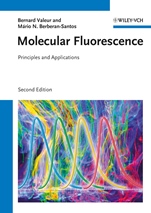
Molecular Fluorescence: Principles and Applications
ISBN 9783527328376
Autor: Bernard Valeur, Mário Nuno Berberan–Santos
Wydawca: Wiley
Dostępność: 3-6 tygodni
Cena: 773,85 zł
Przed złożeniem zamówienia prosimy o kontakt mailowy celem potwierdzenia ceny.
ISBN13: |
9783527328376 |
ISBN10: |
3527328378 |
Autor: |
Bernard Valeur, Mário Nuno Berberan–Santos |
Oprawa: |
Hardback |
Rok Wydania: |
2012-04-26 |
Numer Wydania: |
2nd Edition |
Ilość stron: |
592 |
Wymiary: |
242x176 |
Tematy: |
PN |
T his second edition of the well–established bestseller is completely updated and revised with approximately 30 % additional material, including two new chapters on applications, which has seen the most significant developments. The comprehensive overview written at an introductory level covers fundamental aspects, principles of instrumentation and practical applications, while providing many valuable tips. For photochemists and photophysicists, physical chemists, molecular physicists, biophysicists, biochemists and biologists, lecturers and students of chemistry, physics, and biology.
Preface to the First Edition XV Preface to the Second Edition XVII Acknowledgments XIX Prologue XXI 1 Introduction 1 1.1 What Is Luminescence? 1 1.2 A Brief History of Fluorescence and Phosphorescence 2 1.3 Photoluminescence of Organic and Inorganic Species: Fluorescence or Phosphorescence? 19 1.4 Various De–Excitation Processes of Excited Molecules 20 1.5 Fluorescent Probes, Indicators, Labels, and Tracers 21 1.6 Ultimate Temporal and Spatial Resolution: Femtoseconds, Femtoliters, Femtomoles, and Single–Molecule Detection 23 General Bibliography: Monographs and Books 25 Part I Principles 31 2 Absorption of Ultraviolet, Visible, and Near–Infrared Radiation 33 2.1 Electronic Transitions 33 2.2 Transition Probabilities: The Beer–Lambert Law, Oscillator Strength 39 2.3 Selection Rules 46 2.4 The Franck–Condon Principle 47 2.5 Multiphoton Absorption and Harmonic Generation 49 Bibliography 51 3 Characteristics of Fluorescence Emission 53 3.1 Radiative and Nonradiative Transitions between Electronic States 53 3.2 Lifetimes and Quantum Yields 61 3.3 Emission and Excitation Spectra 67 Bibliography 74 4 Structural Effects on Fluorescence Emission 75 4.1 Effects of the Molecular Structure of Organic Molecules on Their Fluorescence 75 4.2 Fluorescence of Conjugated Polymers (CPs) 92 4.3 Luminescence of Carbon Nanostructures: Fullerenes, Nanotubes, and Carbon Dots 93 4.4 Luminescence of Metal Compounds, Metal Complexes, and Metal Clusters 96 4.5 Luminescence of Semiconductor Nanocrystals (Quantum Dots and Quantum Rods) 103 Bibliography 105 5 Environmental Effects on Fluorescence Emission 109 5.1 Homogeneous and Inhomogeneous Band Broadening – Red–Edge Effects 109 5.2 General Considerations on Solvent Effects 110 5.3 Solvent Relaxation Subsequent to Photoinduced Charge Transfer (PCT) 112 5.4 Theory of Solvatochromic Shifts 117 5.5 Effects of Specifi c Interactions 119 5.6 Empirical Scales of Solvent Polarity 124 5.7 Viscosity Effects 129 5.8 Fluorescence in Solid Matrices at Low Temperature 135 5.9 Fluorescence in Gas Phase: Supersonic Jets 137 Bibliography 138 6 Effects of Intermolecular Photophysical Processes on Fluorescence Emission 141 6.1 Introduction 141 6.2 Overview of the Intermolecular De–Excitation Processes of Excited Molecules Leading to Fluorescence Quenching 143 6.3 Photoinduced Electron Transfer 159 6.4 Formation of Excimers and Exciplexes 162 6.5 Photoinduced Proton Transfer 168 Bibliography 179 7 Fluorescence Polarization: Emission Anisotropy 181 7.1 Polarized Light and Photoselection of Absorbing Molecules 181 7.2 Characterization of the Polarization State of Fluorescence (Polarization Ratio and Emission Anisotropy) 184 7.3 Instantaneous and Steady–State Anisotropy 187 7.4 Additivity Law of Anisotropy 188 7.5 Relation between Emission Anisotropy and Angular Distribution of the Emission Transition Moments 190 7.6 Case of Motionless Molecules with Random Orientation 191 7.7 Effect of Rotational Motion 199 7.8 Applications 207 Bibliography 210 8 Excitation Energy Transfer 213 8.1 Introduction 213 8.2 Distinction between Radiative and Nonradiative Transfer 218 8.3 Radiative Energy Transfer 219 8.4 Nonradiative Energy Transfer 221 8.5 Determination of Distances at a Supramolecular Level Using FRET 235 8.6 FRET in Ensembles of Donors and Acceptors 243 8.7 FRET between Like Molecules: Excitation Energy Migration in Assemblies of Chromophores 250 8.8 Overview of Qualitative and Quantitative Applications of FRET 252 Bibliography 258 Part II Techniques 263 9 Steady–State Spectrofl uorometry 265 9.1 Operating Principles of a Spectrofl uorometer 265 9.2 Correction of Excitation Spectra 268 9.3 Correction of Emission Spectra 268 9.4 Measurement of Fluorescence Quantum Yields 269 9.5 Possible Artifacts in Spectrofluorometry 271 9.6 Measurement of Steady–State Emission Anisotropy: Polarization Spectra 277 Appendix 9.A Elimination of Polarization Effects in the Measurement of Fluorescence Intensity 281 Bibliography 283 10 Time–Resolved Fluorescence Techniques 285 10.1 Basic Equations of Pulse and Phase–Modulation Fluorimetries 286 10.2 Pulse Fluorimetry 292 10.3 Phase–Modulation Fluorimetry 298 10.4 Artifacts in Time–Resolved Fluorimetry 302 10.5 Data Analysis 305 10.6 Lifetime Standards 312 10.7 Time–Resolved Polarization Measurements 314 10.8 Time–Resolved Fluorescence Spectra 318 10.9 Lifetime–Based Decomposition of Spectra 318 10.10 Comparison between Single–Photon Timing Fluorimetry and Phase–Modulation Fluorimetry 322 Bibliography 323 11 Fluorescence Microscopy 327 11.1 Wide–Field (Conventional), Confocal, and Two–Photon Fluorescence Microscopies 328 11.2 Super–Resolution (Subdiffraction) Techniques 333 11.3 Fluorescence Lifetime Imaging Microscopy (FLIM) 340 11.4 Applications 342 Bibliography 346 12 Fluorescence Correlation Spectroscopy and Single–Molecule Fluorescence Spectroscopy 349 12.1 Fluorescence Correlation Spectroscopy (FCS) 349 12.2 Single–Molecule Fluorescence Spectroscopy 360 Bibliography 372 Part III Applications 377 13 Evaluation of Local Physical Parameters by Means of Fluorescent Probes 379 13.1 Fluorescent Probes for Polarity 379 13.2 Estimation of “Microviscosity,” Fluidity, and Molecular Mobility 384 13.3 Temperature 398 13.4 Pressure 402 Bibliography 404 14 Chemical Sensing via Fluorescence 409 14.1 Introduction 409 14.2 Various Approaches of Fluorescence Sensing 410 14.3 Fluorescent pH Indicators 412 14.4 Design Principles of Fluorescent Molecular Sensors Based on Ion or Molecule Recognition 420 14.5 Fluorescent Molecular Sensors of Metal Ions 427 14.6 Fluorescent Molecular Sensors of Anions 436 14.7 Fluorescent Molecular Sensors of Neutral Molecules 445 14.8 Fluorescence Sensing of Gases 453 14.9 Sensing Devices 458 14.10 Remote Sensing by Fluorescence LIDAR 460 Appendix 14.A. Spectrophotometric and Spectrofluorometric pH Titrations 462 Single–Wavelength Measurements 462 Dual–Wavelength Measurements 463 Appendix 14.B. Determination of the Stoichiometry and Stability Constant of Metal Complexes from Spectrophotometric or Spectrofl uorometric Titrations 465 Definition of the Equilibrium Constants 465 Preliminary Remarks on Titrations by Spectrophotometry and Spectrofl uorometry 467 Formation of a 1 : 1 Complex (Single–Wavelength Measurements) 467 Formation of a 1 : 1 Complex (Dual–Wavelength Measurements) 469 Formation of Successive Complexes ML and M2L 470 Cooperativity 471 Determination of the Stoichiometry of a Complex by the Method of Continuous Variations (Job’s Method) 471 Bibliography 473 15 Autofluorescence and Fluorescence Labeling in Biology and Medicine 479 15.1 Introduction 479 15.2 Natural (Intrinsic) Chromophores and Fluorophores 480 15.3 Fluorescent Proteins (FPs) 491 15.4 Fluorescent Small Molecules 493 15.5 Quantum Dots and Other Luminescent Nanoparticles 497 15.6 Conclusion 501 Bibliography 502 16 Miscellaneous Applications 507 16.1 Fluorescent Whitening Agents 507 16.2 Fluorescent Nondestructive Testing 508 16.3 Food Science 511 16.4 Forensics 513 16.5 Counterfeit Detection 514 16.6 Fluorescence in Art 515 Bibliography 518 Appendix: Characteristics of Fluorescent Organic Compounds 521 Epilogue 551 Index 553
Bernard Valeur received his engineering diploma from the École Supérieure de Physique et de Chimie Industrielles de Paris (E.S.P.C.I.) and his PhD degree from the Université Pierre–et–Marie–Curie (Paris, France), followed by postdoctoral research at the University of Illinois at Urbana–Champaign (USA). After being an associate professor at E.S.P.C.I, he became full professor of physical chemistry at the Conservatoire National des Arts et Métiers (Paris) in 1979, where he is emeritus professor since 2008. Professor Valeur is a member of the laboratory Photophysique et Photochimie Supramoléculaires et Macromoléculaires at the École Normale Supérieure de Cachan since 1996. From 1995 to 2000 he served as an elected member of the French Comité National de la Recherche Scientifique. He is the author of over 170 articles or book chapters, five books, and the editor of one book. In addition, he is a member of several editorial boards. Mário Nuno Berberan–Santos graduated in chemical engineering from Instituto Superior Técnico (IST, Technical University of Lisbon, Portugal). After a brief stay at the National Research Council of Canada (Ottawa), he received his PhD in chemistry from IST in 1989. He was a post–doctoral fellow with Bernard Valeur at Conservatoire National des Arts et Métiers (Paris, France), and at Laboratoire pour l′Utilisation du Rayonnement Electromagnétique (Univ. Paris–Sud, Orsay, France). He is full professor of Physical Chemistry at IST, and was invited full professor at the École Normale Supérieure de Cachan (France). He is a member of several editorial advisory boards and is president of the Portuguese Chemical Society (2010–2012). He has authored over 180 publications, including 150 papers in scientific journals, several book chapters, and was the editor of one book.
“Molecular Fluorescence is a comprehensive textbook and reference book that provides a deep and critical analysis of this evolving field.” ( Journal of Biomedical Optics , 1 March 2013) "The strength of the book lies in its clear and understandable presentation, and in the thoroughness of the descriptions of fluorescence applications, enabling one to quickly appreciate the many questions and problems in the field of fluorescence. Molecular Fluorescence is more a textbook than a monograph, and therefore it is of special interest for students and beginners in the field, and be recommended." – Angewandte Chemie (international edition), 2002; Vol. 41 No. 16
Koszyk
Książek w koszyku: 0 szt.
Wartość zakupów: 0,00 zł
Informacje


Kontakt
Gambit
Centrum Oprogramowania
i Szkoleń Sp. z o.o.
Al. Pokoju 29b/22-24
31-564 Kraków
Siedziba Księgarni
ul. Kordylewskiego 1
31-542 Kraków
+48 12 410 5991
+48 12 410 5987
+48 12 410 5989
Subskrypcje
Administratorem danych osobowych jest firma Gambit COiS Sp. z o.o. Na podany adres będzie wysyłany wyłącznie biuletyn informacyjny.
Autoryzacja płatności

Informacje na temat autoryzacji płatności poprzez PayU.

© Copyright 2012: GAMBIT COiS Sp. z o.o. Wszelkie prawa zastrzeżone.
Projekt i wykonanie: Alchemia Studio Reklamy