


Wydawcy
Katalog tematyczny
- Archeologia (109)
- Ekonomia, finanse, business (13704)
- Filozofia (1445)
- Historia (3040)
- Języki i językoznawstwo (2356)
- Lifestyle, hobby i rozrywka (475)
- Medycyna (9704)
- Nauki humanistyczne (4)
- Nauki o Ziemi i środowisku (2638)
- Nauki ścisłe (20412)
- Astronomia (294)
- Biologia (5119)
- Chemia (6540)
- Fizyka (3309)
- Elektryczność i magnetyzm (90)
- Fizyka atomowa i molekularna (110)
- Fizyka cząstek elementarnych (36)
- Fizyka jądra atomowego (36)
- Fizyka kwantowa (210)
- Fizyka matematyczna (121)
- Fizyka relatywistyczna (36)
- Fizyka statystyczna (51)
- Fizyka stosowana (498)
- Mechanika klasyczna (186)
- Optyka i światło (133)
- Stany materii (202)
- Matematyka (4574)
- Nauki ścisłe, ogólnie (503)
- Nauki społeczne (8486)
- Nauki techniczne (13450)
- Prawo (1696)
- Publikacje informacyjne i interdyscyplinarne (1288)
- Religia i wierzenia (917)
- Technika komputerowa (4067)
- Zdrowie, relacje międzyludzkie i rozwój osobisty (657)





Informacje szczegółowe o książce
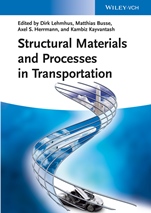
Structural Materials and Processes in Transportation
ISBN 9783527327874
Autor: Dirk Lehmhus, Matthias Busse, Axel Herrmann, Kambiz Kayvantash
Wydawca: Wiley
Dostępność: 3-6 tygodni
Cena: 827,40 zł
Przed złożeniem zamówienia prosimy o kontakt mailowy celem potwierdzenia ceny.
ISBN13: |
9783527327874 |
ISBN10: |
3527327878 |
Autor: |
Dirk Lehmhus, Matthias Busse, Axel Herrmann, Kambiz Kayvantash |
Oprawa: |
Hardback |
Rok Wydania: |
2013-04-23 |
Ilość stron: |
500 |
Wymiary: |
246x178 |
Tematy: |
PH |
Lightness, efficiency, durability and economic as well as ecological viability are key attributes required from materials today. In the transport industry, the performance needs are felt exceptionally strongly. This handbook and ready reference covers the use of structural materials throughout this industry, particularly for the road, air, and rail sectors. A strong focus is placed on the latest developments in materials engineering. The authors present new insights and trends, providing first–hand information from the perspective of universities. Fraunhofer and independent research institutes, aerospace and automobile companies and suppliers. Arranged into parts to aid the readers in finding the information relevant to their needs: • Metals • Polymers • Composites • Cellular Materials • Modeling and Simulation • Higher Level Trends
Preface xxi List of Contributors xxv Part I Metals 1 Axel von Hehl References 4 1 Steel and Iron Based Alloys 5 Ali Ramazani, Banu Berme, and Ulrich Prahl 1.1 Introduction 5 1.2 Sheet Steels 7 1.3 Forging Steels 34 1.4 Casting Steel 39 2 Aluminum and Aluminum Alloys 49 Axel von Hehl and Peter Krug 2.1 Introduction 49 2.2 Wrought Alloys and Associated Processes 52 2.3 Casting Alloys and Associated Processes 71 2.4 Secondary Processes 84 2.5 Case Studies 88 2.6 Summary and Outlook 98 2.7 Further Reading 99 3 Magnesium and Magnesium Alloys 113 Wim H. Sillekens and Norbert Hort 3.1 Introduction 113 3.2 Wrought Alloys and Associated Processes 118 3.4 Other Aspects 138 3.5 Case Studies 142 3.6 Summary and Outlook 145 3.7 Further Reading 147 4 Titanium and Titanium Alloys 151 Lothar Wagner and Manfred Wollmann 4.1 Introduction 151 4.2 Fundamental Aspects 152 4.3 Applications in Automobiles, Aerospace, and ShipBuilding 165 4.4 Future Trends 177 4.5 Further Reading 179 Part II Polymers 181 James Njuguna 5 Thermoplastics 183 Aravind Dasari 5.1 Introduction 183 5.2 Fundamentals and Recent Advancements in Thermoplastics 184 5.3 Processing and Evolution of Structure–Basics and Recent Developments 188 5.4 Properties 197 5.5 Summary 200 6 Thermosets 205 Sergio Henrique Pezzin, Luiz Antonio Ferreira Coelho, Sandro Campos Amico, and Luiz Claudio Pardini 6.1 Introduction 205 6.2 Advanced Thermosets and Associated Processes 212 6.3 Thermosets for Coatings and Adhesives 219 6.4 Case Studies–Thermoset Composites 221 6.5 Summary and Outlook 230 7 Elastomers 237 Krzysztof Pielichowski and James Njuguna 7.1 Introduction 237 7.2 Classification of Elastomers 237 7.3 Natural Rubber 238 7.4 Synthetic Rubbers 240 7.5 Thermoplastic Elastomers 243 7.6 Fluorine–Containing TPEs 245 7.7 Bio–Based TPEs 246 7.8 Conclusions 248 Part III Composites 253 8 Polymer Matrix Composites 257 Axel S. Herrmann, Andre Stieglitz, Christian Brauner, Christian Peters, and Patrick Schiebel 8.1 Introduction 257 8.2 Further Reading 298 9 Metal Matrix Composites 303 Maider Garcia de Cortazar, Pedro Egizabal, Jorge Barcena, and Yann Le Petitcorps 9.1 Introduction 303 9.2 Relevant MMC Systems 312 9.3 Case Studies 319 9.4 Summary and Outlook 335 9.5 Further Reading 335 10 Polymer Nanocomposites 339 James Njuguna and Krzysztof Pielichowski 10.1 Introduction 339 10.2 Fiber–Reinforced Nanocomposites 341 10.3 Sandwich Structures 355 10.4 High–Temperature Fiber–Reinforced Nanocomposites 358 10.5 Age and Durability Performance 362 10.6 Concluding Remarks 365 Part IV Cellular Materials 371 Eusebio Solorzano and Miguel A. Rodriguez–Perez 11 Polymeric Foams 375 Eusebio Solorzano and Miguel A. Rodriguez–Perez 11.1 Introduction 375 11.2 Blowing Agents for Polymer Foams 375 11.3 Thermoplastic Foams: Conventional Processing Technologies 378 11.4 Thermoplastic Foams: New Trends, Materials and Technologies 384 11.5 Thermosets Foams: Conventional Processing Technologies 390 11.6 Thermosets Foams: New Trends, Materials and Technologies 394 11.7 Nanocomposite Foams 397 11.8 Case Studies 400 11.9 Summary and Outlook 407 11.10 Further Reading 409 12 Metal Foams 415 Joachim Baumeister and Jorg Weise 12.1 Introduction 415 12.2 Foams Produced by Means of Melt Technologies 419 12.3 Foams Produced by Means of Powder Metallurgy (P/M) 423 12.4 Porous Structures for Structural Applications Produced from Wires and Other Half–Finished Parts 429 12.5 Case Studies 431 12.6 Summary and Outlook 437 12.7 Further Reading 441 Part V Modeling and Simulation 445 Kambiz Kayvantash 13 Advanced Simulation and Optimization Techniques for Composites 447 Jorg Hohe 13.1 Introduction 447 13.2 Multiphysics Homogenization Analysis 448 13.3 Probabilistic Homogenization Approaches 453 13.4 Optimization 458 13.5 Summary and Conclusions 459 14 An Artificial–Intelligence–Based Approach for Generalized Material Modeling 463 Kambiz Kayvantash 14.1 Introduction 463 14.2 Strain Measures 464 14.3 Stress Measures 467 14.4 Example 478 15 Ab Initio Guided Design of Materials 481 Martin Friak, Dierk Raabe, and Jorg Neugebauer 15.1 Introduction 481 15.2 Top–Down and Bottom–Up Multiscale Modeling Strategies 481 15.3 Ab Initio Based Multiscale Modeling of Materials 484 15.4 Modeling of Ultralightweight Mg–Li Alloys 486 15.5 Ternary bcc MgLi–X Alloys 489 15.6 Summary and Outlook 491 15.7 Further Reading 492 Part VI Higher Level Trends 497 Dirk Lehmhus 16 Hybrid Design Approaches 499 Daniele Bassan 16.1 Introduction 499 16.2 Motivation 499 16.3 From Monomaterial to Hybrid Multi–Material Design Approach in the Automotive Sector 502 16.4 ULSAB AVC Project/FSV Future Steel Vehicle Project 502 16.5 S–in Motion – Steel BiW Project 503 16.6 Multi–Material Hybrid Design Approach 504 16.7 Optimum Multi–Material Solutions: The Reason for Hybrid Design Approach 504 16.8 SuperLIGHT–Car Project 505 16.9 Hybrid Solutions: Overview of Current Automotive Production 506 16.10 Trends in Automotive Materials and Structural Design 512 16.11 Hybrid Solutions in Aircraft, Rail, and Ship Market 513 16.12 General Aspects on Joining Technologies for Multi–Material Mix 514 16.13 Conclusion 515 17 Sensorial Materials 517 Dirk Lehmhus, Stefan Bosse, and Matthias Busse 17.1 Introduction 517 17.2 Components 519 17.3 Case Study 539 17.4 Further Reading 542 18 Additive Manufacturing Approaches 549 Juan F. Isaza P. and Claus Aumund–Kopp 18.1 Introduction 549 18.2 Metal Materials 554 18.3 Nonmetal Materials 558 18.4 Secondary Processes 560 18.5 Case Studies 561 18.6 Summary and Outlook 564 18.7 Further Reading 565 References 566 Index 567
Matthias Busse holds the chair for near net shape manufacturing technology at the University of Bremen, Germany, at the faculty of production engineering. In 2003 he became director of the Fraunhofer Institute for Manufacturing Technology and Applied Materials Research (Fraunhofer IFAM). After his PhD he started his career at Volkswagen where he was promoted to head of production research in 2001. He represents the University of Bremen′s newly founded Scientific Centre ISIS as speaker of the board of directors. Axel S. Herrmann has taken over the post of director at the Faserinstitut Bremen (FIBRE) e.V. in 2001. After his PhD he became head of the composite structures demonstration centre at DFVLR (now DLR) and was was responsible for the affiliated department of fibre–reinforced composite technologies until he moved to Bremen. Axel S. Hermann has taken a leading role in establishing the CFK Valley Network of Excellence in Stade, Germany. In addition he is general manager of the Composite Technology Centre (CTC) GmbH Stade. Kambiz Kayvantash holds the Chair for Automotive Technology at Cranfield University, UK, and is currently Head of the Centre for Automotive Technology and Director of the Cranfield Impact Centre that contributes to the aeronautic and motor sport industry. He has more than 25 years professional and consulting experience in automotive safety, materials modeling and software applications. Kambiz Kayvantash is the Chairman of the Simbio–M conference, dedicated to biomechanics, biomaterial, biomedicine and biomolecular research. Dirk Lehmhus received his mechanical engineering diploma based on studies dedicated to galvanic corrosion of magnesium alloys at Volkswagen′s central laboratory. He joined Fraunhofer IFAM in 1998 and obtained a PhD in production technology at the University of Bremen for studies on optimization of aluminium foam production processes and properties. In May 2009, he changed to the University of Bremen as managing director of the ISIS dedicated to the development of sensor materials and sensor–equipped structures.
“The clear presentation of properties and manufacturing processes in each material class such as metals, composites and polymers allows readers to quickly find solutions for their own engineering needs and to develop synergies between different fields of application.” ( Materials and Corrosion , 1 August 2013)
Koszyk
Książek w koszyku: 0 szt.
Wartość zakupów: 0,00 zł
Informacje


Kontakt
Gambit
Centrum Oprogramowania
i Szkoleń Sp. z o.o.
Al. Pokoju 29b/22-24
31-564 Kraków
Siedziba Księgarni
ul. Kordylewskiego 1
31-542 Kraków
+48 12 410 5991
+48 12 410 5987
+48 12 410 5989
Subskrypcje
Administratorem danych osobowych jest firma Gambit COiS Sp. z o.o. Na podany adres będzie wysyłany wyłącznie biuletyn informacyjny.
Autoryzacja płatności

Informacje na temat autoryzacji płatności poprzez PayU.

© Copyright 2012: GAMBIT COiS Sp. z o.o. Wszelkie prawa zastrzeżone.
Projekt i wykonanie: Alchemia Studio Reklamy