


Wydawcy
Katalog tematyczny
- Archeologia (109)
- Ekonomia, finanse, business (13704)
- Filozofia (1445)
- Historia (3040)
- Języki i językoznawstwo (2356)
- Lifestyle, hobby i rozrywka (475)
- Medycyna (9704)
- Nauki humanistyczne (4)
- Nauki o Ziemi i środowisku (2638)
- Nauki ścisłe (20412)
- Astronomia (294)
- Biologia (5119)
- Chemia (6540)
- Chemia analityczna (361)
- Chemia fizyczna (346)
- Chemia nieorganiczna (137)
- Chemia organiczna (535)
- Krystalografia (27)
- Minerologia (46)
- Fizyka (3309)
- Matematyka (4574)
- Nauki ścisłe, ogólnie (503)
- Nauki społeczne (8486)
- Nauki techniczne (13450)
- Prawo (1696)
- Publikacje informacyjne i interdyscyplinarne (1288)
- Religia i wierzenia (917)
- Technika komputerowa (4067)
- Zdrowie, relacje międzyludzkie i rozwój osobisty (657)





Informacje szczegółowe o książce
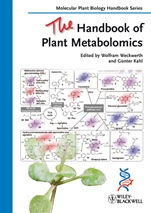
The Handbook of Plant Metabolomics
ISBN 9783527327775
Autor: Wolfram Weckwerth, Guenter Kahl
Wydawca: Wiley
Dostępność: 3-6 tygodni
Cena: 827,40 zł
Przed złożeniem zamówienia prosimy o kontakt mailowy celem potwierdzenia ceny.
ISBN13: |
9783527327775 |
ISBN10: |
3527327770 |
Autor: |
Wolfram Weckwerth, Guenter Kahl |
Oprawa: |
Hardback |
Rok Wydania: |
2013-04-23 |
Ilość stron: |
448 |
Wymiary: |
247x177 |
Tematy: |
PN |
This is the newest title in the successful Molecular Plant Biology Handbook Series. Just like the other titles in the series this new book presents an excellent overview of different approaches and techniques in Metabolomics. Contributors are either from ivy–league research institutions or from companies developing new technologies in this dynamic and fast–growing field. With its approach to introduce current techniques in plant metabolomics to a wider audience and with many labs and companies considering to introduce metabolomics for their research, the title meets a growing market. The Kahl books are in addition a trusted brand for the plant science community and have always sold above expectations.
Preface XVII List of Contributors XIX Part I Central Metabolism 1 1 Metabolic Profiling of Plants by GC–MS 3 Camilla B. Hill and Ute Roessner 1.1 Introduction 3 1.2 Methods and Protocols 7 1.2.1 Sample Preparation 7 1.2.2 Chemical Derivatization: Methoxymation and Silylation 9 1.2.3 GC–MS Analysis 10 1.2.3.1 Procedure to Acquire GC–MS Data 11 1.2.4 Data Preprocessing and Export 12 1.3 Applications of the Technology 15 1.4 Perspectives 17 References 18 2 Isotopologue Profiling – Toward a Better Understanding of Metabolic Pathways 25 Wolfgang Eisenreich, Claudia Huber, Erika Kutzner, Nihat Knispel, and Nicholas Schramek 2.1 Introduction 25 2.2 Methods and Protocols to Determine Isotopologues 31 2.2.1 Mass Spectrometry 31 2.2.2 Protocols for Isotopologue Profiling by GC–MS 36 2.2.3 NMR Spectroscopy 38 2.2.4 Protocols for Isotopologue Profiling by NMR 41 2.2.5 Deconvolution of Isotopologue Data 43 2.2.6 Expanding the Metabolic Space by Retrobiosynthetic Analysis 45 2.3 Applications 46 2.3.1 Experiments Using ½U–13C6—Glucose 46 2.3.2 Experiments Using 13CO2 47 2.4 Perspectives 53 References 54 3 Nuclear Magnetic Resonance Spectroscopy for Plant Metabolite Profiling 57 Sonia van der Sar, Hye Kyong Kim, Axel Meissner, Robert Verpoorte, and Young Hae Choi 3.1 Introduction 57 3.2 Methods and Protocols 59 3.2.1 Sample Preparation 59 3.2.2 Data Acquisition 60 3.2.3 Standard 1H–NMR Spectroscopy 61 3.2.4 J–Resolved Spectroscopy 61 3.2.5 Data Analysis 61 3.3 Applications 62 3.3.1 1D 1H–NMR Spectroscopy 62 3.3.2 2D NMR Spectroscopy 63 3.3.3 Magic Angle Spinning 70 3.4 Perspectives 71 References 72 4 Comprehensive Two–Dimensional Gas Chromatography for Metabolomics 77 Katja Dettmer, Martin F. Almstetter, Christian J. Wachsmuth, and Peter J. Oefner 4.1 Introduction 77 4.2 Methods and Protocols 81 4.2.1 Instrumentation 81 4.2.2 Sample Preparation and Analysis 82 4.2.3 Data Processing 83 4.2.4 Metabolic Fingerprinting 83 4.2.5 Quantitative Analysis of Selected Metabolites 84 4.3 Applications of the Technology 85 4.3.1 Data Analysis 85 4.3.2 Literature 88 4.4 Perspectives 89 References 90 5 MALDI Mass Spectrometric Imaging of Plants 93 Ale9s Svato9s and Hans–Peter Mock 5.1 Introduction 93 5.1.1 Sample Preparation 96 5.1.2 Data Acquisition 98 5.1.3 Data Processing 98 5.2 Methods and Protocols 99 5.2.1 Sample Preparation and Handling 99 5.2.2 Matrix Deposition 100 5.2.3 MALDI–MS Imaging Measurement 103 5.3 Imaging Intact Tissues and Objects 105 5.4 Future Perspectives 109 References 109 6 Medicago truncatula Root and Shoot Metabolomics: Protocol for the Investigation of the Primary Carbon and Nitrogen Metabolism Based on GC–MS 111 Vlora Mehmeti, Lena Fragner, and Stefanie Wienkoop 6.1 Introduction 111 6.2 Methods and Protocols 112 6.2.1 Equipment and Software 112 6.2.2 Buffers and Chemicals 112 6.2.3 Plant Material and Harvest 113 6.2.4 Extraction 114 6.2.5 Derivatization 115 6.2.6 GC–MS Setup for the Analysis 115 6.2.7 Metabolite Identification and Quantification: Data Matrix Processing 116 6.2.8 Data Mining 119 6.3 Applications of the Technology 119 6.4 Perspectives 121 References 123 Part II Secondary and Lipid Metabolism 125 7 Study of the Volatile Metabolome in Plant–Insect Interactions 127 Georg J.F. Weingart, Nora C. Lawo, Astrid Forneck, Rudolf Krska, and Rainer Schuhmacher 7.1 Introduction 127 7.1.1 Plant–Insect Interactions 127 7.1.2 Significance of Volatile Plant Metabolites 128 7.1.3 Study of the Plant Volatile Metabolome in Plant–Insect Interactions 128 7.2 Methods and Protocols 135 7.2.1 Permanent Breed of Insects 135 7.2.2 Cultivation of Grapevine Plants and Inoculation with Phylloxera 136 7.2.3 Sampling and Quenching of Plant Tissue (Roots and Leaves) 138 7.2.4 Milling and Weighing of Plant Tissue (Roots and Leaves) 140 7.2.5 Measurement – Automated HS–SPME Extraction and GC–MS Analysis 143 7.2.6 Data Processing with AMDIS 145 7.2.7 Statistics/Chemometrics 147 7.3 Applications of the Technology 148 7.4 Perspectives 149 References 150 8 Metabolomics in Herbal Medicine Research 155 Lie–Fen Shyur, Chiu–Ping Liu, and Shih–Chang Chien 8.1 Introduction 155 8.2 Methods and Protocols 158 8.2.1 Materials 158 8.2.2 Procedures 160 8.3 Applications 168 8.4 Perspectives 169 References 170 9 Integrative Analysis of Secondary Metabolism and Transcript Regulation in Arabidopsis thaliana 175 Fumio Matsuda and Kazuki Saito 9.1 Introduction 175 9.2 Methods and Protocols 177 9.2.1 Metabolome Analysis of Plant Secondary Metabolites 177 9.2.2 Preparation of Combined Data Matrix 180 9.2.3 Data Mining 180 9.3 Applications of the Technology 183 9.4 Perspectives 187 References 190 10 Liquid Chromatographic–Mass Spectrometric Analysis of Flavonoids 197 Maciej Stobiecki and Piotr Kachlicki 10.1 Introduction 197 10.1.1 Role of Flavonoids and Their Derivatives in Biological Systems 197 10.1.2 Preparation of Biological Material for Metabolomic Analysis and/or Metabolite Profiling 199 10.1.3 Instrumental Considerations 201 10.2 Methods and Protocols: Liquid Chromatography–Mass Spectrometry of Flavonoids 206 10.2.1 General Remarks 206 10.2.2 Plant Cultivation Conditions 208 10.2.3 Preparation of Biological Material with Biotechnological Methods (Callus, Cell, or Hairy Root Cultures) 208 10.2.4 Extraction of Plant Tissue or Biotechnologically Prepared Material 208 10.2.5 Solid–Phase Extraction of Culture Medium or Apoplastic Fluids 209 10.2.6 Preparation of Samples for LC–MS Analyses 210 10.2.7 Chromatographic Protocols for Separation of Flavonoid Glyconjugates 210 10.2.8 Control of Ionization Parameters During Mass Spectrometric Analysis and Identification of Compounds During LC–MS Metabolite Profiling 211 10.3 Applications of the Technology 211 10.4 Perspectives 211 References 212 11 Introduction to Lipid (FAME) Analysis in Algae Using Gas Chromatography–Mass Spectrometry 215 Takeshi Furuhashi and Wolfram Weckwerth 11.1 Introduction 215 11.2 Methods and Experimental Protocol 216 11.2.1 Extraction 216 11.2.2 Bound and Free Fatty Acids 217 11.2.3 Pigments 217 11.2.4 Contaminants 219 11.2.5 Derivatization 219 11.2.6 GC–MS System 220 11.2.7 Identification 220 11.2.8 Protocols 221 11.2.9 GC–MS Instrument and Conditions 223 11.3 Application and Perspective 223 References 224 12 Multi–Gene Transformation for Pathway Engineering of Secondary Metabolites 227 Hideyuki Suzuki, Eiji Takita, Kiyoshi Ohyama, Satoru Sawai, Hikaru Seki, Nozomu Sakurai, Toshiya Muranaka, Masao Ishimoto, Hiroshi Sudo, Kazuki Saito, and Daisuke Shibata 12.1 Introduction 227 12.2 Methods and Protocols 233 12.2.1 Chemicals 233 12.2.2 Plasmid Construction of Multi–Gene Transformation 233 12.2.3 Preparation of Dual Terminator (DT) Fragment by PCR–Based Overlap Extension Method 233 12.2.4 Plasmid Construction of pUHR KS CSPS Thsp 236 12.2.5 Construction of pHSG299 CSPS 35S–CYP88–DT (Figure 12.2a) 236 12.2.6 Construction of pHSG299 CSPS 35S–CYP72–DT2 (Figure 12.2a) 237 12.2.7 Construction of pHSG299–CYP93(RNAi)–DT (Figure 12.2a) 238 12.2.8 Construction of pUHR KS CSPS Thsp–CYP88–CYP72–CYP93 (RNAi) 239 12.2.9 Transformation of Soybean by Particle Bombardment 239 12.2.10 GC–MS Analysis for Triterpene Glycone 241 12.2.11 GC–MS Conditions 242 12.3 Application of Technology 242 12.4 Perspectives 243 References 243 Part III Metabolomics and Genomics 245 13 Metabolomics–Assisted Plant Breeding 247 Alexander Herrmann and Nicolas Schauer 13.1 Introduction 247 13.2 Method 249 13.3 Applications of the Technology 251 13.4 Perspective 253 References 254 14 Conducting Genome–Wide Association Mapping of Metabolites 255 Susanna Atwell and Daniel J. Kliebenstein 14.1 Introduction 255 14.2 Methods and Protocols 256 14.2.1 Biological Question to Be Addressed 256 14.2.2 Chemistry to Study 256 14.2.3 Species Choice 258 14.2.4 Should I Utilize an Additional Perturbation? 260 14.2.5 Conducting the Phenotype Measurements 261 14.2.6 Computational Platform to Use for Analysis 261 14.2.7 Candidate Gene Selection 265 14.2.8 Candidate Gene Validation 266 14.3 Applications 267 14.4 Perspectives 268 References 268 Part IV Metabolomics and Bioinformatics 273 15 Metabolite Clustering and Visualization of Mass Spectrometry Data Using One–Dimensional Self–Organizing Maps 275 Alexander Kaever, Manuel Landesfeind, Kirstin Feussner, Ivo Feussner, and Peter Meinicke 15.1 Introduction 275 15.2 Methods and Protocols 276 15.2.1 Data Import 277 15.2.2 Clustering 277 15.2.3 Cluster Analysis 280 15.3 Applications of the Technology 281 15.4 Perspectives 286 References 286 16 Metabolite Identification and Computational Mass Spectrometry 289 Steffen Neumann, Florian Rasche, Sebastian Wolf, and Sebastian B€ocker 16.1 Introduction 289 16.2 Annotation and Identification of Metabolites 290 16.2.1 Exact Mass Search in Compound Libraries 291 16.2.2 Deriving the Elemental Composition from MS1 292 16.2.3 Elemental Composition from MS2 and MSn 293 16.2.4 In Silico Library Search with MetFrag 294 16.2.5 Reference Spectral Library Lookup 299 16.3 Perspectives 302 References 303 17 Using COVAIN to Analyze Metabolomics Data 305 Xiaoliang Sun and Wolfram Weckwerth 17.1 Introduction 305 17.2 Methods 308 17.2.1 Data Preprocessing 308 17.2.2 Uni– and Bivariate Statistical Methods for Individual Metabolite–Level Analysis 311 17.2.3 Multivariate Statistical Methods for Group–Level Analysis 312 17.2.4 Network–Level Analysis 313 17.2.5 Influences of Data Preprocessing on Statistical Analysis Results 313 17.3 Application 314 17.4 Perspective 320 References 320 18 Mass Spectral Search and Analysis Using the Golm Metabolome Database 321 Jan Hummel, Nadine Strehmel, Christian B€olling, Stefanie Schmidt, Dirk Walther, and Joachim Kopka 18.1 Introduction 321 18.2 Methods and Protocols: the GMD and Supported Data Analysis Workflows 322 18.2.1 The GMD Data Entities 322 18.2.2 The Text Search Queries 325 18.2.3 The Mass Spectrum Query Submission and Analysis Options 325 18.2.4 Interpreting the Mass Spectral Analysis Results 329 18.2.5 The Web Services at GMD 336 18.2.6 The GMD Download Options 338 18.3 Applications and Perspectives 341 References 342 Glossary 345 Index 415
Günter Kahl is Professor for Plant Molecular Biology at the Biocenter of Johann Wolfgang Goethe–University of Frankfurt/Main, Germany. After gaining his PhD in plant biochemistry, he spent two postdoctoral years at Michigan State University, East Lansing, USA, joining Professor Joe Varner, and at the California Institute of Technology, Pasadena, California, with Professor James Bonner. His main research interests are: – Sequencing and analysis of fungal, plant and animal genomes – Transcriptome analysis in pro– and eukaryotic organisms – Technology development Günter Kahl is the author of more than 250 scientific journal publications and several book publications including all titles of the successful Molecular Plant Biology Handbook series, and currently holds the CSO position at GenXPro GmbH, a company specializing in novel technologies in genomics and transcriptomics, located at the Frankfurt Innovation Centre for Biotechnology (FIZ), Frankfurt/Main, Germany. Wolfram Weckwerth is Professor and founding chair of the Department of Molecular Systems Biology (MOSYS) at the University of Vienna, Austria. He holds a diploma in chemistry and a PhD in biochemistry, both from the Technical University Berlin, Germany. His main research interests are: – The development of genome–wide metabolomics and proteomics/phosphoproteomics technologies as elementary systems biology techniques, high throughput profiling (HTP) in systems biology, data integration; combining experimental approaches with multivariate statistics, pattern recognition, modeling of metabolism, and functional genome interpretation: synergetics – The genotype–environment–phenotype–equation: plant ecology and phenotypic plasticity including stress, growth, developmental and nutritional physiology – Plant–microbe–interaction and medicinal plants – Green Systems Biology: application of systems biology approaches in ecology, evolution and biotechnology
Koszyk
Książek w koszyku: 0 szt.
Wartość zakupów: 0,00 zł
Informacje


Kontakt
Gambit
Centrum Oprogramowania
i Szkoleń Sp. z o.o.
Al. Pokoju 29b/22-24
31-564 Kraków
Siedziba Księgarni
ul. Kordylewskiego 1
31-542 Kraków
+48 12 410 5991
+48 12 410 5987
+48 12 410 5989
Subskrypcje
Administratorem danych osobowych jest firma Gambit COiS Sp. z o.o. Na podany adres będzie wysyłany wyłącznie biuletyn informacyjny.
Autoryzacja płatności

Informacje na temat autoryzacji płatności poprzez PayU.

© Copyright 2012: GAMBIT COiS Sp. z o.o. Wszelkie prawa zastrzeżone.
Projekt i wykonanie: Alchemia Studio Reklamy