


Wydawcy
Katalog tematyczny
- Archeologia (109)
- Ekonomia, finanse, business (13704)
- Filozofia (1445)
- Historia (3040)
- Języki i językoznawstwo (2356)
- Lifestyle, hobby i rozrywka (475)
- Medycyna (9704)
- Nauki humanistyczne (4)
- Nauki o Ziemi i środowisku (2638)
- Nauki ścisłe (20412)
- Astronomia (294)
- Biologia (5119)
- Chemia (6540)
- Fizyka (3309)
- Elektryczność i magnetyzm (90)
- Fizyka atomowa i molekularna (110)
- Fizyka cząstek elementarnych (36)
- Fizyka jądra atomowego (36)
- Fizyka kwantowa (210)
- Fizyka matematyczna (121)
- Fizyka relatywistyczna (36)
- Fizyka statystyczna (51)
- Fizyka stosowana (498)
- Mechanika klasyczna (186)
- Optyka i światło (133)
- Stany materii (202)
- Matematyka (4574)
- Nauki ścisłe, ogólnie (503)
- Nauki społeczne (8486)
- Nauki techniczne (13450)
- Prawo (1696)
- Publikacje informacyjne i interdyscyplinarne (1288)
- Religia i wierzenia (917)
- Technika komputerowa (4067)
- Zdrowie, relacje międzyludzkie i rozwój osobisty (657)





Informacje szczegółowe o książce
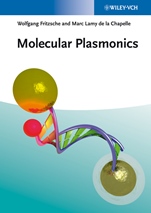
Molecular Plasmonics
ISBN 9783527327652
Autor: Wolfgang Fritzsche, Marc Lamy de la Chapelle
Wydawca: Wiley
Dostępność: 3-6 tygodni
Cena: 530,25 zł
Przed złożeniem zamówienia prosimy o kontakt mailowy celem potwierdzenia ceny.
ISBN13: |
9783527327652 |
ISBN10: |
3527327657 |
Autor: |
Wolfgang Fritzsche, Marc Lamy de la Chapelle |
Oprawa: |
Hardback |
Rok Wydania: |
2014-09-10 |
Ilość stron: |
192 |
Wymiary: |
251x171 |
Tematy: |
PH |
Adopting a novel approach, this book provides a unique “molecular perspective” on plasmonics, concisely presenting the fundamentals and applications in a way suitable for beginners entering this hot field as well as for experienced researchers and practitioners. It begins by introducing readers to the optical effects that occur at the nanoscale and particularly their modification in the presence of biomolecules, followed by a concise yet thorough overview of the different methods for the actual fabrication of nanooptical materials. Further chapters address the relevant nanooptics, as well as the various approaches to combining nanostructures and biomolecules to achieve certain desired functionalities for applications in the fields of probing, sensing and particle manipulation. For analytical biologists, physical chemists, materials scientists and medicinal chemists. With a foreword by William Barnes.
Foreword XI 1 Introduction 1 References 3 2 Plasmonic Effects 5 2.1 Electrical Conductivity in Metal 5 2.1.1 Drude Model 6 2.1.2 Drude–Lorentz Model 6 2.1.3 Drude–Sommerfeld Model 6 2.2 Optical Properties and Dielectric Constant 7 2.3 Plasmons 9 2.4 Volume Plasmons 9 2.5 Surface Plasmons and Applications in Life Sciences 9 2.5.1 Surface Plasmons in a Flat Metallic Film 9 2.5.2 Biosensor Applications 12 2.6 Localized Surface Plasmon 13 2.6.1 LSP in Spherical Nanoparticles 15 2.6.2 LSP in Nanorods 18 2.6.3 LSP in Other Shapes 19 2.6.4 Influence of Environment on LSPR 22 2.6.5 Effects of Other Parameters on Resonance 25 2.6.5.1 Composition 25 2.6.5.2 Charge 26 2.6.5.3 Neighboring Particles 26 2.6.6 Field Enhancement, Damping, Dephasing Time, LineWidth 27 2.7 Combination of SPR and LSPR Approaches 30 2.8 Nanoholes 30 2.8.1 Nanoholes in Plasmonically Active Metal Films 30 2.8.1.1 Arrays 30 2.8.1.2 Single Holes 32 2.8.2 Nanoholes in Other Materials 32 2.9 Enhanced Spectroscopies 35 2.9.1 Metal Enhanced Fluorescence 36 2.9.2 Enhanced Raman Scattering 38 2.9.2.1 Raman Spectroscopy 38 2.9.2.2 SERS 39 2.9.2.3 TERS 43 2.9.2.4 SEIRA 45 References 46 3 Nanofabrication of Metal Structures 51 3.1 Introduction 51 3.2 Nanofabrication: Top–Down 52 3.2.1 Lithography 52 3.2.1.1 Thin Film Technology and Adhesion Layer 53 3.2.1.2 Optical Lithography 54 3.2.1.3 Electron Beam Lithography (EBL) 54 3.2.1.4 Focused Ion Beam (FIB) 54 3.2.2 Modern Nanofabrication Techniques 55 3.2.2.1 Scanning Probe Techniques (STM, AFM, SNOM, Dip pen) 55 3.2.2.2 Soft Lithography 55 3.2.2.3 Nanoimprinting 56 3.2.2.4 Nanostructure Lithography 56 3.2.2.5 Release of Surface–Bound Nanostructures into Solution 56 3.3 Bottom–Up Approaches 57 3.3.1 Physical: Gas–Phase Based Growth (Aerosol Process) 57 3.3.1.1 Mechanism of Particle Formation 57 3.3.1.2 Evaporation/Condensation and Island Film Preparation 58 3.3.1.3 Laser Ablation 58 3.3.2 Chemical: Condensed–Phase Fabrication 59 3.3.2.1 Introduction 59 3.3.2.2 Mechanism of Particle Generation 59 3.3.2.3 Stability of Small Metal Clusters 60 3.3.2.4 Stabilization 60 3.3.2.5 Single–Phase Synthetic Approaches 61 3.3.2.6 Two–Phase Synthesis 61 3.3.2.7 Synthesis in Confined Microenvironments 62 3.3.2.8 Size Control by Synthesis 63 3.3.2.9 Layered and/or Mixed Composition 64 3.3.2.10 Shape Control: Anisotropic Structures 66 3.3.2.11 Shape Control: Hard and Soft Templating 71 3.3.2.12 Enzyme–Mediated Nanoparticle Formation and Growth 72 3.3.2.13 Biosynthesis 73 3.3.2.14 Chemical: Solid–Phase Fabrication 73 3.4 Post–Processing, Combination, and Integration 74 3.4.1 Increased Monodispersity byWet–Chemical Post–treatment 74 3.4.2 Radiation–Based Post–Processing for Size Tailoring 75 3.4.3 Multifunctional Particles 76 3.4.4 Integration 78 References 80 4 The MolecularWorld 85 4.1 Interaction and Forces between Molecules and Substrates 85 4.2 Self–assembly Monolayer (SAM) 86 4.3 DNA 89 4.3.1 DNA–Attachment to Plasmonic Nanoparticles 92 4.3.2 Defined Stochiometry DNA–Nanoparticle 93 4.4 Peptides and Proteins 94 4.5 Bioassay Types and Formats 95 4.6 Nanomedicine: Cell–Nanoparticle Interaction 97 References 101 5 Measurement and Characterization Techniques 105 5.1 Parameters of Interest 105 5.2 Far–Field Optical Techniques 106 5.2.1 Optical Dark–Field Microscopy in Combination with Spectroscopy 106 5.2.2 Extinction Spectroscopy 107 5.2.3 Evanescent Field Illumination 108 5.2.4 Other Light Scattering Approaches 108 5.2.5 Fluorescence Microscopy 108 5.2.6 Optical ImagingWindow 109 5.2.7 Special Optical Microscopic Techniques 109 5.3 Near–Field Optical Techniques 110 5.3.1 Scanning Near–Field Optical Microscopy (SNOM) 110 5.3.2 Enhanced Spectroscopies 111 5.3.3 Layer–by–Layer Method 111 5.3.4 Use of Photosensitive Molecules 111 5.4 High–Resolution Microscopy 112 5.4.1 Transmission Electron Microscopy (TEM) 112 5.4.2 Scanning Electron Microscopy (SEM) 112 5.4.3 TEM–Based Plasmon Imaging 113 5.4.4 Scanning Probe Techniques 113 References 115 6 Molecular Plasmonics: Life Sciences Applications 117 6.1 Marker 117 6.1.1 Macroscopic Detection 117 6.1.2 Microscopic Dark Field (Scattering) Contrast 118 6.1.2.1 Comparison with Fluorescence 118 6.1.2.2 Scattering Labels for Microarray Detection 119 6.1.2.3 Single–Particle Labels 119 6.1.3 Photothermal Imaging 120 6.1.4 Photoacoustic Imaging 120 6.1.5 Fluorescent Particles 121 6.1.6 Other Plasmonic Labels 121 6.2 Sensor 121 6.2.1 Plasmonic Nanoparticle Sensor 121 6.2.2 Sensitivity 122 6.2.3 Comparison SPR–LSPR 125 6.2.4 LSPR Sensing of Refractive Index of a Homogeneous Environment (Bulk Refractive Index Sensing) 126 6.2.5 Based on Change in Interparticle Distance 126 6.2.5.1 Aggregation Assay 127 6.2.5.2 Dissociation Assay 128 6.2.5.3 Molecular Ruler 129 6.2.5.4 Strain Sensor 129 6.2.6 Molecular Layer (Molecular Refractive Index Sensing) 130 6.2.6.1 Ensemble Sensors 130 6.2.6.2 Single–Particle Sensorics 132 6.2.6.3 Ensemble versus Single–Particle Measurements 133 6.2.6.4 Parallelization of (Single) Particle LSPR Sensoric 133 6.2.7 Nanohole Sensing 134 6.3 Local Field Control by Plasmonic Nanostructures 134 6.3.1 Fluorescence Quenching and FRET 135 6.3.2 Plasmonic Resonance Energy Transfer (PRET) 137 6.3.3 Fluorescence Enhancement 137 6.3.4 Surface–Enhanced Raman Scattering (SERS) 139 6.3.4.1 Surface–Enhanced Raman Scattering (SERS) for Analyte Detection 139 6.3.4.2 SERS Label 141 6.3.4.3 Tip–Enhanced Raman Scattering (TERS) 142 6.4 Light–Induced Manipulation 143 6.4.1 Nanoantenna–Effect 143 6.4.1.1 Mechanism 143 6.4.1.2 Thermal DNA Analysis 144 6.4.1.3 Hyperthermal Treatment 145 6.4.1.4 Other Thermal Manipulation at the Tissue Level 146 6.4.1.5 Manipulation at the Sub–cellular Level 147 6.4.2 Release of Drugs and Other Active Molecules 148 References 150 7 Molecular Plasmonics for Nanooptics and Nanotechnology 157 7.1 Plasmonic Lithography 157 7.2 Nanopositioning for Nanooptics 159 7.3 Nanopositioning for Ultrasensitive Bioanalytics 163 7.4 Integration of Molecular Constructs 164 7.5 Plasmonic Properties Control by Using Molecular Assembly 164 References 166 Index 169
Wolfgang Fritzsche heads the Nano Biophotonics Department at the Institute of Photonic Technology (IPHT) in Jena, Germany, since 2001. He did his PhD at the Max–Planck–Institute for Biophysical Chemistry in Göttingen and then worked as a postdoc at the Iowa State University, USA, on biological AFM and image processing before returning to Jena. His research interests are molecular plasmonics and nanotechnology with a special focus on DNA–nanoparticle complexes and their integration into chip environments for bioanalytical and nanophotonic applications. Wolfgang Fritzsche is the initiator and organizer of the bi–annual "Molecular Plasmonics" Symposia in Jena. Marc Lamy de la Chapelle is professor at the Paris 13 University at the Laboratory of Chemistry, Properties and Structure of the Biomaterials and Therapeutics Agents (UMR 7244). He got his PhD in science physics in 1998 at the University of Nantes on the study of carbon nanotubes by Raman spectroscopy. After two postdoc at the Office National d’Etude et de Recherche en Aéronautique in Paris and at the Tsinghua University in Beijing (China), he became associate professor at the Université de technologie de Troyes (UTT) in 2001. Since 2007, he is professor at the Paris 13 University. His research activities are focused on nanooptics and Raman spectroscopy. His research subject is the application of SERS and TERS to biological issues and more especially to the disease diagnosis. He is head of the “spectroscopies of biomolecules and biological media” research team and he is director of the CNRS national research network on the Molecular Plasmonics and Enhanced Spectroscopies.
Koszyk
Książek w koszyku: 0 szt.
Wartość zakupów: 0,00 zł
Informacje


Kontakt
Gambit
Centrum Oprogramowania
i Szkoleń Sp. z o.o.
Al. Pokoju 29b/22-24
31-564 Kraków
Siedziba Księgarni
ul. Kordylewskiego 1
31-542 Kraków
+48 12 410 5991
+48 12 410 5987
+48 12 410 5989
Subskrypcje
Administratorem danych osobowych jest firma Gambit COiS Sp. z o.o. Na podany adres będzie wysyłany wyłącznie biuletyn informacyjny.
Autoryzacja płatności

Informacje na temat autoryzacji płatności poprzez PayU.

© Copyright 2012: GAMBIT COiS Sp. z o.o. Wszelkie prawa zastrzeżone.
Projekt i wykonanie: Alchemia Studio Reklamy