


Wydawcy
Katalog tematyczny
- Archeologia (109)
- Ekonomia, finanse, business (13704)
- Filozofia (1445)
- Historia (3040)
- Języki i językoznawstwo (2356)
- Lifestyle, hobby i rozrywka (475)
- Medycyna (9704)
- Nauki humanistyczne (4)
- Nauki o Ziemi i środowisku (2638)
- Nauki ścisłe (20412)
- Astronomia (294)
- Biologia (5119)
- Chemia (6540)
- Chemia analityczna (361)
- Chemia fizyczna (346)
- Chemia nieorganiczna (137)
- Chemia organiczna (535)
- Krystalografia (27)
- Minerologia (46)
- Fizyka (3309)
- Matematyka (4574)
- Nauki ścisłe, ogólnie (503)
- Nauki społeczne (8486)
- Nauki techniczne (13450)
- Prawo (1696)
- Publikacje informacyjne i interdyscyplinarne (1288)
- Religia i wierzenia (917)
- Technika komputerowa (4067)
- Zdrowie, relacje międzyludzkie i rozwój osobisty (657)





Informacje szczegółowe o książce
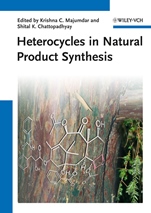
Heterocycles in Natural Product Synthesis
ISBN 9783527327065
Autor: Krishna C. Majumdar, Shital K. Chattopadhyay
Wydawca: Wiley
Dostępność: 3-6 tygodni
Cena: 920,85 zł
Przed złożeniem zamówienia prosimy o kontakt mailowy celem potwierdzenia ceny.
ISBN13: |
9783527327065 |
ISBN10: |
3527327061 |
Autor: |
Krishna C. Majumdar, Shital K. Chattopadhyay |
Oprawa: |
Hardback |
Rok Wydania: |
2011-06-29 |
Ilość stron: |
658 |
Wymiary: |
250x182 |
Tematy: |
PN |
There is an unbelievably large number of various heterocycles found in natural products. The synthesis of these compounds has always been a fascinating topic in organic chemistry, mainly because many of them are used in pharmaceutical and agrochemical active substances.
Filling a gap on the market, this handbook and ready reference is the first to discuss the usefulness of various heterocyclic systems in the synthesis of natural products. It is clearly structured for easy access to the information, with each chapter devoted to a certain class of heterocycle. For every natural product covered, a tabular presentation contains the particular heterocyclic ring system along with its biological profile, occurrence and most important physical properties, all supported by the appropriate references. In addition, the application of the heterocyclic system to the synthesis of natural products is covered in detail.
With its unique perspective and wealth of information, this is indispensable to organic, natural products, medicinal and biochemists, as well as those working in the pharmaceutical and agrochemical industry.
Spis treści:
Preface.
List of Contributors.
Part One Strained Heterocycles in the Synthesis of Natural Products.
1 Aziridines in Natural Product Synthesis (Candice Botuha, Fabrice Chemla, Franck Ferreira and Alejandro Pérez–Luna).
1.1 Introduction.
1.2 Synthesis of Natural Products Containing Aziridine Units.
1.3 Synthesis of Natural Products Involving the Transformation of an Aziridine Moiety.
1.4 Conclusion.
References.
2 Azetidine and Its Derivatives (Hidemi Yoda, Masaki Takahashi and Tetsuya Sengoku).
2.1 Introduction.
2.2 Structural Description of Azetidines.
2.3 Synthetic Methodologies for the Formation of Azetidine Rings.
2.4 Synthesis of Mugineic Acids.
2.5 Synthesis of Penaresidins.
2.6 Structural Description of Azetidin&
#8211;2–ones.
2.7 Synthetic Methodologies for the Formation of Azetidin–2–ones.
2.8 Synthesis of Penicillin.
2.9 Synthesis of Cephalosporin.
2.10 Conclusion.
Acknowledgment.
References.
3 Epoxides and Oxetanes (Biswanath Das and Kongara Damodar).
3.1 Introduction.
3.2 Epoxides in Natural Product Synthesis.
3.3 Oxetane in Natural Product Synthesis.
3.4 Conclusion.
Acknowledgment.
References.
Part Two Common Ring Heterocycles in Natural Product Synthesis.
4 Furan and Its Derivatives (Alicia Boto and Laura Alvarez).
4.1 Introduction.
4.2 Natural Products Containing the Furan Ring.
4.3 Furan Derivatives as Reagents in the Synthesis of Natural Products.
4.4 Summary.
References.
5 Pyran and Its Derivatives (Hideto Miyabe, Okiko Miyata and Takeaki Naito).
5.1 Introduction.
5.2 Application of Pyran Moieties in the Synthesis of Natural Products.
5.3 Conclusion.
References.
6 Pyrrole and Its Derivatives (Dipakranjan Mal, Brateen Shome and Bidyut Kumar Dinda).
6.1 Introduction.
6.2 Synthesis of Pyrrole Natural Products.
6.3 Synthesis of Non–pyrrole Natural Products from Pyrrole Derivatives.
6.4 Conclusion.
Acknowledgments.
References.
7 Indoles and Indolizidines (Sarah M. Bronner, G.–Yoon J. Im and Neil K. Garg).
7.1 Introduction.
7.2 Applications of Indoles and Indolizidines in the Synthesis of Natural Products.
7.3 Conclusion.
Acknowledgment.
References.
8 Pyridine and Its Derivatives (Paula Kiuru and Jari Yli–Kauhaluoma).
8.1 Introduction.
8.2 Application of the Pyridine Moiety in the Synthesis of Natural Products.
8.3 Conclusion.
Acknowledgment.
References.
9 Quinolines and Isoquinolines (Antonio Garrido Montalban).
9.1 Introduction.
9.2 Application of Quinolines and Isoquinolines in the Synthes
is of Natural Products.
9.3 Conclusion.
References.
10 Carbazoles and Acridines (Konstanze K. Gruner and Hans–Joachim Knölker).
10.1 Introduction to Carbazoles.
10.2 Total Synthesis of Carbazole Alkaloids.
10.3 Introduction to Acridines.
10.4 Synthesis of Acridines and Acridones.
References.
11 Thiophene and Other Sulfur Heterocycles (Krishna C. Majumdar and Shovan Mondal).
11.1 Introduction.
11.2 Synthesis of Natural Products Containing Thiophene.
11.3 Synthesis of Natural Products Containing Other Sulfur Heterocycles.
11.4 Conclusion.
Acknowledgments.
References.
12 Oxazole and Its Derivatives (David W. Knight).
12.1 Introduction.
12.2 Mono–Oxazoles.
12.3 Unconnected Bis– and Tris–Oxazoles.
12.4 Cyclic Polyheterocyclic Metabolites Containing Single Oxazole Residues.
12.5 Conjugated Bis–Oxazoles.
12.6 Tris– and Poly–Oxazoles.
References.
13 Thiazoline and Thiazole and Their Derivatives (Zhengshuang Xu and Tao Ye).
13.1 Introduction.
13.2 General Methods for the Synthesis of Thiazoline and Thiazole Derivatives.
13.3 Thiazole and Thiazoline–Containing Natural Products.
13.4 Conclusions.
References.
14 Pyrimidine and Imidazole (Vipan Kumar and Mohinder P. Mahajan).
14.1 General Introduction.
14.2 Pyrimidine–Based Natural Products.
14.3 Imidazole–Based Natural Products.
14.4 Conclusion.
Acknowledgment.
References.
Part Three Natural Products Containing Medium and Large Ring–Sized Heterocyclic Systems.
15 Oxepines and Azepines (Darren L. Riley and Willem A.L. van Otterlo).
15.1 Introduction.
15.2 Synthesis of the Heterocyclic Core of Selected Natural Products Containing Oxepines.
15.3 Synthesis of the Heterocyclic Core of Selected Natural Products Containing Azepines.
15.4 Synthesis of
the Heterocyclic Core of Selected Natural Products Containing Oxazapines.
15.5 Conclusion.
Acknowledgments.
References.
16 Bioactive Macrocyclic Natural Products (Siti Mariam Mohd Nor, Zhengshuang Xu and Tao Ye).
16.1 General.
16.2 Natural Products Containing Azoles.
16.3 Pyridine– and Piperidine–Containing Natural Products.
16.4 Indole– and Imidazole–Containing Natural Products.
16.5 Pyran– and Furan–Containing Natural Products.
16.6 Piperazic Acid–Containing Natural Products.
16.7 Mixed Heterocyclic Systems.
16.8 Conclusions.
References.
Index.
Nota biograficzna:
Krishna C. Majumdar is a Professor of Chemistry at the University of Kalyani in India. Having obtained his B.Sc and M. Sc. From the University of Calcutta, and Ph. D. from the University of Idaho (USA), he spent five years doing post–doctoral work at the Universities of Idaho and Alberta before taking up faculty position at the University of Kalyani. Professor Majumdar has authored over 270 publications and has received numerous awards including the Chemical Research Society of India medal and Indian Chemical Society award.
Shital K Chattopadhyay is a Professor of Chemistry in the University of Kalyani, India. He obtained his M.Sc and Ph. D. degree from the University of Kalyani (Professor K. C. Majumdar) and then carried out his post–doctoral works in the University of East Anglia (Professor A. McKillop), U.K., Nottingham University (Professor G. Pattenden), U.K., Umea University (Professor T. Frejd), Sweden and Indian Institute of Science, Bangalore (Professor G. Mehta), India, working on total synthesis of complex heterocyclic natural products for nearly six years. His research interests surround on asymmetric synthesis of heterocyclic natural products of biological interest. He is recipient of the European Union research fellowship and Royal Society (U
. K.) Visiting fellowship. He has co–authored nearly sixty publications and has published one review article.
Okładka tylna:
There is an unbelievably large number of various heterocycles found in natural products. The synthesis of these compounds has always been a fascinating topic in organic chemistry, mainly because many of them are used in pharmaceutical and agrochemical active substances.
Filling a gap on the market, this handbook and ready reference is the first to discuss the usefulness of various heterocyclic systems in the synthesis of natural products. It is clearly structured for easy access to the information, with each chapter devoted to a certain class of heterocycle. For every natural product covered, a tabular presentation contains the particular heterocyclic ring system along with its biological profile, occurrence and most important physical properties, all supported by the appropriate references. In addition, the application of the heterocyclic system to the synthesis of natural products is covered in detail.
With its unique perspective and wealth of information, this is indispensable to organic, natural products, medicinal and biochemists, as well as those working in the pharmaceutical and agrochemical industry.
Koszyk
Książek w koszyku: 0 szt.
Wartość zakupów: 0,00 zł
Informacje


Kontakt
Gambit
Centrum Oprogramowania
i Szkoleń Sp. z o.o.
Al. Pokoju 29b/22-24
31-564 Kraków
Siedziba Księgarni
ul. Kordylewskiego 1
31-542 Kraków
+48 12 410 5991
+48 12 410 5987
+48 12 410 5989
Subskrypcje
Administratorem danych osobowych jest firma Gambit COiS Sp. z o.o. Na podany adres będzie wysyłany wyłącznie biuletyn informacyjny.
Autoryzacja płatności

Informacje na temat autoryzacji płatności poprzez PayU.

© Copyright 2012: GAMBIT COiS Sp. z o.o. Wszelkie prawa zastrzeżone.
Projekt i wykonanie: Alchemia Studio Reklamy