


Wydawcy
Katalog tematyczny
- Archeologia (109)
- Ekonomia, finanse, business (13704)
- Filozofia (1445)
- Historia (3040)
- Języki i językoznawstwo (2356)
- Lifestyle, hobby i rozrywka (475)
- Medycyna (9704)
- Nauki humanistyczne (4)
- Nauki o Ziemi i środowisku (2638)
- Nauki ścisłe (20412)
- Astronomia (294)
- Biologia (5119)
- Chemia (6540)
- Chemia analityczna (361)
- Chemia fizyczna (346)
- Chemia nieorganiczna (137)
- Chemia organiczna (535)
- Krystalografia (27)
- Minerologia (46)
- Fizyka (3309)
- Matematyka (4574)
- Nauki ścisłe, ogólnie (503)
- Nauki społeczne (8486)
- Nauki techniczne (13450)
- Prawo (1696)
- Publikacje informacyjne i interdyscyplinarne (1288)
- Religia i wierzenia (917)
- Technika komputerowa (4067)
- Zdrowie, relacje międzyludzkie i rozwój osobisty (657)





Informacje szczegółowe o książce
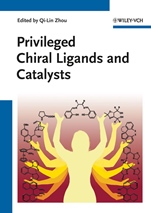
Privileged Chiral Ligands and Catalysts
ISBN 9783527327041
Autor: Qi–Lin Zhou
Wydawca: Wiley
Dostępność: 3-6 tygodni
Cena: 801,15 zł
Przed złożeniem zamówienia prosimy o kontakt mailowy celem potwierdzenia ceny.
ISBN13: |
9783527327041 |
ISBN10: |
3527327045 |
Autor: |
Qi–Lin Zhou |
Oprawa: |
Hardback |
Rok Wydania: |
2011-04-06 |
Ilość stron: |
484 |
Wymiary: |
247x179 |
Tematy: |
PN |
Catalytic asymmetric synthesis has been one of the most active research areas in chemistry (Nobel Prize in 2001). The development of efficient chiral catalysts plays a crucial role in asymmetric catalysis. Although many chiral ligands/catalysts have been developed in the past decades, the most efficient catalysts are derived from a few core structures, called "privileged chiral catalysts". This ultimate "must have" and long awaited reference for every chemist working in the field of asymmetric catalysis starts with the core structure of the catalysts, explaining why a certain ligand or catalyst is so successful. It describes in detail the history, the basic structural characteristics, and the applications of these "privileged catalysts". This novel presentation provides readers with a much deeper insight into the topic and makes it a must–have for organic chemists, catalytic chemists, chemists working with/on organometallics, chemists in industry, and libraries.
From the contents:BINAPBisphosphacycles – From DuPhos and BPE to a Diverse Set of Broadly Applied LigandsJosiphos Ligands: From Discovery to Technical ApplicationsChiral Spiro LigandsChiral Bisoxazoline LigandsPHOX LigandsChiral Salen ComplexesBINOLTADDOLate LigandsCinchona AlkaloidsProline Derivatives
Spis treści:
Preface.
List of Contributors.
1 BINAP (Takeshi Ohkuma and Nobuhito Kurono).
1.1 Introduction: Structural Consideration.
1.2 Hydrogenation of Olefins.
1.3 Hydrogenation of Ketones.
1.4 Isomerization of Allylamines and Allylalcohols.
1.5 Hydroboration, Hydrosilylation, Hydroacylation, and Hydroamination.
1.6 Allylic Alkylation.
1.7 Heck Reaction.
1.8 Aldol and Mannich–Type Reactions.
1.9 Nucleophilic Additions to Carbonyl and Imino Compounds.
1.10 a–Substitution Reactions of Carbonyl Compounds.
1.11 Michael–Type Reactions.
1.
12 Conjugate Additions Using Organoboron and Grignard Reagents.
1.13 Diels–Alder Reaction.
1.14 Ene Reaction.
1.15 Cyclization.
1.16 Ring–Opening Reactions.
1.17 Concluding Remarks.
2 Bisphosphacycles—From DuPhos and BPE to a Diverse Set of Broadly Applied Ligands (Weicheng Zhang and Xumu Zhang).
2.1 Introduction.
2.2 Development of Bisphosphacycle Ligands.
2.3 Applications of Bisphosphacycle Ligands.
2.4 Concluding Remarks.
3 Josiphos Ligands: From Discovery to Technical Applications (Hans–Ulrich Blaser, Benoît Pugin, Felix Spindler, Esteban Mejía, and Antonio Togni).
3.1 Introduction and Background.
3.2 Discovery and Development of the Josiphos Ligand Family.
3.3 Why Are Josiphos Ligands So Effective?.
3.4 Catalytic Profile of the Josiphos Ligand Family.
3.5 Concluding Remarks.
4 Chiral Spiro Ligands (Shou–Fei Zhu and Qi–Lin Zhou).
4.1 Introduction.
4.2 Preparation of Chiral Spiro Ligands.
4.3 Asymmetric Hydrogenation.
4.4 Asymmetric Carbon–Carbon Bond Forming Reaction.
4.5 Asymmetric Carbon–Heteroatom Bond Forming Reaction.
4.6 Conclusion.
5 Chiral Bisoxazoline Ligands (Levi M. Stanley and Mukund P. Sibi).
5.1 Introduction.
5.2 Enantioselective Carbon–Carbon Bond Formation.
5.3 Enantioselective Carbon–Heteroatom Bond Formation.
5.4 Enantioselective Cycloaddition Reactions.
5.5 Conclusions.
6 PHOX Ligands (Cory C. Bausch and Andreas Pfaltz).
6.1 Introduction.
6.2 Synthesis of PHOX Ligands.
6.3 Nucleophilic Allylic Substitution.
6.4 Decarboxylative Tsuji Allylations.
6.5 Heck Reaction.
6.6 Hydrogenation.
6.7 Cycloadditions.
6.8 Miscellaneous Reactions.
6.9 Conclusion.
7 Chiral Salen Complexes (Wen–Zhen Zhang and Xiao–Bing Lu).
7.1 Introduction.
7.2 Synthesis of Chiral Salen Com
plexes.
7.3 Structural Properties of Chiral Salen Complexes.
7.4 Asymmetric Reactions Catalyzed by Chiral Salen Complexes.
7.5 Conclusion and Outlook.
8 BINOL (Masakatsu Shibasaki and Shigeki Matsunaga).
8.1 Introduction.
8.2 Applications in Reduction and Oxidation.
8.3 Metal/BINOL Chiral Lewis Acid Catalysts in Asymmetric C–C Bond Forming Reactions.
8.4 Acid/Base Bifunctional Metal/BINOL Catalysts.
8.5 BINOL in Organocatalysis.
8.6 Summary.
9 TADDO Late Ligands (Hélène Pellissier).
9.1 Introduction.
9.2 Nucleophilic Additions to C¼O Double Bonds.
9.3 Nucleophilic Conjugate Additions to Electron–Deficient C¼C Double Bonds.
9.4 Nucleophilic Substitutions.
9.5 Cycloaddition Reactions.
9.6 Oxidation and Reduction Reactions.
9.7 Miscellaneous Reactions.
9.8 Conclusions.
10 Cinchona Alkaloids (Hongming Li, Yonggang Chen and Deng Li).
10.1 Introduction.
10.2 Metal Catalysis.
10.3 Phase–Transfer Catalysis.
10.4 Nucleophilic Catalysis.
10.5 Base Catalysis.
10.6 Cooperative and Multifunctional Catalysis.
10.7 Conclusion.
11 Proline Derivatives (Shilei Zhang and Wei Wang).
11.1 Introduction.
11.2 Proline as Organocatalyst.
11.3 Proline Analogs as Organocatalysts.
11.4 5–Pyrrolidin–2–yltetrazole as Organocatalyst.
11.5 Pyrrolidine–Based Sulfonamides as Organocatalysts.
11.6 Pyrrolidine–Based Amides as Organocatalysts.
11.7 Pyrrolidine Diamine Catalysts.
11.8 Diarylprolinols or Diarylprolinol Ether Catalysts.
11.9 Concluding Remarks.
Index.
Nota biograficzna:
Qi–Lin Zhou is the director of the Institute of Elemento–organic Chemistry, Nankai University in Tianjin, China. He obtained his Ph.D. degree at Shanghai Institute of Organic Chemistry. After several years of postdoctoral research (with professors Andre
as Pfaltz and Michael Doyle et al.) he started his independent research in the field of asymmetric catalysis in China. Qi–Lin Zhou has authored over 100 scientific publications and has received many scientific awards including the Prize for Creation in Organic Synthesis (Chinese Chemical Society, Division of Organic Chemistry), Yao–Zeng Huang Prize of Organometallics (Chinese Chemical Society), and JSPS Fellowship Award (Japan Society for the Promotion of Science). He is also a member of different editorial boards such as Acc. Chem. Res.
Okładka tylna:
Catalytic asymmetric synthesis has been one of the most active research areas in chemistry (Nobel Prize in 2001). The development of efficient chiral catalysts plays a crucial role in asymmetric catalysis. Although many chiral ligands/catalysts have been developed in the past decades, the most efficient catalysts are derived from a few core structures, called "privileged chiral catalysts". This ultimate "must have" and long awaited reference for every chemist working in the field of asymmetric catalysis starts with the core structure of the catalysts, explaining why a certain ligand or catalyst is so successful. It describes in detail the history, the basic structural characteristics, and the applications of these "privileged catalysts". This novel presentation provides readers with a much deeper insight into the topic and makes it a must–have for organic chemists, catalytic chemists, chemists working with/on organometallics, chemists in industry, and libraries.
From the contents:BINAPBisphosphacycles – From DuPhos and BPE to a Diverse Set of Broadly Applied LigandsJosiphos Ligands: From Discovery to Technical ApplicationsChiral Spiro LigandsChiral Bisoxazoline LigandsPHOX LigandsChiral Salen ComplexesBINOLTADDOLate LigandsCinchona AlkaloidsProline Derivatives
Koszyk
Książek w koszyku: 0 szt.
Wartość zakupów: 0,00 zł
Informacje


Kontakt
Gambit
Centrum Oprogramowania
i Szkoleń Sp. z o.o.
Al. Pokoju 29b/22-24
31-564 Kraków
Siedziba Księgarni
ul. Kordylewskiego 1
31-542 Kraków
+48 12 410 5991
+48 12 410 5987
+48 12 410 5989
Subskrypcje
Administratorem danych osobowych jest firma Gambit COiS Sp. z o.o. Na podany adres będzie wysyłany wyłącznie biuletyn informacyjny.
Autoryzacja płatności

Informacje na temat autoryzacji płatności poprzez PayU.

© Copyright 2012: GAMBIT COiS Sp. z o.o. Wszelkie prawa zastrzeżone.
Projekt i wykonanie: Alchemia Studio Reklamy