


Wydawcy
Katalog tematyczny
- Archeologia (109)
- Ekonomia, finanse, business (13704)
- Filozofia (1445)
- Historia (3040)
- Języki i językoznawstwo (2356)
- Lifestyle, hobby i rozrywka (475)
- Medycyna (9704)
- Nauki humanistyczne (4)
- Nauki o Ziemi i środowisku (2638)
- Nauki ścisłe (20412)
- Nauki społeczne (8486)
- Nauki techniczne (13450)
- Budownictwo lądowe (1045)
- Chemia przemysłowa (2258)
- Elektronika i telekomunikacja (3287)
- Energetyka (1122)
- Inne nauki stosowane (363)
- Inżynieria biochemiczna (507)
- Inżynieria transportu (232)
- Mechanika i materiały (3316)
- Nauka o środowisku (321)
- Rolnictwo (507)
- Technika, ogólnie (475)
- Prawo (1696)
- Publikacje informacyjne i interdyscyplinarne (1288)
- Religia i wierzenia (917)
- Technika komputerowa (4067)
- Zdrowie, relacje międzyludzkie i rozwój osobisty (657)





Informacje szczegółowe o książce
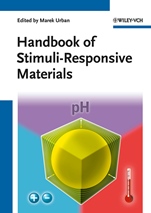
Handbook of Stimuli–Responsive Materials
ISBN 9783527327003
Autor: Marek W. Urban
Wydawca: Wiley
Dostępność: 3-6 tygodni
Cena: 801,15 zł
Przed złożeniem zamówienia prosimy o kontakt mailowy celem potwierdzenia ceny.
ISBN13: |
9783527327003 |
ISBN10: |
3527327002 |
Autor: |
Marek W. Urban |
Oprawa: |
Hardback |
Rok Wydania: |
2011-02-09 |
Ilość stron: |
296 |
Wymiary: |
250x179 |
Tematy: |
TG |
Adopting a broad approach, this volume provides the scientific community with a much–needed overview of developments and scientific findings in stimuli–responsive materials. Its primary focus is on the designing, synthesizing, formulating, and processing of materials that lead to an understanding of the scientific principles governing response driven functions leading to future technologies.
The highly experienced and internationally renowned editor has assembled a team of leading scientists from the interdisciplinary areas of: PolymersBiopolymersBiochemistryBiophysicsBiomaterialsBioengineeringMaterials engineeringBiotechnologyChemistryPhysicsCeramicsMetalsAnd materials science.
A combination that guarantees a unique and high–quality handbook
Spis treści:
Preface.
List of Contributors.
1 Synthetic and Physicochemical Aspects of Advanced Stimuli–Responsive Polymers (Dirk Kuckling and Marek W. Urban).
1.1 Introduction.
1.2 Controlled Free Radical Polymerization of Stimuli–Responsive Polymers.
1.3 Synthesis of Stimuli–Responsive Colloidal Dispersions.
1.4 Summary.
References.
2 Biological– and Field–Responsive Polymers: Expanding Potential in Smart Materials (Debashish Roy, Jennifer N. Cambre, and Brent S. Sumerlin).
2.1 Introduction.
2.2 Biologically Responsive Polymer Systems.
2.3 Field–Responsive Polymers.
2.4 Conclusions.
References.
3 Self–Oscillating Gels as Stimuli–Responsive Materials (Anna C. Balazs, Pratyush Dayal, Olga Kuksenok, and Victor V. Yashin).
3.1 Introduction.
3.2 Methodology.
3.3 Results and Discussions.
3.4 Conclusions.
Acknowledgments.
References.
4 Self–Repairing Polymeric Materials (Biswajit Ghosh, Cathrin C. Corten, and Marek W. Urban).
4.1 Intr
oduction.
4.2 Damage and Repair Mechanisms in Polymers.
4.3 Summary.
References.
5 Stimuli–Driven Assembly of Chromogenic Dye Molecules: a Versatile Approach for the Design of Responsive Polymers (Brian Makowski, Jill Kunzelman, and Christoph Weder).
5.1 Introduction.
5.2 Excimer–Forming Sensor Molecules.
5.3 Fluorescent Mechanochromic Sensors.
5.4 Thermochromic Sensors.
5.5 Chemical Sensing with Excimer–Forming Dyes.
5.6 Summary and Outlook.
Acknowledgments.
References.
6 Switchable Surface Approaches (Aftin M. Ross, Himabindu Nandivada, and Joerg Lahann).
6.1 Introduction.
6.2 Electroactive Materials.
6.3 Photoresponsive Materials.
6.4 pH–Responsive Materials.
6.5 Thermoresponsive Materials.
6.6 Switchable Surfaces Based on Supramolecular Shuttles.
6.7 Switchable Surfaces Comprising DNA and Peptide Monolayers.
6.8 Summary.
References.
7 Layer–by–Layer Self–Assembled Multilayer Stimuli–Responsive Polymeric Films (Lei Zhai).
7.1 Introduction.
7.2 Fabrication of Multilayer Polymer Coatings.
7.3 Response of Multilayer Polymer Coatings to External Stimuli.
7.4 Conclusion and Outlook.
References.
Further Reading.
8 Photorefractive Polymers (Kishore V. Chellapan, Rani Joseph, and Dhanya Ramachandran).
8.1 Introduction.
8.2 The Photorefractive Effect in Polymers.
8.3 The Two–Beam Coupling Effect.
8.4 High–Performance Photorefractive Polymers.
8.5 Experimental Techniques.
8.6 Conclusions.
References.
9 Photochromic Responses in Polymer Matrices (Dhanya Ramachandran and Marek W. Urban).
9.1 Introduction.
9.2 Photochromic Polymeric Systems.
9.3 Photochromic Systems.
9.4 Outlook of Photochromic Materials.
Acknowledgments.
References.
10 Covalent Bonding of Functional Coatings on Conductive Materials: the Electro
chemical Approach (Michaël Cécius and Christine Jérôme).
10.1 Introduction.
10.2 Electrodeposited Coatings.
10.3 Electrografted Coatings.
10.4 Compounds Requiring an Anodic Process.
10.5 Compounds Requiring a Cathodic Process.
10.6 Conclusions.
References.
Index.
Nota biograficzna:
Marek W. Urban is internationally recognized scientist and scholar in the area of chemical physics of polymeric stimuli–responsive materials. He is a professor of polymer science and engineering in the School of Polymers and High Performance Materials at the University of Southern Mississippi and director of Materials Research Science and Engineering Center (MRSEC). He has authored over 300 research papers, three books, and edited 8 American Chemical Society Advances in Chemistry Series books. He chaired the Gordon Research Conference on Polymer Films and Coatings and is the recipient of numerous awards. Current focus of his research is on stimuli–responsive polymeric materials and molecular level processes which govern their behavior.
Okładka tylna:
Adopting a broad approach, this volume provides the scientific community with a much–needed overview of developments and scientific findings in stimuli–responsive materials. Its primary focus is on the designing, synthesizing, formulating, and processing of materials that lead to an understanding of the scientific principles governing response driven functions leading to future technologies.
The highly experienced and internationally renowned editor has assembled a team of leading scientists from the interdisciplinary areas of: PolymersBiopolymersBiochemistryBiophysicsBiomaterialsBioengineeringMaterials engineeringBiotechnologyChemistryPhysicsCeramicsMetalsAnd materials science.
A combination that guarantees a unique and high–q
uality handbook
Koszyk
Książek w koszyku: 0 szt.
Wartość zakupów: 0,00 zł
Informacje


Kontakt
Gambit
Centrum Oprogramowania
i Szkoleń Sp. z o.o.
Al. Pokoju 29b/22-24
31-564 Kraków
Siedziba Księgarni
ul. Kordylewskiego 1
31-542 Kraków
+48 12 410 5991
+48 12 410 5987
+48 12 410 5989
Subskrypcje
Administratorem danych osobowych jest firma Gambit COiS Sp. z o.o. Na podany adres będzie wysyłany wyłącznie biuletyn informacyjny.
Autoryzacja płatności

Informacje na temat autoryzacji płatności poprzez PayU.

© Copyright 2012: GAMBIT COiS Sp. z o.o. Wszelkie prawa zastrzeżone.
Projekt i wykonanie: Alchemia Studio Reklamy