


Wydawcy
Katalog tematyczny
- Archeologia (109)
- Ekonomia, finanse, business (13704)
- Filozofia (1445)
- Historia (3040)
- Języki i językoznawstwo (2356)
- Lifestyle, hobby i rozrywka (475)
- Medycyna (9704)
- Nauki humanistyczne (4)
- Nauki o Ziemi i środowisku (2638)
- Nauki ścisłe (20412)
- Nauki społeczne (8486)
- Nauki techniczne (13450)
- Prawo (1696)
- Publikacje informacyjne i interdyscyplinarne (1288)
- Religia i wierzenia (917)
- Technika komputerowa (4067)
- Zdrowie, relacje międzyludzkie i rozwój osobisty (657)





Informacje szczegółowe o książce
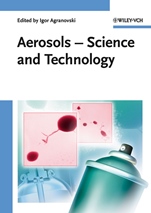
Aerosols: Science and Technology
ISBN 9783527326600
Autor: Igor Agranovski
Wydawca: Wiley
Dostępność: 3-6 tygodni
Cena: 882,00 zł
Przed złożeniem zamówienia prosimy o kontakt mailowy celem potwierdzenia ceny.
ISBN13: |
9783527326600 |
ISBN10: |
352732660X |
Autor: |
Igor Agranovski |
Oprawa: |
Hardback |
Rok Wydania: |
2010-06-28 |
Ilość stron: |
492 |
Wymiary: |
253x180 |
Tematy: |
AT |
Aerosols and aerosol research play an important role in various applied scientific and technological fields, including the understanding of climate change, global warming and pollution. Understanding aerosol science is hugely important in both nature and industry, e.g. vast amounds of aerosols are emitted into the atmosphere during combustion and explosion processes as well as volcano eruptions. This self–contained handbook and ready reference examines aerosol science and technology in depth, providing a detailed insight into this expanding field. Divided into four clear parts, it covers aerosol formation, measurement and characterization, removal, and atmospheric and biological aerosols. Written by a host of internationally renowned experts in the field, this is an essential resource for chemists and engineers in the chemical and materials disciplines across multiple industries, as well as ideal supplementary reading in graduate level courses. From the contents: ∗ Introduction to Aerosols PART I: Aerosol Formation ∗ High Temperature Aerosol Systems ∗ Aerosol Synthesis of Single–Walled Carbon Nanotubes ∗ Condensation, Evaporation, Nucleation ∗ Combustion–Derived Carbonaceous Aerosols (SOOT) in the Atmosphere: Water Interaction and Climate Effects ∗ Radioactive Aerosols ¿ Chernobyl Nuclear Power Plant Case Study PART II: Aerosol Measurement and Characterization ∗ Applications of Optical Methods for Micrometer and Submicrometer Particle Measurement ∗ Inverse Problem and Aerosol Measurements PART III: Aerosol Removal ∗ History of Development and Present State of Polymeric Fine–Fiber Unwoven Petryanov Filter Materials for Aerosol Entrapment ∗ Deposition of Aerosol Nanoparticles in Model Fibrous Filters ∗ Filtration of Liquid and Solid Aerosols on Liquid–Coated Filters PART IV: Atmospheric and Biological Aerosols ∗ Atmospheric Aerosols ∗ Biological Aerosols ∗ Atmospheric Bioaerosols
Introduction INTRODUCTION TO AEROSOLS Introduction Aerosol Phenomenology Drag Force and Diffusivity Diffusion Charging of Aerosol Particles Fractal Aggregates Coagulation Laser–Induced Aerosols Conclusion PART I: Aerosol Formation HIGH–TEMPERATURE AEROSOL SYSTEMS Introduction Main High–Temperature Processes for Aerosol Formation Basic Dynamic Processes in High–Temperature Aerosol Systems Particle Tailoring in High–Temperature Processes AEROSOL SYNTHESIS OF SINGLE–WALLED CARBON NANOTUBES Introduction Aerosol–Unsupported Chemical Vapor Deposition Methods Control and Optimization of Aerosol Synthesis Carbon Nanotube Bundling and Growth Mechanisms Integration of the Carbon Nanotubes Summary CONDENSATIONS, EVAPORATION, NUCLEATION Introduction Condensation Condensation in the Transition Regime Evaporation Uptake Balancing Fluxes Nucleation Nucleation–Controlled Processes Conclusion COMBUSTION–DERIVED CARBONACEOUS AEROSOLS (SOOT) IN THE ATMOSPHERE: WATER INATERACTION AND CLIMATE EFFECTS Black Carbon Aerosols in the Atmosphere: Emissions and Climate Effects Physico–Chemical Properties of Black Carbon Aerosols Water Uptake by Black Carbons Conclusions RADIOACTIVE AEROSOLS – CHERNOBYL NUCLEAR POWER PLANT CASE STUDY Introduction Environmental Aerosols Aerosols inside the Vicinity of the "Shelter" Building PART II: Aerosol Measurement and Characterization APPLICATIONS OF OPTICAL METHODS FOR MICROMETER AND SUBMICROMETER PARTICLE MEASUREMENTS Introduction Optical Methods in Particle Measurements Short Overview of Light Scattering Theories Classification of Optical Instruments for Particle Measurements Development of Airborne and Liquid–borne Particle Counters and Sizers New Methods Used to Characterize the Electrical Charge and Density of the Particles Aerosol Analyzers for Measurement of the Complex Refractive Index of Aerosol Particles Comparison of Commercially Available Instruments and Analysis of the Trends of Further Developments Conclusions THE INVERSE PROBLEM AND AEROSOL MEASUREMENTS Introduction Forms of Representation of Particle Size Distribution Differential and Integral Measurements Differential Mobility Analysis Diffusion Aerosol Spectrometry Conclusions PART III: Aerosol Removal HISTORY OF DEVELOPMENT AND PRESENT STATE OF POLYMERIC FINE–FIBER UNWOVEN PETRYANOV FILTER MATERIALS FOR AEROSOL ENTRAPMENT DEPOSITION OF AEROSOL NANOPARTICLES IN MODEL FIBROUS FILTERS Introduction Results of Numerical Modeling of Nanoparticle Deposition in Two–Dimensional Model Filters Penetration of Nanoparticles through Wire Screen Diffusion Batteries Conclusion FILTRATION OF LIQUID AND SOLID AEROSOLS ON LIQUID–COATED FILTERS Introduction Wettable Filtration Materials Non–Wettable Filtration Materials Filtration on a Porous Medium Submerged into a Liquid PART IV: Atmospheric and Biological Aerosols ATMOSPHERIC AEROSOLS General Concepts Atmospheric Aerosols of Different Nature Temporal and Dimensional Structure of Atmospheric Aerosols Aerosols in the Stratosphere BIOLOGICAL AEROSOLS Introduction History of Bioaerosol Research Main Definitions and Types of Bioaerosol Particles Sources of Biological Particles and their Aerosolization Sampling and Collection Analysis Real–Time Measurement of Bioaerosols Purification of Indoor Air Contaminated with Bioaerosol Particles and Respiratory Protection ATMOSPHERIC BIOAEROSOLS Introduction Methods of Atmospheric Bioaerosol Research Atmospheric Bioaerosol Studies Conclusion
Prof. Agranovski is a research scientist with 24 years experience in aerosol science and nanotechnology and their applications in design and implementation of air pollution control and monitoring technologies. He has published more than 120 papers and has 5 patents to his name. He worked as a consultant for 49 companies worldwide and developed more than 30 new technologies. Prof. Agranovski is an Editor of CLEAN–Soil, Air, Water Journal. During his career, he worked as visiting professor at a number of universities in various countries including Japan, Russia, France, USA, UK, Hong Kong, Korea and many others.
Koszyk
Książek w koszyku: 0 szt.
Wartość zakupów: 0,00 zł
Informacje


Kontakt
Gambit
Centrum Oprogramowania
i Szkoleń Sp. z o.o.
Al. Pokoju 29b/22-24
31-564 Kraków
Siedziba Księgarni
ul. Kordylewskiego 1
31-542 Kraków
+48 12 410 5991
+48 12 410 5987
+48 12 410 5989
Subskrypcje
Administratorem danych osobowych jest firma Gambit COiS Sp. z o.o. Na podany adres będzie wysyłany wyłącznie biuletyn informacyjny.
Autoryzacja płatności

Informacje na temat autoryzacji płatności poprzez PayU.

© Copyright 2012: GAMBIT COiS Sp. z o.o. Wszelkie prawa zastrzeżone.
Projekt i wykonanie: Alchemia Studio Reklamy