


Wydawcy
Katalog tematyczny
- Archeologia (109)
- Ekonomia, finanse, business (13704)
- Filozofia (1445)
- Historia (3040)
- Języki i językoznawstwo (2356)
- Lifestyle, hobby i rozrywka (475)
- Medycyna (9704)
- Nauki humanistyczne (4)
- Nauki o Ziemi i środowisku (2638)
- Nauki ścisłe (20412)
- Astronomia (294)
- Biologia (5119)
- Chemia (6540)
- Chemia analityczna (361)
- Chemia fizyczna (346)
- Chemia nieorganiczna (137)
- Chemia organiczna (535)
- Krystalografia (27)
- Minerologia (46)
- Fizyka (3309)
- Matematyka (4574)
- Nauki ścisłe, ogólnie (503)
- Nauki społeczne (8486)
- Nauki techniczne (13450)
- Prawo (1696)
- Publikacje informacyjne i interdyscyplinarne (1288)
- Religia i wierzenia (917)
- Technika komputerowa (4067)
- Zdrowie, relacje międzyludzkie i rozwój osobisty (657)





Informacje szczegółowe o książce
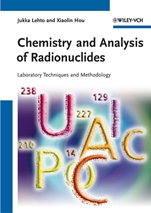
Chemistry and Analysis of Radionuclides: Laboratory Techniques and Methodology
ISBN 9783527326587
Autor: Jukka Lehto, Xiaolin Hou
Wydawca: Wiley
Dostępność: 3-6 tygodni
Cena: 502,95 zł
Przed złożeniem zamówienia prosimy o kontakt mailowy celem potwierdzenia ceny.
ISBN13: |
9783527326587 |
ISBN10: |
3527326588 |
Autor: |
Jukka Lehto, Xiaolin Hou |
Oprawa: |
Hardback |
Rok Wydania: |
2010-11-24 |
Ilość stron: |
426 |
Wymiary: |
245x179 |
Tematy: |
PN |
Written by chemists for chemists, this is a comprehensive guide to the important radionuclides as well as techniques for their separation and analysis. It introduces readers to the important laboratory techniques and methodologies in the field, providing practical instructions on how to handle nuclear waste and radioactivity in the environment.
From the contents:Chemistry and Analysis of Most Important Radionuclides in Nuclear Waste and in EnvironmentRadionuclides and their Radiometric MeasurementSpecial Characteristics of the Chemistry of Radionuclides and their SeparationsFactors Affecting Chemical Forms of Radionuclides in Aqueous SolutionsYield Determinations and Source PreparationsSpeciation AnalysisMeasurement of Radionuclides with Mass SpectrometrySampling and Sample Pretreatment of Environment SamplesChemical Changes Induced by the Radioactive Decay Process
Spis treści:
Preface.
Acknowledgments.
1 Radionuclides and their Radiometric Measurement.
1.1 Radionuclides.
1.2 Modes of Radioactive Decay.
1.3 Detection and Measurement of Radiation.
2 Special Features of the Chemistry of Radionuclides and their Separation.
2.1 Small Quantities.
2.2 Adsorption.
2.3 Use of Carriers.
2.4 Utilization of Radiation in the Determination of Radionuclides.
2.5 Consideration of Elapsed Time.
2.6 Changes in the System Caused by Radiation and Decay.
2.7 The Need for Radiochemical Separations.
3 Factors Affecting Chemical Forms of Radionuclides in Aqueous Solutions.
3.1 Solution pH.
3.2 Redox Potential.
3.3 Dissolved Gases.
3.4 Ligands Forming Complexes with Metals.
3.5 Humic Substances.
3.6 Colloidal Particles.
3.7 Source and Generation of Radionuclides.
3.8 Appendix: Reagents Used to Adjust Oxidation States of Radionuclides.
4 Separation Methods.
4.1 Precipitation.
4.2 Solubility Product.
4.3 Ion Exchange.
4.4 Solvent Extraction.
4.5 Extraction Chromatography.
5 Yield Determinations and Counting Source Preparation.
5.1 The Determination of Chemical Yield in Radiochemical Analyses.
5.2 Preparation of Sources for Activity Counting.
5.3 Essentials in Chemical Yield Determination and in Counting Source Preparation.
6 Radiochemistry of the Alkali Metals.
6.1 Most Important Radionuclides of the Alkali Metals.
6.2 Chemical Properties of the Alkali Metals.
6.3 Separation Needs of Alkali Metal Radionuclides.
6.4 Potassium – 40K.
6.5 Cesium – 134Cs, 135Cs, and 137Cs.
6.6 Essentials in the Radiochemistry of the Alkali Metals.
7 Radiochemistry of the Alkaline Earth Metals.
7.1 Most Important Radionuclides of the Alkaline Earth Metals.
7.2 Chemical Properties of the Alkaline Earth Metals.
7.3 Beryllium – 7Be and 10Be.
7.4 Calcium – 41Ca and 45Ca.
7.5 Strontium – 89Sr and 90Sr.
7.6 Radium – 226Ra and 228Ra.
7.7 Essentials in the Radiochemistry of the Alkaline Earth Metals.
8 Radiochemistry of the 3d–Transition Metals.
8.1 The Most Important Radionuclides of the 3d–Transition Metals.
8.2 Chemical Properties of the 3d–Transition Metals.
8.3 Iron – 55Fe.
8.4 Nickel – 59Ni and 63Ni.
8.5 Essentials in 3–d Transition Metals Radiochemistry.
9 Radiochemistry of the 4d–Transition Metals.
9.1 Important Radionuclides of the 4d–Transition Metals.
9.2 Chemistry of the 4d–Transition Metals.
9.3 Technetium – 99Tc.
9.4 Zirconium – 93Zr.
9.5 Molybdenum – 93Mo.
9.6 Niobium – 94Nb.
9.7 Essentials in the Radiochemistry of 4–d Transition Metals.
10 Radiochemistry of the Lanthanides.
10.1 Important Lanthanide Radionuclides.
10.2 Chemical Properties of the Lanthanides.
10.3 Separation of Lanthanides from Act
inides.
10.4 Lanthanides as Actinide Analogs.
10.5 147Pm and 151Sm.
10.6 Essentials of Lanthanide Radiochemistry.
11 Radiochemistry of the Halogens.
11.1 Important Halogen Radionuclides.
11.2 Physical and Chemical Properties of the Halogens.
11.3 Chlorine – 36Cl.
11.4 Iodine – 129I.
11.5 Essentials of Halogen Radiochemistry.
12 Radiochemistry of the Noble Gases.
12.1 Important Radionuclides of the Noble Gases.
12.2 Physical and Chemical Characteristics of the Noble Gases.
12.3 Measurement of Xe Isotopes in Air.
12.4 Determination of 85Kr in Air.
12.5 Radon and its Determination.
12.6 Essentials of Noble Gas Radiochemistry.
13 Radiochemistry of Tritium and Radiocarbon.
13.1 Tritium – 3H.
13.2 Radiocarbon – 14C.
13.3 Essentials of Tritium and Radiocarbon Radiochemistry.
14 Radiochemistry of Lead, Polonium, Tin, and Selenium.
14.1 Polonium – 210Po.
14.2 Lead – 210Pb.
14.3 Tin – 126Sn.
14.4 Selenium – 79Se.
14.5 Essentials of Polonium, Lead, Tin, and Selenium Radiochemistry.
15 Radiochemistry of the Actinides.
15.1 Important Actinide Isotopes.
15.2 Generation and Origin of the Actinides.
15.3 Electronic Structures of the Actinides.
15.4 Oxidation States of the Actinides.
15.5 Ionic Radii of the Actinides.
15.6 Major Chemical Forms of the Actinides.
15.7 Disproportionation.
15.8 Hydrolysis and Polymerization of the Actinides.
15.9 Complex Formation of the Actinides.
15.10 Oxides of the Actinides.
15.11 Actinium.
15.12 Thorium.
15.13 Protactinium.
15.14 Uranium.
15.15 Neptunium.
15.16 Plutonium.
15.17 Americium and Curium.
16 Speciation Analysis.
16.1 Considerations Relevant to Speciation.
16.2 Significance of Speciation.
16.3 Categorization of Speciation Analyzes.
16.4 Fractionation Techniques for Environmental Samples.
16.5 Analysis
of Radionuclide and Isotope Compositions.
16.6 Spectroscopic Speciation Methods.
16.7 Wet Chemical Methods.
16.8 Sequential Extractions.
16.9 Computational Speciation Methods.
16.10 Characterization of Radioactive Particles.
17 Measurement of Radionuclides by Mass Spectrometry.
17.1 Introduction.
17.2 Inductively Coupled Plasma Mass Spectrometry (ICP–MS).
17.3 Accelerator Mass Spectrometry (AMS).
17.4 Thermal Ionization Mass Spectrometry (TIMS).
17.5 Resonance Ionization Mass Spectrometry (RIMS).
17.6 Essentials of the Measurement of Radionuclides by Mass Spectrometry.
18 Sampling and Sample Pretreatment for the Determination of Radionuclides.
18.1 Introduction.
18.2 Air Sampling and Pretreatment.
18.3 Sampling Gaseous Components.
18.4 Atmospheric Deposition Sampling.
18.5 Water Sampling.
18.6 Sediment Sampling and Pretreatment.
18.7 Soil Sampling and Pretreatment.
18.8 Essentials in Sampling and Sample Pretreatment for Radionuclides.
19 Chemical Changes Induced by Radioactive Decay.
19.1 Autoradiolysis.
19.2 Transmutation and Subsequent Chemical Changes.
19.3 Recoil – Hot Atom Chemistry.
Index.
Nota biograficzna:
Professor Jukka Lehto is the head of the Laboratory of Radiochemistry at the Department of Chemistry, University of Helsinki. He attained his PhD degree in 1987 at the University of Helsinki. Since 1980 he has worked as a teaching assistant, senior lecturer at the University of Helsinki, visiting researcher at Texas A&M University, USA, senior research fellow of the Academy of Finland, acting professor and since 2005 as a professor in radiochemistry. Professor Lehto′s main research areas have been nuclear waste management and disposal, and environmental radioactivity studies. He has published 160 scientific and technical papers and patents, and also published a book on the principles of radioactiv
ity and radiochemistry in Finnish.
Xiaolin Hou obtained his PhD degree in nuclear and radioanalytical chemistry from the Chinese Academy of Sciences in 1997. He joined Ris National Laboratory, Denmark, in 1998 (in 2007 Ris became part of the Technical University of Denmark), and has been a senior scientist there since 2003. His primary research interests are radiochemical and speciation analysis of radionuclides, nuclear and radioanalytical techniques, environmental radioactivity, radiotracer application, radiolabeling and protein adsorption on surfaces. Dr. Hou has authored/co–authored more than 110 research articles in peer reviewed scientific journals and 7 book chapters.
Okładka tylna:
Written by chemists for chemists, this is a comprehensive guide to the important radionuclides as well as techniques for their separation and analysis. It introduces readers to the important laboratory techniques and methodologies in the field, providing practical instructions on how to handle nuclear waste and radioactivity in the environment.
From the contents:Chemistry and Analysis of Most Important Radionuclides in Nuclear Waste and in EnvironmentRadionuclides and their Radiometric MeasurementSpecial Characteristics of the Chemistry of Radionuclides and their SeparationsFactors Affecting Chemical Forms of Radionuclides in Aqueous SolutionsYield Determinations and Source PreparationsSpeciation AnalysisMeasurement of Radionuclides with Mass SpectrometrySampling and Sample Pretreatment of Environment SamplesChemical Changes Induced by the Radioactive Decay Process
Koszyk
Książek w koszyku: 0 szt.
Wartość zakupów: 0,00 zł
Informacje


Kontakt
Gambit
Centrum Oprogramowania
i Szkoleń Sp. z o.o.
Al. Pokoju 29b/22-24
31-564 Kraków
Siedziba Księgarni
ul. Kordylewskiego 1
31-542 Kraków
+48 12 410 5991
+48 12 410 5987
+48 12 410 5989
Subskrypcje
Administratorem danych osobowych jest firma Gambit COiS Sp. z o.o. Na podany adres będzie wysyłany wyłącznie biuletyn informacyjny.
Autoryzacja płatności

Informacje na temat autoryzacji płatności poprzez PayU.

© Copyright 2012: GAMBIT COiS Sp. z o.o. Wszelkie prawa zastrzeżone.
Projekt i wykonanie: Alchemia Studio Reklamy