


Wydawcy
Katalog tematyczny
- Archeologia (109)
- Ekonomia, finanse, business (13704)
- Filozofia (1445)
- Historia (3040)
- Języki i językoznawstwo (2356)
- Lifestyle, hobby i rozrywka (475)
- Medycyna (9704)
- Nauki humanistyczne (4)
- Nauki o Ziemi i środowisku (2638)
- Nauki ścisłe (20412)
- Astronomia (294)
- Biologia (5119)
- Chemia (6540)
- Chemia analityczna (361)
- Chemia fizyczna (346)
- Chemia nieorganiczna (137)
- Chemia organiczna (535)
- Krystalografia (27)
- Minerologia (46)
- Fizyka (3309)
- Matematyka (4574)
- Nauki ścisłe, ogólnie (503)
- Nauki społeczne (8486)
- Nauki techniczne (13450)
- Prawo (1696)
- Publikacje informacyjne i interdyscyplinarne (1288)
- Religia i wierzenia (917)
- Technika komputerowa (4067)
- Zdrowie, relacje międzyludzkie i rozwój osobisty (657)





Informacje szczegółowe o książce
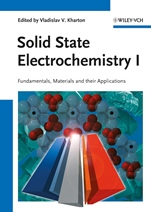
Solid State Electrochemistry
ISBN 9783527326570
Autor: Vladislav V. Kharton
Wydawca: Wiley
Dostępność: 3-6 tygodni
Cena: 1 530,90 zł
Przed złożeniem zamówienia prosimy o kontakt mailowy celem potwierdzenia ceny.
ISBN13: |
9783527326570 |
ISBN10: |
352732657X |
Autor: |
Vladislav V. Kharton |
Oprawa: |
Hardback |
Rok Wydania: |
2011-06-29 |
Ilość stron: |
950 |
Wymiary: |
241x176 |
Tematy: |
PN |
The one–stop reference source for all questions about solid–state electrochemistry. This important and rapidly developing scientific field integrates many aspects of the solid–state chemistry, solid–state physics, materials science and catalysis related to electrochemical processes. Its key applications include batteries, fuel cells, electrochemical pumps and compressors, gas separation membranes, solid–state electrolyzers, electrocatalytic reactors, super–capacitors, electrochromic and memory devices, various sensors, corrosion protection, and synthesis of new materials with improved properties. The only comprehensive handbook on this important and rapidly developing topic combines fundamental information with a brief overview of recent advances in the field. Particular attention is focused on the most important developments performed during the last decade, methodological and theoretical aspects of solid–state electrochemistry, as well as practical applications. The highly experienced editor has included chapters with critical reviews of theoretical approaches, experimental methods and modeling techniques, providing definitions and explaining the relevant terminology as necessary. Several other chapters cover all the key groups of the ion–conducting solids important for practice, namely cationic, protonic, oxygen–anionic and mixed conductors, but also conducting polymer and hybrid materials. Due to the very interdisciplinary nature of the topic, this ready reference is of great interest to material scientists, polymer chemists, physicists, and industrial scientists, too.
Preface FUNDAMENTALS, APPLICATIONS AND PERSPECTIVES OF SOLID STATE ELECTROCHEMISTRY – A SYNOPSIS Solid vs. Liquid State Thermodynamics and Kinetics of Charge Carriers Usefulness of Electrochemical Cells Materials Research Strategies: Bulk Defect Chemistry Materials Research Strategy: Boundary Defect Chemistry Nanoionics SUPERIONIC MATERIALS: STRUCTURAL ASPECTS Techniques Families of Superionic Conductors Current Status and Future Prospects DEFECT EQUILIBRIA IN SOLIDS AND RELATED PROPERTIES: AN INTRODUCTION Defect Structure of Solids: Thermodynamic Approach Basic Relationships between the Defect Equilibria and Charge Tranfer in Solids Examples of Functional Materials with Different Defect Structures ION–CONDUCTING NANOCRYSTALS: THEORY, METHODS AND APPLICATIONS Theoretical Aspects Applications and Perspectives Experimental Methods Review of the Current Experimental Data and their Agreement with Theory Overview and Areas for Future Development THE FUNDAMENTALS AND ADVANCES OF SOLID STATE ELECTROCHEMISTRY: INTERCALATION (INSERTION) AND DEINTERCALATAION (EXTRACTION) IN SOLID STATE ELECTRODES Thermodynamics of Intercalation and Deintercalation Kinetics of Intercalation and Deintercalation Methodological Overview SOLID STATE ELECTROCHEMICAL REACTIONS OF ELECTROACTIVE MICRO– AND NANOPARTICLES IN A LIQUID ELECTROLYTE ENVIRONMENT Methodological Aspects Theory Examples and Applications ALKALI METAL CATION AND PROTON CONDUCTORS: RELATIONSHIPS BETWEEN COMPOSITION, CRYSTAL STRUCTURE AND PROPERTIES Principles of Classification and General Comments Crystal–Chemistry Factors Affecting Cationic Conductivity Crystal Structural Screening and Studies of the Conduction Paths Conductors with Large Alkaline Ions Lithium Ion Conductors Proton Conductors CONDUCTING SOLIDS: IN THE SEARCH FOR MULTIVALENT CATION TRANSPORT Analysis of Trivalent Cation Transport Search for Tetravalent Cation Conductors OXYGEN ION–CONDUCTING MATERIALS Oxygen Ionic Transport in Acceptor–Doped Oxide Phases: Relevant Trends Stabilized Zirconia Electrolytes Doped Ceria Anion Conductors Based on Bi2O3 Transport Properties of Other Fluorite–Related Phases: Selected Examples Perovskite–Type LnBO3 (B=Ga,, Al, In, Sc, Y) and their Derivatives Perovskite–Related Mixed Conductors: A Short Overview La2Mo2O9–Based Electrolytes Solid Electrolytes with Apatite Structure POLYMER AND HYBRID MATERIALS, THEIR ELECTROCHEMISTRY AND APPLICATIONS Introduction Fundamentals Fluorinated Ionomer Membranes Non–Fluorinated Ionomer Membranes High Temperature PEMs Conclusion ELECTRONICALLY CONDUCTING POLYMERS Solid Organic and Inorganic Electrochemically Active Materials for Galvanic Cells Operating at Moderate Temperatures General Features of Doping–Induced Changes in Pi–Conjugated Polymers HIGH–TEMPERATURE APPLICATIONS OF SOLID ELECTROLYTES: GAS ANALYSIS, PUMPING AND CONVERSION Characteristics of a Current–Carrying Electrode on an Oxide Electrolyte Operating Modes Cell Materials Cell Designs Examples of Applications ELECTROCHEMICAL SENSORS: FUNDAMENTALS, KEY MATERIALS AND APPLICATIONS Operation Principles Materials Challenges Applications Interfacial Phenomena in Electrochemical Cells with Solid Electrolytes and Mixed Ionic–Electronic Conductors Adsorption Phenomena: Selected Aspects Surface Transport Interfacial Processes in Fuel Cells and Ceramic Membranes Grain Boundary Behavior of Micro– and Nanostructured Ion Conducting Ceramics Composite Solid Electrolytes Microelectrodes in solid state electrochemistry Batteries and supercapacitors: state–of–the–art, problems and perspectives Fuel cells: advances and challenges Oxygen– and hydrogen–permeable ceramic membranes Materials Science Aspects Relevant For High–Temperature Electrochemistry
Vladislav Kharton is a principal investigator at the Department of Ceramics and Glass Engineering, University of Aveiro (Portugal). Having received his doctoral degree in physical chemistry from the Belarus State University in 1993, he has published over 230 scientific papers in international SCI journals, including 7 reviews, and coauthored over 40 papers in other refereed journals and volumes, 2 books and 2 patents. He is a topical editor of the Journal of Solid State Electrochemistry, and member of the editorial boards of Materials Letters, The Open Condensed Matter Physics Journal, and Processing and Application of Ceramics. In 2004, he received the Portuguese Science Foundation prize for Scientific Excellence.
Koszyk
Książek w koszyku: 0 szt.
Wartość zakupów: 0,00 zł
Informacje


Kontakt
Gambit
Centrum Oprogramowania
i Szkoleń Sp. z o.o.
Al. Pokoju 29b/22-24
31-564 Kraków
Siedziba Księgarni
ul. Kordylewskiego 1
31-542 Kraków
+48 12 410 5991
+48 12 410 5987
+48 12 410 5989
Subskrypcje
Administratorem danych osobowych jest firma Gambit COiS Sp. z o.o. Na podany adres będzie wysyłany wyłącznie biuletyn informacyjny.
Autoryzacja płatności

Informacje na temat autoryzacji płatności poprzez PayU.

© Copyright 2012: GAMBIT COiS Sp. z o.o. Wszelkie prawa zastrzeżone.
Projekt i wykonanie: Alchemia Studio Reklamy