


Wydawcy
Katalog tematyczny
- Archeologia (109)
- Ekonomia, finanse, business (13704)
- Filozofia (1445)
- Historia (3040)
- Języki i językoznawstwo (2356)
- Lifestyle, hobby i rozrywka (475)
- Medycyna (9704)
- Nauki humanistyczne (4)
- Nauki o Ziemi i środowisku (2638)
- Nauki ścisłe (20412)
- Astronomia (294)
- Biologia (5119)
- Chemia (6540)
- Chemia analityczna (361)
- Chemia fizyczna (346)
- Chemia nieorganiczna (137)
- Chemia organiczna (535)
- Krystalografia (27)
- Minerologia (46)
- Fizyka (3309)
- Matematyka (4574)
- Nauki ścisłe, ogólnie (503)
- Nauki społeczne (8486)
- Nauki techniczne (13450)
- Prawo (1696)
- Publikacje informacyjne i interdyscyplinarne (1288)
- Religia i wierzenia (917)
- Technika komputerowa (4067)
- Zdrowie, relacje międzyludzkie i rozwój osobisty (657)





Informacje szczegółowe o książce
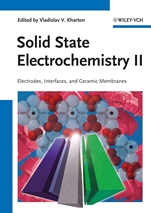
Solid State Electrochemistry II: Electrodes, Interfaces and Ceramic Membranes
ISBN 9783527326389
Autor: Vladislav V. Kharton
Wydawca: Wiley
Dostępność: 3-6 tygodni
Cena: 893,55 zł
Przed złożeniem zamówienia prosimy o kontakt mailowy celem potwierdzenia ceny.
ISBN13: |
9783527326389 |
ISBN10: |
3527326383 |
Autor: |
Vladislav V. Kharton |
Oprawa: |
Hardback |
Rok Wydania: |
2011-04-20 |
Ilość stron: |
576 |
Wymiary: |
243x179 |
Tematy: |
PN |
The one–stop reference source for fundamentals, advances and intriguing problems in solid–state electrochemistry. This important and rapidly developing scientific field integrates many aspects of conventional electrochemical science and engineering, materials science, solid–state chemistry and physics, heterogeneous catalysis and other areas of physical chemistry. The range of practical applications includes many types of batteries, fuel cells, electrochemical pumps and compressors, solid state electrolyzers and electrocatalytic reactors, synthesis of new materials with improved properties and corrosion protection, supercapacitors, accumulators, sensors, electrochromic and memory devices.
The second volume contains brief reviews dealing with the ionic memory and fuel cell technologies, ceramic membranes and composites, nanostructured ionic and mixed conductors, novel electrode materials for a variety of solid–state electrochemical cells, selected theoretical aspects, and numerous factors related to interfacial and surface processes, stability and reliability of the electrochemical appliances. As for the previous volume "Fundamentals, Materials and their Applications", particular emphasis is centered on the general methodological aspects, reference information and recent advances. Due to the highly interdisciplinary nature of the topic, this handbook is of great interest to industrial and academic researchers, engineers and postgraduate students specializing in all related areas of science and technology.
Spis treści:
Preface XV
List of Contributors XIX
1 Ionic Memory Technology 1
An Chen
1.1 Introduction 1
1.2 Ionic Memory Switching Mechanisms 4
1.3 Materials for Ionic Memories 8
1.4 Electrical Characteristics of Ionic Memories 12
1.5 Architectures for Ionic Memories 20
1.6 Challenges of Ionic Memories 22
1.7 Applications of Ionic Memories 24
1.8 Summary 26
References 26
2 Composite Solid Electrolytes 31
Nikolai F. Uvarov
2.1 Introduction 31
2.2 Interface Interactions and Defect Equilibria in Composite Electrolytes 32
2.3 Nanocomposite Solid Electrolytes: Grain Size Effects 42
2.4 Ionic Transport 50
2.5 Other Properties 55
2.6 Computer Simulations 56
2.7 Design of the Composite Solid Electrolytes: General Approaches and Perspectives 58
2.8 Composite Materials Operating at Elevated Temperatures 64
2.9 Conclusions 65
References 66
3 Advances in the Theoretical Description of Solid–Electrolyte Solution Interfaces 73
Orest Pizio and Stefan Sokolowski
3.1 Introduction 73
3.2 Theoretical Approaches 74
3.3 Computer Simulations 100
References 118
4 Dynamical Instabilities in Electrochemical Processes 125
István Z. Kiss, Timea Nagy, and Vilmos Gáspár
4.1 Introduction 125
4.2 Origin and Classification of Dynamical Instabilities in Electrochemical Systems 126
4.3 Methodology 136
4.4 Dynamics 142
4.5 Control of Dynamics 159
4.6 Toward Applications 167
4.7 Summary and Outlook 171
References 173
5 Fuel Cells: Advances and Challenges 179
San Ping Jiang and Xin Wang
5.1 Introduction 179
5.2 Alkaline and Alkaline Membrane Fuel Cells 187
5.3 Polymer Electrolyte Membrane Fuel Cells 194
5.4 Phosphoric Acid Fuel Cells and Molten Carbonate Fuel Cells 211
5.5 Solid Oxide Fuel Cells 217
5.6 Emerging Fuel Cells 232
5.6.1 Protic Ionic Liquid Electrolyte Fuel Cells 232
5.7 Applications of Fuel Cells 247
5.8 Final Remarks 249
References 252
6 Electrodes for High–Temperature Electrochemical Cells: Novel Materials and Recent Trends 265
Ekaterina V. Tsipis and Vladislav V. Kharton
6.1 Introduction 265
6.2 General Comments 266
6.3 Novel Cathode Materials for Solid Oxide Fuel Cells: Selected Trends and Compositions 267
6.4 Oxide and Cermet SOFC Anodes: Relevant Trends 286
6.5 Other Fuel Cell Concepts: Single–Chamber, Micro–, and Symmetrical SOFCs 301
6.6 Alternative Fuels: Direct Hydrocarbon and Direct Carbon SOFCs 309
6.7 Electrode Materials for High–Temperature Fuel Cells with Proton–Conducting Electrolytes 312
6.8 Electrolyzers, Reactors, and Other Applications Based on Oxygen Ion– and Proton–Conducting Solid Electrolytes 317
6.9 Concluding Remarks 321
References 322
7 Advances in Fabrication, Characterization, Testing, and Diagnosis of High–Performance Electrodes for PEM Fuel Cells 331
Jinfeng Wu, Wei Dai, Hui Li, and Haijiang Wang
7.1 Introduction 331
7.2 Advanced Fabrication Methods for High–Performance Electrodes 333
7.3 Characterization of PEM Fuel Cell Electrodes 348
7.4 Testing and Diagnosis of PEM Fuel Cell Electrodes 364
7.5 Final Comments 377
References 378
8 Nanostructured Electrodes for Lithium Ion Batteries 383
Ricardo Alcántara, Pedro Lavela, Carlos Pérez–Vicente, and José L. Tirado
8.1 Introduction 383
8.2 Positive Electrodes: Nanoparticles, Nanoarchitectures, and Coatings 384
8.3 Negative Electrodes 393
8.4 Concluding Remarks 406
References 407
9 Materials Science Aspects Relevant for High–Temperature Electrochemistry 415
Annika Eriksson, Mari–Ann Einarsrud, and Tor Grande
9.1 Introduction 415
9.2 Powder Preparation, Forming Processes, and Sintering Phenomena 416
9.3 Cation Diffusion 426
9.4 Thermomechanical Stability 437
9.5 Thermodynamic Stability of Materials 447
References 454
10 Oxygen– and Hydrogen–Permeable Dense Ceramic Membranes 467
Jay Kniep and Jerry Y.S. Lin
10.1 Introduction 467
10.2 Structure of Membrane Materials 468
10.3 Synthesis and Permeation Experimental Methods 471
10.4 Gas Permeation Mo
dels 473
10.5 Characteristics of Oxygen–Permeable Membranes 476
10.6 Characteristics of Hydrogen–Permeable Membranes 484
10.7 Applications of Membranes 490
10.8 Summary and Conclusions 494
References 495
11 Interfacial Phenomena in Mixed Conducting Membranes: Surface Oxygen Exchange– and Microstructure–Related Factors 501
Xuefeng Zhu and Weishen Yang
11.1 Introduction 501
11.2 Surface Exchange 503
11.3 Microstructural Effects in Mixed Conducting Membranes 520
11.4 Thermodynamic and Kinetic Stability 530
References 532
Index 541
Nota biograficzna:
Vladislav Kharton is a principal investigator at the Department of Ceramics and Glass Engineering, University of Aveiro (Portugal). Having received his doctoral degree in physical chemistry from the Belarus State University in 1993, he has published over 280 scientific papers in international SCI journals, including 10 reviews, and coauthored over 40 papers in other refereed journals and volumes, 3 books and 2 patents. He is a topical editor of the Journal of Solid State Electrochemistry, regional editor of Recent Patents on Material Science, and member of the editorial boards of Materials Letters, The Open Condensed Matter Physics Journal, and Processing and Application of Ceramics. In 2004, he received the Portuguese Science Foundation prize for Scientific Excellence.
Okładka tylna:
The one–stop reference source for fundamentals, advances and intriguing problems in solid–state electrochemistry. This important and rapidly developing scientific field integrates many aspects of conventional electrochemical science and engineering, materials science, solid–state chemistry and physics, heterogeneous catalysis and other areas of physical chemistry. The range of practical applications includes many types of batteries, fuel cells, electrochemical pumps and compressors, solid state el
ectrolyzers and electrocatalytic reactors, synthesis of new materials with improved properties and corrosion protection, supercapacitors, accumulators, sensors, electrochromic and memory devices.
The second volume contains brief reviews dealing with the ionic memory and fuel cell technologies, ceramic membranes and composites, nanostructured ionic and mixed conductors, novel electrode materials for a variety of solid–state electrochemical cells, selected theoretical aspects, and numerous factors related to interfacial and surface processes, stability and reliability of the electrochemical appliances. As for the previous volume "Fundamentals, Materials and their Applications", particular emphasis is centered on the general methodological aspects, reference information and recent advances. Due to the highly interdisciplinary nature of the topic, this handbook is of great interest to industrial and academic researchers, engineers and postgraduate students specializing in all related areas of science and technology.
Koszyk
Książek w koszyku: 0 szt.
Wartość zakupów: 0,00 zł
Informacje


Kontakt
Gambit
Centrum Oprogramowania
i Szkoleń Sp. z o.o.
Al. Pokoju 29b/22-24
31-564 Kraków
Siedziba Księgarni
ul. Kordylewskiego 1
31-542 Kraków
+48 12 410 5991
+48 12 410 5987
+48 12 410 5989
Subskrypcje
Administratorem danych osobowych jest firma Gambit COiS Sp. z o.o. Na podany adres będzie wysyłany wyłącznie biuletyn informacyjny.
Autoryzacja płatności

Informacje na temat autoryzacji płatności poprzez PayU.

© Copyright 2012: GAMBIT COiS Sp. z o.o. Wszelkie prawa zastrzeżone.
Projekt i wykonanie: Alchemia Studio Reklamy