


Wydawcy
Katalog tematyczny
- Archeologia (109)
- Ekonomia, finanse, business (13704)
- Filozofia (1445)
- Historia (3040)
- Języki i językoznawstwo (2356)
- Lifestyle, hobby i rozrywka (475)
- Medycyna (9704)
- Nauki humanistyczne (4)
- Nauki o Ziemi i środowisku (2638)
- Nauki ścisłe (20412)
- Astronomia (294)
- Biologia (5119)
- Biochemia (575)
- Biologia człowieka (14)
- Biologia komórkowa (377)
- Biologia molekularna (398)
- Biologia rozwoju (130)
- Biologia, ogólnie (1277)
- Botanika (280)
- Hydrobiologia (92)
- Mikrobiologia (363)
- Mykologia (22)
- Zoologia (303)
- Chemia (6540)
- Fizyka (3309)
- Matematyka (4574)
- Nauki ścisłe, ogólnie (503)
- Nauki społeczne (8486)
- Nauki techniczne (13450)
- Prawo (1696)
- Publikacje informacyjne i interdyscyplinarne (1288)
- Religia i wierzenia (917)
- Technika komputerowa (4067)
- Zdrowie, relacje międzyludzkie i rozwój osobisty (657)





Informacje szczegółowe o książce
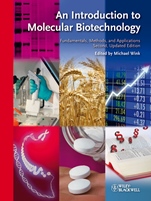
An Introduction to Molecular Biotechnology: Fundamentals, Methods and Applications
ISBN 9783527326372
Autor: Michael Wink
Wydawca: Wiley
Dostępność: 3-6 tygodni
Cena: 476,70 zł
Przed złożeniem zamówienia prosimy o kontakt mailowy celem potwierdzenia ceny.
ISBN13: |
9783527326372 |
ISBN10: |
3527326375 |
Autor: |
Michael Wink |
Oprawa: |
Paperback |
Rok Wydania: |
2011-03-18 |
Numer Wydania: |
2nd Edition |
Ilość stron: |
636 |
Wymiary: |
283x211 |
Tematy: |
PS |
Life sciences have advanced at a rapid speed. The information of cell and molecular biology as well as genetics can be applied to biotechnology and medicine. This new field has been termed "Molecular Biotechnology" and its focus is more on Science and its techniques than on fermenters and engineering. This book summarizes the basic knowledge of cell and molecular biology, introduces the main methods and explains concepts and applications in more detail.
A very detailed introduction to the fundamentals in molecular and cell biology is followed by an overview of standard techniques applied in molecular biotechnology –– including chromatography and electrophoresis, cloning techniques, gene expression systems, immunological methods, labeling of proteins and in situ–techniques, microscopy and laser systems. The third part then focuses on the key topics of molecular biotechnology, ranging from functional genomics, proteomics and bioinformatics to drug targeting, recombinant antibodies, structural biology, gene therapy and knock mice. The whole is rounded off by a section on biotechnology in industry dealing with patenting issues, company foundation and market opportunities.
Biotechnology is our use of living organisms to produce useful products and services. This involves the manipulation of living organisms, frequently through genetic engineering. For years now there have been products on the market produced with the help of biotechnology, for example beer and yoghurt. Today, more and more products derived from biotechnology are being brought onto the market. Medicines such as insulin for the treatment of diabetes have been used for years, while others have only recently been introduced.
Over 600 pages this book provides students and professionals in life sciences, pharmacy and biochemistry with all they need to know about molecular biotechnology.
Spis treści:
Preface.
List of Contributors.<
/b>
Abbreviations.
Part I. FUNDAMENTALS OF CELLULAR AND MOLECULAR BIOLOGY.
1. The Cell as the Basic Unit of Life (M. Wink).
2. Structure and Function of Cellular Macromolecules (M. Wink).
3. Structure and Functions of a Cell (M. Wink).
4. Biosynthesis and Function of Macromolecules (DNA, RNA, and Proteins) (M. Wink).
5. Distributing Proteins in the Cell (Protein Sorting) (M. Wink).
6. Evolution and Diversity of Organisms (M. Wink).
Part II. STANDARD METHODS IN MOLECULAR BIOTECHNOLOGY.
7. Isolation and Purification of Proteins (T. Wieland, M. Lutz).
8. Peptide and Protein Analysis with Electrospray Tandem Mass Spectrometry (A. Schlosser, W.D. Lehmann).
9. Isolation of DNA and RNA (H. Weiher, R. Zwacka, I. Herr).
10. Chromatography and Electrophoresis of Nucleic Acids (H. Weiher, R. Zwacka, I. Herr).
11. Hybridization of Nucleic Acids (H. Weiher, R. Zwacka, I. Herr).
12. Use of Enzymes in the Modification of Nucleic Acids (A. Groth, R. Zwacka, H. Weiher, I. Herr).
13. Polymerase Chain Reaction (A. Mohr, H. Weiher, I. Herr, R. Zwacka).
14. DNA Sequencing (R. Zwacka, A. Mohr, I. Herr, H. Weiher).
15. Cloning Procedures (T. Wieland, S. Lutz).
16. Expression of Recombinant Proteins (T. Wieland, S. Lutz).
17. Patch Clamp Method (R. Kraft).
18. Cell Cycle Analysis (S. Wölfl, A. Kitanovic).
19. Microscopic Techniques (S. Diekmann).
20. Laser Applications (M. Vogel, R. Fink).
Part III. KEY TOPICS.
21. Genomics and Functional Genomics (S.Wiemann, M. Frohme).
22. Bioinformatics (B. Brors, K. Fellenberg).
23. Cellular Systems Biology (H. Schmidt–Gienewinkel, S. Legewie, B. Brors, R. König).
24. Protein?Protein and Protein?DNA Interaction (P. Uetz, E. Pohl).
25. Drug Research (M. Koegl, R. Tolle, U. Deuschle, C. Kremoser).
26. Drug Targeting and Prodrugs (G. Fricker).
27. Molecular Diagnostics in Medicine (S. Wölfl, R. Gessner).
28. Rec
ombinant Antibodies and Phage Display (S. Dübel).
29. Transgenic and Gene–Targeted Mice and their Impact in Medical Research (R. Sprengel).
30. Gene Therapy: Strategies and Vectors (A. Groth, I. Herr).
31. RNA Interference, Modified DNA, Peptide Nucleic Acid, and Applications in Medicine and Biotechnology (N. Metzler–Nolte, A. Sosniak).
32. Plant Biotechnology (H. Hillebrand, R. Hell).
33. Biocatalysis in the Chemical Industry (M. Breuer, B. Hauer).
Part IV. BIOTECHNOLOGY IN INDUSTRY.
34. Industrial Application: Biotech Industry, Markets, and Opportunities (J. Schüler).
35. Patents in the Molecular Biotechnology Industry: Legal and Ethical Issues (David B. Resnik).
36. Drug Approval in the European Union and United States (G. Walsh).
37. Emergence of a Biotechnology Industry (C. Kremoser).
38. The 101 of Founding a Biotech Company (C. Kremoser).
39. Marketing (C. Kremoser).
Further Reading.
Abbreviations.
Glossary (M. Wink).
Subject Index.
Nota biograficzna:
Michael Wink studied biology and chemistry in Bonn and was awarded his doctorate from TU Braunschweig in 1980. After gaining his lecturing qualification in 1984/1985, he was awarded a Heisenberg grant by the German Research Council to work at the Max Planck Institute for Breeding Research in Cologne and from then at the gene center of Ludwig–Maximilians University in Munich. Following a chair for pharmaceutical biology at Mainz University in 1988, he accepted the post of Professor for Pharmaceutical Biology at the University of Heidelberg one year later. Between 2002 and 2004 he was the founding and managing director of the Institute for Pharmacy and Molecular Biotechnology, and dean from 2001 to 2005 for the new and popular course in molecular biotechnology offered by the university. Professor Wink′s areas of interest include pharmaceutical research, molecular biotechnology, and medicinal plants, as well a
s research into secondary materials and evolution.
Koszyk
Książek w koszyku: 0 szt.
Wartość zakupów: 0,00 zł
Informacje


Kontakt
Gambit
Centrum Oprogramowania
i Szkoleń Sp. z o.o.
Al. Pokoju 29b/22-24
31-564 Kraków
Siedziba Księgarni
ul. Kordylewskiego 1
31-542 Kraków
+48 12 410 5991
+48 12 410 5987
+48 12 410 5989
Subskrypcje
Administratorem danych osobowych jest firma Gambit COiS Sp. z o.o. Na podany adres będzie wysyłany wyłącznie biuletyn informacyjny.
Autoryzacja płatności

Informacje na temat autoryzacji płatności poprzez PayU.

© Copyright 2012: GAMBIT COiS Sp. z o.o. Wszelkie prawa zastrzeżone.
Projekt i wykonanie: Alchemia Studio Reklamy