


Wydawcy
Katalog tematyczny
- Archeologia (109)
- Ekonomia, finanse, business (13704)
- Filozofia (1445)
- Historia (3040)
- Języki i językoznawstwo (2356)
- Lifestyle, hobby i rozrywka (475)
- Medycyna (9704)
- Nauki humanistyczne (4)
- Nauki o Ziemi i środowisku (2638)
- Nauki ścisłe (20412)
- Astronomia (294)
- Biologia (5119)
- Chemia (6540)
- Chemia analityczna (361)
- Chemia fizyczna (346)
- Chemia nieorganiczna (137)
- Chemia organiczna (535)
- Krystalografia (27)
- Minerologia (46)
- Fizyka (3309)
- Matematyka (4574)
- Nauki ścisłe, ogólnie (503)
- Nauki społeczne (8486)
- Nauki techniczne (13450)
- Prawo (1696)
- Publikacje informacyjne i interdyscyplinarne (1288)
- Religia i wierzenia (917)
- Technika komputerowa (4067)
- Zdrowie, relacje międzyludzkie i rozwój osobisty (657)





Informacje szczegółowe o książce
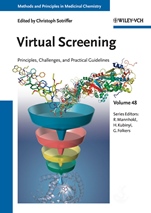
Virtual Screening: Principles, Challenges, and Practical Guidelines
ISBN 9783527326365
Autor: Christoph Sotriffer, Raimund Mannhold, Hugo Kubinyi, Gerd Folkers
Wydawca: Wiley
Dostępność: 3-6 tygodni
Cena: 909,30 zł
Przed złożeniem zamówienia prosimy o kontakt mailowy celem potwierdzenia ceny.
ISBN13: |
9783527326365 |
ISBN10: |
3527326367 |
Autor: |
Christoph Sotriffer, Raimund Mannhold, Hugo Kubinyi, Gerd Folkers |
Oprawa: |
Hardback |
Rok Wydania: |
2011-01-14 |
Ilość stron: |
550 |
Wymiary: |
248x180 |
Tematy: |
PN |
Drug discovery is all about finding small molecules that interact in a desired way with larger molecules, namely proteins and other macromolecules in the human body. If the three–dimensional structures of both the small and large molecule are known, their interaction can be tested by computer simulation with a reasonable degree of accuracy. This virtual screening can even be applied to compounds that have yet to be synthesized, as opposed to "real" screening that requires cost and labor–intensive laboratory testing with previously synthesized drug compounds.
Unique in its focus on the end user, this is a real "how to" book that does not presuppose prior experience in virtual screening or a background in computational chemistry. It is both a desktop reference and practical guide to virtual screening applications in drug discovery, offering a comprehensive and up–to–date overview. Clearly divided into four major sections, the first provides a detailed description of the methods required for and applied in virtual screening, while the second discusses the most important challenges in order to improve the impact and success of this technique. The third and fourth, practical parts contain practical guidelines and several case studies covering the most important scenarios for new drug discovery, accompanied by general guidelines for the entire workflow of virtual screening studies.
Throughout the text, medicinal chemists from academia, as well as from large and small pharmaceutical companies report on their experience and pass on priceless practical advice on how to make best use of these powerful methods.
Spis treści:
List of Contributors.
Preface.
A Personal Foreword.
Part One Principles.
1 Virtual Screening of Chemical Space: From Generic Compound Collections to Tailored Screening Libraries (Markus Boehm).
1.1 Introduction.
1.2 Concepts of Chemical Space.
1.3 Concepts of
Druglikeness and Leadlikeness.
1.4 Diversity–Based Libraries.
1.5 Focused Libraries.
1.6 Virtual Combinatorial Libraries and Fragment Spaces.
1.7 Databases of Chemical and Biological Information.
1.8 Conclusions and Outlook.
1.9 Glossary.
References.
2 Preparing and Filtering Compound Databases for Virtual and Experimental Screening (Maxwell D. Cummings, Éric Arnoult, Christophe Buyck, Gary Tresadern, Ann M. Vos, and Jörg K. Wegner).
2.1 Introduction.
2.2 Ligand Databases.
2.3 Considering Physicochemical Properties.
2.4 Undesirables.
2.5 Property–Based Filtering for Selected Targets.
2.6 Summary.
References.
3 Ligand–Based Virtual Screening (Herbert Koeppen, Jan Kriegl, Uta Lessel, Christofer S. Tautermann, and Bernd Wellenzohn).
3.1 Introduction.
3.2 Descriptors.
3.3 Search Databases and Queries.
3.4 Virtual Screening Techniques.
3.5 Conclusions.
References.
4 The Basis for Target–Based Virtual Screening: Protein Structures (Jason C. Cole, Oliver Korb, Tjelvar S.G. Olsson, and John Liebeschuetz).
4.1 Introduction.
4.2 Selecting a Protein Structure for Virtual Screening.
4.3 Setting Up a Protein Model for vHTS.
4.4 Summary.
4.5 Glossary of Crystallographic Terms.
References.
5 Pharmacophore Models for Virtual Screening (Patrick Markt, Daniela Schuster, and Thierry Langer).
5.1 Introduction.
5.2 Compilation of Compounds.
5.3 Pharmacophore Model Generation.
5.4 Validation of Pharmacophore Models.
5.5 Pharmacophore–Based Screening.
5.6 Postprocessing of Pharmacophore–Based Screening Hits.
5.7 Pharmacophore–Based Parallel Screening.
5.8 Application Examples for Synthetic Compound Screening.
5.9 Application Examples for Natural Product Screening.
5.9.10 Pharmacophore–Based Parallel Screening of Natural Products.
5.10 Conclusions.
Refe
rences.
6 Docking Methods for Virtual Screening: Principles and Recent Advances (Didier Rognan).
6.1 Principles of Molecular Docking.
6.2 Docking–Based Virtual Screening Flowchart.
6.3 Recent Advances in Docking–Based VS Methods.
6.4 Future Trends in Docking.
References.
Part Two Challenges.
7 The Challenge of Affinity Prediction: Scoring Functions for Structure–Based Virtual Screening (Christoph Sotriffer and Hans Matter).
7.1 Introduction.
7.2 Physicochemical Basis of Protein–Ligand Recognition.
7.3 Classes of Scoring Functions.
7.4 Interesting New Approaches to Scoring Functions.
7.5 Comparative Assessment of Scoring Functions.
7.6 Tailoring Scoring Strategies in Virtual Screening.
7.7 Caveats for Development of Scoring Functions.
7.8 Conclusions.
References.
8 Protein Flexibility in Structure–Based Virtual Screening: From Models to Algorithms (Angela M. Henzler and Matthias Rarey).
8.1 How Flexible Are Proteins? – A Historical Perspective.
8.2 Flexible Protein Handling in Protein–Ligand Docking.
8.3 Flexible Protein Handling in Docking–Based Virtual Screening.
8.4 Summary.
References.
9 Handling Protein Flexibility in Docking and High–Throughput Docking: From Algorithms to Applications (Claudio N. Cavasotto).
9.1 Introduction: Docking and High–Throughput Docking in Drug Discovery.
9.2 The Challenge of Accounting for Protein Flexibility in Docking.
9.3 Accounting for Protein Flexibility in Docking–Based Drug Discovery and Design.
9.4 Conclusions.
References.
10 Consideration of Water and Solvation Effects in Virtual Screening (Johannes Kirchmair, Gudrun M. Spitzer, and Klaus R. Liedl).
10.1 Introduction.
10.2 Experimental Approaches for Analyzing Water Molecules.
10.3 Computational Approaches for Analyzing Water Molecules.10.4 Water–Sensitive Virtual Screening: Approaches and Applications.
10.5 Conclusions and Recommendations.
References.
Part Three Applications and Practical Guidelines.
11 Applied Virtual Screening: Strategies, Recommendations, and Caveats (Dagmar Stumpfe and Jürgen Bajorath).
11.1 Introduction.
11.2 What Is Virtual Screening?
11.3 Spectrum of Virtual Screening Approaches.
11.4 Molecular Similarity as a Foundation and Caveat of Virtual Screening.
11.5 Goals of Virtual Screening.
11.6 Applicability Domain.
11.7 Reference and Database Compounds.
11.8 Biological Activity versus Compound Potency.
11.9 Methodological Complexity and Compound Class Dependence.
11.10 Search Strategies and Compound Selection.
11.11 Virtual and High–Throughput Screening.
11.12 Practical Applications: An Overview.
11.13 LFA–1 Antagonist.
11.14 Selectivity Searching.
11.15 Concluding Remarks.
References.
12 Applications and Success Stories in Virtual Screening (Hans Matter and Christoph Sotriffer).
12.1 Introduction.
12.2 Practical Considerations.
12.3 Successful Applications of Virtual Screening.
12.4 Conclusion.
References.
Part Four Scenarios and Case Studies: Routes to Success.
13 Scenarios and Case Studies: Examples for Ligand–Based Virtual Screening (Trevor Howe, Daniele Bemporad, and Gary Tresadern).
13.1 Introduction.
13.2 1D Ligand–Based Virtual Screening.
13.3 2D Ligand–Based Virtual Screening.
13.4 3D Ligand–Based Virtual Screening.
13.5 Summary.
References.
14 Virtual Screening on Homology Models (Róbert Kiss and György M. Keseru).
14.1 Introduction.
14.2 Homology Models versus Crystal Structures: Comparative Evaluation of Screening Performance.
14.3 Challenges of Homology Model–Based Virtual Screening.
14.4 Case Studies.
15 Tar
get–Based Virtual Screening on Small–Molecule Protein Binding Sites (Ralf Heinke, Urszula Uciechowska, Manfred Jung, and Wolfgang Sippl).
15.1 Introduction.
15.2 Structure–Based VS for Histone Arginine Methyltransferase PRMT1 Inhibitors.
15.3 Identification of Nanomolar Histamine H3 Receptor Antagonists by Structure– and Pharmacophore–Based VS.
15.4 Summary.
References.
16 Target–Based Virtual Screening to Address Protein–Protein Interfaces (Olivier Sperandio, Maria A. Miteva, and Bruno O. Villoutreix).
16.1 Introduction.
16.2 Some Recent PPIM Success Stories.
16.3 Protein–Protein Interfaces.
16.4 PPIMs. Chemical Space and ADME/Tox Properties.
16.5 Drug Discovery, Chemical Biology, and In Silico Screening Methods: Overview and Suggestions for PPIM Search.
16.6 Case Studies.
16.7 Conclusions and Future Directions.
References.
17 Fragment–Based Approaches in Virtual Screening (Danzhi Huang and Amedeo Caflisch).
17.1 Introduction.
17.2 In Silico Fragment–Based Approaches.
17.3 Our Approach to High–Throughput Fragment–Based Docking.
17.4 Lessons Learned from Our Fragment–Based Docking.
17.5 Challenges of Fragment–Based Approaches.
References.
Appendix A: Software Overview.
Appendix B: Virtual Screening Application Studies.
Index.
Nota biograficzna:
Christoph Sotriffer is Professor for Pharmaceutical Chemistry at the University of Wurzburg (Germany). After studying Chemistry at the Universities of Innsbruck (Austria) and Padova (Italy), he obtained his PhD at the University of Innsbruck in 1999. After conducting postdoctoral research at the University of California, San Diego (USA), in the group of Prof. McCammon and at the University of Marburg (Germany), in the group of Prof. Klebe, he obtained his habilitation and moved to the University of Wurz
burg in 2006, where he has started to build a new research group for computational medicinal chemistry. He has been co–organizer of the biannual International Workshop on New Approaches in Drug Discovery and Design in Rauischholzhausen (Germany) since 2003. His research has been awarded prizes by the Austrian Chemical Society (Anton–Paar–Wissenschaftspreis) in 2005, and the German Chemical and Pharmaceutical Societies (Innovationspreis in Medizinisch/Pharmazeutischer Chemie) in 2007.
Okładka tylna:
Drug discovery is all about finding small molecules that interact in a desired way with larger molecules, namely proteins and other macromolecules in the human body. If the three–dimensional structures of both the small and large molecule are known, their interaction can be tested by computer simulation with a reasonable degree of accuracy. This virtual screening can even be applied to compounds that have yet to be synthesized, as opposed to "real" screening that requires cost and labor–intensive laboratory testing with previously synthesized drug compounds.
Unique in its focus on the end user, this is a real "how to" book that does not presuppose prior experience in virtual screening or a background in computational chemistry. It is both a desktop reference and practical guide to virtual screening applications in drug discovery, offering a comprehensive and up–to–date overview. Clearly divided into four major sections, the first provides a detailed description of the methods required for and applied in virtual screening, while the second discusses the most important challenges in order to improve the impact and success of this technique. The third and fourth, practical parts contain practical guidelines and several case studies covering the most important scenarios for new drug discovery, accompanied by general guidelines for the entire workflow of virtual screening studies.
Throughout the text, medic
inal chemists from academia, as well as from large and small pharmaceutical companies report on their experience and pass on priceless practical advice on how to make best use of these powerful methods.
Koszyk
Książek w koszyku: 0 szt.
Wartość zakupów: 0,00 zł
Informacje


Kontakt
Gambit
Centrum Oprogramowania
i Szkoleń Sp. z o.o.
Al. Pokoju 29b/22-24
31-564 Kraków
Siedziba Księgarni
ul. Kordylewskiego 1
31-542 Kraków
+48 12 410 5991
+48 12 410 5987
+48 12 410 5989
Subskrypcje
Administratorem danych osobowych jest firma Gambit COiS Sp. z o.o. Na podany adres będzie wysyłany wyłącznie biuletyn informacyjny.
Autoryzacja płatności

Informacje na temat autoryzacji płatności poprzez PayU.

© Copyright 2012: GAMBIT COiS Sp. z o.o. Wszelkie prawa zastrzeżone.
Projekt i wykonanie: Alchemia Studio Reklamy