


Wydawcy
Katalog tematyczny
- Archeologia (109)
- Ekonomia, finanse, business (13704)
- Filozofia (1445)
- Historia (3040)
- Języki i językoznawstwo (2356)
- Lifestyle, hobby i rozrywka (475)
- Medycyna (9704)
- Nauki humanistyczne (4)
- Nauki o Ziemi i środowisku (2638)
- Nauki ścisłe (20412)
- Astronomia (294)
- Biologia (5119)
- Chemia (6540)
- Chemia analityczna (361)
- Chemia fizyczna (346)
- Chemia nieorganiczna (137)
- Chemia organiczna (535)
- Krystalografia (27)
- Minerologia (46)
- Fizyka (3309)
- Matematyka (4574)
- Nauki ścisłe, ogólnie (503)
- Nauki społeczne (8486)
- Nauki techniczne (13450)
- Prawo (1696)
- Publikacje informacyjne i interdyscyplinarne (1288)
- Religia i wierzenia (917)
- Technika komputerowa (4067)
- Zdrowie, relacje międzyludzkie i rozwój osobisty (657)





Informacje szczegółowe o książce
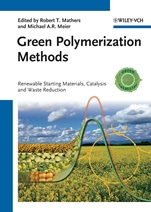
Green Polymerization Methods: Renewable Starting Materials, Catalysis and Waste Reduction
ISBN 9783527326259
Autor: Robert T. Mathers, Michael A. R. Meier
Wydawca: Wiley
Dostępność: 3-6 tygodni
Cena: 801,15 zł
Przed złożeniem zamówienia prosimy o kontakt mailowy celem potwierdzenia ceny.
ISBN13: |
9783527326259 |
ISBN10: |
3527326251 |
Autor: |
Robert T. Mathers, Michael A. R. Meier |
Oprawa: |
Hardback |
Rok Wydania: |
2011-02-23 |
Ilość stron: |
380 |
Wymiary: |
248x171 |
Tematy: |
PN |
Designing polymers and developing polymerization processes that are safe, prevent pollution, and are more efficient in the use of materials and energy is an important topic in modern chemistry. Today, green polymer research can be seen increasingly in academia and industry. It tackles all aspects of polymers and polymerization–everything from chemical feedstocks, synthetic pathways, and reaction media to the nature of the final polymer as related to its inherent nontoxicity or degradability. This book summarizes and evaluates the latest developments in green polymerization methods. Specifically, new catalytic methods and processes which incorporate renewable resources will be discussed by leading experts in the field of polymer chemistry. This book is a must–have for Polymer Chemists, Chemists Working with / on Organometallics, Biochemists, Physical Chemists, Chemical Engineers, Biotechnologists, Materials Scientists, and Catalytic Chemists.
Spis treści:
List of Contributors.
Part I Introduction.
1 Why are Green Polymerization Methods Relevant to Society, Industry, and Academics? (Robert T. Mathers and Michael A. R. Meier).
1.1 Status and Outlook for Environmentally Benign Processes.
1.2 Importance of Catalysis.
1.3 Brief Summaries of Contributions.
References.
Part II Integration of Renewable Starting Materials.
2 Plant Oils as Renewable Feedstock for Polymer Science (Michael A. R. Meier).
2.1 Introduction.
2.2 Cross–Linked Materials.
2.3 Non–Cross–Linked Polymers.
2.4 Conclusion.
References.
3 Furans as Offsprings of Sugars and Polysaccharides and Progenitors of an Emblematic Family of Polymer Siblings (Alessandro Gandini).
3.1 Introduction.
3.2 First Generation Furans and their Conversion into Monomers.
3.3 Polymers from Furfuryl Alcohol.
3.4 Conjugated Polymers and Oligomers.
3.5 Polyesters.<
br>3.6 Polyamides.
3.7 Polyurethanes.
3.8 Furyl Oxirane.
3.9 Application of the Diels–Alder Reaction to Furan Polymers.
3.10 Conclusions.
References.
4 Selective Conversion of Glycerol into Functional Monomers via Catalytic Processes (François Jérôme and Joël Barrault).
4.1 Introduction.
4.2 Conversion of Glycerol into Glycerol Carbonate.
4.3 Conversion of Glycerol into Acrolein/Acrylic Acid.
4.4 Conversion of Glycerol into Glycidol.
4.5 Oxidation of Glycerol to Functional Carboxylic Acid.
4.6 Conversion of Glycerol into Acrylonitrile.
4.7 Selective Conversion of Glycerol into Propylene Glycol.
4.8 Selective Coupling of Glycerol with Functional Monomers.
4.9 Conclusion.
References.
Part III Sustainable Reaction Conditions.
5 Monoterpenes as Polymerization Solvents and Monomers in Polymer Chemistry (Robert T. Mathers and Stewart P. Lewis).
5.1 Introduction.
5.2 Monoterpenes as Monomers.
5.3 Monoterpenes as Solvents and Chain Transfer Agents.
5.4 Conclusion.
Acknowledgments.
References.
6 Controlled and Living Polymerization in Water: Modern Methods and Application to Bio–Synthetic Hybrid Materials (Debasis Samanta, Katrina Kratz, and Todd Emrick).
6.1 Introduction.
6.2 Ring–Opening Metathesis Polymerization (ROMP).
6.3 Living Free Radical Methods for Bio–Synthetic Hybrid Materials.
Acknowledgments.
References.
7 Towards Sustainable Solution Polymerization: Biodiesel as a Polymerization Solvent (Marc A. Dub´e and Somaieh Salehpour).
7.1 Introduction.
7.2 Solution Polymerization and Green Solvents.
7.3 Biodiesel as a Polymerization Solvent.
7.4 Experimental Section.
7.5 Effect of FAME Solvent on Polymerization Kinetics.
7.6 Effect of Biodiesel Feedstock.
7.7 Conclusion.
References.
Part IV Catalytic Processes.
8 Ring–Open
ing Polymerization of Renewable Six–Membered Cyclic Carbonates. Monomer Synthesis and Catalysis (Donald J. Darensbourg, Adriana I. Moncada, and Stephanie J. Wilson).
8.1 Introduction.
8.2 Preparation of 1,3–Propanediol from Renewable Resources.
8.3 Preparation of Dimethylcarbonate from Renewable Resources.
8.4 Synthesis of Trimethylene Carbonate.
8.5 Six–Membered Cyclic Carbonates: Thermodynamic Properties of Ring–Opening Polymerization.
8.6 Catalytic Processes Using Green Catalysts Methods.
8.7 Thermoplastic Elastomers and their Biodegradation Processes.
8.8 Concluding Remarks.
Acknowledgments.
References.
9 Poly(lactide)s as Robust Renewable Materials (Jan M. Becker and Andrew P. Dove).
9.1 Introduction.
9.2 Ring–Opening Polymerization of Lactide.
9.3 Poly(lactide) Properties.
9.4 Thermoplastic Elastomers.
9.5 Future Developments/Outlook.
References.
10 Synthesis of Saccharide–Derived Functional Polymers (Julian Thimm and Joachim Thiem).
10.1 Introduction.
10.2 Polyethers.
10.3 Polyamides.
10.4 Polyurethanes and Polyureas.
10.5 Glycosilicones.
References.
11 Degradable and Biodegradable Polymers by Controlled/Living Radical Polymerization: From Synthesis to Application (Nicolay V. Tsarevsky).
11.1 Introduction.
11.2 (Bio)degradable Polymers by CRP.
11.3 Conclusions.
Abbreviations.
References.
Part V Biomimetic Methods and Biocatalysis.
12 High–Performance Polymers from Phenolic Biomonomers (Tatsuo Kaneko).
12.1 Introduction.
12.2 Coumarates as Phytomonomers.
12.3 LC Properties of Homopolymers.
12.4 LC Copolymers for Biomaterials.
12.5 LC Copolymers for Photofunctional Polymers.
12.6 LC Copolymers for High Heat–Resistant Polymers.
12.7 Conclusion.
Acknowledgments.
References.
13 Enzymatic Polymer Synthesis in Green Ch
emistry (Andreas Heise and Inge van der Meulen).
13.1 Introduction.
13.2 Polymers.
13.3 Green Media for Enzymatic Polymerization.
13.4 Conclusions and Outlook.
References.
14 Green Cationic Polymerizations and Polymer Functionalization for Biotechnology (Judit E. Puskas, Chengching K. Chiang, and Mustafa Y. Sen).
14.1 Introduction.
14.2 Enzyme Catalysis.
14.3 "Green" Cationic Polymerizations and Polymer Functionalization Using Lipases.
14.4 Natural Rubber Biosynthesis – the Ultimate Green Cationic Polymerization.
14.5 Green Synthetic Cationic Polymerization and Copolymerization of Isoprene.
Acknowledgments.
References.
Index.
Nota biograficzna:
Robert T. Mathers graduated from North Carolina State University with a B.S. in chemistry. After working under the direction of Professor Roderic P. Quirk at The University of Akron, he obtained a PhD in Polymer Science in 2002. After two years of postdoctoral research at Cornell University with Professor Geoffrey W. Coates in the Department of Chemistry and Chemical Biology, he joined Pennsylvania State University. Currently, he is an Associate Professor of Chemistry at the New Kensington campus. His research interests focus on green polymerization methods that integrate renewable resources, such as monoterpenes, with catalysis. Robert has also served as coeditor for the Handbook of Transition Metal Polymerization Catalysts published by Wiley.
Michael A. R. Meier (born 1975) studied chemistry at the University of Regensburg and obtained his doctorate in 2006 from the Eindhoven University of Technology, for which he was awarded with the Golden Thesis Award of the Dutch Polymer Institute. In 2006 he was appointed principal investigator of the junior research group Renewable Raw Materials at the University of Applied Sciences in Emden, Germany. In June 2009 he became Juniorprofessor for Sustainable Organic S
ynthesis at the University of Potsdam, Germany. Since October 2010 he is full professor at the Karlsruhe Institute for Technology in Karlsruhe, Germany. In 2010 he was awarded with the European Young Lipid Scientist Award of European Federation for the Science and Technology of Lipids. His current research focuses on a sustainable use of plant oils and other renewable resources for the synthesis of novel monomers, fine chemicals, and polymers. He is an author of more than 70 journal publications and co–inventor on three patents.
Okładka tylna:
Designing polymers and developing polymerization processes that are safe, prevent pollution, and are more efficient in the use of materials and energy is an important topic in modern chemistry. Today, green polymer research can be seen increasingly in academia and industry. It tackles all aspects of polymers and polymerization–everything from chemical feedstocks, synthetic pathways, and reaction media to the nature of the final polymer as related to its inherent nontoxicity or degradability. This book summarizes and evaluates the latest developments in green polymerization methods. Specifically, new catalytic methods and processes which incorporate renewable resources will be discussed by leading experts in the field of polymer chemistry. This book is a must–have for Polymer Chemists, Chemists Working with / on Organometallics, Biochemists, Physical Chemists, Chemical Engineers, Biotechnologists, Materials Scientists, and Catalytic Chemists.
Koszyk
Książek w koszyku: 0 szt.
Wartość zakupów: 0,00 zł
Informacje


Kontakt
Gambit
Centrum Oprogramowania
i Szkoleń Sp. z o.o.
Al. Pokoju 29b/22-24
31-564 Kraków
Siedziba Księgarni
ul. Kordylewskiego 1
31-542 Kraków
+48 12 410 5991
+48 12 410 5987
+48 12 410 5989
Subskrypcje
Administratorem danych osobowych jest firma Gambit COiS Sp. z o.o. Na podany adres będzie wysyłany wyłącznie biuletyn informacyjny.
Autoryzacja płatności

Informacje na temat autoryzacji płatności poprzez PayU.

© Copyright 2012: GAMBIT COiS Sp. z o.o. Wszelkie prawa zastrzeżone.
Projekt i wykonanie: Alchemia Studio Reklamy