


Wydawcy
Katalog tematyczny
- Archeologia (109)
- Ekonomia, finanse, business (13704)
- Filozofia (1445)
- Historia (3040)
- Języki i językoznawstwo (2356)
- Lifestyle, hobby i rozrywka (475)
- Medycyna (9704)
- Nauki humanistyczne (4)
- Nauki o Ziemi i środowisku (2638)
- Nauki ścisłe (20412)
- Astronomia (294)
- Biologia (5119)
- Chemia (6540)
- Fizyka (3309)
- Elektryczność i magnetyzm (90)
- Fizyka atomowa i molekularna (110)
- Fizyka cząstek elementarnych (36)
- Fizyka jądra atomowego (36)
- Fizyka kwantowa (210)
- Fizyka matematyczna (121)
- Fizyka relatywistyczna (36)
- Fizyka statystyczna (51)
- Fizyka stosowana (498)
- Mechanika klasyczna (186)
- Optyka i światło (133)
- Stany materii (202)
- Matematyka (4574)
- Nauki ścisłe, ogólnie (503)
- Nauki społeczne (8486)
- Nauki techniczne (13450)
- Prawo (1696)
- Publikacje informacyjne i interdyscyplinarne (1288)
- Religia i wierzenia (917)
- Technika komputerowa (4067)
- Zdrowie, relacje międzyludzkie i rozwój osobisty (657)





Informacje szczegółowe o książce
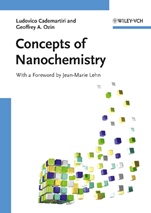
Concepts of Nanochemistry
ISBN 9783527325979
Autor: Ludovico Cademartiri, Geoffrey A. Ozin, Jean–Marie Lehn
Wydawca: Wiley
Dostępność: 3-6 tygodni
Cena: 308,70 zł
Przed złożeniem zamówienia prosimy o kontakt mailowy celem potwierdzenia ceny.
ISBN13: |
9783527325979 |
ISBN10: |
3527325972 |
Autor: |
Ludovico Cademartiri, Geoffrey A. Ozin, Jean–Marie Lehn |
Oprawa: |
Paperback |
Rok Wydania: |
2009-08-12 |
Ilość stron: |
282 |
Wymiary: |
242x175 |
Tematy: |
PH |
Authored by a rising star in the field and one of its pioneers, this textbook is ideal for interdisciplinary courses –– bridging chemistry, materials science, physics and biology. Adopting a completely new and visionary approach, this is a unique learning tool, focusing on just six concepts crucial for understanding nanochemistry: surface, size, shape, self–assembly, defects and the interface of biology and nanochemistry. These concepts are elucidated through the analysis of six materials representing the real life application of the nanochemistry concepts. The teaching questions included provide real "food for thought", thus training students to think as a researcher does and so develop problem–solving skills.
With a Foreword by Nobel Prize laureate Jean–Marie Lehn.
Additional material for lectures at www.wiley–vch.de/textbooks
Spis treści:
Foreword.
About the Authors.
Acknowledgments.
Introduction.
Nanochemistry –Why Should We Care?
What is Nanochemistry?
This Book –Instructions for Use.
References.
1 An Introduction to Nanochemistry Concepts.
1.1 Nanochemistry – What′s in a Name?
1.2 On the Surface of Things.
1.3 Size is Everything...Almost.
1.4 Shape.
1.5 Self–Assembly.
1.6 Two Words About Defects.
1.7 The Bio–Nano Interface.
1.8 Safety.
References.
2 Silica.
2.1 Introduction.
2.2 Surface.
2.3 Size.
2.4 Shape.
2.5 Self–Assembly.
2.6 Defects.
2.7 BioNano.
2.8 Conclusion.
2.9 Silica – NanoFood for Thought.
References.
3 Gold.
3.1 Introduction.
3.2 Surface.
3.3 Size.
3.4 Shape.
3.5 Self–Assembly.
3.6 Defects.
3.7 BioNano.
3.8 Gold – NanoFood for Thought.
References.
4 Polydimethylsiloxane.
4.1 Introduction.
4.2 Surface.
4.3 Size.
4.4 Shape.
4.5 Self–Assembly.
4.6 Defects.
4
.7 BioNano.
4.8 PDMS – NanoFood for Thought.
References.
5 Cadmium Selenide.
5.1 Introduction.
5.2 Surface.
5.3 Size.
5.4 Shape.
5.5 Self–Assembly.
5.6 Defects.
5.7 BioNano.
5.8 CdSe – NanoFood for Thought.
References.
6 Iron Oxide.
6.1 Introduction.
6.2 Surface.
6.3 Size.
6.4 Shape.
6.5 Self–Assembly.
6.6 Defects.
6.7 BioNano.
6.8 Iron Oxide – NanoFood for Thought.
References.
7 Carbon.
7.1 Introduction.
7.2 Surface.
7.3 Size.
7.4 Shape.
7.5 Self–Assembly.
7.6 BioNano.
7.7 Conclusion.
7.8 Carbon – NanoFood for Thought.
References.
8 Nanochemistry Case Histories.
8.1 Introduction.
8.2 Case #1.
8.3 Case #2.
8.4 Conclusions.
References.
9 Nanochemistry Diagnostics.
9.1 A Reference Sheet.
9.2 Microscopy Techniques.
9.3 Diffraction Techniques.
9.4 Spectroscopic Techniques.
9.5 Magnetic Techniques.
9.6 Separation Techniques.
9.7 Thermal Techniques.
9.8 Adsorption Techniques.
9.9 Electrical Techniques.
10 Challenges in Nanochemistry.
Referenes.
Index.
Nota biograficzna:
Ludovico Cademartiri studied materials science at the University of Parma, Italy, and chemistry at the University of Toronto, Canada. Currently he is postdoc in the group of George M. Whitesides at Harvard University. His research interests include nanocrystal chemistry, processing and self–assembly, contrast agents, mesoporous materials, photonic crystals, quasicrystals and soil science. Despite his young age he has already received two Graduate Student Awards from the Materials Research Society, the Canada Research Chair Graduate
Prize in Chemistry, the Canadian Society of Chemistry Prize for Graduate Work in Inorganic Chemistry, the American Chemical Society DIC Young Investigator Award and the Governor General Gold Medal, a prize confer
red annually to the three most academically accomplished graduate students of the University of Toronto. He is author of 16 publications in international journals, he gave numerous invited lectures and he is coauthor of two textbooks on nanochemistry.
Geoffrey A. Ozin studied chemistry at Kings College University of London and Oriel College University of Oxford. He is Government of Canada Research Chair in Materials Chemistry and Distinguished University Professor at the University of Toronto, Canada. He has made exceptionally important contributions to the fields of self–assembly, materials chemistry, biomimetics, photonic crystals, nanochemistry and nanomotors. The significance of his research has recently been recognized by Canada`s CIC SCI LeSueur Memorial Award, NSERC Inaugural Brockhouse Interdisciplinary Prize 2005, E.W.R. Steacie CSC Award 2002 and CIC Medal 2001, Germany`s Alexander von Humboldt Award 2005, and Britain`s RSC Materials Chemistry Award 2002. He serves on the editorial advisory board of journals such as Advanced Materials and Journal of Materials Chemistry and is an experienced book author. He has published 600 articles and obtained 10 US patents. His close ties with industry have resulted in numerous inventions and technology transfer. He is co–founder of Opalux, a Toronto company commercializing photonic crystal products that have emerged from his research. The ISI citation impact of his papers place his research in the top 100 and he is an ISI Top–Ten Materials Scientist 1996–2006.
Okładka tylna:
Authored by a rising star in the field and one of its pioneers, this textbook is ideal for interdisciplinary courses –– bridging chemistry, materials science, physics and biology. Adopting a completely new and visionary approach, this is a unique learning tool, focusing on just six concepts crucial for understanding nanochemistry: surface, size, shape, self–assembly, defects
and the interface of biology and nanochemistry. These concepts are elucidated through the analysis of six materials representing the real life application of the nanochemistry concepts. The teaching questions included provide real "food for thought", thus training students to think as a researcher does and so develop problem–solving skills.
With a Foreword by Nobel Prize laureate Jean–Marie Lehn.
Additional material for lectures at www.wiley–vch.de/textbooks
Koszyk
Książek w koszyku: 0 szt.
Wartość zakupów: 0,00 zł
Informacje


Kontakt
Gambit
Centrum Oprogramowania
i Szkoleń Sp. z o.o.
Al. Pokoju 29b/22-24
31-564 Kraków
Siedziba Księgarni
ul. Kordylewskiego 1
31-542 Kraków
+48 12 410 5991
+48 12 410 5987
+48 12 410 5989
Subskrypcje
Administratorem danych osobowych jest firma Gambit COiS Sp. z o.o. Na podany adres będzie wysyłany wyłącznie biuletyn informacyjny.
Autoryzacja płatności

Informacje na temat autoryzacji płatności poprzez PayU.

© Copyright 2012: GAMBIT COiS Sp. z o.o. Wszelkie prawa zastrzeżone.
Projekt i wykonanie: Alchemia Studio Reklamy