


Wydawcy
Katalog tematyczny
- Archeologia (109)
- Ekonomia, finanse, business (13704)
- Filozofia (1445)
- Historia (3040)
- Języki i językoznawstwo (2356)
- Lifestyle, hobby i rozrywka (475)
- Medycyna (9704)
- Nauki humanistyczne (4)
- Nauki o Ziemi i środowisku (2638)
- Nauki ścisłe (20412)
- Astronomia (294)
- Biologia (5119)
- Chemia (6540)
- Chemia analityczna (361)
- Chemia fizyczna (346)
- Chemia nieorganiczna (137)
- Chemia organiczna (535)
- Krystalografia (27)
- Minerologia (46)
- Fizyka (3309)
- Matematyka (4574)
- Nauki ścisłe, ogólnie (503)
- Nauki społeczne (8486)
- Nauki techniczne (13450)
- Prawo (1696)
- Publikacje informacyjne i interdyscyplinarne (1288)
- Religia i wierzenia (917)
- Technika komputerowa (4067)
- Zdrowie, relacje międzyludzkie i rozwój osobisty (657)





Informacje szczegółowe o książce
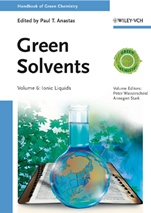
Green Solvents, Volume 6: Ionic Liquids
ISBN 9783527325924
Autor: Paul T. Anastas, Peter Wasserscheid, Annegret Stark
Wydawca: Wiley
Dostępność: 3-6 tygodni
Cena: 976,50 zł
Przed złożeniem zamówienia prosimy o kontakt mailowy celem potwierdzenia ceny.
ISBN13: |
9783527325924 |
ISBN10: |
3527325921 |
Autor: |
Paul T. Anastas, Peter Wasserscheid, Annegret Stark |
Oprawa: |
Hardback |
Rok Wydania: |
2013-08-14 |
Ilość stron: |
365 |
Wymiary: |
251x179 |
Tematy: |
PN |
Green chemistry is a vitally important subject area in the world where being as green and environmentally sound as possible is no longer a luxury but a necessity. Its applications include the design of chemical products and processes that help to reduce or eliminate the use and generation of hazardous substances. The Handbook of Green Chemistry comprises 12 volumes, split into subject–specific sets as follow: Set I: Green Catalysis Set II: Green Solvents • Volume 4: Supercritical Solvents • Volume 5: Reactions in Water • Volume 6: Ionic Liquids Set III: Green Processes Set IV: Green Products Ionic liquids are salts which are characterized – due to their special distribution of charges and due to their special shape of ions – by melting points below 100° C. Their unique property profiles allow them to be adapted and used for a wide range of applications. This book covers themes from the synthesis of ionic liquids, to specific uses (catalysis, separation technologies, adsorption chillers and lubricants) and includes actual case studies from industry.
Ionic Liquids and Green Chemistry – an Extended Preface XIII About the Editors XXI List of Contributors XXIII Part I Green Synthesis 1 1 The Green Synthesis of Ionic Liquids 3 Maggel Deetlefs and Kenneth R. Seddon 1.1 The Status Quo of Green Ionic Liquid Syntheses 3 1.2 Ionic Liquid Preparations Evaluated for Greenness 4 1.3 Which Principles of Green Chemistry are Relevant to Ionic Liquid Preparations? 6 1.4 Atom Economy and the E–factor 7 1.5 Strengths, Weaknesses, Opportunities, Threats (SWOT) Analyses 8 1.6 Conductive Heating Preparation of 1–Alkyl–3–methylimidazolium Halide Salts 8 1.7 Purification of 1–Alkyl–3–methylimidazolium Halide Salts 12 1.8 Ionic Liquid Syntheses Promoted by Microwave Irradiation 15 1.9 Syntheses of Ionic Liquids Promoted by Ultrasonic Irradiation 20 1.10 Simultaneous Use of Microwave and Ultrasonic Irradiation to Prepare Ionic Liquids 23 1.11 Preparation of Ionic Liquids Using Microreactors 25 1.12 Purification of Ionic Liquids with Non–halide Anions 28 1.13 Decolorization of Ionic Liquids 31 1.14 Conclusion 34 References 36 Part II Green Synthesis Using Ionic Liquids 39 2 Green Organic Synthesis in Ionic Liquids 41 Peter Wasserscheid and Joni Joni 2.1 General Aspects 41 2.2 Friedel–Crafts Alkylation 54 References 59 3 Transition Metal Catalysis in Ionic Liquids 65 Peter Wasserscheid 3.1 Solubility and Immobilization of Transition Metal Complexes in Ionic Liquids 65 3.2 Ionic Liquid–Catalyst Interaction 67 3.3 Distillative Product Isolation from Ionic Catalyst Solutions 70 3.4 New Opportunities for Biphasic Catalysis 72 3.5 Green Aspects of Nanoparticle and Nanocluster Catalysis in Ionic Liquids 75 3.6 Green Aspects of Heterogeneous Catalysis in Ionic Liquids 77 3.7 Green Chemistry Aspects of Hydroformylation Catalysis in Ionic Liquids 79 3.8 Conclusion 85 References 85 4 Ionic Liquids in the Manufacture of 5–Hydroxymethylfurfural from Saccharides. An Example of the Conversion of Renewable Resources to Platform Chemicals 93 Annegret Stark and Bernd Ondruschka 4.1 Introduction 93 4.2 HMF Manufacture 99 4.3 Goals of Study 105 4.4 HMF Manufacture in Ionic Liquids – Results of Detailed Studies in the Jena Laboratories 105 4.5 Conclusion 117 References 118 5 Cellulose Dissolution and Processing with Ionic Liquids 123 Uwe Vagt 5.1 General Aspects 123 5.2 Dissolution of Cellulose in Ionic Liquids 127 5.3 Rheological Behavior of Cellulose Solutions in Ionic Liquids 129 5.4 Regeneration of the Cellulose and Recycling of the Ionic Liquid 131 5.5 Cellulosic Fibers 131 5.6 Cellulose Derivatives 134 5.7 Fractionation of Biomass with Ionic Liquids 134 5.8 Conclusion and Outlook 135 References 135 Part III Ionic Liquids in Green Engineering 137 6 Green Separation Processes with Ionic Liquids 139 Wytze (G. W.) Meindersma, Ferdy (S. A. F.) Onink, and André B. de Haan 6.1 Introduction 139 6.2 Liquid Separations 141 6.3 Environmental Separations 158 6.4 Combination of Separations in the Liquid Phase with Membranes 163 6.5 Gas Separations 164 6.6 Engineering Aspects 168 6.7 Design of a Separation Process 172 6.8 Conclusions 175 References 176 7 Applications of Ionic Liquids in Electrolyte Systems 191 William R. Pitner, Peer Kirsch, Kentaro Kawata, and Hiromi Shinohara 7.1 Introduction 191 7.2 Electrolyte Properties of Ionic Liquids 193 7.3 Electrochemical Stability 196 7.4 Dye–sensitized Solar Cells 198 References 200 8 Ionic Liquids as Lubricants 203 Marc Uerdingen 8.1 Introduction 203 8.2 Why Are Ionic Liquids Good Lubricants? 204 8.3 Applications, Conclusion and Future Challenges 217 References 218 9 New Working Pairs for Absorption Chillers 221 Matthias Seiler and Peter Schwab 9.1 Introduction 221 9.2 Absorption Chillers 222 9.3 Requirements and Challenges 223 9.4 State of the Art and Selected Results 226 9.5 Abbreviations 228 References 228 Part IV Ionic Liquids and the Environment 233 10 Design of Inherently Safer Ionic Liquids: Toxicology and Biodegradation 235 Marianne Matzke, Jürgen Arning, Johannes Ranke, Bernd Jastorff, and Stefan Stolte 10.1 Introduction 235 10.2 (Eco)toxicity of Ionic Liquids 239 10.3 Biodegradability of Ionic Liquids 265 10.4 Conclusion 290 References 295 11 Eco–efficiency Analysis of an Industrially Implemented Ionic Liquid–based Process – the BASF BASIL Process 299 Peter Saling, Matthias Maase, and Uwe Vagt 11.1 The Eco–efficiency Analysis Tool 299 11.2 The Methodological Approach 299 11.3 The Design of the Eco–efficiency Study of BASIL 303 11.4 Selected Single Results 304 11.5 The Creation of the Eco–efficiency Portfolio 309 11.6 Scenario Analysis 311 11.7 Conclusion 312 11.8 Outlook 313 References 314 12 Perspectives of Ionic Liquids as Environmentally Benign Substitutes for Molecular Solvents 315 Denise Ott, Dana Kralisch, and Annegret Stark 12.1 Introduction 315 12.2 Evaluation and Optimization of R&D Processes: Developing a Methodology 317 12.3 Assessment of Ionic Liquid Synthesis – Case Studies 322 12.4 Assessment of the Application of Ionic Liquids in Contrast to Molecular Solvents 329 12.5 Conclusions 335 References 336 Index 341
Paul T. Anastas joined Yale University as Professor and iserves as the Director of the Center for Green Chemistry and Green Engineering at Yale. From 2004–2006, Paul Anastas has been the Director of the Green Chemistry Institute in Washington, D.C. Until June of 2004 he served as Assistant Director for Environment at e White House Office of Science and Technology Policy where his responsibilities included a wide range of environmental science issues including furthering international public–private cooperation in areas of Science for Sustainability such as Green Chemistry. In 1991, he established the industry–government–university partnership Green Chemistry Program, which was expanded to include basic research, and the Presidential Green Chemistry Challenge Awards. He has published and edited several books in the field of Green Chemistry and developed the 12 principles of Green Chemistry.
Koszyk
Książek w koszyku: 0 szt.
Wartość zakupów: 0,00 zł
Informacje


Kontakt
Gambit
Centrum Oprogramowania
i Szkoleń Sp. z o.o.
Al. Pokoju 29b/22-24
31-564 Kraków
Siedziba Księgarni
ul. Kordylewskiego 1
31-542 Kraków
+48 12 410 5991
+48 12 410 5987
+48 12 410 5989
Subskrypcje
Administratorem danych osobowych jest firma Gambit COiS Sp. z o.o. Na podany adres będzie wysyłany wyłącznie biuletyn informacyjny.
Autoryzacja płatności

Informacje na temat autoryzacji płatności poprzez PayU.

© Copyright 2012: GAMBIT COiS Sp. z o.o. Wszelkie prawa zastrzeżone.
Projekt i wykonanie: Alchemia Studio Reklamy