


Wydawcy
Katalog tematyczny
- Archeologia (109)
- Ekonomia, finanse, business (13704)
- Filozofia (1445)
- Historia (3040)
- Języki i językoznawstwo (2356)
- Lifestyle, hobby i rozrywka (475)
- Medycyna (9704)
- Nauki humanistyczne (4)
- Nauki o Ziemi i środowisku (2638)
- Nauki ścisłe (20412)
- Astronomia (294)
- Biologia (5119)
- Chemia (6540)
- Chemia analityczna (361)
- Chemia fizyczna (346)
- Chemia nieorganiczna (137)
- Chemia organiczna (535)
- Krystalografia (27)
- Minerologia (46)
- Fizyka (3309)
- Matematyka (4574)
- Nauki ścisłe, ogólnie (503)
- Nauki społeczne (8486)
- Nauki techniczne (13450)
- Prawo (1696)
- Publikacje informacyjne i interdyscyplinarne (1288)
- Religia i wierzenia (917)
- Technika komputerowa (4067)
- Zdrowie, relacje międzyludzkie i rozwój osobisty (657)





Informacje szczegółowe o książce
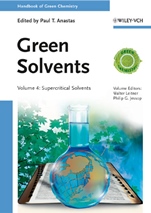
Green Solvents, Volume 4: Supercritical Solvents
ISBN 9783527325900
Autor: Paul T. Anastas, Walter Leitner, Philip G. Jessop
Wydawca: Wiley
Dostępność: 3-6 tygodni
Cena: 976,50 zł
Przed złożeniem zamówienia prosimy o kontakt mailowy celem potwierdzenia ceny.
ISBN13: |
9783527325900 |
ISBN10: |
3527325905 |
Autor: |
Paul T. Anastas, Walter Leitner, Philip G. Jessop |
Oprawa: |
Hardback |
Rok Wydania: |
2013-08-14 |
Ilość stron: |
508 |
Wymiary: |
247x177 |
Tematy: |
PN |
Green Chemistry is a vitally important subject area in a world where being as green and environmentally sound as possible is no longer a luxury but a necessity. Its applications include the design of chemical products and processes that help to reduce or eliminate the use and generation of hazardous substances. The Handbook of Green Chemistry comprises 12 volumes, split into subject–specific sets as follows: Set I: Green Catalysis Set II: Green Solvents • Volume 4: Supercritical Solvents • Volume 5: Reactions in Water • Volume 6: Ionic Liquids Set III: Green Processes Set IV: Green Products Supercritical Fluids (SCFs) and Gas–Expanded Liquids (GXLs) are of great interest in green chemistry because either they are nontoxic and non–polluting solvents (like carbon dioxide or water) or they help one to avoid harmful intermediates through new processing routes. This book examines the use of SCFs and GXLs in catalysis, polymerization and many other major reactions and processes where avoiding the use of a hazardous solvent is beneficial for the environment and the economy. The additional control parameters resulting from the unique physiochemical properties of solvents are discussed and highlighted with numerous examples from the current literature and applications.
Foreword V Preface XV About the editors XIX List of Contributors XXI 1 Introduction 1 Philip Jessop and Walter Leitner 1.1 What is a Supercritical Fluid (SCF)? 1 1.2 Practical Aspects of Reactions in Supercritical Fluids 4 1.3 The Motivation for Use of SCFs in Modern Chemical Synthesis 6 1.4 The History and Applications of SCFs 9 2 High–pressure Methods and Equipment 31 Nils Theyssen, Katherine Scovell, and Martyn Poliakoff 2.1 Introduction 31 2.2 Infrastructure for High–pressure Experiments 32 2.3 High–pressure Reactors 34 2.4 Auxiliary Equipment and Handling 45 2.5 Dosage Under a High–pressure Regime 58 2.6 Further Regulations and Control in Flow Systems 64 2.7 Evaporation and Condensation 66 2.8 Complete Reactor Systems for Synthesis with SCFs 67 2.9 Conclusion 73 References 73 3 Basic Physical Properties, Phase Behavior and Solubility 77 Neil R. Foster, Frank P. Lucien, and Raffaella Mammucari 3.1 Introduction 77 3.2 Basic Physical Properties of Supercritical Fluids 77 3.3 Phase Behavior in High–Pressure Systems 86 3.4 Factors Affecting Solubility in Supercritical Fluids 92 4 Expanded Liquid Phases in Catalysis: Gas–expanded Liquids and Liquid–Supercritical Fluid Biphasic Systems 101 Ulrich Hintermair, Walter Leitner, and Philip Jessop 4.1 A Practical Classification of Biphasic Systems Consisting of Liquids and Compressed Gases for Multiphase Catalysis 101 4.2 Physical Properties of Expanded Liquid Phases 106 4.3 Chemisorption of Gases in Liquids and their Use for Synthesis and Catalysis 120 4.4 Using Gas–expanded Liquids for Catalysis 129 4.5 Why Perform Liquid–SCF Biphasic Reactions? 150 4.6 Biphasic Liquid–SCF Systems 159 4.7 Biphasic Reactions in Emulsions 172 References 175 5 Synthetic Organic Chemistry in Supercritical Fluids 189 Christopher M. Rayner, Paul M. Rose, and Douglas C. Barnes 5.1 Introduction 189 5.2 Hydrogenation in Supercritical Fluids 190 5.3 Hydroformylation and Related Reactions in Supercritical Fluids 202 5.4 Oxidation Reactions in Supercritical Fluids 205 5.5 Palladium–mediated Coupling Reactions in Supercritical Fluids 208 5.6 Miscellaneous Catalytic Reactions in Supercritical Fluids 214 5.7 Cycloaddition Reactions in Supercritical Fluids 221 5.8 Photochemical Reactions in Supercritical Fluids 224 5.9 Radical Reactions in Supercritical Fluids 228 5.10 Biotransformations in Supercritical Fluids 229 5.11 Conclusion 234 References 235 6 Heterogeneous Catalysis 243 Roger Gläser 6.1 Introduction and Scope 243 6.2 General Aspects of Heterogeneous Catalysis in SCFs and GXLs 244 6.3 Selected Examples of Heterogeneously Catalyzed Conversions in SCFs and GXLs 252 6.4 Outlook 273 References 274 7 Enzymatic Catalysis 281 Pedro Lozano, Teresa De Diego, and José L. Iborra 7.1 Enzymes in Non–aqueous Environments 281 7.2 Supercritical Fluids for Enzyme Catalysis 283 7.3 Enzymatic Reactions in Supercritical Fluids 285 7.4 Reaction Parameters in Supercritical Biocatalysis 289 7.5 Stabilized Enzymes for Supercritical Biocatalysis 292 7.6 Enzymatic Catalysis in IL–scCO2 Biphasic Systems 294 7.7 Future Trends 298 References 298 8 Polymerization in Supercritical Carbon Dioxide 303 Uwe Beginn 8.1 General Aspects 303 8.2 Polymerization in scCO2 315 8.3 Conclusion 352 References 353 9 Synthesis of Nanomaterials 369 Zhimin Liu and Buxing Han 9.1 Introduction 369 9.2 Metal and Semiconductor Nanocrystals 369 9.3 Metal Oxide Nanoparticles 377 9.4 Carbon Nanomaterials 383 9.5 Nanocomposites 385 9.6 Conclusion 393 References 394 10 Photochemical and Photo–induced Reactions in Supercritical Fluid Solvents 399 James M. Tanko 10.1 Introduction 399 10.2 Photochemical Reactions in Supercritical Fluid Solvents 403 10.3 Photo–initiated Radical Chain Reactions in Supercritical Fluid Solvents 410 10.4 Conclusion 414 References 415 11 Electrochemical Reactions 419 Patricia Ann Mabrouk 11.1 Introduction 419 11.2 Electrochemical Methods 419 11.3 Analytes 420 11.4 Electrolytes 421 11.5 Electrochemical Cell and Supercritical Fluid Delivery System 421 11.6 Electrodes 422 11.7 Solvents 423 11.8 Applications 429 11.9 Conclusion and Outlook 431 References 431 12 Coupling Reactions and Separation in Tunable Fluids: Phase Transfer–Catalysis and Acid–catalyzed Reactions 435 Pamela Pollet, Jason P. Hallett, Charles A. Eckert, and Charles L. Liotta 12.1 Introduction 435 12.2 Phase Transfer Catalysis 435 12.3 Near–critical Water 438 12.4 Alkylcarbonic Acids 448 12.5 Conclusion 453 References 454 13 Chemistry in Near– and Supercritical Water 457 Andrea Kruse and G. Herbert Vogel 13.1 Introduction 457 13.2 Properties 457 13.3 Synthesis Reactions 459 13.4 Biomass Conversion 465 13.5 Supercritical Water Oxidation (SCWO) 470 13.6 Inorganic Compounds in NSCW 471 13.7 Conclusion 472 13.8 Future Trends 473 References 473 Index 477
Series Editor: Paul T. Anastas joined Yale University as Professor and iserves as the Director of the Center for Green Chemistry and Green Engineering at Yale. From 2004–2006, Paul Anastas has been the Director of the Green Chemistry Institute in Washington, D.C. Until June of 2004 he served as Assistant Director for Environment at e White House Office of Science and Technology Policy where his responsibilities included a wide range of environmental science issues including furthering international public–private cooperation in areas of Science for Sustainability such as Green Chemistry. In 1991, he established the industry–government–university partnership Green Chemistry Program, which was expanded to include basic research, and the Presidential Green Chemistry Challenge Awards. He has published and edited several books in the field of Green Chemistry and developed the 12 principles of Green Chemistry. Volume Editors: Philip Jessop is the Canada Research Chair of Green Chemistry at Queen′s University in Kingston, Ontario, Canada. After his Ph.D. (Inorganic Chemistry, UBC, 1991) and a postdoctoral appointment at the University of Toronto, he took a contract research position in the Research Development Corp. of Japan under the supervision of Ryoji Noyori, investigating reactions in supercritical CO2. As a professor at the University of California–Davis (1996–2003) and then at Queen′s University, he has studied green solvents, the conversion of CO2 to useful products, and aspects of H2 chemistry. He has presented popular chemistry shows to thousands of members of the public. Distinctions include the Canadien Catalysis Lectureship Award (2004), a Canada Research Chair (2003 to present), and the NSERC Polanyi Award (2008). He has chaired the 2007 CHEMRAWN and ICCDU Conference on Green Chemistry, and serves as Technical Director of GreenCentre Canada. Walter Leitner was born in 1963. He obtained his Ph.D. with Prof. Henri Brunner at Regensburg University in 1989 and was a Postdoctoral Fellow with Prof. John M. Brown at the University of Oxford. After research within the Max–Planck–Society under the mentorship of Profs. Eckhard Dinjus (Jena) and Manfred T. Reetz (Mülheim), he was appointed Chair of Technical Chemistry and Petrochemistry at RWTH Aachen University in 2002 as successor to Prof. Willi Keim. Walter Leitner is External Scientific Member of the Max–Planck–Institut für Kohlenforschung and Scientific Director of CAT, the joint Catalysis Research Center of RWTH Aachen and the Bayer Company. His research interests are the molecular and reaction engineering principles of catalysis as a fundamental science and key technology for Green Chemistry. In particular, this includes the development and synthetic application of organometallic catalysts and the use of alternative reaction media, especially supercritical carbon dioxide, in multiphase catalysis. Walter Leitner has published more than 170 publications in this field and co–edited among others the first edition of "Synthesis using Supercritical Fluids" and the handbook on "Multiphase Homogeneous Catalysis". Since 2004, he serves as the Scientific Editor of the Journal "Green Chemistry" published by the Royal Society of Chemistry. The research of his team has been recognized with several awards including the Gerhard–Hess–Award of the German Science Foundation (1997), the Otto–Roelen–Medal of Dechema (2001), and the Wöhler–Award of the German Chemical Society (2009).
Koszyk
Książek w koszyku: 0 szt.
Wartość zakupów: 0,00 zł
Informacje


Kontakt
Gambit
Centrum Oprogramowania
i Szkoleń Sp. z o.o.
Al. Pokoju 29b/22-24
31-564 Kraków
Siedziba Księgarni
ul. Kordylewskiego 1
31-542 Kraków
+48 12 410 5991
+48 12 410 5987
+48 12 410 5989
Subskrypcje
Administratorem danych osobowych jest firma Gambit COiS Sp. z o.o. Na podany adres będzie wysyłany wyłącznie biuletyn informacyjny.
Autoryzacja płatności

Informacje na temat autoryzacji płatności poprzez PayU.

© Copyright 2012: GAMBIT COiS Sp. z o.o. Wszelkie prawa zastrzeżone.
Projekt i wykonanie: Alchemia Studio Reklamy