


Wydawcy
Katalog tematyczny
- Archeologia (109)
- Ekonomia, finanse, business (13704)
- Filozofia (1445)
- Historia (3040)
- Języki i językoznawstwo (2356)
- Lifestyle, hobby i rozrywka (475)
- Medycyna (9704)
- Nauki humanistyczne (4)
- Nauki o Ziemi i środowisku (2638)
- Nauki ścisłe (20412)
- Astronomia (294)
- Biologia (5119)
- Chemia (6540)
- Chemia analityczna (361)
- Chemia fizyczna (346)
- Chemia nieorganiczna (137)
- Chemia organiczna (535)
- Krystalografia (27)
- Minerologia (46)
- Fizyka (3309)
- Matematyka (4574)
- Nauki ścisłe, ogólnie (503)
- Nauki społeczne (8486)
- Nauki techniczne (13450)
- Prawo (1696)
- Publikacje informacyjne i interdyscyplinarne (1288)
- Religia i wierzenia (917)
- Technika komputerowa (4067)
- Zdrowie, relacje międzyludzkie i rozwój osobisty (657)





Informacje szczegółowe o książce
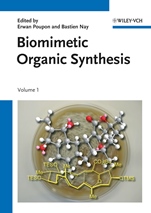
Biomimetic Organic Synthesis: 2 Volume Set
ISBN 9783527325801
Autor: Erwan Poupon, Bastien Nay
Wydawca: Wiley
Dostępność: 3-6 tygodni
Cena: 2 017,05 zł
Przed złożeniem zamówienia prosimy o kontakt mailowy celem potwierdzenia ceny.
ISBN13: |
9783527325801 |
ISBN10: |
3527325808 |
Autor: |
Erwan Poupon, Bastien Nay |
Oprawa: |
Hardback |
Rok Wydania: |
2011-04-20 |
Ilość stron: |
1024 |
Wymiary: |
248x180 |
Tematy: |
PN |
Biomimetic organic synthesis transposes the efficiency of nature′s chemistry into the laboratory. Natural products (also known as secondary metabolites) are among the best examples of how nature can assemble atoms into highly complex structures. Therefore, biomimetic total syntheses of natural products (in which biosynthesis considerations guide the synthetic strategy) constitute the major focus of this book, with emphasis on the developments of the last 10 to 15 years. Important key definitions and general concepts are described in a tutorial way and additional chapters develop some frontier fields that may benefit to or from biomimetic synthesis. The book has been organized according to the main biosynthetic pathways:
Volume 1: alkaloids derived from ornithine, arginine, lysine, tyrosine, tryptophane; manzamine alkaloids; pyrrole–2–aminoimidazole and guanidinium alkaloids; peptide alkaloids; alkaloids with a non–amino acid origin.
Volume 2: Terpenoids and polyprenylated compounds; polyketides: aromatic, non aromatic, polyethers, electrocyclization pathways, lignans, resveratrol–derived and tannin polyphenols; frontiers in biomimetic organic synthesis: Diels–Alderases, transfer hydrogenations, life′s single chirality, artifacts in natural product chemistry.
This two–volume book is made up of 24 contributions from 33 authors. Graduate students, teachers and researchers in the fields of organic and bio–organic chemistry, who enjoy total syntheses, synthetic strategies and biosyntheses, will be the happy users of this book.
Spis treści:
Contents to Volume 1.
Preface.
List of Contributors.
Biomimetic Organic Synthesis: an Introduction (Bastien Nay and Erwan Poupon).
Part I Biomimetic Total Synthesis of Alkaloids.
1 Biomimetic Synthesis of Ornithine/Arginine and Lysine–Derived Alkaloids: Selected Examples (
Erwan Poupon, Rim Salame, and Lok–Hang Yan).
1.1 Ornithine/Arginine and Lysine: Metabolism Overview.
1.2 Biomimetically Related Chemistry of Ornithine– and Lysine–Derived Reactive Units.
1.3 Biomimetic Synthesis of Alkaloids Derived from Ornithine and Arginine.
1.4 Biomimetic Synthesis of Alkaloids Derived from Lysine.
1.5 Pelletierine–Based Metabolism.
2 Biomimetic Synthesis of Alkaloids Derived from Tyrosine: The Case of FR–901483 and TAN–1251 Compounds (Huan Liang and Marco A. Ciufolini).
2.1 Introduction.
2.2 Biomimetic Total Syntheses of FR–901483 and TAN–1251 Compounds.
2.3 Oxidative Amidation of Phenols.
2.4 Biomimetic Syntheses of FR–901483 and TAN–1251 Compounds via Oxidative Amidation Chemistry and Related Processes.
3 Biomimetic Synthesis of Alkaloids Derived from Tryptophan: Indolemonoterpene Alkaloids (Sylvie Michel and Francois Tillequin).
3.1 Introduction.
3.2 Biomimetic Synthesis of Indolomonoterpene Alkaloids with a Non–rearranged Monoterpene Unit: Aristotelia Alkaloids.
3.3 Biomimetic Synthesis of Secologanin–Derived Indolomonoterpene Alkaloids.
3.4 Biomimetic Synthesis of Secologanin–Derived Quinoline Alkaloids.
3.5 Biomimetic Synthesis of Dimeric Indolomonoterpene Alkaloids.
3.6 Conclusion.
4 Biomimetic Synthesis of Alkaloids Derived from Tryptophan: Dioxopiperazine Alkaloids (Timothy R. Welch and Robert M. Williams).
4.1 Introduction.
4.2 Prenylated Indole Alkaloids.
4.3 Non–prenylated Indole Alkaloids.
4.4 Conclusion.
5 Biomimetic Synthesis of Alkaloids with a Modified Indole Nucleus (Tanja Gaich and Johann Mulzer).
5.1 Introduction.
5.2 Individual Examples.
5.3 Conclusion.
6 Biomimetic Synthesis of Manzamine Alkaloids (Romain Duval and Erwan Poupon).
6.1 Introd
uction.
6.2 Two Complementary Hypotheses: An "Acrolein Scenario" and a "Malondialdehyde Scenario".
6.3 Biomimetic Synthesis of Pyridinium Marine Sponge Alkaloids.
6.4 Development of Baldwin’s Hypothesis: From Cyclostellettamines to Keramaphidin–Type Alkaloids.
6.5 "Malondialdehyde Scenario:" A Modified Hypothesis Placing Aminopentadienals as Possible Precursors of Manzamine Alkaloids.
6.6 Testing the Modified Hypothesis in the Laboratory.
6.7 Biomimetic Approaches toward Other Manzamine Alkaloids.
6.8 A Biomimetic Tool–Box for the Synthesis of Manzamine Alkaloids: Glutaconaldehydes and Aminopentadienals.
6.9 Biosynthesis of Manzamine Alkaloids: Towards a Universal Scenario.
6.10 Total Syntheses of Manzamine–Type Alkaloids.
6.11 Conclusion.
7 Biomimetic Synthesis of Marine Pyrrole–2–Aminoimidazole and Guanidinium Alkaloids (Jerome Appenzeller and Ali Al–Mourabit).
7.1 Introduction.
7.2 Ground Work of George B¨uchi: Dibromophakellin (7) Synthesis from Dihydrooroidin (31).
7.3 Biomimetic Synthesis of P–2–AI Linear and Polycyclic Monomers.
7.4 Biomimetic Synthesis of P–2–AIs Simple Dimers.
7.5 Biomimetic Synthesis of Complex Dimers: Palau’amine and Related Congeners.
7.6 New Challenging P–2–AI Synthetic Targets and Perspectives.
8 Biomimetic Syntheses of Alkaloids with a Non–Amino Acid Origin (Edmond Gravel).
8.1 Introduction.
8.2 Galbulimima Alkaloids.
8.3 Cyclic Imine Marine Alkaloids.
8.4 Other Polyketide Derived Alkaloids.
8.5 Alkaloids Derived from Terpene Precursors.
8.6 Conclusion.
9 Biomimetic Synthesis of Azole– and Aryl–Peptide Alkaloids (Hans–Dieter Arndt, Roman Lichtenecker, Patrick Loos, and Lech–Gustav Milroy).
9.1 Introduction.
9.2 Azole–Containing Peptide Alkaloids.
9.3 Pepti
de Alkaloids Cyclized by Oxidation of Aryl Side Chains.
10 Biomimetic Synthesis of Indole–Oxidized and Complex Peptide Alkaloids (Hans–Dieter Arndt, Lech–Gustav Milroy, and Stefano Rizzo).
10.1 Indole–Oxidized Cyclopeptides.
10.2 A Complex Peptide Alkaloid: Ecteinascidine 743 (ET 743).
10.3 Outlook.
Contents to Volume 2.
Part II Biomimetic Synthesis of Terpenoids and Polyprenylated Natural Compounds.
11 Biomimetic Rearrangements of Complex Terpenoids (Bastien Nay and Laurent Evanno).
12 Polyprenylated Phloroglucinols and Xanthones (Marianna Dakanali and Emmanuel A. Theodorakis).
Part III Biomimetic Synthesis of Polyketides.
13 Polyketide Assembly Mimics and Biomimetic Access to Aromatic Rings (Gr´egory Genta–Jouve, Sylvain Antoniotti, and Olivier P. Thomas).
14 Biomimetic Synthesis of Non–Aromatic Polycyclic Polyketides (Bastien Nay and Nassima Riache).
15 Biomimetic Synthesis of Polyether Natural Products via Polyepoxide Opening (Ivan Vilotijevic and Timothy F. Jamison).
16 Biomimetic Electrocyclization Reactions toward Polyketide–Derived Natural Products (James Burnley, Michael Ralph, Pallavi Sharma, and John E. Moses).
Part IV Biomimetic Synthesis of Polyphenols.
17 Biomimetic Synthesis and Related Reactions of Ellagitannins (Takashi Tanaka, Isao Kouno, and Gen–ichiro Nonaka).
18 Biomimetic Synthesis of Lignans (Craig W. Lindsley, Corey R. Hopkins, and Gary A. Sulikowski).
19 Synthetic Approaches to the Resveratrol–Based Family of Oligomeric Natural Products (Scott A. Snyder).
20 Sequential Reactions Initiated by Oxidative Dearomatization. Biomimicry or Artifact? (Stephen K. Jackson, Kun–Liang Wu, and Thomas R.R. Pet
tus).
Part V Frontiers in Biomimetic Chemistry: From Biological to Bio–inspired Processes.
21 The Diels–Alderase Never Ending Story (Atsushi Minami and Hideaki Oikawa).
22 Bio–Inspired Transfer Hydrogenations (Magnus Rueping, Fenja R. Schoepke, Iuliana Atodiresei, and Erli Sugiono).
23 Life′s Single Chirality: Origin of Symmetry Breaking in Biomolecules (Michael Mauksch and Svetlana B. Tsogoeva).
Part VI Conclusion: From Natural Facts to Chemical Fictions.
24 Artifacts and Natural Substances Formed Spontaneously (Pierre Champy).
Index.
Nota biograficzna:
Erwan Poupon obtained his PhD in Pharmacy under the supervision of Dr. Nicole Kunesch and Prof. Henri–Philippe Husson in 2000. He was subsequently a post–doctoral fellow at the University of California at San Diego – La Jolla with Prof. Emmanuel Theodorakis. He then joined the faculty at the Paris–Sud School of Pharmacy where he is now professor of pharmacognosy. His fields of interest relate to the chemistry of natural products, including biomimetic synthesis and chemical biology.
Bastien Nay followed pharmacy studies before completing his PhD under the guidance of Prof. Joseph Vercauteren at the School of Pharmacy of Bordeaux, France. Having obtained his academic degree in 2000, he joined Prof. Stephen Clark′s group as a research associate in the Unviersity of Nottingham, UK, and the Dr. Poupat team at the Institut de Chimie des Substances Naturelles (CNRS), Gif–sur–Yvette, France. In 2003 he was appointed research scientist at the CNRS, working at the National Museum of Natural History in Paris, where he is now responsible for the natural product chemistry team. His research interests concern the thotal synthesis of natural products and associated methodologies.
Okładka tylna:
Biomimetic organic synthesis transposes the efficiency of nature′s chemistry into the laboratory. Natural products (also known as secondary metabolites) are among the best examples of how nature can assemble atoms into highly complex structures. Therefore, biomimetic total syntheses of natural products (in which biosynthesis considerations guide the synthetic strategy) constitute the major focus of this book, with emphasis on the developments of the last 10 to 15 years. Important key definitions and general concepts are described in a tutorial way and additional chapters develop some frontier fields that may benefit to or from biomimetic synthesis. The book has been organized according to the main biosynthetic pathways:
Volume 1: alkaloids derived from ornithine, arginine, lysine, tyrosine, tryptophane; manzamine alkaloids; pyrrole–2–aminoimidazole and guanidinium alkaloids; peptide alkaloids; alkaloids with a non–amino acid origin.
Volume 2: Terpenoids and polyprenylated compounds; polyketides: aromatic, non aromatic, polyethers, electrocyclization pathways, lignans, resveratrol–derived and tannin polyphenols; frontiers in biomimetic organic synthesis: Diels–Alderases, transfer hydrogenations, life′s single chirality, artifacts in natural product chemistry.
This two–volume book is made up of 24 contributions from 33 authors. Graduate students, teachers and researchers in the fields of organic and bio–organic chemistry, who enjoy total syntheses, synthetic strategies and biosyntheses, will be the happy users of this book.
Koszyk
Książek w koszyku: 0 szt.
Wartość zakupów: 0,00 zł
Informacje


Kontakt
Gambit
Centrum Oprogramowania
i Szkoleń Sp. z o.o.
Al. Pokoju 29b/22-24
31-564 Kraków
Siedziba Księgarni
ul. Kordylewskiego 1
31-542 Kraków
+48 12 410 5991
+48 12 410 5987
+48 12 410 5989
Subskrypcje
Administratorem danych osobowych jest firma Gambit COiS Sp. z o.o. Na podany adres będzie wysyłany wyłącznie biuletyn informacyjny.
Autoryzacja płatności

Informacje na temat autoryzacji płatności poprzez PayU.

© Copyright 2012: GAMBIT COiS Sp. z o.o. Wszelkie prawa zastrzeżone.
Projekt i wykonanie: Alchemia Studio Reklamy