


Wydawcy
Katalog tematyczny
- Archeologia (109)
- Ekonomia, finanse, business (13704)
- Filozofia (1445)
- Historia (3040)
- Języki i językoznawstwo (2356)
- Lifestyle, hobby i rozrywka (475)
- Medycyna (9704)
- Nauki humanistyczne (4)
- Nauki o Ziemi i środowisku (2638)
- Nauki ścisłe (20412)
- Astronomia (294)
- Biologia (5119)
- Chemia (6540)
- Chemia analityczna (361)
- Chemia fizyczna (346)
- Chemia nieorganiczna (137)
- Chemia organiczna (535)
- Krystalografia (27)
- Minerologia (46)
- Fizyka (3309)
- Matematyka (4574)
- Nauki ścisłe, ogólnie (503)
- Nauki społeczne (8486)
- Nauki techniczne (13450)
- Prawo (1696)
- Publikacje informacyjne i interdyscyplinarne (1288)
- Religia i wierzenia (917)
- Technika komputerowa (4067)
- Zdrowie, relacje międzyludzkie i rozwój osobisty (657)





Informacje szczegółowe o książce
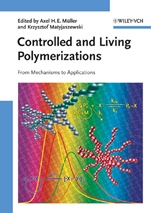
Controlled and Living Polymerizations: From Mechanisms to Applications
ISBN 9783527324927
Autor: Krzysztof Matyjaszewski, Axel H. E. Müller
Wydawca: Wiley
Dostępność: 3-6 tygodni
Cena: 882,00 zł
Przed złożeniem zamówienia prosimy o kontakt mailowy celem potwierdzenia ceny.
ISBN13: |
9783527324927 |
ISBN10: |
3527324925 |
Autor: |
Krzysztof Matyjaszewski, Axel H. E. Müller |
Oprawa: |
Hardback |
Rok Wydania: |
2009-08-19 |
Ilość stron: |
634 |
Wymiary: |
250x180 |
Tematy: |
PN |
Written by a highly prestigious and knowledgeable team of top scientists in the field, this book provides an overview of the current status of controlled/living polymerization, combining the synthetic, mechanistic and application–oriented aspects.
From the contents:
∗ Anionic Vinyl Polymerization
∗ Carbocationic Polymerization
∗ Radical Polymerization
∗ Coordination Polymerization of Olefins
∗ Ring–Opening Polymerization of Heterocycles
∗ Ring–Opening Metathesis Polymerization
∗ Macromolecular Architectures
∗ Complex Functional Macromolecules
∗ Synthesis of Block and Graft Copolymers
∗ Bulk and Solution Structures of Block Copolymers
∗ Industrial Applications
While some of the material is based on chapters taken from the four–volume work "Macromolecular Engineering", it is completely updated and rewritten to reflect the focus of this monograph.
Must–have knowledge for polymer and organic chemists, plastics technologists, materials scientists and chemical engineers.
Spis treści:
Preface.
List of Contributors.
1 Anionic Vinyl Polymerization (Durairaj Baskaran and Axel H. E. Müller).
1.1 Introduction.
1.2 Structure of Carbanions.
1.3 Initiation.
1.4 Mechanism of Styrene and Diene Polymerization.
1.5 Mechanism of Anionic Polymerization of Acrylic Monomers.
1.6 Some Applications of Anionic Polymerization.
1.7 Conclusions and Outlook.
References.
2 Carbocationic Polymerization (Priyadarsi De and Rudolf Faust).
2.1 Introduction.
2.2 Mechanistic and Kinetic Details of Living Cationic Polymerization.
2.3 Living Cationic Polymerization.
2.4 Functional Polymers by Living Cationic Polymerization.
2.5 Telechelic Polymers.
2.6 Macromonomers.
2.7 Linear Diblock Copolymers.
2.8 Linear Triblock Copolymers.
2.9 Block Copoly
mers with Nonlinear Architecture.
2.10 Branched and Hyperbranched Polymers.
2.11 Surface Initiated Polymerization – Polymer Brushes.
2.12 Conclusions.
References.
3 Radical Polymerization (Krzysztof Matyjaszewski).
3.1 Introduction.
3.2 Typical Features of Radical Polymerization.
3.3 Controlled Reversible–Deactivation Radical Polymerization.
3.4 SFRP: NMP and OMRP Systems – Examples and Peculiarities.
3.5 ATRP – Examples and Peculiarities.
3.6 Degenerative Transfer Processes and RAFT.
3.7 Relative Advantages and Limitations of SFRP, ATRP, and DT Processes.
3.8 Controlled Polymer Architectures by CRP: Topology.
3.9 Chain Composition.
3.10 Functional Polymers.
3.11 Applications of Materials Prepared by CRP.
3.21 Outlook.
Acknowledgments.
References.
4 Living Transition Metal–Catalyzed Alkene Püolymerization: Polyolefin Synthesis and New Polymer Architectures (Joseph B. Edson, Gregory J. Domski, Jeffrey M. Rose, Andrew D. Bolig, Maurice Brookhart and Geoffrey W. Coates).
4.1 Introduction.
4.2 Living α–Olefin Polymerization.
4.3 Living Propylene Polymerization.
4.4 Living Polymerization of Ethylene.
4.5 Living Nonconjugated Diene Polymerization.
4.6 Living Homo– and Copolymerization of Cyclic Olefins.
4.7 Random Copolymers.
4.8 Block Copolymers.
4.9 Outlook and Summary.
References.
5 Living Ring–Opening Polymerization of Heterocyclic Monomers (Stanislaw Penczek, Marek Cypryk, Andrzej Duda, Pzemyslaw Kubisa and Stanislaw Slomkowski).
5.1 Introduction.
5.2 Anionic and Coordination Living Ring–Opening Polymerization (LROP).
5.3 Cationic CROP and LROP.
5.4 CROP and LROP Conducted in Dispersions.
5.5 Conclusions.
References.
6 Living Ring–Opening Metathesis Polymerization (Christopher W. Bielawski and Robert H. Grubbs).
6.1 Overview of Ring–Op
ening Metathesis Polymerization (ROMP).
6.2 Initiators for Living ROMP.
6.3 Applications of Polymers Synthesized using ROMP: From Novel Materials to Commercial Products.
6.4 Challenges and Perspectives for the Future.
6.5 Conclusion.
Acknowledgments.
References.
7 Macromolecular Architectures by Living and Controlled/Living Polymerizations (Nikos Hadjichristidis, Marinos Pitsikalis, Hermis Latrou and Georgios Sakellariou).
7.1 Introduction.
7.2 Star Polymers.
7.3 Comb Polymers.
7.4 Cyclic Polymers.
7.5 Dendritic Polymers.
7.6 Complex Macromolecular Architectures.
7.7 Applications.
7.8 Conclusions.
References.
8 Synthesis Of Block And Graft Copolymers (Constantinos Tsitsilianis).
8.1 Introduction.
8.2 Principles of Block Copolymerization.
8.3 ABA Triblock Copolymers.
8.4 (AB)n Linear Multiblock Copolymers.
8.5 ABC Triblock Terpolymers.
8.6 Synthesis of ABCA Tetra– and ABCBA Pentablock Terpolymers.
8.7 Synthesis of ABCD Quaterpolymers.
8.8 Graft Copolymers.
8.9 Applications.
8.10 Concluding Remarks.
References.
9 Morphologies in Block Copolymers (Volker Abetz, Adriana Boschetti–de–Fierro and Jean–François Gohy).
9.1 Introduction.
9.2 Block Copolymers in Bulk State.
9.3 Block Copolymer Thin Films.
9.4Block Copolymer Micelles.
9.5 Applications.
9.6 Summary and Outlook.
References.
10 Industrial Applications (Dale L Handlin Jr., David R. Hansen, Kathryn J. Wright and Scott R. Trenor).
10.1 Introduction.
10.2 Synthesis of Anionic Styrenic Block Copolymers.
10.3 Adhesives and Sealants.
10.4 Compounding Applications.
10.5 Polymer Modification.
10.6 Cross–Linked Systems.
10.7 Bitumen Modification.
10.8 Footwear.
10.9 Viscosity Modification and Other Highly Diluted SBC Applications.
10.10 Emerging Technology in Block Copolymers.<
br>References.
Index.
Nota biograficzna:
Axel H.E. Müller holds the Chair of Macromolecular Chemistry at Bayreuth University, Germany. He received his academic degrees in chemistry from the University of Mainz, Germany, with G.V. Schulz. His research focuses on the synthesis and self–organization of well–defined polymer structures by living/controlled techniques. Professor Müller has contributed over 300 publications in polymer science. He received the IUPAC World Polymer Congress MACRO 2004 award "Distinguished Polymer Scientist". In addition, he has been coordinator of various European research networks, organizer of international meetings and is Senior Editor of the journal Polymer.
Krzysztof Matyjaszewski is J.C. Warner Professor of Natural Sciences at Carnegie Mellon University in Pittsburgh, USA and also adjunct Professor at the Polish Academy of Sciences. His research focus is on macromolecular engineering, especially on the synthesis of well–defined copolymers using atom transfer radical polymerization and other controlled/living polymerization techniques. He is a member of the US National Academy of Engineering and the Polish Academy of Sciences and is the editor of the journals Progress in Polymer Science and Central European Journal of Chemistry. Professor Matyjaszewski authored 13 books, over 60 book chapters, more than 600 peer–reviewed publications and holds 38 US patents. He received several awards from the American Chemical Society, including the 2009 Presidential Award in Green Chemistry.
Okładka tylna:
Written by a highly prestigious and knowledgeable team of top scientists in the field, this book provides an overview of the current status of controlled/living polymerization, combining the synthetic, mechanistic and application–oriented aspects.
From the contents:
∗ Anionic Vinyl Polymerization
∗ Carbocationic Polymeri
zation
∗ Radical Polymerization
∗ Coordination Polymerization of Olefins
∗ Ring–Opening Polymerization of Heterocycles
∗ Ring–Opening Metathesis Polymerization
∗ Macromolecular Architectures
∗ Complex Functional Macromolecules
∗ Synthesis of Block and Graft Copolymers
∗ Bulk and Solution Structures of Block Copolymers
∗ Industrial Applications
While some of the material is based on chapters taken from the four–volume work "Macromolecular Engineering", it is completely updated and rewritten to reflect the focus of this monograph.
Must–have knowledge for polymer and organic chemists, plastics technologists, materials scientists and chemical engineers.
Koszyk
Książek w koszyku: 0 szt.
Wartość zakupów: 0,00 zł
Informacje


Kontakt
Gambit
Centrum Oprogramowania
i Szkoleń Sp. z o.o.
Al. Pokoju 29b/22-24
31-564 Kraków
Siedziba Księgarni
ul. Kordylewskiego 1
31-542 Kraków
+48 12 410 5991
+48 12 410 5987
+48 12 410 5989
Subskrypcje
Administratorem danych osobowych jest firma Gambit COiS Sp. z o.o. Na podany adres będzie wysyłany wyłącznie biuletyn informacyjny.
Autoryzacja płatności

Informacje na temat autoryzacji płatności poprzez PayU.

© Copyright 2012: GAMBIT COiS Sp. z o.o. Wszelkie prawa zastrzeżone.
Projekt i wykonanie: Alchemia Studio Reklamy