


Wydawcy
Katalog tematyczny
- Archeologia (109)
- Ekonomia, finanse, business (13704)
- Filozofia (1445)
- Historia (3040)
- Języki i językoznawstwo (2356)
- Lifestyle, hobby i rozrywka (475)
- Medycyna (9704)
- Nauki humanistyczne (4)
- Nauki o Ziemi i środowisku (2638)
- Nauki ścisłe (20412)
- Astronomia (294)
- Biologia (5119)
- Chemia (6540)
- Chemia analityczna (361)
- Chemia fizyczna (346)
- Chemia nieorganiczna (137)
- Chemia organiczna (535)
- Krystalografia (27)
- Minerologia (46)
- Fizyka (3309)
- Matematyka (4574)
- Nauki ścisłe, ogólnie (503)
- Nauki społeczne (8486)
- Nauki techniczne (13450)
- Prawo (1696)
- Publikacje informacyjne i interdyscyplinarne (1288)
- Religia i wierzenia (917)
- Technika komputerowa (4067)
- Zdrowie, relacje międzyludzkie i rozwój osobisty (657)





Informacje szczegółowe o książce
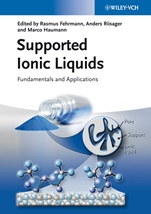
Supported Ionic Liquids: Fundamentals and Applications
ISBN 9783527324293
Autor: Rasmus Fehrmann, Anders Riisager, Marco Haumann
Wydawca: Wiley
Dostępność: 3-6 tygodni
Cena: 801,15 zł
Przed złożeniem zamówienia prosimy o kontakt mailowy celem potwierdzenia ceny.
ISBN13: |
9783527324293 |
ISBN10: |
3527324291 |
Autor: |
Rasmus Fehrmann, Anders Riisager, Marco Haumann |
Oprawa: |
Hardback |
Rok Wydania: |
2014-01-22 |
Ilość stron: |
496 |
Wymiary: |
247x174 |
Tematy: |
PN |
This book introduces the topic of supported ionic liquid materials and fundamentals, covering ionic liquids, porous supports, synthesis and characterization. The main part covers various applications, such as the catalytic production of bulk and fine chemicals, environmental processes, biotechnology, energy production and gas separation. In each case, the most pertinent authors available describe here the underlying research. The final part discusses the perspectives and outlook of these materials as well as describing some real life applications. The book is aimed at organic and inorganic chemists, industrial chemists, catalytic chemists, chemical engineers, biotechnologists, and materials scientists.
Preface XV List of Contributors XVII 1 Introduction 1 Rasmus Fehrmann, Marco Haumann, and Anders Riisager 1.1 A Century of Supported Liquids 1 1.2 Supported Ionic Liquids 2 1.3 Applications in Catalysis 5 1.4 Applications in Separation 5 1.5 Coating of Heterogeneous Catalysts 6 1.6 Monolayers of IL on Surfaces 7 1.7 Conclusion 7 References 8 Part I Concept and Building Blocks 11 2 Introducing Ionic Liquids 13 Tom Welton 2.1 Introduction 13 2.2 Preparation 13 2.3 Liquid Range 14 2.4 Structures 16 2.4.1 The Liquid/Solid Interface 17 2.4.2 The Liquid/Gas Interface 19 2.5 Physical Properties 20 2.5.1 The Liquid/Solid Interface 21 2.5.2 The Liquid/Gas Interface 21 2.5.3 Polarity 22 2.5.4 Chromatographic Measurements and the Abraham Model of Polarity 24 2.5.5 Infinite Dilution Activity Coefficients 24 2.6 Effects of Ionic Liquids on Chemical Reactions 26 2.7 Ionic Liquids as Process Solvents in Industry 29 2.8 Summary 30 References 31 3 Porous Inorganic Materials as Potential Supports for Ionic Liquids 37 Wilhelm Schwieger, Thangaraj Selvam, Michael Klumpp, and Martin Hartmann 3.1 Introduction 37 3.2 Porous Materials – an Overview 39 3.2.1 History 39 3.2.2 Pore Size 40 3.2.3 Structural Aspects 41 3.2.4 Chemistry 43 3.2.5 Synthesis 43 3.3 Silica–Based Materials – Amorphous 48 3.3.1 Silica Gels 48 3.3.2 Precipitated Silicas 49 3.3.3 Porous Glass 49 3.4 Layered Materials 51 3.5 Microporous Materials 52 3.5.1 Zeolites 52 3.5.2 AlPOs/SAPOs 54 3.5.3 Hierarchical Porosity in Zeolite Crystals 55 3.6 Ordered Mesoporous Materials 56 3.6.1 Silica–Based Classical Compounds 58 3.6.2 PMOs 60 3.6.3 Mesoporous Carbons 61 3.6.4 Other Mesoporous Oxides 61 3.6.5 Anodic Oxidized Materials 62 3.7 Structured Supports and Monolithic Materials 63 3.7.1 Monoliths with Hierarchical Porosity 64 3.7.2 Hierarchically Structured Reactors 65 3.8 Conclusions 66 References 66 4 Synthetic Methodologies for Supported Ionic Liquid Materials 75 Reinout Meijboom, Marco Haumann, Thomas E. M¨uller, and Normen Szesni 4.1 Introduction 75 4.2 Support Materials 76 4.3 Preparation Methods for Supported Ionic Liquids 77 4.3.1 Incipient Wetness Impregnation 77 4.3.2 Freeze–Drying 79 4.3.3 Spray Coating 80 4.3.4 Chemically Bound Ionic Liquids 82 4.3.5 IL–Silica Hybrid Materials 89 4.4 Summary 91 References 91 Part II Synthesis and Properties 95 5 Pore Volume and Surface Area of Supported Ionic Liquids Systems 97 Florian Heym, Christoph Kern, Johannes Thiessen, and Andreas Jess 5.1 Example I: [EMIM][NTf2] on Porous Silica 98 5.2 Example II: SCILL Catalyst (Commercial Ni catalyst) Coated with [BMIM][OcSO4] 99 Acknowledgments 103 Symbols 104 Abbreviations 104 References 104 6 Transport Phenomena, Evaporation, and Thermal Stability of Supported Ionic Liquids 105 Florian Heym, Christoph Kern, Johannes Thiessen, and Andreas Jess 6.1 Introduction 105 6.2 Diffusion of Gases and Liquids in ILs and Diffusivity of ILs in Gases 106 6.2.1 Diffusivity of Gases and Liquids in ILs 106 6.2.2 Diffusion Coefficient of Evaporated ILs in Gases 108 6.3 Thermal Stability and Vapor Pressure of Pure ILs 109 6.3.1 Drawbacks and Opportunities Regarding Stability and Vapor Pressure Measurements of ILs 109 6.3.2 Experimental Methods to Determine the Stability and Vapor Pressure of ILs 110 6.3.3 Data Evaluation and Modeling Methodology 110 6.3.3.1 Evaluation of Vapor Pressure and Decomposition of ILs by Ambient Pressure TG at Constant Heating Rate 110 6.3.3.2 Evaluation of Vapor Pressure of ILs by High Vacuum TG 114 6.3.4 Vapor Pressure Data and Kinetic Parameters of Decomposition of Pure ILs 116 6.3.4.1 Kinetic Data of Thermal Decomposition of Pure ILs 116 6.3.4.2 Vapor Pressure of Pure ILs 116 6.3.5 Guidelines to Determine the Volatility and Stability of ILs 118 6.3.6 Criteria for the Maximum Operation Temperature of ILs 118 6.3.6.1 Maximum Operation Temperature of ILs with Regard to Thermal Decomposition 118 6.3.6.2 Maximum Operation Temperature of ILs with Regard to Evaporation 120 6.4 Vapor Pressure and Thermal Decomposition of Supported ILs 120 6.4.1 Thermal Decomposition of Supported ILs 121 6.4.2 Mass Loss of Supported ILs by Evaporation 123 6.4.2.1 Evaporation of ILs Coated on Silica (SILP–System) 123 6.4.2.2 Evaporation of ILs Coated on a Ni–Catalyst (SCILL–System) 132 6.4.2.3 Evaluation of Internal Surface Area by the Evaporation Rate of Supported ILs 132 6.4.3 Criteria for the Maximum Operation Temperature of Supported ILs 134 6.4.3.1 Maximum Operation Temperature of Supported ILs with Regard to Thermal Stability 134 6.4.3.2 Maximum Operation Temperature of Supported ILs with Regard to Evaporation 135 6.5 Outlook 137 Acknowledgments 138 Symbols 138 Abbreviations 140 References 140 7 Ionic Liquids at the Gas–Liquid and Solid–Liquid Interface – Characterization and Properties 145 Zlata Grenoble and Steven Baldelli 7.1 Introduction 145 7.2 Characterization of Ionic Liquid Surfaces by Spectroscopic Techniques 146 7.2.1 Types of Interfacial Systems Involving Ionic Liquids 146 7.2.2 Overview of Surface Analytical Techniques for Characterization of Ionic Liquids 146 7.2.3 Structural and Orientational Analysis of Ionic Liquids at the Gas–Liquid Interface 147 7.2.3.1 Principles of Sum–Frequency Vibrational Spectroscopy 147 7.2.4 Cation–Specific Ionic Liquid Orientational Analysis 148 7.2.5 Anion–Specific Ionic Liquid Orientational Analysis 154 7.2.6 Ionic Liquid Interfacial Analysis by Other Surface–Specific Techniques 157 7.2.7 Ionic Liquid Effects on Surface Tension 162 7.2.8 Ionic Liquid Effects on Surface Charge Density 163 7.3 Orientation and Properties of Ionic Liquids at the Solid–Liquid Interface 165 7.3.1 Surface Orientational Analysis of Ionic Liquids on Dry Silica 165 7.3.2 Cation Orientational Analysis 166 7.3.3 Alkyl Chain Length Effects on Orientation 167 7.3.4 Competing Anions and Co–adsorption 168 7.3.5 Computational Simulations of Ionic Liquid on Silica 168 7.3.6 Ionic Liquids on Titania (TiO2) 170 7.4 Comments 172 References 173 8 Spectroscopy on Supported Ionic Liquids 177 Peter S. Schulz 8.1 NMR–Spectroscopy 178 8.1.1 Spectroscopy of Support and IL 178 8.1.2 Spectroscopy of the Catalyst 183 8.2 IR Spectroscopy 186 References 189 9 A Priori Selection of the Type of Ionic Liquid 191 Wolfgang Arlt and Alexander Buchele 9.1 Introduction and Objective 191 9.2 Methods 191 9.2.1 Experimental Determination of Gas Solubilities 192 9.2.1.1 Magnetic Suspension Balance 192 9.2.1.2 Isochoric Solubility Cell 194 9.2.1.3 Inverse Gas Chromatography 195 9.2.2 Prediction of Gas Solubilities with COSMO–RS 196 9.2.3 Reaction Equilibrium and Reaction Kinetics 197 9.3 Usage of COSMO–RS to Predict Solubilities in IL 198 9.4 Results of Reaction Modeling 201 9.5 Perspectives of the A Priori Selection of ILs 202 References 205 Part III Catalytic Applications 209 10 Supported Ionic Liquids as Part of a Building–Block System for Tailored Catalysts 211 Thomas E. M¨uller 10.1 Introduction 211 10.2 Immobilized Catalysts 212 10.3 Supported Ionic Liquids 214 10.4 The Building Blocks 215 10.4.1 Ionic Liquid 215 10.4.2 Support 216 10.4.3 Catalytic Function 218 10.4.3.1 Type A1 – Task Specific IL 219 10.4.3.2 Type A2 – Immobilized Homogeneous Catalysts and Metal Nanoparticles 219 10.4.3.3 Type B – Heterogeneous Catalysts Coated with IL 221 10.4.3.4 Type C – Chemically Bound Monolayers of IL 221 10.4.4 Additives and Promoters 222 10.4.5 Preparation and Characterization of Catalysts Involving Supported ILs 222 10.5 Catalysis in Supported Thin Films of IL 222 10.6 Supported Films of IL in Catalysis 223 10.6.1 Hydrogenation Reactions 224 10.6.2 Hydroamination 225 10.7 Advantages and Drawbacks of the Concept 228 10.8 Conclusions 229 Acknowledgments 229 References 229 11 Coupling Reactions with Supported Ionic Liquid Catalysts 233 Zhenshan Hou and Buxing Han 11.1 Introduction 233 11.2 A Short History of Supported Ionic Liquids 234 11.3 Properties of SIL 234 11.4 Application of SIL in Coupling Reactions 235 11.4.1 C–C Coupling Reactions 235 11.4.1.1 Stille Cross Coupling Reactions 235 11.4.1.2 Friedel–Crafts Alkylation 235 11.4.1.3 Olefin Hydroformylation Reaction 236 11.4.1.4 Methanol Carbonylation 237 11.4.1.5 Suzuki Coupling Reactions 237 11.4.1.6 Heck Coupling Reactions 239 11.4.1.7 Diels–Alder Cycloaddition 241 11.4.1.8 Mukaiyama reaction 242 11.4.1.9 Biglinelli Reaction 242 11.4.1.10 Olefin Metathesis Reaction 243 11.4.2 C–N Coupling Reaction 243 11.4.2.1 Hydroamination 243 11.4.2.2 N–Arylation of N–Containing Heterocycles 244 11.4.2.3 Huisgen [3+2] Cycloaddition 244 11.4.3 Miscellaneous Coupling Reaction 244 11.5 Conclusion 246 References 246 12 Selective Hydrogenation for Fine Chemical Synthesis 251 Pasi Virtanen, Eero Salminen, P¨aivi M¨aki–Arvela, and Jyri–Pekka Mikkola 12.1 Introduction 251 12.2 Selective Hydrogenation of α,β–Unsaturated Aldehydes 251 12.3 Asymmetric Hydrogenations over Chiral Metal Complexes Immobilized in SILCAs 257 12.4 Conclusions 261 References 261 13 Hydrogenation with Nanoparticles Using Supported Ionic Liquids 263 Jackson D. Scholten and Jairton Dupont 13.1 Introduction 263 13.2 MNPs Dispersed in ILs: Green Catalysts for Multiphase Reactions 264 13.3 MNPs Immobilized on Supported Ionic Liquids: Alternative Materials for Catalytic Reactions 267 13.4 Conclusions 275 References 275 14 Solid Catalysts with Ionic Liquid Layer (SCILL) 279 Wolfgang Korth and Andreas Jess 14.1 Introduction 279 14.2 Classification of Applications of Ionic Liquids in Heterogeneous Catalysis 280 14.3 Preparation and Characterization of the Physical Properties of the SCILL Systems 283 14.3.1 Preparation of SCILL Catalysts 283 14.3.2 Nernst Partition Coefficients 284 14.3.3 Pore Volume and Surface Area of the SCILL Catalyst with [BMIM][OcSO4] as IL 287 14.4 Kinetic Studies with SCILL Catalysts 287 14.4.1 Experimental 287 14.4.2 Hydrogenation of 1,5–Cyclooctadiene (COD) 288 14.4.2.1 Reaction Steps of 1,5–COD Hydrogenation on the Investigated Ni Catalyst 288 14.4.2.2 Influence of ILCoating of the Ni Catalyst on the Selectivity of COD Hydrogenation 288 14.4.2.3 Influence of IL Coating of the Catalyst on the Rate of COD Hydrogenation 291 14.4.2.4 Influence of Pore Diffusion on the Effective Rate of COD Hydrogenation 293 14.4.2.5 Influence of Pore Diffusion on the Selectivity of COD Hydrogenation 295 14.4.2.6 Stability of the IL Layer and Deactivation of IL–Coated Catalyst 297 14.4.3 Hydrogenation of Octine, Cinnamaldehyde, and Naphthalene with SCILL Catalysts 297 14.4.4 Hydrogenation of Citral with SCILL Catalysts 298 14.5 Conclusions and Outlook 300 Acknowledgments 300 Symbols Used 300 Greek Symbols 301 Abbreviations and Subscripts 301 References 302 15 Supported Ionic Liquid Phase (SILP) Materials in Hydroformylation Catalysis 307 Andreas Sch¨onweiz and Robert Franke 15.1 SILP Materials in Liquid–Phase Hydroformylation Reactions 307 15.2 Gas–Phase SILP Hydroformylation Catalysis 311 15.3 SILP Combined with scCO2 – Extending the Substrate Range 319 15.4 Continuous SILP Gas–Phase Methanol Carbonylation 322 15.5 Conclusion and Future Potential 323 References 324 16 Ultralow Temperature Water–Gas Shift Reaction Enabled by Supported Ionic Liquid Phase Catalysts 327 Sebastian Werner and Marco Haumann 16.1 Introduction to Water–Gas Shift Reaction 327 16.1.1 Heterogeneous WGS Catalysts 327 16.1.2 Homogeneous WGS Catalysts 329 16.2 Challenges 332 16.3 SILP Catalyst Development 332 16.4 Building–Block Optimization 333 16.4.1 Catalyst Precursor 334 16.4.2 Support Material 335 16.4.3 IL Variation 337 16.4.4 Catalyst Loading 338 16.4.5 IL Loading 339 16.4.6 Combination of Optimized Parameters 340 16.5 Application–Specific Testing 341 16.5.1 Restart Behavior 341 16.5.2 Industrial Support Materials 343 16.5.3 Elevated Pressure 345 16.5.4 Reformate Synthesis Gas Tests 346 16.6 Conclusion 348 References 348 17 Biocatalytic Processes Based on Supported Ionic Liquids 351 Eduardo Garc´ýa–Verdugo, Pedro Lozano, and Santiago V. Luis 17.1 Introduction and General Concepts 351 17.1.1 Enzymes and Ionic Liquids 351 17.1.2 Supported ILs for Biocatalytic Processes 353 17.1.3 Reactor Configurations with Supported ILs for Biocatalytic Processes 355 17.2 Biocatalysts Based on Supported Ionic Liquid Phases (SILPs) 356 17.3 Biocatalysts Based on Covalently Supported Ionic Liquid–Like Phases (SILLPs) 360 17.4 Conclusions/Future Trends and Perspectives 365 Acknowledgments 365 References 365 18 Supported Ionic Liquid Phase Catalysts with Supercritical Fluid Flow 369 Rub´en Duque and David J. Cole–Hamilton 18.1 Introduction 369 18.2 SILP Catalysis 369 18.2.1 Liquid–Phase Reactions 369 18.2.2 Gas–Phase Reactions 370 18.2.3 Supercritical Fluids 371 18.2.4 SCF IL Biphasic Systems 372 18.2.5 SILP Catalysis with Supercritical Flow 375 References 381 Part IV Special Applications 385 19 Pharmaceutically Active Supported Ionic Liquids 387 O. Andreea Cojocaru, Amal Siriwardana, Gabriela Gurau, and Robin D. Rogers 19.1 Active Pharmaceutical Ingredients in Ionic Liquid Form 387 19.2 Solid–Supported Pharmaceuticals 389 19.3 Silica Materials for Drug Delivery 389 19.4 Factors That Influence the Loading and Release Rate of Drugs 391 19.4.1 Adsorptive Properties (Pore Size, Surface Area, Pore Volume) of Mesoporous Materials 391 19.4.1.1 Pore Size 391 19.4.1.2 Surface Area 392 19.4.1.3 Pore Volume 392 19.4.2 Surface Functionalization of Mesoporous materials 392 19.4.3 Drug Loading Procedures 394 19.4.3.1 Covalent Attachment 394 19.4.3.2 Physical Trapping 394 19.4.3.3 Adsorption 395 19.5 SILPs Approach for Drug Delivery 395 19.5.1 ILs Confined on Silica 395 19.5.2 API–ILs Confined on Silica 396 19.5.2.1 Synthesis and Characterization of SILP Materials 396 19.5.2.2 Release Studies of the API–ILs from the SILP Materials 399 19.6 Conclusions 402 References 402 20 Supported Protic Ionic Liquids in Polymer Membranes for Electrolytes of Nonhumidified Fuel Cells 407 Tomohiro Yasuda and Masayoshi Watanabe 20.1 Introduction 407 20.2 Protic ILs as Electrolytes for Fuel Cells 409 20.2.1 Protic ILs 409 20.2.2 Thermal Stability of Protic IL 410 20.2.3 PILs Preferable for Fuel Cell Applications 411 20.3 Membrane Fabrication Including PIL and Fuel Cell Operation 411 20.3.1 Membrane Preparation 411 20.3.2 Fuel Cell Operation Using Supported PILs in Membranes 414 20.4 Proton Conducting Mechanism during Fuel Cell Operation 415 20.5 Conclusion 417 Acknowledgments 418 References 418 21 Gas Separation Using Supported Ionic Liquids 419 Marco Haumann 21.1 SILP Materials 419 21.1.1 SILP–Facilitated GC 423 21.2 Supported Ionic Liquid Membranes (SILMs) 428 21.2.1 Gas Separation 429 21.2.2 Gas Separation and Reaction 437 21.3 Conclusion 440 References 441 22 Ionic Liquids on Surfaces – a Plethora of Applications 445 Thomas J. S. Schubert 22.1 Introduction 445 22.2 The Influence of ILs on Solid–State Surfaces 445 22.3 Layers of ILs on Solid–State Surfaces 446 22.4 Selected Applications 446 22.5 Sensors 447 22.6 Electrochemical Double Layer Capacitors (Supercapacitors) 449 22.7 Dye Sensitized Solar Cells 451 22.8 Lubricants 452 22.9 Synthesis and Dispersions of Nanoparticles 453 References 454 Part V Outlook 457 23 Outlook – the Technical Prospect of Supported Ionic Liquid Materials 459 Peter Wasserscheid 23.1 Competitive Advantage 460 23.2 Observability 462 23.3 Trialability 462 23.4 Compatibility 463 23.5 Complexity 463 23.6 Perceived Risk 464 References 465 Index 467
Rasmus Fehrmann is Professor and head of the Centre for Catalysis and Sustainable Chemistry at the Department of Chemistry, Technical University of Denmark (DTU). After obtaining his PhD from DTU he was awarded university candidate– and senior scholarships as well as postdoctoral fellowships at the Institute of Catalysis in Novosibirsk (Russia), Université de Provence (France), and University of Patras (Greece), before taking up his present appointment. His main scientific achievements fall within the chemistry of sulfuric acid catalysts, environmental catalysis and ionic liquid fundamentals and applications including SLP and SILP technologies. He has authored over 130 scientific publications, 20 patent applications, and 400 oral or poster presentations at international conferences, and has been a board member of the Danish National Committee for Chemistry for over a decade. Anders Riisager is Associate Professor at the Centre for Catalysis and Sustainable Chemistry at the Department of Chemistry, Technical University of Denmark (DTU). He studied Chemistry at the University of Copenhagen (Denmark) and obtained his PhD in catalysis from DTU in 2002. Subsequently he acquired a three–year postdoctoral fellowship at RWTH–Aachen/University of Erlangen–Nuremberg (Germany) followed by a one–year Villum Kann Rasmussen postdoctoral fellowship at DTU, where he developed novel SILP catalysts and processes. He has authored more than 80 scientific publications and 20 patent applications, and received several honors including a nomination for the Degussa European Science–to–Business Award 2006 for SILP materials. His main scientific focus is the development of sustainable ionic liquid catalysis and separation technology. Marco Haumann has been a lecturer at the University of Erlangen–Nuremberg (FAU, Germany) since 2003. He studied Engineering and Chemistry at the universities of Dortmund and Berlin (Germany). After obtaining his PhD in 2001, he spent two years at the universities of Cape Town and Johannesburg (South Africa), developing novel catalysts in collaboration with Sasol Technology Pty Limited. From 2011 to the end of 2012, he was in charge of the establishment of the new FAU Branch Campus in Busan, South Korea. He has authored more than 40 scientific publications and was awarded the Arnold–Eucken prize of the Association of German Engineers (VDI–GVC) in 2011 for his contributions on SILP technology. His main scientific focus is the development of novel supported ionic liquid phase materials for catalysis and separation science.
Koszyk
Książek w koszyku: 0 szt.
Wartość zakupów: 0,00 zł
Informacje


Kontakt
Gambit
Centrum Oprogramowania
i Szkoleń Sp. z o.o.
Al. Pokoju 29b/22-24
31-564 Kraków
Siedziba Księgarni
ul. Kordylewskiego 1
31-542 Kraków
+48 12 410 5991
+48 12 410 5987
+48 12 410 5989
Subskrypcje
Administratorem danych osobowych jest firma Gambit COiS Sp. z o.o. Na podany adres będzie wysyłany wyłącznie biuletyn informacyjny.
Autoryzacja płatności

Informacje na temat autoryzacji płatności poprzez PayU.

© Copyright 2012: GAMBIT COiS Sp. z o.o. Wszelkie prawa zastrzeżone.
Projekt i wykonanie: Alchemia Studio Reklamy