


Wydawcy
Katalog tematyczny
- Archeologia (109)
- Ekonomia, finanse, business (13704)
- Filozofia (1445)
- Historia (3040)
- Języki i językoznawstwo (2356)
- Lifestyle, hobby i rozrywka (475)
- Medycyna (9704)
- Nauki humanistyczne (4)
- Nauki o Ziemi i środowisku (2638)
- Nauki ścisłe (20412)
- Astronomia (294)
- Biologia (5119)
- Chemia (6540)
- Chemia analityczna (361)
- Chemia fizyczna (346)
- Chemia nieorganiczna (137)
- Chemia organiczna (535)
- Krystalografia (27)
- Minerologia (46)
- Fizyka (3309)
- Matematyka (4574)
- Nauki ścisłe, ogólnie (503)
- Nauki społeczne (8486)
- Nauki techniczne (13450)
- Prawo (1696)
- Publikacje informacyjne i interdyscyplinarne (1288)
- Religia i wierzenia (917)
- Technika komputerowa (4067)
- Zdrowie, relacje międzyludzkie i rozwój osobisty (657)



Informacje szczegółowe o książce
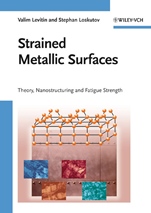
Strained Metallic Surfaces: Theory, Nanostructuring and Fatigue Strength
ISBN 9783527323449
Autor: Valim Levitin, Stephan Loskutov
Wydawca: Wiley
Dostępność: 3-6 tygodni
Cena: 827,40 zł
Przed złożeniem zamówienia prosimy o kontakt mailowy celem potwierdzenia ceny.
ISBN13: |
9783527323449 |
ISBN10: |
3527323449 |
Autor: |
Valim Levitin, Stephan Loskutov |
Oprawa: |
Hardback |
Rok Wydania: |
2008-12-10 |
Ilość stron: |
258 |
Wymiary: |
243x179 |
Tematy: |
PN |
Providing students as well as engineers and researchers with a must–have insight into the complexities of surface structure and behavior, this monograph extends beyond the usual introductory books, presenting concentrated knowledge on the surface science of metals, and connecting fundamentals with actual applications. Beginning with explanations of the intricacies of surfaces and their differences to bulk, it takes the reader through the vital steps towards macroscopic metallic components as well as surface nanostructuring. In so doing, it makes use of theory, experimental techniques, examples, and modeling to facilitate a firm understanding.
Spis treści:
Introduction.
1 Peculiarities of the Metallic Surface.
1.1 Surface Energy and Surface Stress.
1.2 Crystal Structure of a Surface.
1.3 Surface Defects.
1.4 Distribution of Electrons near the Surface.
1.4.1 Model of Free Electrons in Solids.
1.4.2 Semi–Infinite Chain.
1.4.3 Infinite Surface Barrier.
1.4.4 The Jellium Model.
1.5 Summary.
2 Some Experimental Techniques.
2.1 Diffraction Methods.
2.1.1 The Low–Energy Electron Diffraction Method.
2.1.2 The Reflection High–Energy Electron Diffraction Method.
2.1.3 The X–ray Measurement of Residual Stresses.
2.1.3.1 Foundation of the Method.
2.1.3.2 Experimental Installation and Precise Technique.
2.1.4 Calculation of Microscopic Stresses.
2.2 Distribution of Residual Stresses in Depth.
2.3 The Electronic Work Function.
2.3.1 Experimental Installation.
2.3.2 Measurement Procedure.
2.4 Indentation of Surface. Contact Electrical Resistance.
2.5 Materials under Investigation.
2.6 Summary.
3 Experimental Data on the Work Function of Strained Surfaces.
3.1 Effec
t of Elastic Strain.
3.2 Effect of Plastic Strain.
3.2.1 Physical Mechanism.
3.3 Influence of Adsorption and Desorption.
3.4 Summary.
4 Modeling the Electronic Work Function.
4.1 Model of the Elastic Strained Single Crystal.
4.2 Taking into Account the Relaxation and Discontinuity of the Ionic Charge.
4.3 Model for Neutral Orbital Electronegativity.
4.3.1 Concept of the Model.
4.3.2 Effect of Nanodefects Formed on the Surface.
4.4 Summary.
5 Contact Interaction of Metallic Surfaces.
5.1 Mechanical Indentation of the Surface Layers.
5.2 Influence of Indentation and Surface Roughness on the Work Function.
5.3 Effect of Friction and Wear on Energetic Relief.
5.4 Summary.
6 Prediction of Fatigue Location.
6.1 Forecast Possibilities of the Work Function. Experimental Results.
6.1.1 Aluminum and Titanium–Based Alloys.
6.1.2 Superalloys.
6.2 Dislocation Density in Fatigue–Tested Metals.
6.3 Summary.
7 Computer Simulation of Parameter Evolutions during Fatigue.
7.1 Parameters of the Physical Model.
7.2 Equations.
7.2.1 Threshold Stress and Dislocation Density.
7.2.2 Dislocation Velocity.
7.2.3 Density of Surface Steps.
7.2.4 Change in the Electronic Work Function.
7.3 System of Differential Equations.
7.4 Results of the Simulation: Changes in the Parameters.
7.5 Summary.
8 Stressed Surfaces in the Gas–Turbine Engine Components.
8.1 Residual Stresses in the Surface of Blades and Disks and Fatigue Strength.
8.1.1 Turbine and Compressor Blades.
8.1.2 Grooves of Disks.
8.2 Compressor Blades of Titanium–Based Alloys.
8.2.1 Residual Stresses and Subgrain Size.
8.2.2 Effect
of Surface Treatment on Fatigue Life.
8.2.3 Distribution of Chemical Elements.
8.3 Summary.
9 Nanostructuring and Strengthening of Metallic Surfaces. Fatigue Behavior.
9.1 Surface Profile and Distribution of Residual Stresses with Depth.
9.2 Fatigue Strength of the Strained Metallic Surface.
9.3 Relaxation of the Residual Stresses under Cyclic Loading.
9.4 Microstructure and Microstructural Stability.
9.5 Empirical and Semi–Empirical Models of Fatigue Behavior.
9.5.1 Fatigue–Crack Propagation in Linear Elastic Fracture Mechanics.
9.5.2 Crack Propagation in a Model Crystal.
9.6 Prediction of Fatigue Strength.
9.7 Summary.
10 The Physical Mechanism of Fatigue.
10.1 Crack Initiation.
10.2 Periods of Fatigue–Crack Propagation.
10.3 Crack Growth.
10.4 Evolution of Fatigue Failure.
10.5 S – N curves.
10.6 Influence of Gas Adsorption.
10.7 Summary.
11 Improvement in Fatigue Performance.
11.1 Restoring Intermediate Heat Treatment.
11.2 Effect of the Current Pulse on Fatigue.
11.3 The Combined Treatment of Blades.
11.4 Structural Elements of Strengthening.
11.5 Summary.
12 Supplement I.
12.1 List of Symbols.
12.1.1 Roman Symbols.
12.1.2 Greek Symbols.
13 Supplement II.
13.1 Growth of a Fatigue Crack. Description by a System of Differential Equations.
13.1.1 Parameters to be Studied.
13.1.2 Results.
References.
Index.
Nota biograficzna:
Valim Levitin is Professor and the Head of an internationally renowned Research Group at the National Technical University in Ukraine. He obtained his Ph.D: from Ural State University in Sverdlovsk, Russia, in 1961 and after several positio
ns as research engineer became Professor of Physics at the National Technical University of Ukraine in Zaporozhye. His research focuses on problems of atom vibrations in solids, work functions, the physical bases of creep and fatigue as well as X–ray and TEM studies of the fundamentals of materials strength. He holds 12 patents and has published more than 130 peer–reviewed articles and two books, most recently High Temperature Strain of Metals and Alloys, also with Wiley–VCH.
Stephan Loskutov is Professor of Physics at the National Technical University of Ukraine in Zaporozhye. He began his academic career in 1981 as Assistant Lecturer and became Assistant Professor at the NTU in 1993. He obtained his D.Sc. in metal physics from the Kurdyumov Institute of Metal Physics in Kiev in 2005. His research interests are focused on metal and alloy surfaces, materials fatigue and the computer simulation of crystals.
Koszyk
Książek w koszyku: 0 szt.
Wartość zakupów: 0,00 zł
Informacje


Kontakt
Gambit
Centrum Oprogramowania
i Szkoleń Sp. z o.o.
Al. Pokoju 29b/22-24
31-564 Kraków
Siedziba Księgarni
ul. Kordylewskiego 1
31-542 Kraków
+48 12 410 5991
+48 12 410 5987
+48 12 410 5989
Subskrypcje
Administratorem danych osobowych jest firma Gambit COiS Sp. z o.o. Na podany adres będzie wysyłany wyłącznie biuletyn informacyjny.
Autoryzacja płatności

Informacje na temat autoryzacji płatności poprzez PayU.

© Copyright 2012: GAMBIT COiS Sp. z o.o. Wszelkie prawa zastrzeżone.
Projekt i wykonanie: Alchemia Studio Reklamy